...
Mold Removal and Mould Remediation Toronto - GTA Restoration

Emergency? 24-Hrs

416.800.0000
  • Home Restore
  • Emergency Services
    • Emergency Plumbers 24/7
    • Water Damage Restoration
    • Flooded Basement
    • Mold Remediation Toronto
    • Sewer Backup Remediation
    • Fire & Smoke Restoration
    • Odour Removal Toronto
    • Biohazard Cleanup
    • Emergency Roofing Repair
    • Water Leak and Detection
    • Condominium Restoration
    • Basement WaterProofing
    • Property Inspection Toronto
    • Sanitizing and Disinfection
    • Insurance Claim Appraisers
    • Equipment for Rent Toronto
    • Privacy Policy & Service Terms
  • Commercial Restoration
  • Blog
  • Our Team
  • Contact
31 January 2022 - Categories: GTA Restoration Articles

How to Prevent Burst Pipes from Freezing in Winter


Disaster Restoration Emergency Plumbing Service Blog Icon

How to prevent burst pipes from freezing in winter in Toronto

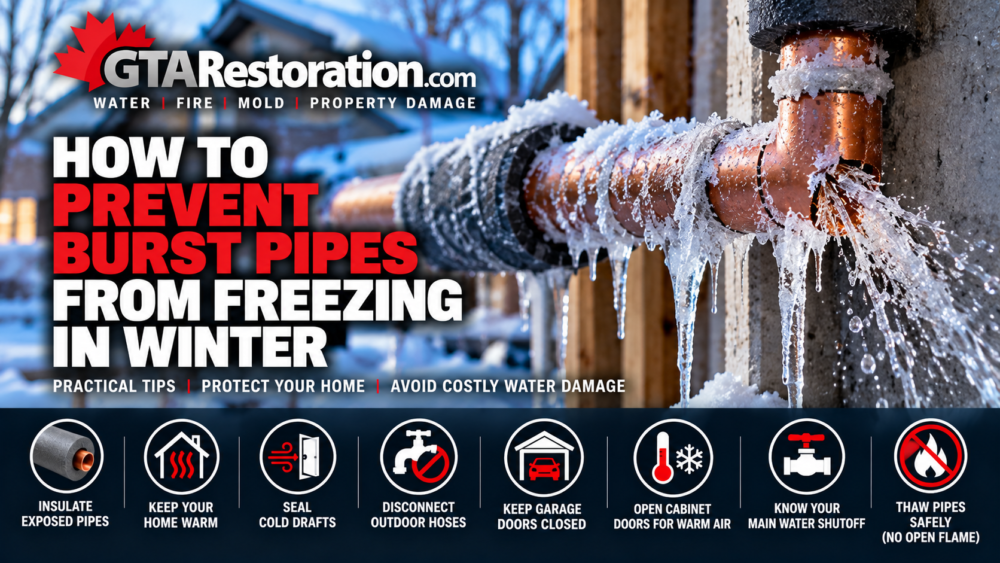
How to Prevent Burst Pipes From Freezing in Winter

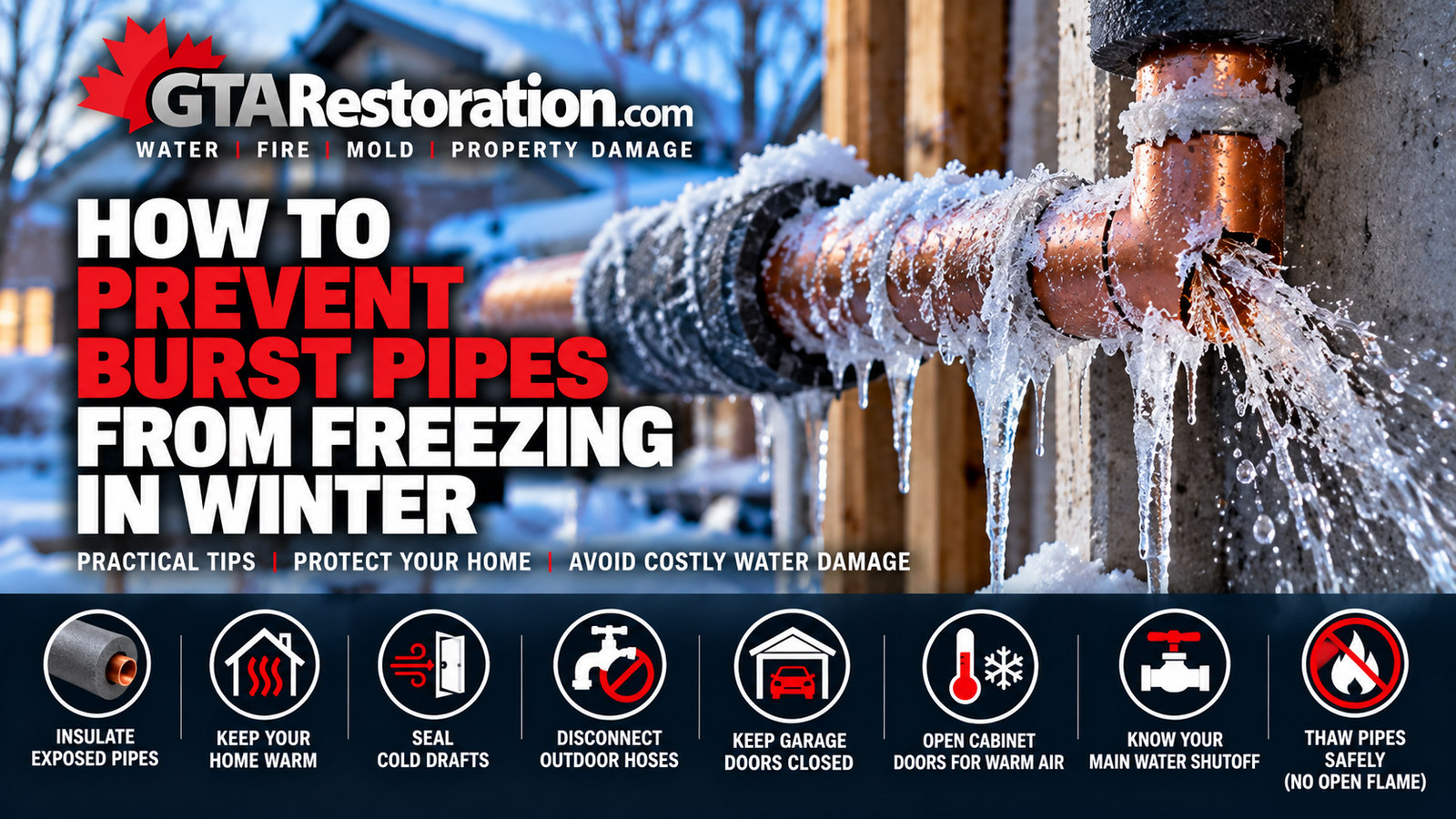
Knowing how to prevent burst pipes from freezing in winter can help protect your home from sudden leaks, flooding and expensive water damage. Pipes often burst after water inside them freezes and expands. As pressure builds, a pipe, joint or fitting may crack. Then, when the ice begins to thaw, water can escape quickly.

Toronto winters can place extra stress on plumbing near exterior walls, garages, basements, crawl spaces and other cold areas. Therefore, the best time to protect your pipes is before severe cold arrives.

Find the Pipes Most Likely to Freeze

First, walk through your home and identify plumbing in colder areas. Pipes near outside walls, garages, crawl spaces, attics and unheated rooms may face a greater risk.

Also, check plumbing near windows, doors, foundation openings and areas where cold air enters the building. Even a small section of exposed pipe can become a problem during a cold spell.

Insulate Exposed Water Pipes

Foam pipe covers can help reduce heat loss from vulnerable plumbing. Therefore, add insulation to accessible pipes in cold areas before winter temperatures arrive.

Pay particular attention to pipes near outside walls and in garages or crawl spaces. In addition, make sure the insulation fits properly and does not leave large exposed gaps.

Seal Cold Air Leaks Around Plumbing

Cold air can freeze a pipe even when the rest of the room feels reasonably warm. For example, drafts may enter around windows, doors, dryer vents, electrical openings and holes where plumbing passes through walls.

Seal unwanted air leaks where appropriate. As a result, warmer indoor air can stay around the plumbing for longer.

Disconnect Outdoor Hoses Before Freezing Weather

Outdoor faucets often face freezing temperatures first. Before winter, remove garden hoses and drain exterior plumbing when your system allows it.

If your home has an indoor shutoff for the outside faucet, close it and drain the line. This simple step helps reduce trapped water that may freeze inside the pipe.

Keep Garage Doors Closed

If water lines pass through your garage, keep the garage door closed during cold weather. Opening it for long periods can quickly lower the temperature around nearby plumbing.

In addition, check that exposed garage pipes have suitable insulation.

Stop Pipes From Freezing During Extreme Cold

Keep the Home Warm

During severe cold, maintain heat throughout the home. Avoid allowing rooms with plumbing to become extremely cold, even if you do not use those rooms often.

The City of Toronto recommends keeping areas around indoor water pipes warm, especially near the water meter. It also recommends extra care when temperatures fall well below zero.

Open Cabinet Doors Around Plumbing

Kitchen, bathroom and laundry cabinets can trap cold air around pipes. Therefore, open cabinet doors when very cold weather arrives so warmer room air can circulate around the plumbing.

This can be especially useful for sinks installed against exterior walls.

Know Where the Main Water Shutoff Is

One of the most important ways to prevent burst pipes from freezing in winter from turning into major water damage is knowing how to stop the water quickly.

Locate your main water shutoff valve before an emergency. In many Toronto homes, it sits near the foundation wall where the water service enters the building.

The City of Toronto frozen pipe guide recommends knowing the location of the main shutoff in case a frozen pipe breaks.

Consider Water Movement for Pipes That Often Freeze

If a particular pipe regularly freezes during very cold weather, the City of Toronto says homeowners may choose to run a pencil-thin stream of cold water to keep some water moving through the plumbing.

However, this uses metered water and should not replace proper insulation or repairs. Also, keep the drain completely clear to prevent an overflow.

Prepare Plumbing Before Leaving Home

If you plan to travel during winter, do not simply turn the heat off. Instead, keep the home warm enough to protect plumbing.

For a longer absence, the City advises that homeowners may close the main water valve and open a basement cold-water tap to drain remaining water from the plumbing. However, make sure this approach is suitable for your home’s plumbing and heating equipment.

In addition, consider having someone check the property while you are away.

Use Smart Leak Detection

Water sensors can provide an early warning if a pipe begins leaking while you are asleep or away from home. Place sensors near mechanical rooms, water heaters, laundry equipment and plumbing that has leaked before.

Some systems can also connect to automatic shutoff equipment. Therefore, leak detection can add another layer of protection during winter.

What to Do if a Pipe Freezes or Bursts

Watch for Frozen Pipe Warning Signs

Little or no water from a faucet can be an early warning of a frozen pipe. You may also notice unusually low water pressure during very cold weather.

If several fixtures work normally but one area has no water, plumbing near that fixture may have frozen.

Thaw Frozen Pipes Carefully

If you can safely reach the suspected frozen section, open a faucet and apply gentle heat. For example, the City lists a hair dryer, electric heating pad, warm towel or warm surrounding air as possible options.

Never use an open flame, torch, charcoal stove or similar device to thaw plumbing. These methods create a serious fire hazard.

Also, do not leave electrical heating equipment unattended. If you cannot locate the frozen section or thaw it safely, contact a licensed plumber.

Check the Pipe as It Thaws

A frozen pipe may not leak until ice begins to melt. Therefore, watch the plumbing carefully as water flow returns.

Check joints, fittings and surrounding building materials for dripping or spraying water. If a crack appears, shut off the main water supply immediately when it is safe to do so.

Act Quickly After a Burst Pipe

If a pipe bursts, first stop the water source. Next, contact a plumber to repair the damaged pipe. Then remove standing water and begin drying affected materials.

GTA Restoration provides emergency plumbing services and water damage restoration throughout Toronto and the GTA.

Check for Water Behind Walls and Floors

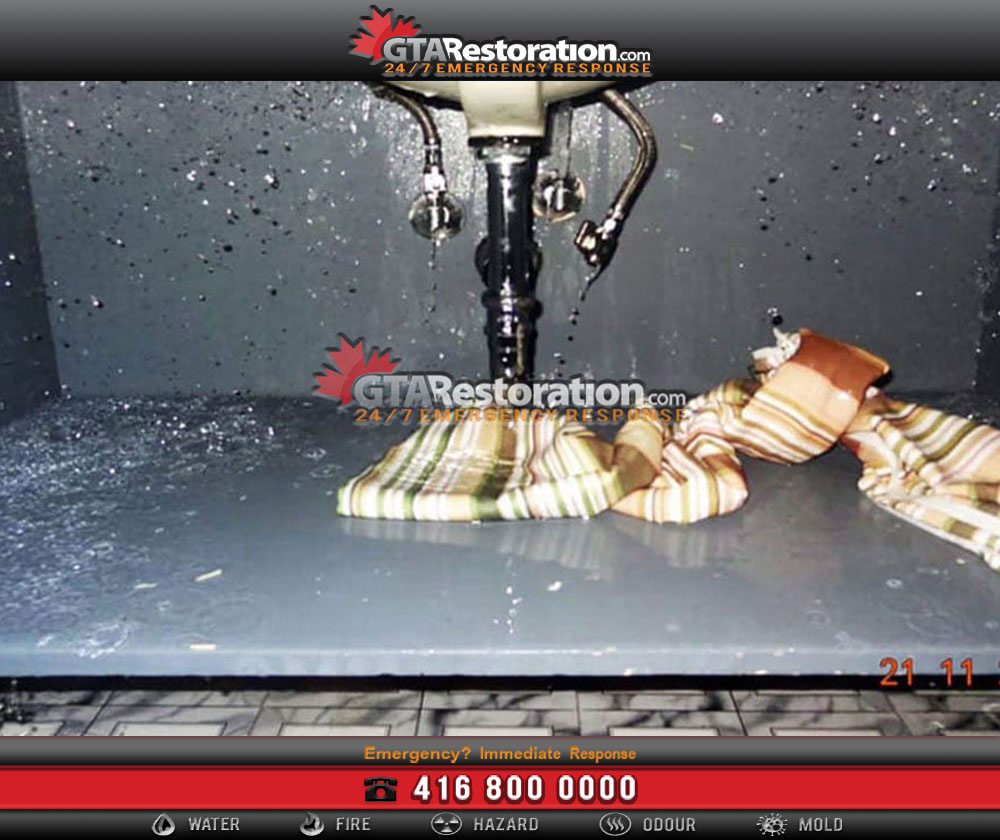
Burst pipe water can travel farther than it first appears. For example, water may move below flooring, behind drywall, through insulation or into rooms below the leak.

As a result, simply wiping up visible water may not fully dry the property. Moisture readings and water leak detection can help locate hidden wet areas.

Dry Wet Building Materials Quickly

After stopping the leak, remove standing water and begin structural drying as soon as practical. Air movement and dehumidification can help remove moisture from affected materials.

However, the correct drying plan depends on the amount of water, materials involved and how far the moisture travelled.

Document Burst Pipe Damage

Take clear photos and videos when it is safe to do so. In addition, keep plumbing invoices, drying records, moisture readings and repair estimates.

Insurance coverage depends on your specific policy and the circumstances of the loss. Therefore, contact your insurer or broker for coverage questions. GTA Restoration can also provide restoration documentation and insurance claims support.

Prevent the Same Pipe From Freezing Again

Once the immediate problem is under control, find out why the pipe froze. A cold draft, poor insulation, low indoor temperature or exposed plumbing may still need attention.

Otherwise, the same section may freeze again during the next cold period.

Ultimately, the best way to prevent burst pipes from freezing in winter is to prepare vulnerable plumbing before temperatures drop. Insulate exposed pipes, stop drafts, keep cold areas warm, disconnect outdoor hoses and locate your main shutoff valve.

In addition, watch problem areas during extreme cold. These practical steps can help prevent burst pipes from freezing in winter and reduce the chance of serious water damage.


Frozen Pipe or Burst Pipe Emergency?

GTA Restoration provides emergency plumbing, water extraction, moisture detection and structural drying throughout Toronto and the GTA.

If a pipe has burst, shut off the water when safe and act quickly before moisture spreads through the property.

Call Us: 416-800-0000

Learn More

Frozen pipe & how to prevent them? | How to Prevent Frozen Pipes from Bursting in the Winter | House Winter Water Damage and How to Prevent It | Burst Pipe Plumber | Montréal Pipe Burst Emergency | Commercial Garage Roof Repair & Waterproofing

Share this... Spread the word!


Tags: Best Mold Removal Toronto, Emergency Plumber, Emergency Plumber Toronto, Flooded Basement Toronto, Sewage Backup Cleanup, Sewer Backup, Water Damage, Water Damage Toronto,

☛ ☛ Related Restoration Articles You May Also Like!

Does your Insurance cover Water Damage?
Waterproofing  Properties in  Toronto
Waterproofing Properties in Toronto
What services do plumbers offer?
How Much Does it Cost for Flood Restoration?

Emergency? Immediate response 24/7

416.800.0000 416.800.0000

For non-emergencies use our contact form

Prepare Pipes Before Winter

The best time to prevent a burst pipe is before severe cold arrives. Therefore, inspect vulnerable plumbing and correct obvious cold spots early.

Insulate Pipes in Cold Areas

Add insulation around exposed pipes near exterior walls, garages, crawl spaces and other cold areas. Proper insulation helps slow heat loss when outdoor temperatures fall.

Seal Cold Drafts

Cold air can enter through small openings around pipes, windows, doors and vents. Therefore, seal unwanted drafts where appropriate.

Disconnect Outdoor Hoses

Remove garden hoses before freezing weather. Also, shut off and drain exterior plumbing when your home’s system allows it.

Keep Plumbing Areas Warm

Maintain heat in rooms that contain water pipes. In addition, keep garage doors closed when plumbing runs through the garage.

Open Sink Cabinets During Extreme Cold

Opening cabinet doors allows warm indoor air to circulate around plumbing below sinks. This can help during periods of severe cold.

Locate Your Main Water Shutoff

Know where the main valve is and make sure you can reach it quickly. If a pipe bursts, shutting off the water can greatly reduce how much water enters the property.

Watch for Low Water Flow

Little or no water from a faucet may signal a frozen pipe. Therefore, investigate unusual water flow during very cold weather rather than ignoring it.

Thaw Pipes Without an Open Flame

Use gentle heat on an accessible frozen pipe. Never use a torch or other open flame because it can cause a fire.

Inspect Pipes After Thawing

A frozen pipe may begin leaking after the ice melts. As a result, check the pipe carefully while normal water flow returns.

Dry Water Damage After a Burst Pipe

When water reaches drywall, flooring or insulation, visible cleanup may not be enough. Moisture detection and structural drying can help locate and remove hidden water.

Prevent Burst Pipes in Toronto

GTA Restoration provides emergency plumbing, burst pipe cleanup, water extraction and structural drying throughout Toronto and the GTA. If a frozen pipe causes water damage, quick action can help limit the affected area.


Has a Frozen Pipe Started Leaking or Burst?

Stop the water when safe and get help with plumbing repairs, water extraction and drying before moisture spreads farther.

Call Us: 416-800-0000


Nationwide, Local Pricing

GTA Restoration offers local flood & water damage repair, mold removal/remediation, asbestos removal/abatement, fire/smoke damage repair services and much more.

Search

  • Ajax Asbestos Removal
  • Ajax Mold Removal
  • Ajax Water Damage
  • Anjou Mold Removal
  • Aurora Mold Removal
  • Aurora Water Damage
  • Beaconsfield Asbestos Removal
  • Beaconsfield Mold Removal
  • Boucherville Mold Removal
  • Brampton Asbestos Removal
  • Brampton Asbestos Removal
  • Brampton Mold Removal
  • Brampton Water Damage
  • Brossard Mold Removal
  • Burlington Asbestos Removal
  • Burlington Mold Removal
  • Burlington Water Damage
  • Burnaby Mold Removal
  • Burst Frozen Pipe Edmonton
  • Caledon Mold Removal
  • Caledon Water Damage
  • Calgary Asbestos Removal
  • Calgary Mold Removal
  • Calgary Water Damage
  • Cambridge Mold Removal
  • Cambridge Water Damage
  • Chambly Mold Removal
  • Chateauguay Mold Removal
  • Chomedey Mold Removal
  • Clarington Mold Removal
  • Concord Mold Removal
  • Concord Water Damage
  • Mississauga Mold Removal
  • Coquitlam Mold Removal
  • Cumberland Mold Removal
  • Dollard-des-Ormeaux Mold Removal
  • Dorval Mold Removal
  • Edmonton Asbestos Removal
  • Edmonton Mold Removal
  • Edmonton Water Damage
  • Etobicoke Asbestos Removal
  • Etobicoke Mold Removal
  • Etobicoke Water Damage
  • McMurray Fire Damage Services
  • Saskatchewan Asbestos Removal
  • Saskatchewan Mold Removal
  • Frozen Burst Pipe Repair Montreal
  • Frozen Burst Pipe Repair Ottawa
  • Gloucester Asbestos Removal
  • Gloucester Mold Removal
  • Hamilton Asbestos Removal
  • Hamilton Asbestos Testing
  • Hamilton Mold Removal
  • Hamilton Water Damage
  • Hampstead Mold Removal
  • Hampstead Water & Flood Damage
  • L'île-Bizard Mold Removal
  • Kahnawake Mold Removal
  • Kanata Asbestos Removal
  • Kanata Mold Removal
  • Kanata Water Damage
  • Kirkland Mold Removal
  • Kitchener Asbestos Removal
  • Kitchener Mold Removal
  • Kitchener Water Damage
  • Lasalle Mold Removal
  • Laval Asbestos Removal
  • Laval Mold Removal
  • Laval Water Damage
  • London Mold Removal
  • London Water Damage
  • Longueuil Mold Removal
  • Longueuil Water Damage
  • Markham Asbestos Removal
  • Markham Mold Removal
  • Markham Water Damage
  • Mississauga Asbestos Testing
  • Mississauga Mold Removal
  • Mississauga Water Damage
  • Montreal Air Duct Cleaning
  • Montreal Asbestos Removal
  • Montreal Asbestos Testing
  • Montreal East Mold Removal
  • Montreal Mold Removal
  • Montreal Water Damage
  • Mount-Royal Mold Removal
  • Nepean Asbestos Removal
  • Nepean Mold Removal
  • Nepean Water Damage
  • New Market Water Damage
  • New Westminster Mold Removal
  • Newmarket Mold Removal
  • North York Mold Removal
  • Oakville Mold Removal
  • Oakville Water Damage
  • Orleans Asbestos Removal
  • Orleans Mold Removal
  • Orleans Water Damage
  • Osgoode Mold Removal
  • Oshawa Mold Removal
  • Oshawa Water Damage
  • Ottawa Air Duct Cleaning
  • Ottawa Asbestos Removal
  • Ottawa Mold Removal
  • Ottawa Vermiculite Removal
  • Ottawa Water Damage
  • Pickering Mold Removal
  • Pickering Water Damage
  • Red Deer Mold Removal
  • Red Deer Water Damage
  • Richmond Hill Mold Removal
  • Richmond Hill Water Damage
  • Richmond Mold Removal
  • Rideau Lakes Mold Removal
  • Rockcliffe Park Mold Removal
  • Roxboro Mold Removal
  • Saint Laurent Mold Removal
  • Saint-Hubert Mold Removal
  • Scarborough Asbestos Removal
  • Scarborough Mold removal
  • Scarborough Water Damage
  • Sewer Backup Edmonton
  • Sewer Backup Montreal
  • Sewer Backup Ottawa
  • Sherwood Park Asbestos Removal
  • Sherwood Park Mold Removal
  • Spruce Grove Asbestos Removal
  • Spruce Grove Mold Removal
  • St. Albert Asbestos Removal
  • St. Albert Mold Removal
  • Ste.Dorothee Mold Removal
  • Surrey Mold Removal
  • Thornhill Mold Removal
  • Toronto & GTA Asbestos Removal
  • Toronto & GTA Mold Removal
  • Toronto Air Duct Cleaning
  • Toronto Water Damage
  • Unionville Mold Removal
  • Unionville Water Damage
  • Vancouver Asbestos Removal
  • Vancouver Mold Removal
  • Vancouver Water Damage
  • Vanier Mold Removal
  • Vaughan Mold Removal
  • Vaughan Water Damage
  • Westmount Mold Removal
  • Whitby Water Damage
  • Woodbridge Asbestos Removal
  • Woodbridge Mold Removal
  • Woodbridge Water Damage
  • Waterproofing
  • Kitchen & Bath Pro
  • Condo Restoration

Main Head Office


Burst Pipe Prevention – Frequently Asked Questions

How do I prevent burst pipes from freezing in winter?

Insulate exposed pipes, seal cold drafts, keep plumbing areas warm, disconnect outdoor hoses and know where your main water shutoff valve is located.

Which pipes are most likely to freeze?

Pipes near exterior walls, garages, crawl spaces, attics and other cold areas usually face a higher freezing risk.

How can I tell if a pipe is already frozen?

Little or no water from a faucet during very cold weather may indicate a frozen pipe. Low water pressure can also be a warning sign.

Can I use a torch to thaw frozen pipes?

No. Never use an open flame. Instead, use gentle heat such as a hair dryer, heating pad or warm towel, or contact a plumber.

What should I do if a frozen pipe bursts?

Shut off the main water supply when safe, arrange plumbing repairs, remove standing water and check walls, flooring and other materials for hidden moisture.


We Work Direct with All Insurance Companies

Wᴇ ᴀʀᴇ ᴄᴏᴍᴍɪᴛᴛᴇᴅ ᴏɴ ᴡᴏʀᴋɪɴɢ ᴡɪᴛʜ ᴇᴠᴇʀʏ ɪɴsᴜʀᴀɴᴄᴇ ᴄᴏᴍᴘᴀɴʏ ᴀᴄʀᴏss Cᴀɴᴀᴅᴀ & USA.


In House Financing Available

In House Financing Available

FREE Financing Up To 24 Months NO INTEREST NO MONEY DOWN


Contact Us

Learn more ↴ GTA Restoration Tips

RELATED ARTICLES

  • How To Avoid Sprinkler Water Damage?
  • How To Deal With Floods & Water Damage?
  • Signs of Mould Growth In Your Property?
  • Avoid Mould Damage from Melting Snow
  • How to Prevent Water Damage In Summer
  • Avoid Mold Growth With Proper Air Flow
  • Prevent House Floods from Spring Rains
  • Prevent Frozen Burst Pipes in Winter
  • What To Do on Your Flooded Basement?


follow us on  LinkedIn Instagram Twitter Facebook YouTube


Our Clients

Our Vendor Clients


Affiliates

fully certified


GTA Restoration Toronto

Copyright © 2009 - 2026 All Rights Reserved. Sitemap/Links

LinkedInInstagram Twitter Facebook YouTube

Call Us 416-800-0000

Emergency? Immediate response 24/7

416.800.0000

416.800.0000

We cover all GTA 24/7.

Head Office:
250 Consumers Rd,
#10
Toronto, ON
M2J 4V6,
Open 24 hours

Downtown Office:
1 Toronto St,
#10
Toronto, ON
M5W 1A1,
Open 24 hours

For non-emergencies use our contact form


    Not sure what you need?

    Call us today to find the best product for your situation.

    416-800-0000 416-800-0000

    Head Office:
    101 Lebovic Ave,
    Unit #10
    Scarborough,
    ON, M1L 4T7
    Hours
    24-Hours Open

    Downtown Office:
    250 Yonge Street,
    Unit #1A
    Toronto,
    ON, M5B 2L7
    Hours
    24-Hours Open

    How to Prevent Burst Pipes from Freezing in Winter

    Get a quote today


      GTA Restoration Assistant 24/7 Emergency Restoration Help
      Hi! I'm GTA Restoration's virtual assistant. How can I help with your property damage today?
      Emergency? Call 416-800-0000
      Loading Comments...

      You must be logged in to post a comment.