Find the Source Before You Plan Repairs
GTA Restoration provides water leak detection in Toronto and the GTA. We check plumbing leaks, damp walls, wet floors and stains that keep coming back. Our team uses site checks and test tools to help narrow down the source.
A leak may start far from the mark you can see. Water can run along a pipe or floor before it drips into the room below. Therefore, finding the cause is a separate step from fixing the stain.
When to Book a Water Leak Inspection
Some leaks leave a steady drip. Others show up only after a shower, a wash cycle or rain. For example, a wet patch below a bathroom may point to several possible sources. The timing can help guide the search.
Call if you see peeling paint, swollen flooring or new ceiling stains with no clear cause. A rise in water use can also be a clue. However, a stain or musty smell alone does not prove which pipe or building part is at fault.
If water is near your electrical panel or has reached outlets, keep out of the flooded area. Contact your local electric utility for help. The Electrical Safety Authority’s flood safety advice explains these risks.
What Happens During Leak Detection?
Review the Pattern and Check the Area
First, we ask when the problem began and what was in use at the time. Tell us about past leaks, recent work and any repairs already tried. Photos of a drip or stain can help, especially if the area has since dried.
Next, we check the spaces we can reach safely. This may include fixtures, valves, supply lines, drains and appliance hoses. We also review nearby walls and floors because the damp area may extend past the visible mark.
Compare Moisture Readings
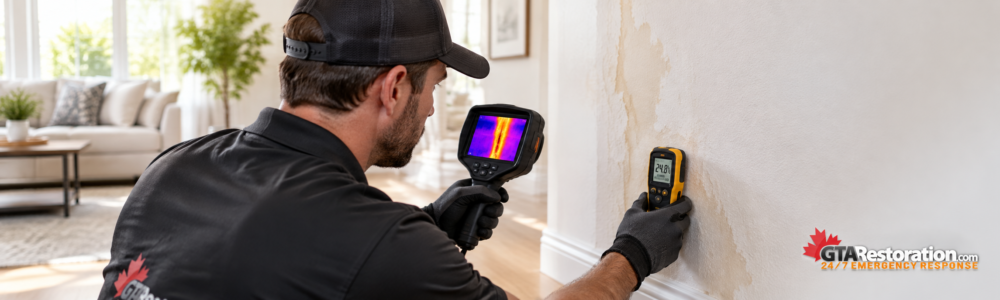
Moisture meters help us check materials and map the wet areas. We compare readings across the space and choose tools suited to the surface. This helps show where more checks or drying may be needed.
A high reading is a clue to review. It does not, on its own, prove which fitting has failed. As a result, we consider the readings alongside the site history and other findings.
Use Thermal or Sound Checks Where Suitable
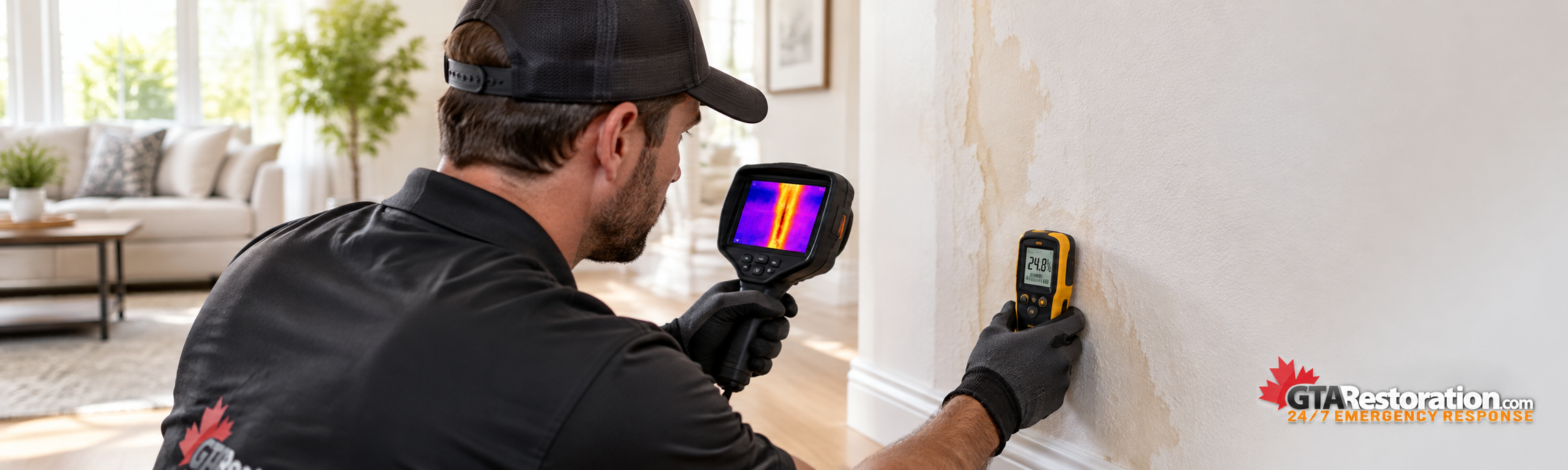
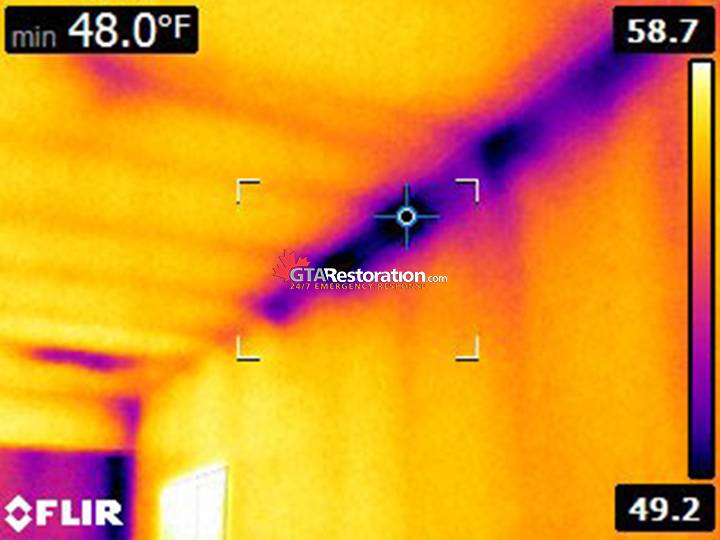
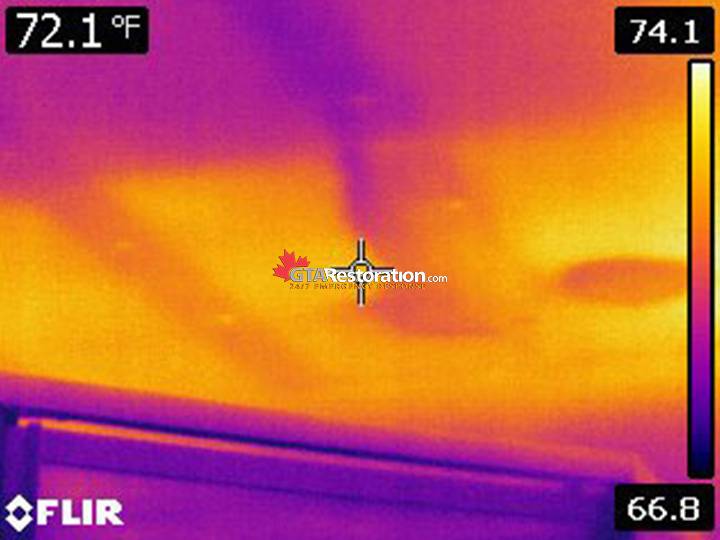
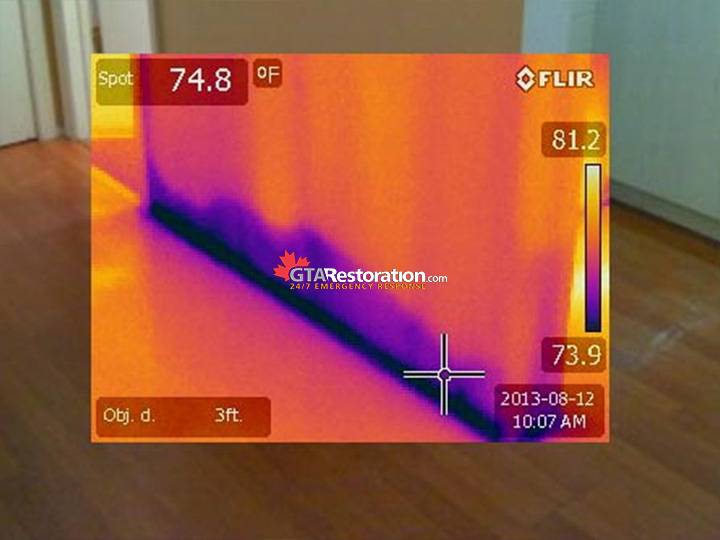
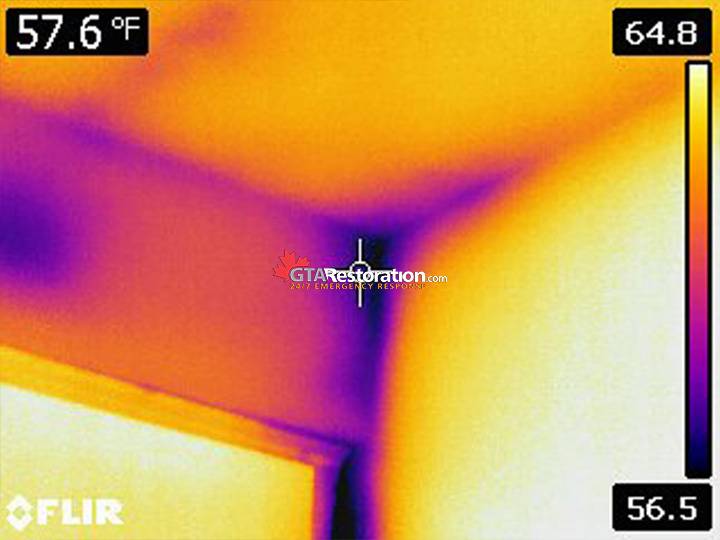
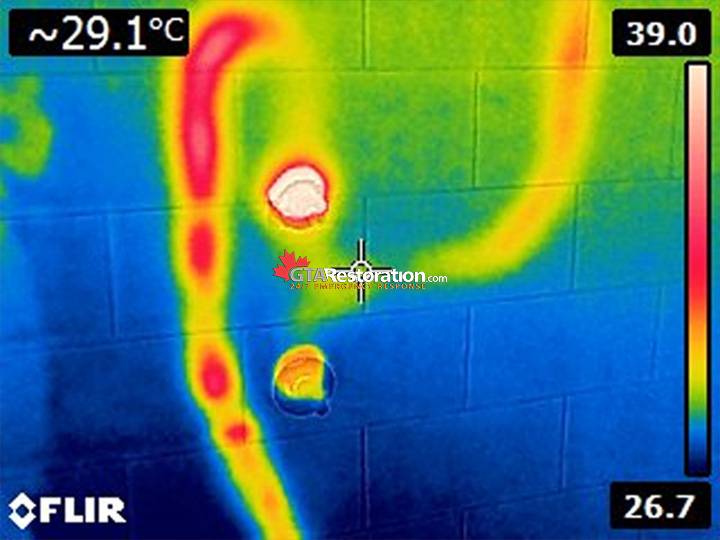
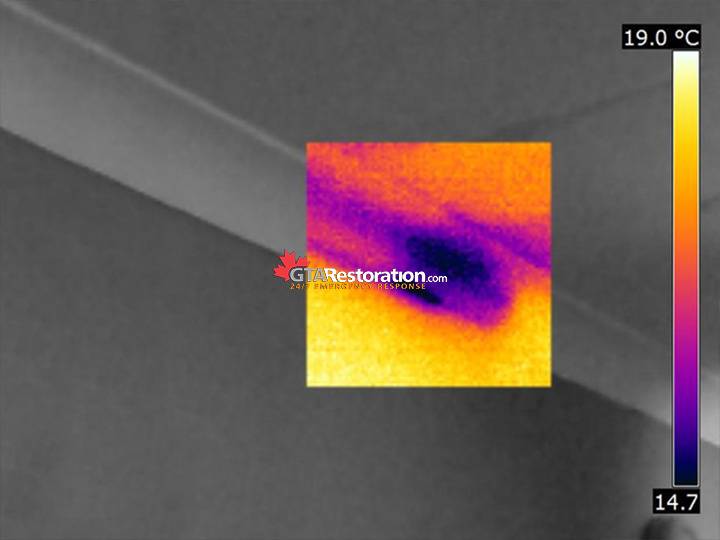
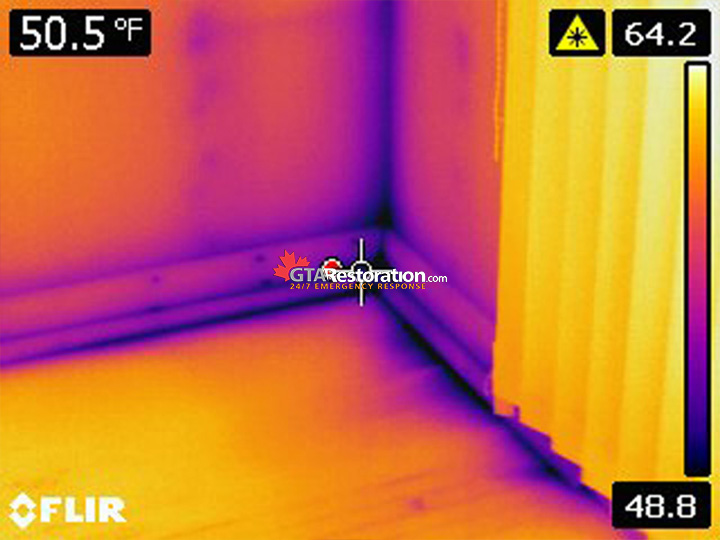
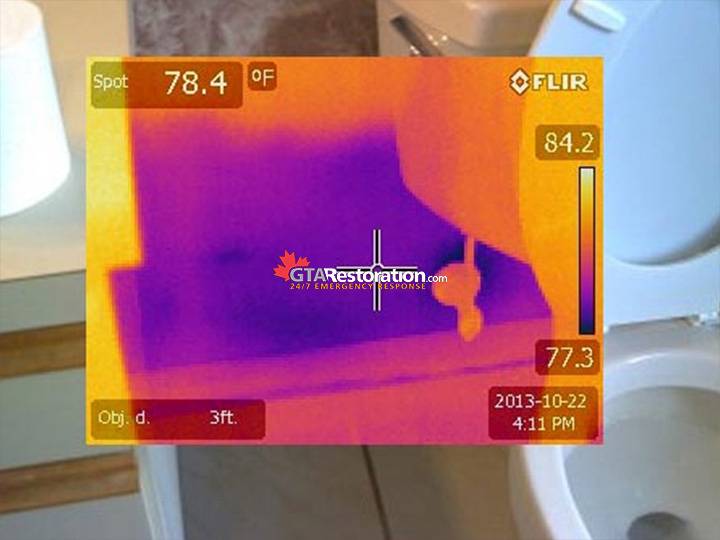
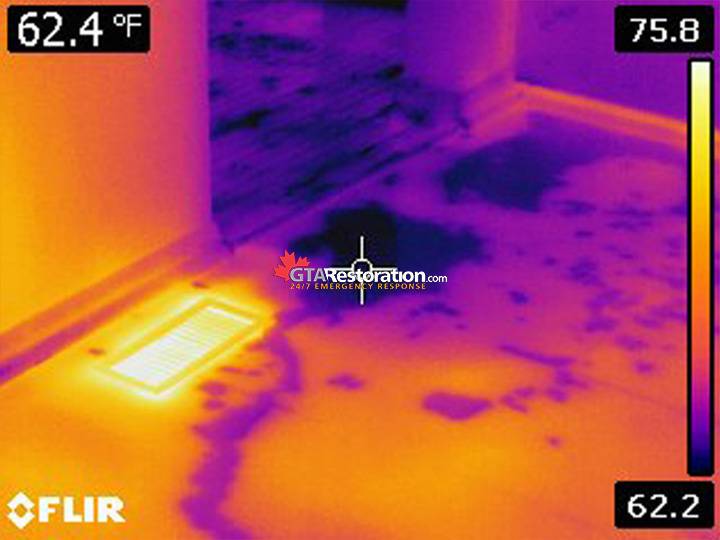
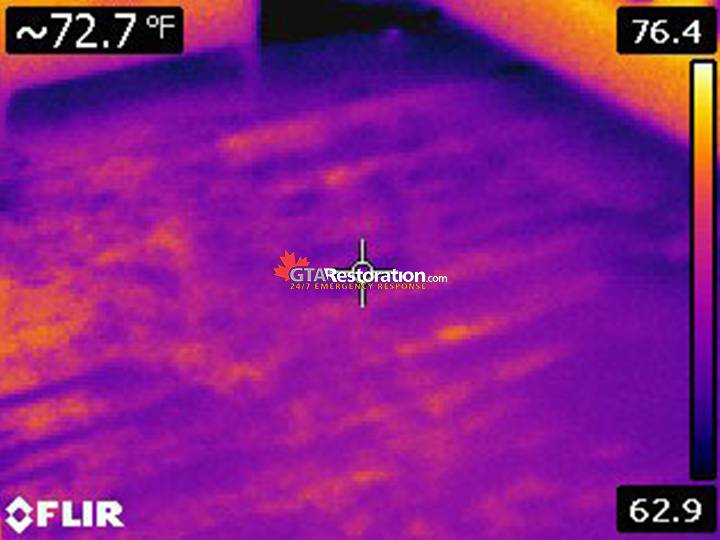
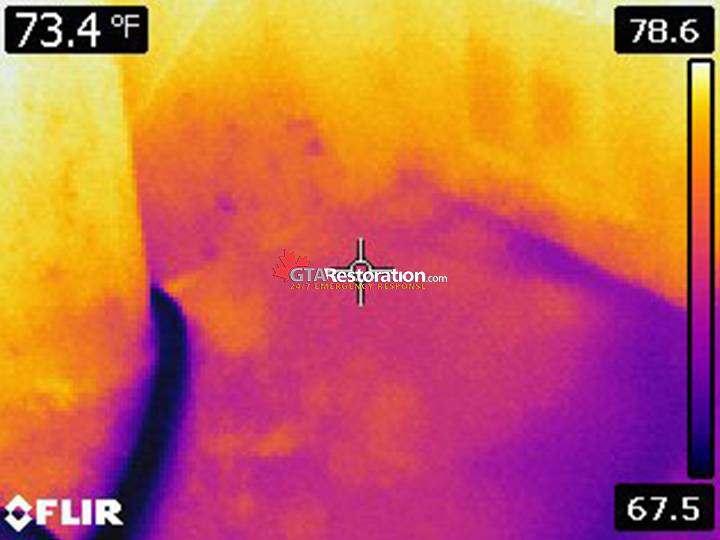
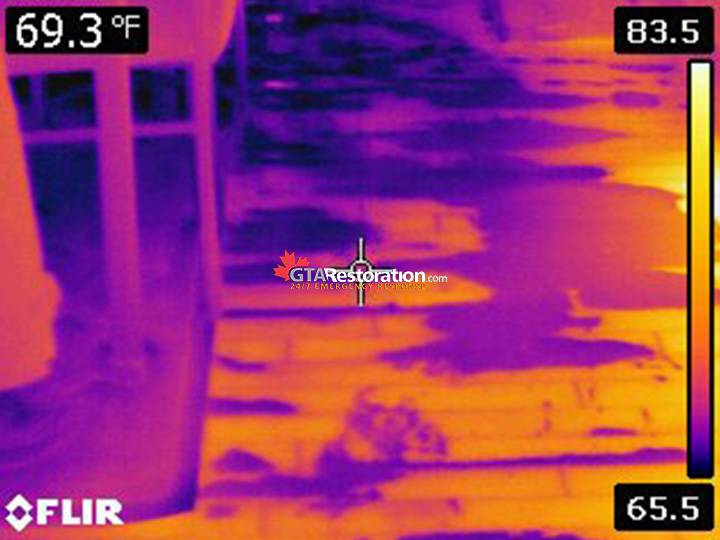
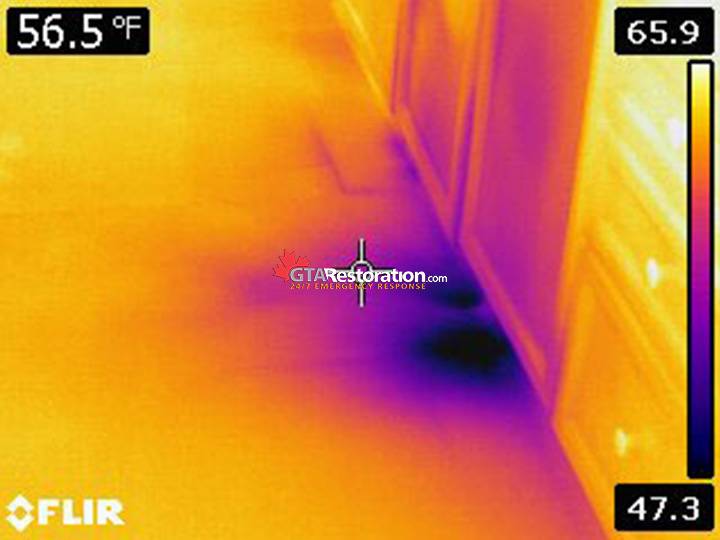
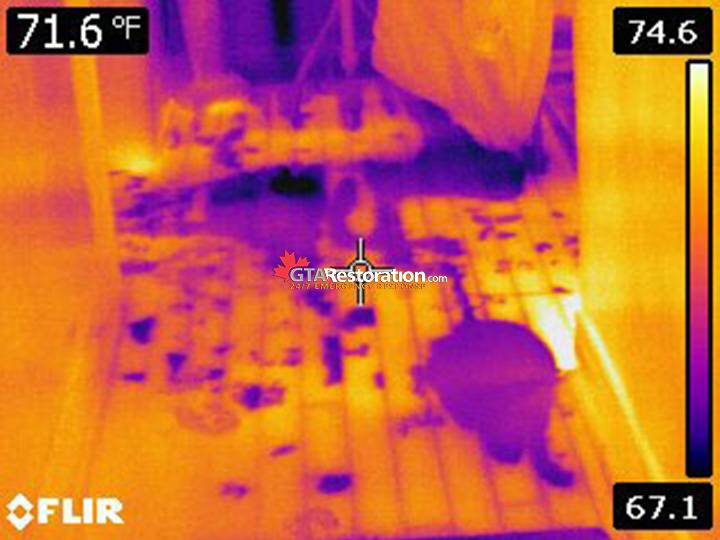
A thermal camera shows surface temperature patterns. It cannot see through a wall or prove that a cold patch is wet. We compare those patterns with moisture readings and other checks.
Sound equipment may help with a leaking pipe under pressure. However, other noise can make the leak harder to hear. The method depends on the suspected source, pipe and access. Our leak detection tools guide explains the main tool types.
Explain Findings and Any Access Needed
We explain what the checks show and which areas still need review. In some cases, a small opening is needed to confirm the source or reach a repair. We discuss that work before it starts.
Hidden leak detection can reduce guesswork, but it cannot promise a search with no openings. A leak that stops between visits may also need a further check. Tell us if the problem returns so we can review the pattern.
Leak Checks for Homes, Condos and Businesses
In a house, we may need access to rooms above or beside the damp area. In a Toronto condo, building staff may need to arrange entry to another suite or a shared service space. Therefore, please tell us about access limits when you book.
Shops and offices may need checks around work hours, stock or tenant access. We discuss these needs with the property contact. For larger losses, our commercial restoration team can help plan the cleanup that follows.
Costs, Repairs and Drying After a Leak
The cost of water leak detection depends on access, the area to check and the tests needed. Ask what the quote includes and whether further visits or openings would cost more. Repair work and drying may need a separate scope.
Once the source is clear, the right trade can plan the repair. Our emergency plumbing service can help with urgent plumbing faults. Meanwhile, water damage cleanup may be needed for rooms the leak has already affected.
Stopping the flow does not dry the materials. For this reason, we check wet floors and walls and discuss drying options before new finishes cover them. If you plan to make a claim, keep photos and work records. Your insurer decides coverage under your policy.
Watch for Further Leaks
After repairs, a water alarm can warn you if water reaches its sensor. Check and maintain the alarm as its instructions explain. However, an alarm does not replace finding and fixing the cause.







 Facebook
  Instagram
  LinkedIn
  X / Twitter
  YouTube



You must be logged in to post a comment.