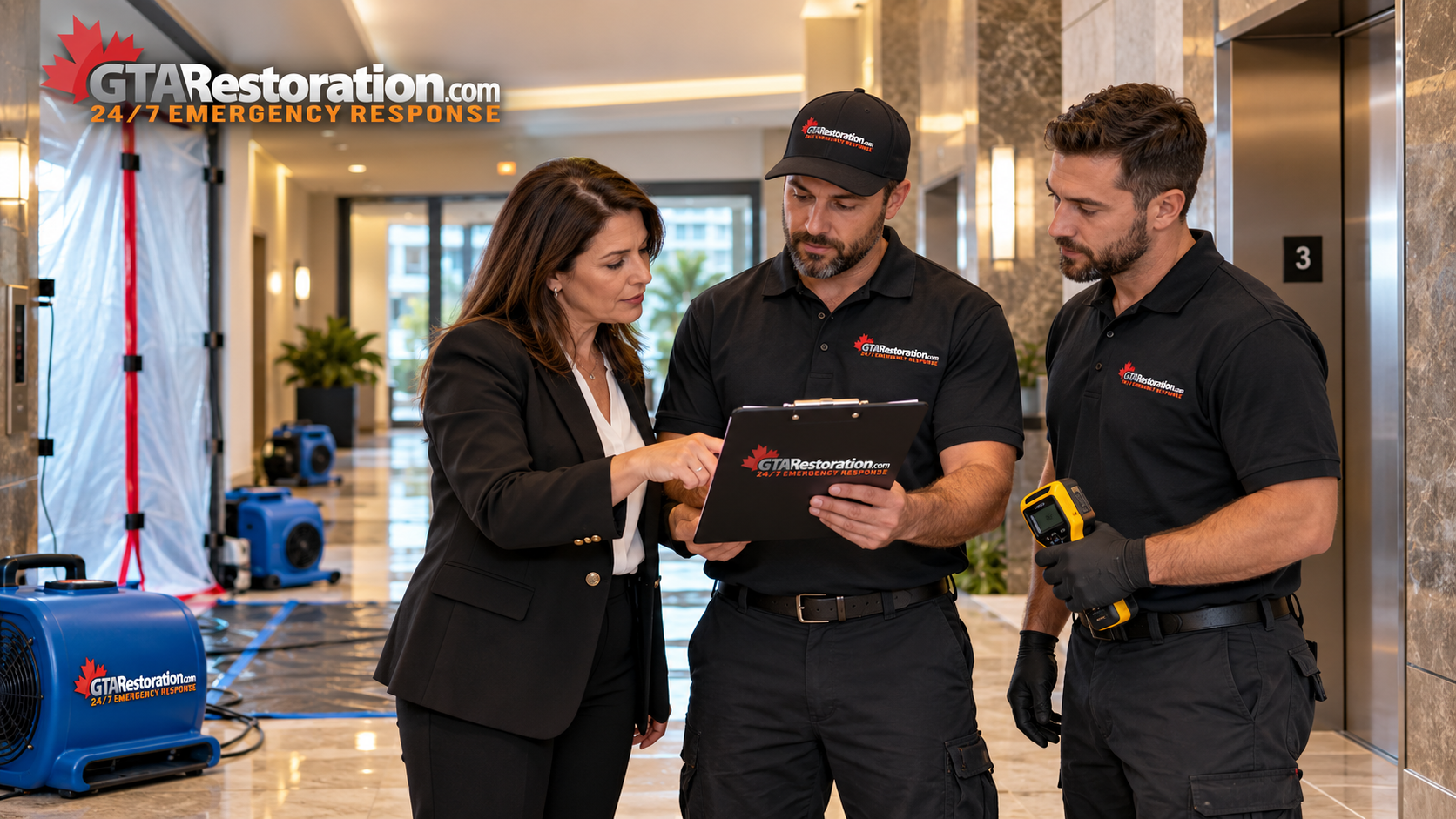
Condominium Restoration Toronto & GTA
GTA Restoration helps with condominium restoration in Toronto and the GTA. We work with condo owners, property managers and building staff after water, fire, smoke, mould or sewage damage. First, tell us which units and shared areas are affected. Then we can discuss safe access and the next steps.
For example, damage may spread through walls, floors and ceilings. For this reason, report a leak to building staff as soon as you can. In turn, early checks help show where water has reached and which materials need work.
Call Us: 416-800-0000
Emergency Condominium Restoration Services
A condo loss can involve several owners and trades at once. Therefore, agree on who will arrange access, approve work and share updates. Also, tell the team about site rules, lift bookings and rooms that must stay in use.
Water Damage Condo Restoration
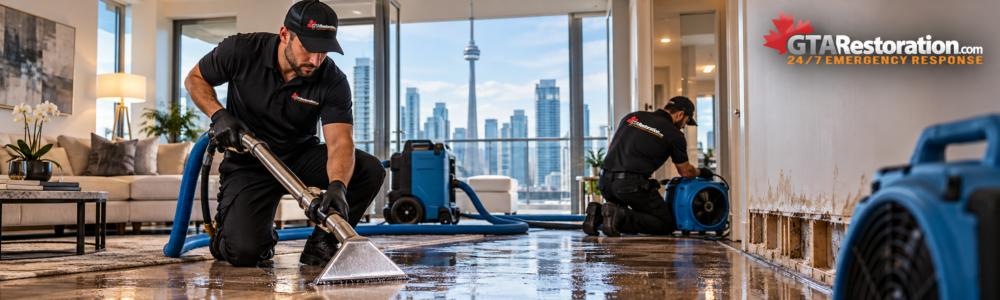
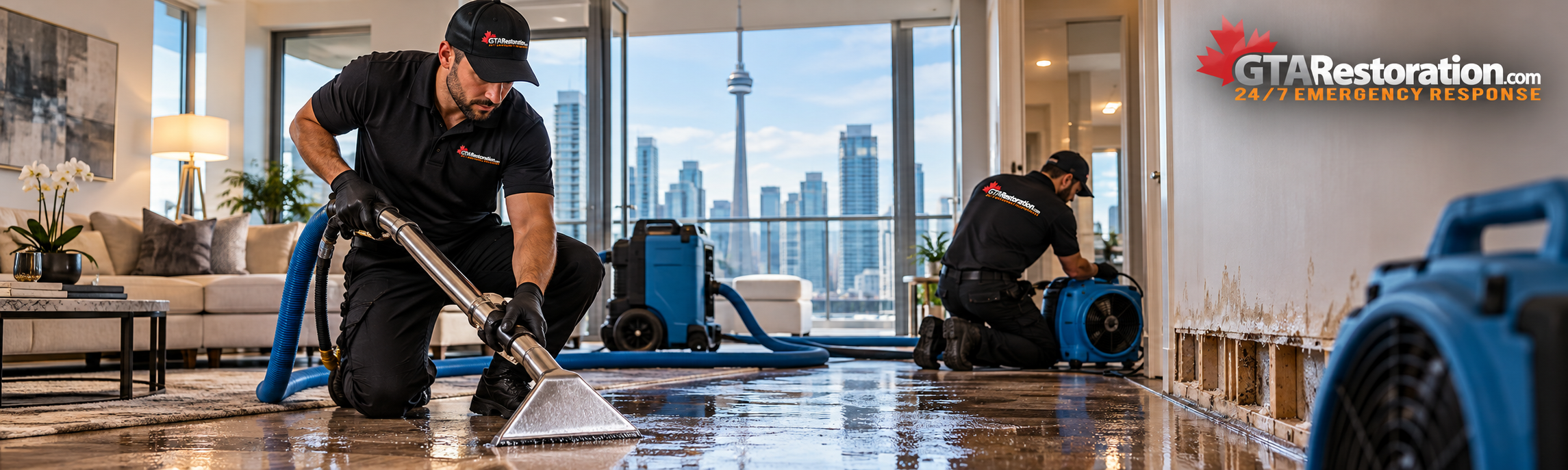
A burst pipe, appliance leak or sprinkler discharge may wet several floors. First, the water source needs to stop. Once access is safe, crews can remove standing water and check nearby materials. Then they plan drying around the wet areas.
Our water damage restoration team can discuss cleanup in units and shared spaces.
Fire and Smoke Cleanup
Fire can leave soot, smells, damaged items and water from fire hoses. As a result, cleanup may involve several stages. Next, crews check what can be cleaned, what needs drying and what must be removed.
Also, nearby units and halls may need a check if smoke or water has spread beyond the first room.
Mold and Moisture Control
Hidden leaks can keep walls, floors and ceilings damp. Therefore, the plan needs to address the source of moisture as well as the growth. A dry-looking surface does not prove the layers below are dry.
Our mold removal team can assess affected areas and discuss the cleanup scope.
Sewage Backup Cleanup
Sewage may reach bathrooms, storage rooms and shared areas. Therefore, keep people and pets away from the waste. Also, tell building staff which drains or rooms are affected. Crews may need to remove soiled materials before cleaning and drying can begin.
Condominium Restoration for Property Managers
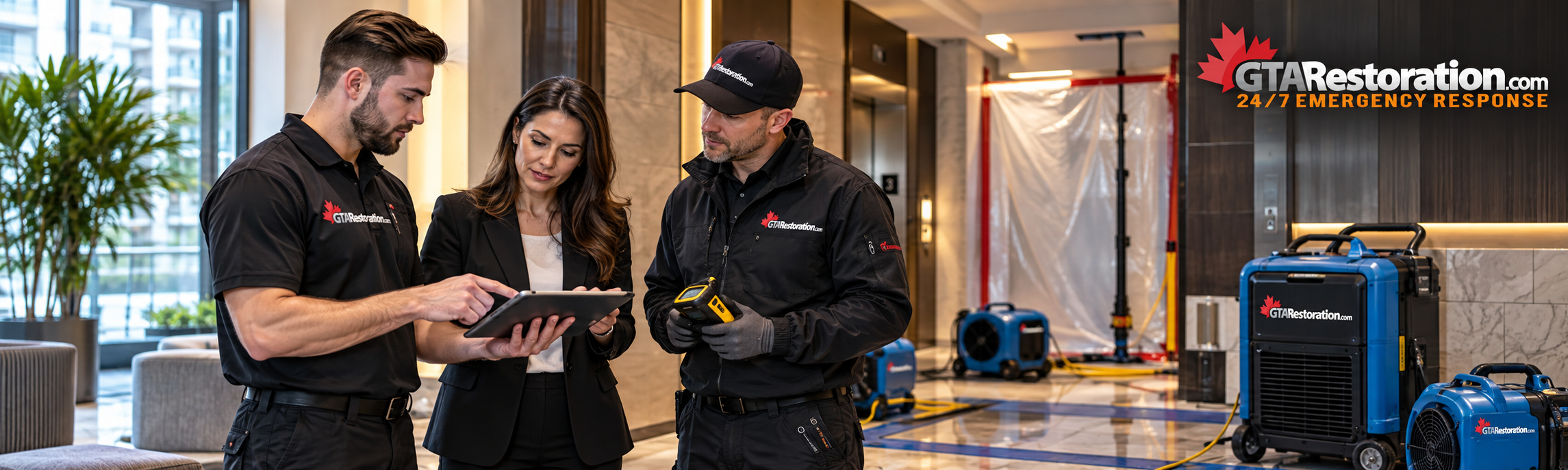
We help property managers plan access, cleanup and drying. In addition, the team can share photos, moisture readings and work notes. To start, choose one site contact who can reach residents, arrange entry and help resolve questions during the work.
Each loss needs its own scope. For example, a small suite leak may need a different setup from damage across several floors. Also, tell us about wet rooms, shared systems and any repairs already in progress.
Work Around Daily Building Use
Condo restoration may take place while other residents remain at home. For this reason, crews need clear routes for equipment and waste. In addition, discuss noise, work hours and access to shared spaces before the job starts.
Meanwhile, building staff can keep residents informed about changes to access and planned work.
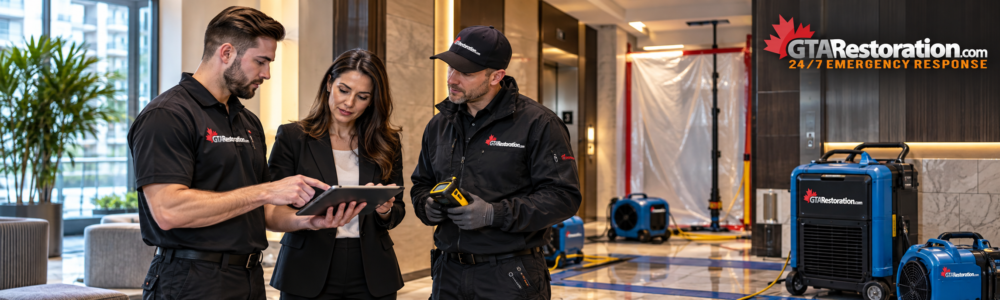
Our Condominium Restoration Process
1. Assess the Damage
First, we check the areas we can reach safely. We review the source, affected materials and any need to check nearby units.
2. Control Further Damage
Next, crews plan the urgent work. This may include water removal, barriers, cleaning, removal of damaged items or drying. The steps depend on the type of loss.
3. Dry and Check Wet Materials
After cleanup, suitable drying equipment may help remove moisture. Crews track readings to guide the work. However, a set number of days alone does not prove that materials are dry.
4. Plan Repairs and Keep Records
Finally, review the remaining repairs and who can approve them. Also, keep photos, work notes and bills. Your insurer decides coverage, while repair duties depend on the building’s documents and the damaged parts.
The Condominium Authority of Ontario’s repair guidance explains why owners and managers should check the condo’s governing documents.






































 Facebook
  Instagram
  LinkedIn
  X / Twitter
  YouTube

