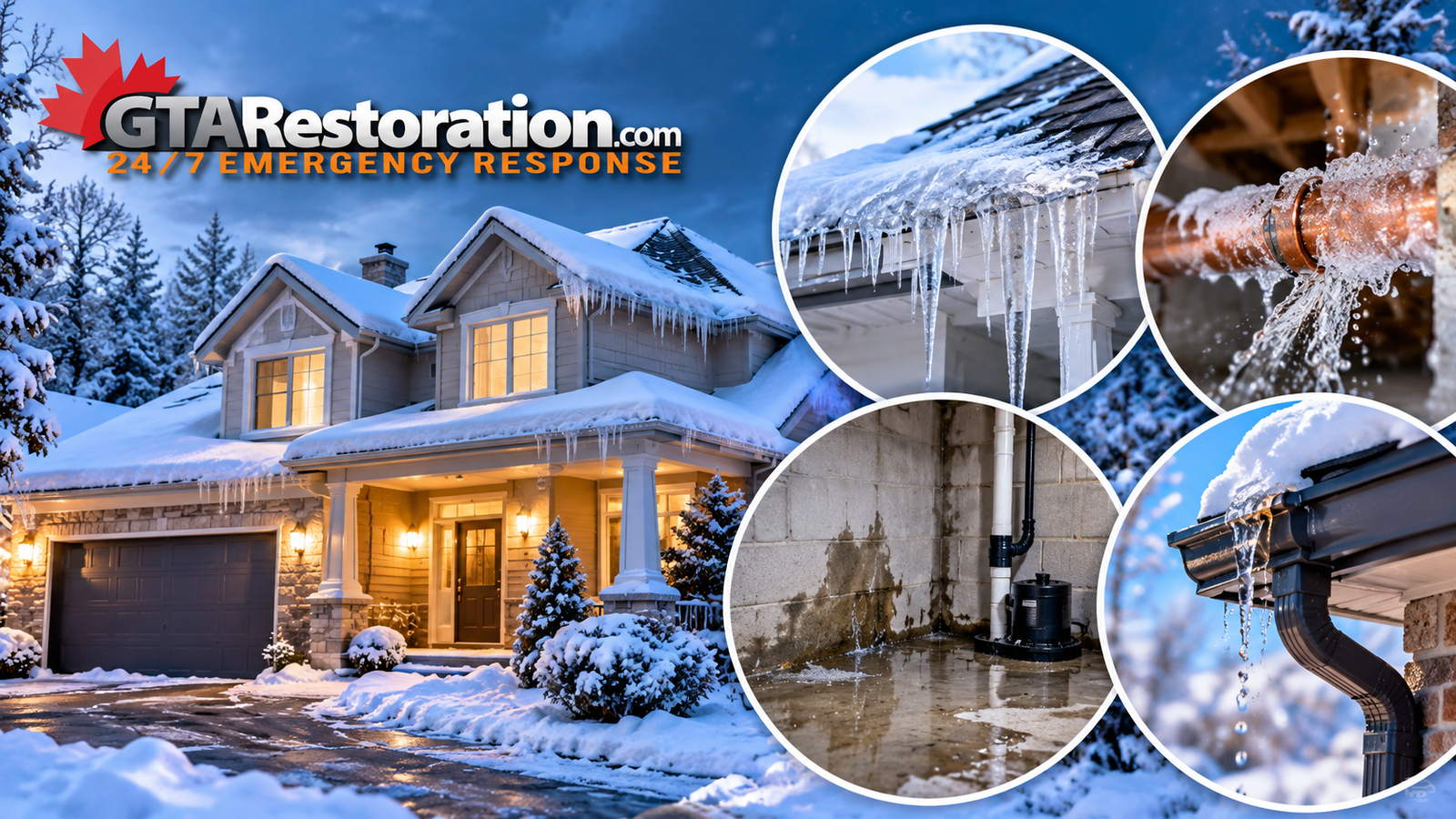
House winter water damage illustration showing snowy roofs, a leaking pipe, a wet basement and an overflowing gutter.


House Winter Water Damage: Prevention Tips

House winter water damage can start with a burst pipe, a roof leak or melting snow beside the basement. Small faults can grow when temperatures drop or a thaw begins. Therefore, check your pipes, roof and drainage before the cold weather arrives.

You cannot prevent every winter leak. However, routine checks can help you spot weak points and act before water spreads. Start with areas that have leaked before. Then make a short list of repairs, seasonal checks and emergency contacts for your home.

Call Us: 416-800-0000

Clean Gutters and Check Downspouts

First, arrange safe gutter cleaning before freezing weather. Leaves and debris can block the flow of rain and melted snow. Also, check for loose joints, sagging sections and blocked outlets. Hire help where access is difficult, and stay off icy ladders and roofs.

Downspouts should drain to a suitable area away from your foundation, without sending water onto a neighbour’s property or an icy walkway. Toronto requires sewer-connected downspouts to be disconnected unless an exemption applies. Then check the City’s drainage rules and exemption process before changing the setup.

For rain barrels, drain and remove the barrel for winter. Then reconnect a suitable downspout extension so water still flows away from the house.

Reduce Snowmelt Damage Around the Foundation

After snowfall, avoid piling snow against basement windows, doors or walls. Where safe and practical, keep snow away from the foundation and clear blocked drainage paths. Also, keep snow clear of furnace and dryer exhaust outlets.

During a thaw, watch where water collects. For example, pooling beside a wall may point to poor grading or a drainage fault. Have repeat trouble spots assessed before the next thaw. Our guide to moisture from melting snow explains how damp areas can affect the home.

Protect Pipes From Winter Leaks

Insulate vulnerable water lines and seal cold drafts around them. Also, keep rooms with plumbing warm and keep garage doors closed where pipes run through the garage. Disconnect garden hoses and have outdoor taps shut off and drained as the system requires.

For more detail, follow Toronto’s frozen-pipe guidance. Learn where your main water shutoff valve is before a pipe breaks. If freezing keeps happening, arrange a plumbing assessment to find the cause.

Limit Winter Leaks From Ice Dams

Heat escaping into the attic can melt snow on the roof. Then, that water may freeze again at the cold roof edge. An ice dam can then trap meltwater and force it under the shingles, causing house winter water damage inside ceilings and walls.

Therefore, ask a qualified contractor to check attic air leaks, insulation and ventilation. Adding more vents alone may not solve the problem. Natural Resources Canada’s roof and attic guide explains these causes.

Also, arrange roof and flashing repairs before snow hides worn areas. Do not climb onto an icy roof or chip ice from shingles. Leave difficult snow and ice removal to trained workers.

Check Sump Pumps Before a Thaw

If your home has a sump pump, test it using the maker’s instructions before winter and major thaws. Check that the discharge route stays clear and does not send water back toward the house. However, a frozen outlet can stop the system from working as intended.

Also, ask about backup power and routine service if the basement relies on the pump. A sump pump handles the water its system collects. It does not prevent every source of basement flooding or replace repairs to leaks elsewhere.

Plan for Cold Weather While Away

Cold-weather leaks may go unnoticed in an empty home. Therefore, keep the heat on and arrange regular checks while you are away. Leave your contact details and the shutoff location with a trusted person.

For a long absence, ask a plumber about safe winter shutdown steps for your specific plumbing and heating system. Also, check your insurer’s requirements for an unattended home before leaving.

What to Do After House Winter Water Damage

Stop the Leak and Avoid Hazards

If a pipe bursts, close the water shutoff only if you can reach it safely. Never use a torch to thaw a frozen line. Instead, call a plumber if you cannot locate the frozen section or suspect damage.

Stay out of floodwater where electrical hazards may exist. If water reaches outlets, heaters or the electrical panel, contact your utility to disconnect power. Follow the Electrical Safety Authority’s flood safety advice. Also, keep people away from sagging ceilings and sewage-contaminated water.

Dry Hidden Moisture After Winter Leaks

Next, arrange water removal and moisture checks. Water can spread beneath floors and behind walls, even after the visible puddle is gone. Our cleanup and drying service can help assess affected areas and plan the work.

Start drying promptly once the site is safe. The EPA’s guidance for wet building materials stresses early action after clean-water damage. However, do not run fans before the water source is assessed. Sewage and other contamination need different controls.

Keep Records and Fix the Cause

Finally, take photos from a safe place and keep repair receipts. Note when the leak began and which rooms were affected. Then share these records with your insurer and the team carrying out repairs.

Before rebuilding, confirm that the source is fixed and the affected structure is dry enough for repairs. This helps keep house winter water damage from becoming a repeat leak or hidden moisture problem.


Get Help With House Winter Water Damage

GTA Restoration can help with plumbing leaks, water removal and structural drying. Call to discuss the problem and the next steps for your property.

Call Us: 416-800-0000

Learn More

Moisture From Melting Snow | Roof Repair Help | Cleanup and Drying Services
Share this... Spread the word!


House Winter Water Damage: Seasonal Checklist

Simple checks help limit winter leaks and costly repairs. Use this list before cold weather, then review trouble spots after storms or thaws.

1. Clear Gutters Safely

First, arrange removal of leaves and debris. Also, check loose joints and blocked outlets before snow and ice make access harder.

2. Reduce Snowmelt Damage

Keep drainage paths and window wells clear. Then watch where melted snow collects near the house during a thaw.

3. Protect Vulnerable Pipes

Check pipe insulation and cold drafts. Also, make sure rooms with plumbing stay warm during cold spells and absences.

4. Prevent Winter Roof Leaks

Arrange repairs to worn roofing and flashing. Recurring ice dams also need a review of attic air leaks and insulation.

5. Check the Sump Pump

Follow the maker’s testing instructions. Next, check the discharge route and ask about backup power if the basement relies on it.

6. Find the Water Shutoff

Know where the main valve is. However, never cross floodwater or enter an unsafe area to reach it.

7. Act on Winter Leaks

Arrange prompt source repairs and drying. Also, check hidden areas before covering wet walls or floors with new finishes.

8. Save Photos and Records

Finally, keep photos, receipts and drying records. These document the house winter water damage and the work completed.


Found a leak during cold weather?
Call GTA Restoration for help with cleanup and next steps.

Call Us: 416-800-0000


GTA Service Centre


House Winter Water Damage FAQs

What causes winter leaks?

Burst pipes and roof faults are common causes, along with poor drainage. Also, ice dams can force water under roof shingles.

Can snowmelt flood my basement?

Yes. Meltwater can pool beside walls and windows. Therefore, keep drainage routes clear and investigate repeat wet spots.

Are blocked gutters the only cause of ice dams?

No. Heat escaping into the attic can melt roof snow. The water may then freeze at the colder roof edge.

Can I use a torch on a frozen pipe?

No. An open flame creates a fire risk. Instead, get plumbing help when you cannot thaw the line safely.

Should I start fans straight away?

First, confirm electrical safety and the water source. Fans can spread contamination if the water is not clean.

Can walls stay wet after the floor dries?

Yes. Hidden spaces may still hold moisture. Therefore, use moisture checks before rebuilding after winter leaks.


Direct Billing & Insurance Claims

Ask your insurer about coverage, deductibles and the records it needs.


Payment options

In-House Financing Available

Financing up to 24 months. No interest. No money down. Ask us about the terms.


Emergency? 24/7 Restoration Help

416-800-0000

416-800-0000

We cover all GTA 24/7.

Head Office:
250 Consumers Rd,
#10
Toronto, ON
M2J 4V6,
Open 24 hours

Downtown Office:
1 Toronto St,
#10
Toronto, ON
M5W 1A1,
Open 24 hours

For non-emergencies use our contact form

    Not sure what you need?

    Call us today to find the best product for your situation.

    416-800-0000 416-800-0000

    Head Office:
    101 Lebovic Ave,
    Unit #10
    Scarborough,
    ON, M1L 4T7
    Hours
    24-Hours Open

    Downtown Office:
    250 Yonge Street,
    Unit #1A
    Toronto,
    ON, M5B 2L7
    Hours
    24-Hours Open

    House Winter Water Damage and How to Prevent It

    Get a quote today



      Emergency? Click to Call!