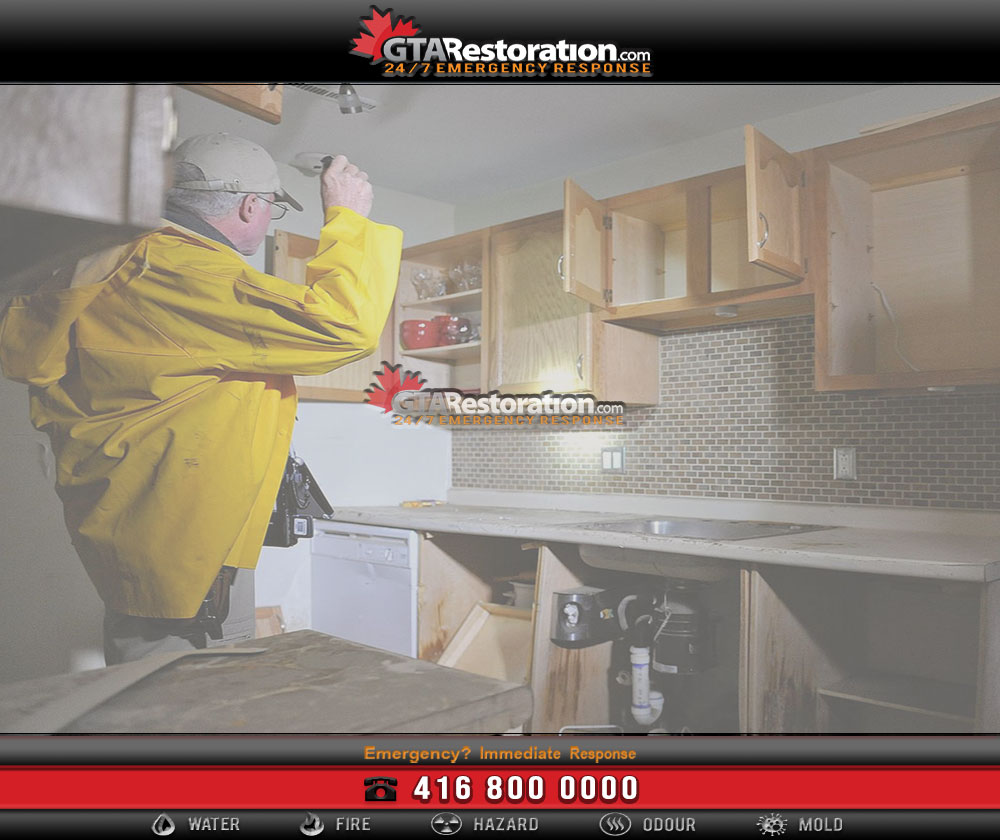
Toronto Mold Inspection and Moisture Assessment
A professional Toronto mold inspection can help identify visible mold, excess moisture, past water damage, and building conditions that may support future growth. GTA Restoration provides mold inspections for homes, condos, commercial properties, and other buildings throughout Toronto and the GTA.
Our inspection focuses on visible concerns and the moisture conditions around them. First, we review what you have noticed. Then, we check accessible areas for signs of water damage, damp materials, staining, musty odours, and other conditions that may need attention.
Call 416-800-0000
What Does a Mold Inspection Include?
Every property is different. Therefore, we begin by discussing visible growth, leaks, flooding, condensation, musty odours, or earlier water damage.
Next, we inspect accessible areas that may show signs of mold or moisture. Depending on the property, we may check:
- Visible mold and unusual staining
- Water-damaged drywall, ceilings, and flooring
- Signs of plumbing or roof leaks
- Moisture around windows and exterior walls
- Basement and foundation moisture
- Bathroom and kitchen humidity concerns
- Areas affected by earlier floods or leaks
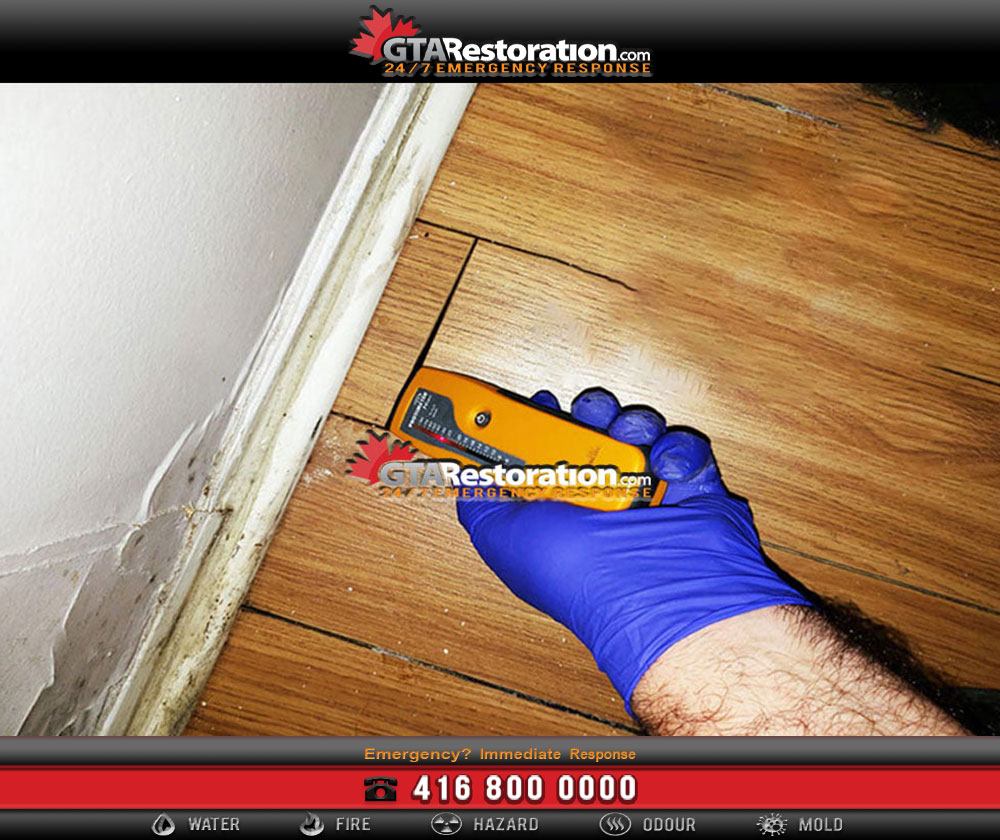
- Moisture levels in building materials
- Temperature patterns with thermal imaging when useful
These findings help us determine whether the property needs moisture control, a closer inspection, mold testing, drying, or professional mold removal.
Signs You May Need a Toronto Mold Inspection
Mold is sometimes easy to see. However, moisture problems can develop before large areas of visible growth appear. A Toronto mold inspection may help when you notice:
- Visible mold or unusual staining
- Persistent musty odours
- Recurring condensation
- Water stains on walls or ceilings
- Peeling or bubbling paint
- Damp drywall or flooring
- Past basement flooding
- Roof or plumbing leaks
- Mold that returns after cleaning
Finding the cause of these warning signs can help you understand what work the property may need next.
Finding Moisture and Hidden Mold
Moisture Behind Mold Growth
Moisture plays a major role in indoor mold growth. Plumbing leaks, roof leaks, foundation seepage, flooding, condensation, and poor ventilation can all create damp conditions.
For that reason, we do not look only at visible mold. Our technicians also check for signs of present or past moisture that may explain why the problem started.
Moisture meters can help identify damp building materials. In addition, thermal imaging may reveal temperature patterns that deserve a closer look. However, thermal cameras do not detect mold directly.
If water damage caused the problem, our water damage restoration Toronto team can help with water removal, moisture checks, and structural drying.
Common Areas for Mold in Toronto Properties
Some areas collect moisture more often than others. Therefore, we commonly inspect basements, bathrooms, kitchens, laundry rooms, attics, ceilings, windows, and areas around plumbing.
Basements may develop moisture from foundation seepage, flooding, humidity, or plumbing leaks. Meanwhile, bathrooms and kitchens can experience condensation or poor airflow. Attics may also develop moisture because of roof leaks, ventilation issues, or insulation problems.
Every building has different conditions. As a result, we follow the signs of moisture instead of assuming where mold may be present.
Can Mold Be Hidden Behind Walls?
Yes. Moisture and mold can sometimes develop behind drywall, under flooring, above ceilings, or inside other concealed spaces.
However, a visual inspection cannot see through every closed surface. Instead, we look for warning signs such as excess moisture, staining, damaged materials, musty odours, and evidence of earlier leaks.
If those signs point to a hidden problem, we can recommend a closer inspection of the affected area.
Toronto Mold Inspection vs. Mold Testing
A Toronto mold inspection and mold testing serve different purposes. During an inspection, we check visible conditions, moisture, water damage, and possible causes of mold growth. Mold testing involves collecting air or surface samples for laboratory analysis.
Not every property needs testing. Instead, the need depends on the conditions, the reason for the concern, and the type of information required.
Health Canada recommends finding and correcting moisture problems and notes that routine air testing for mould is generally not recommended. For more information, review Health Canada’s guidance on moisture and mould.
When Can Mold Testing Be Useful?
Testing may help when an inspection does not clearly explain the concern or when more information is needed about a specific area. For example, a technician may collect air or surface samples and send them to a laboratory.
Results should be reviewed together with the visual inspection, moisture readings, and history of the property. This provides more useful context than relying on a laboratory result by itself.
Learn more about our mould inspection and testing Toronto services.
What Happens After the Inspection?
After the inspection, we explain the findings and discuss possible next steps. The right solution depends on the conditions inside the property.
For example, you may need to repair a plumbing or roof leak, improve ventilation, dry wet materials, inspect a hidden area, arrange testing, or begin professional mold removal.
Most importantly, correct the moisture source. Cleaning visible mold without fixing the water or humidity problem can allow growth to return.
Mold Remediation and Prevention
When Is Mold Remediation Needed?
Not every mold concern requires major remediation. However, professional help may be appropriate when mold covers a larger area, keeps returning, affects porous materials, or follows significant water damage.
Depending on the conditions, mold remediation may include containment, removal of damaged materials, HEPA cleaning, drying, and moisture control.
Visit our mold removal Toronto page to learn more about the remediation process.
Preventing Mold From Returning
Long-term mold control starts with keeping the property dry. Therefore, repair leaks quickly, dry wet materials, maintain good ventilation, and investigate moisture that keeps returning.
- Repair plumbing and roof leaks quickly
- Dry materials after water damage
- Use bathroom and kitchen exhaust fans
- Control high indoor humidity
- Check recurring condensation
- Inspect basements and other damp areas regularly
A professional Toronto mold inspection can help identify present concerns and determine whether you need further inspection, testing, drying, or mold removal.
Concerned About Mold or Moisture?
GTA Restoration provides mold inspections, moisture checks, mold testing, and remediation services throughout Toronto and the GTA.
Call 416-800-0000
Learn More
When Mold Remediation Is Required | Toronto Mold Removal | Free Visual Mold Inspection | Mold Growth Timeline | Water Damage Causing Mold Growth | Signs of Mold Growth |Property Inspection













You must be logged in to post a comment.