...
Mold Removal and Mould Remediation Toronto - GTA Restoration

Emergency? 24-Hrs

416.800.0000
  • Home Restore
  • Emergency Services
    • Emergency Plumbers 24/7
    • Water Damage Restoration
    • Flooded Basement
    • Mold Remediation Toronto
    • Sewer Backup Remediation
    • Fire & Smoke Restoration
    • Odour Removal Toronto
    • Biohazard Cleanup
    • Emergency Roofing Repair
    • Water Leak and Detection
    • Condominium Restoration
    • Basement WaterProofing
    • Property Inspection Toronto
    • Sanitizing and Disinfection
    • Insurance Claim Appraisers
    • Equipment for Rent Toronto
    • Privacy Policy & Service Terms
  • Commercial Restoration
  • Blog
  • Our Team
  • Contact
30 January 2022 - Categories: GTA Restoration Articles

Different Types of Mold


Disaster Restoration Emergency Plumbing Service Blog Icon

Different types of mold contamination with GTA Restoration emergency mold response


Different Types of Mold Found Indoors

Understanding the different types of mold found indoors can help homeowners recognize moisture problems and decide when professional inspection or cleanup may be needed. Mold spores occur naturally in the environment. However, indoor mold types can begin growing when moisture reaches drywall, wood, carpet, insulation, ceilings, or other suitable materials.

Leaks, flooding, condensation, high humidity, and poor ventilation often create the moisture that mold needs. Therefore, one of the best ways to prevent the common types of mold found in buildings is to control water and dry damp materials quickly.

Call 416-800-0000

Where Do Common Types of Mold Grow?

The different types of mold found indoors can grow almost anywhere moisture remains long enough. For example, bathrooms, kitchens, basements, attics, laundry rooms, and areas around plumbing often experience damp conditions.

In addition, some mold species may develop behind drywall, beneath flooring, around windows, or inside cabinets. A musty odour, staining, bubbling paint, or recurring dampness can therefore point to a moisture problem that deserves closer inspection.

Common Types of Mold in Homes and Buildings

People often use colour to describe mold, but colour alone cannot reliably identify a species or determine the level of concern. Instead, laboratories can identify specific mold species when testing has a clear purpose. Some of the most common types of mold found indoors include the following.

Cladosporium Mold

Cladosporium is one of the mold types commonly found indoors and outdoors. It may grow on wood, fabrics, window frames, painted surfaces, and other materials where moisture is present. Because it can appear in several colours, appearance alone does not provide reliable identification.

Penicillium Mold

Penicillium can develop on water-damaged building materials, wallpaper, fabrics, carpet, and stored items. It is also commonly found in soil and outdoor environments. When this type of indoor mold appears, the main priority is to find and correct the moisture source.

Aspergillus Mold

Aspergillus includes many different mold species. Some may appear on damp drywall, insulation, dust, stored materials, and other indoor surfaces. Therefore, professional assessment may be useful when widespread or recurring mold growth affects a building.

Alternaria Mold

Alternaria is often associated with outdoor vegetation and soil, but its spores can also enter buildings. Indoors, this mold may grow where water or humidity remains around windows, bathrooms, basements, or other damp areas.

Stachybotrys and Dark-Coloured Mold

Stachybotrys is one genus commonly associated with the term “black mold.” However, many types of mold can look dark, green, brown, grey, or black. For this reason, colour alone should not be used to identify the exact mold species or determine its potential effects.

If dark growth appears after prolonged water damage, focus first on the moisture source and the extent of affected materials rather than relying on colour alone.

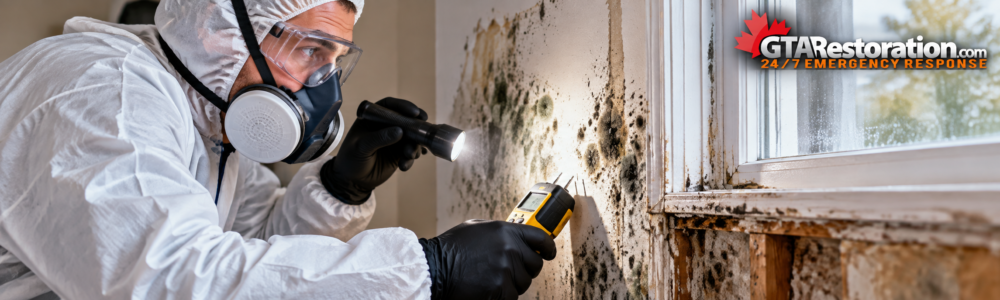
Mold inspection for different types of mold using professional moisture detection equipment

Different Types of Mold Contamination and Indoor Conditions

The different types of mold are sometimes described as allergenic, pathogenic, or toxigenic. These terms describe possible biological effects rather than three simple categories that a person can identify by looking at a wall.

Allergenic Mold

Some mold species may trigger allergic or irritation symptoms in sensitive people. However, individual responses vary. Anyone with health concerns should discuss symptoms with a healthcare professional rather than trying to diagnose the cause from mold colour or appearance.

Pathogenic Mold

The term pathogenic mold generally refers to fungi that may cause infection under certain conditions, particularly in people with weakened immune systems. A building inspection cannot determine an individual’s medical risk from specific indoor mold types.

Toxigenic Mold

Some mold species can produce substances called mycotoxins under certain environmental conditions. However, visible mold does not reveal whether mycotoxins are present. Therefore, the practical response to these types of mould remains the same: correct the moisture source and properly clean or remove affected materials.

Health Canada recommends fixing moisture problems and cleaning visible mould. It also notes that routine air testing is generally not needed in most homes. For more information, review Health Canada’s guidance on moisture and mould.

Water Damage and Different Types of Mold

Water damage often creates the conditions that allow different types of mold to grow. A burst pipe, roof leak, flooded basement, appliance failure, or plumbing problem can leave moisture inside walls, floors, ceilings, and insulation.

For this reason, professional water damage restoration focuses on extraction, moisture checks, and structural drying. Our flooded basement cleanup services can also help reduce conditions that support common indoor mold types after basement water damage.

How to Help Prevent Common Types of Mold

Moisture control is one of the most important ways to reduce indoor mold problems. Therefore, property owners should deal with leaks and damp materials rather than simply cleaning visible stains. Controlling moisture can help limit the conditions that allow many common types of mold to return.

  • Repair plumbing and roof leaks promptly
  • Dry wet building materials after water damage
  • Use bathroom and kitchen exhaust fans
  • Control excess indoor humidity
  • Check basements and attics for recurring dampness
  • Investigate condensation around windows and exterior walls
  • Address musty odours and repeated water stains

When Professional Mold Removal May Be Needed

Small surface areas may sometimes allow straightforward cleaning. However, larger growth, recurring mold, hidden moisture, contaminated porous materials, or mold following major water damage may require professional assessment and remediation.

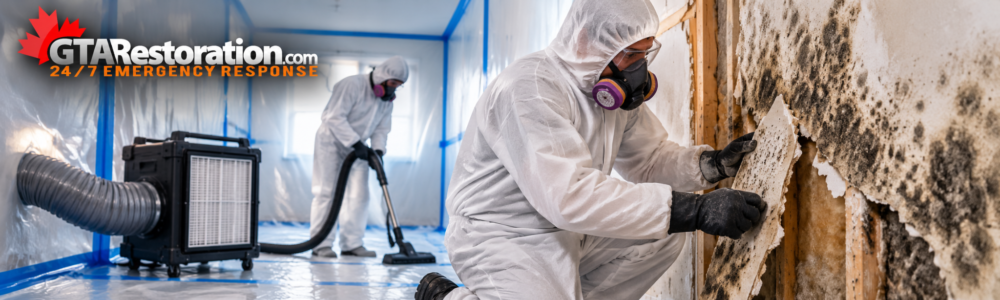
Depending on the conditions, mold remediation may include containment, controlled material removal, HEPA cleaning, moisture control, and drying. These steps can apply to many indoor mold types. Learn more about our mold removal and remediation services.

Professional mold remediation and removal of different types of mold by GTA Restoration

Identifying Different Types of Mold

Identifying the exact mold species is not always necessary before cleanup. Instead, determine where the moisture is coming from, how much material is affected, and whether the growth continues to return.

If you are concerned about different types of mold in your home or business, GTA Restoration can inspect affected areas, check moisture conditions, and explain whether further testing, drying, or professional mold removal may be appropriate.


Concerned About Mold in Your Property?

Contact GTA Restoration for mold inspection, moisture checks, mold remediation, and water damage restoration throughout Toronto and the GTA.

Call 416-800-0000

Learn More

Mold Removal Toronto | Black Mold Guide | White Mold Guide | Best Ways to Prevent Mold | Mold Removal Toronto - GTA | 5 Proven Ways to Prevent Mold Problems | Facts About Mold
Share this... Spread the word!


Tags: Black Mold, Mold in Basement, Mold in House, Mold Inspection Toronto, Mold Remediation, Mold Toronto, Mold Water Damage, Toronto, Toronto Mold, Types of Mold,

☛ ☛ Related Restoration Articles You May Also Like!

Fire Damage Triple Threat for Property Owners
Importance of Mold Inspection & Testing for Air Quality
Real Estate Mold Water Damage Inspection
Toronto Mold Inspection

Emergency? Immediate response 24/7

416.800.0000 416.800.0000

For non-emergencies use our contact form

Different Types of Mold and Indoor Moisture Problems

The different types of mold found indoors usually develop where moisture remains on building materials. GTA Restoration helps property owners assess visible growth, check moisture conditions, and plan cleanup when needed. Most importantly, controlling water and humidity helps reduce the conditions that allow common types of mold to return.

Visible Types of Mold

Visible mold may appear in many colours and patterns. However, colour alone cannot reliably identify exact mold species or determine the level of concern.

Musty Odours and Indoor Mold

A persistent musty smell may point to damp materials or hidden indoor mold types. Therefore, investigate the moisture source instead of simply masking the odour.

Basement Mold

Basements can develop moisture from seepage, plumbing leaks, floods, and high humidity. As a result, several different types of mold may grow when materials remain damp.

Bathroom Mold

Bathrooms often experience condensation and high humidity. Proper ventilation, cleaning, and moisture control can help reduce recurring mold growth.

Attic Mold

Roof leaks, condensation, insulation problems, and poor airflow can create attic moisture. Therefore, both the visible mold and the source of dampness require attention.

Hidden Types of Mold

Some types of mold may grow behind drywall, beneath flooring, or inside concealed spaces. Moisture readings and visible warning signs can help guide a closer inspection.

Mold Testing

Routine testing is not necessary for every visible mold problem. However, testing may provide useful information when a specific question about mold species remains after the mold inspection.

Water Damage and Common Types of Mold

Water damage can leave moisture inside walls, floors, ceilings, and insulation. For this reason, proper extraction and drying help reduce conditions that support common types of mold.

Professional Mold Remediation

Larger or more complex mold problems may need containment, controlled removal, HEPA cleaning, and drying. The exact remediation plan depends on the affected materials and extent of growth.

Preventing Indoor Mold Types

Repair leaks, control humidity, improve ventilation, and investigate repeated condensation. In addition, check previously wet areas for signs that indoor mold types may be returning.

24/7 Mold and Water Damage Help

Leaks and floods can happen at any time. GTA Restoration provides 24/7 assistance for water damage, drying, different types of mold, and related restoration needs.


Seeing mold, water stains, or recurring dampness?
Contact GTA Restoration for mold inspection, moisture checks, mold remediation, and restoration support.

Call 416-800-0000


Nationwide, Local Pricing

GTA Restoration offers local flood & water damage repair, mold removal/remediation, asbestos removal/abatement, fire/smoke damage repair services and much more.

Search

  • Ajax Asbestos Removal
  • Ajax Mold Removal
  • Ajax Water Damage
  • Anjou Mold Removal
  • Aurora Mold Removal
  • Aurora Water Damage
  • Beaconsfield Asbestos Removal
  • Beaconsfield Mold Removal
  • Boucherville Mold Removal
  • Brampton Asbestos Removal
  • Brampton Asbestos Removal
  • Brampton Mold Removal
  • Brampton Water Damage
  • Brossard Mold Removal
  • Burlington Asbestos Removal
  • Burlington Mold Removal
  • Burlington Water Damage
  • Burnaby Mold Removal
  • Burst Frozen Pipe Edmonton
  • Caledon Mold Removal
  • Caledon Water Damage
  • Calgary Asbestos Removal
  • Calgary Mold Removal
  • Calgary Water Damage
  • Cambridge Mold Removal
  • Cambridge Water Damage
  • Chambly Mold Removal
  • Chateauguay Mold Removal
  • Chomedey Mold Removal
  • Clarington Mold Removal
  • Concord Mold Removal
  • Concord Water Damage
  • Mississauga Mold Removal
  • Coquitlam Mold Removal
  • Cumberland Mold Removal
  • Dollard-des-Ormeaux Mold Removal
  • Dorval Mold Removal
  • Edmonton Asbestos Removal
  • Edmonton Mold Removal
  • Edmonton Water Damage
  • Etobicoke Asbestos Removal
  • Etobicoke Mold Removal
  • Etobicoke Water Damage
  • McMurray Fire Damage Services
  • Saskatchewan Asbestos Removal
  • Saskatchewan Mold Removal
  • Frozen Burst Pipe Repair Montreal
  • Frozen Burst Pipe Repair Ottawa
  • Gloucester Asbestos Removal
  • Gloucester Mold Removal
  • Hamilton Asbestos Removal
  • Hamilton Asbestos Testing
  • Hamilton Mold Removal
  • Hamilton Water Damage
  • Hampstead Mold Removal
  • Hampstead Water & Flood Damage
  • L'île-Bizard Mold Removal
  • Kahnawake Mold Removal
  • Kanata Asbestos Removal
  • Kanata Mold Removal
  • Kanata Water Damage
  • Kirkland Mold Removal
  • Kitchener Asbestos Removal
  • Kitchener Mold Removal
  • Kitchener Water Damage
  • Lasalle Mold Removal
  • Laval Asbestos Removal
  • Laval Mold Removal
  • Laval Water Damage
  • London Mold Removal
  • London Water Damage
  • Longueuil Mold Removal
  • Longueuil Water Damage
  • Markham Asbestos Removal
  • Markham Mold Removal
  • Markham Water Damage
  • Mississauga Asbestos Testing
  • Mississauga Mold Removal
  • Mississauga Water Damage
  • Montreal Air Duct Cleaning
  • Montreal Asbestos Removal
  • Montreal Asbestos Testing
  • Montreal East Mold Removal
  • Montreal Mold Removal
  • Montreal Water Damage
  • Mount-Royal Mold Removal
  • Nepean Asbestos Removal
  • Nepean Mold Removal
  • Nepean Water Damage
  • New Market Water Damage
  • New Westminster Mold Removal
  • Newmarket Mold Removal
  • North York Mold Removal
  • Oakville Mold Removal
  • Oakville Water Damage
  • Orleans Asbestos Removal
  • Orleans Mold Removal
  • Orleans Water Damage
  • Osgoode Mold Removal
  • Oshawa Mold Removal
  • Oshawa Water Damage
  • Ottawa Air Duct Cleaning
  • Ottawa Asbestos Removal
  • Ottawa Mold Removal
  • Ottawa Vermiculite Removal
  • Ottawa Water Damage
  • Pickering Mold Removal
  • Pickering Water Damage
  • Red Deer Mold Removal
  • Red Deer Water Damage
  • Richmond Hill Mold Removal
  • Richmond Hill Water Damage
  • Richmond Mold Removal
  • Rideau Lakes Mold Removal
  • Rockcliffe Park Mold Removal
  • Roxboro Mold Removal
  • Saint Laurent Mold Removal
  • Saint-Hubert Mold Removal
  • Scarborough Asbestos Removal
  • Scarborough Mold removal
  • Scarborough Water Damage
  • Sewer Backup Edmonton
  • Sewer Backup Montreal
  • Sewer Backup Ottawa
  • Sherwood Park Asbestos Removal
  • Sherwood Park Mold Removal
  • Spruce Grove Asbestos Removal
  • Spruce Grove Mold Removal
  • St. Albert Asbestos Removal
  • St. Albert Mold Removal
  • Ste.Dorothee Mold Removal
  • Surrey Mold Removal
  • Thornhill Mold Removal
  • Toronto & GTA Asbestos Removal
  • Toronto & GTA Mold Removal
  • Toronto Air Duct Cleaning
  • Toronto Water Damage
  • Unionville Mold Removal
  • Unionville Water Damage
  • Vancouver Asbestos Removal
  • Vancouver Mold Removal
  • Vancouver Water Damage
  • Vanier Mold Removal
  • Vaughan Mold Removal
  • Vaughan Water Damage
  • Westmount Mold Removal
  • Whitby Water Damage
  • Woodbridge Asbestos Removal
  • Woodbridge Mold Removal
  • Woodbridge Water Damage
  • Waterproofing
  • Kitchen & Bath Pro
  • Condo Restoration

Main Head Office


Different Types of Mold FAQs

What are common indoor mold types?

Common indoor mold types can include Cladosporium, Penicillium, Aspergillus, Alternaria, and other fungi that grow where suitable moisture is present.

Can mold types have the same colour?

Yes. Several mold species can share similar colours. Therefore, colour alone cannot reliably identify the exact species.

Is every dark mold considered black mold?

No. Mold can appear dark, green, brown, grey, or black. Visual appearance alone cannot confirm the exact type of mold.

What causes indoor mold to grow?

Leaks, flooding, condensation, high humidity, and damp materials can support mold growth. Therefore, moisture control is essential.

Does visible mold always need testing?

No. Visible mold with a clear moisture problem often does not require routine testing. However, testing may help when identifying a particular mold species serves a specific purpose.

When should I call a mold remediation company?

Consider professional help for larger areas, recurring indoor mold, hidden moisture, major water damage, or affected porous building materials.


We Work Direct with All Insurance Companies

Wᴇ ᴀʀᴇ ᴄᴏᴍᴍɪᴛᴛᴇᴅ ᴏɴ ᴡᴏʀᴋɪɴɢ ᴡɪᴛʜ ᴇᴠᴇʀʏ ɪɴsᴜʀᴀɴᴄᴇ ᴄᴏᴍᴘᴀɴʏ ᴀᴄʀᴏss Cᴀɴᴀᴅᴀ & USA.


In House Financing Available

In House Financing Available

FREE Financing Up To 24 Months NO INTEREST NO MONEY DOWN


Contact Us

Learn more ↴ GTA Restoration Tips

RELATED ARTICLES

  • How To Avoid Sprinkler Water Damage?
  • How To Deal With Floods & Water Damage?
  • Signs of Mould Growth In Your Property?
  • Avoid Mould Damage from Melting Snow
  • How to Prevent Water Damage In Summer
  • Avoid Mold Growth With Proper Air Flow
  • Prevent House Floods from Spring Rains
  • Prevent Frozen Burst Pipes in Winter
  • What To Do on Your Flooded Basement?


follow us on  LinkedIn Instagram Twitter Facebook YouTube


Our Clients

Our Vendor Clients


Affiliates

fully certified


GTA Restoration Toronto

Copyright © 2009 - 2026 All Rights Reserved. Sitemap/Links

LinkedInInstagram Twitter Facebook YouTube

Call Us 416-800-0000

Emergency? Immediate response 24/7

416.800.0000

416.800.0000

We cover all GTA 24/7.

Head Office:
250 Consumers Rd,
#10
Toronto, ON
M2J 4V6,
Open 24 hours

Downtown Office:
1 Toronto St,
#10
Toronto, ON
M5W 1A1,
Open 24 hours

For non-emergencies use our contact form


    Not sure what you need?

    Call us today to find the best product for your situation.

    416-800-0000 416-800-0000

    Head Office:
    101 Lebovic Ave,
    Unit #10
    Scarborough,
    ON, M1L 4T7
    Hours
    24-Hours Open

    Downtown Office:
    250 Yonge Street,
    Unit #1A
    Toronto,
    ON, M5B 2L7
    Hours
    24-Hours Open

    Different Types of Mold

    Get a quote today


      GTA Restoration Assistant 24/7 Emergency Restoration Help
      Hi! I'm GTA Restoration's virtual assistant. How can I help with your property damage today?
      Emergency? Call 416-800-0000
      Loading Comments...

      You must be logged in to post a comment.