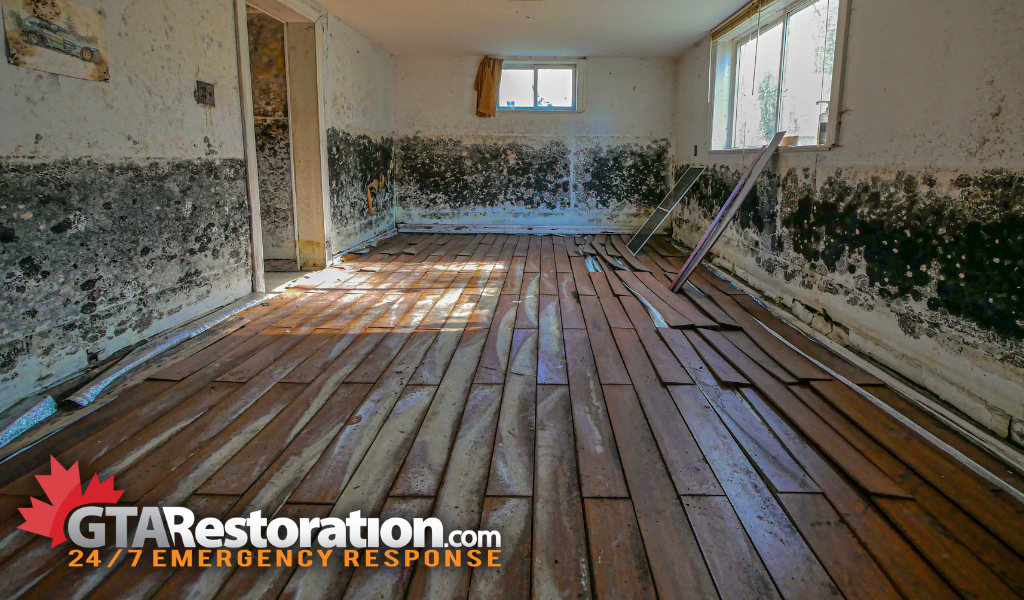
The mold growth timeline is not exactly the same in every home. Moisture level, building materials, temperature, ventilation, humidity, and the length of time surfaces stay wet can all affect how quickly mold develops.
However, one point is clear: prolonged dampness increases the chance of mold growth. Health Canada advises acting quickly after leaks or flooding and notes that mold can begin to grow in areas with excess moisture within about 48 hours.
This does not mean every wet surface will show visible mold at exactly the same time. Instead, the 48-hour guidance is a reason to dry wet materials promptly rather than an exact biological countdown.
Mold Growth Timeline: The Quick Answer
Health Canada advises that mold can begin to grow where excess moisture remains within about 48 hours. Therefore, drying wet materials as soon as possible can reduce the chance of mold becoming established.
Still, there is no single mold growth rate that applies to every property. Some materials hold moisture longer than others, while airflow, temperature, humidity, contamination, and hidden water can also change the outcome.
First 48 Hours in the Mold Growth Timeline
The first two days after a leak or flood are important because wet building materials may still contain enough moisture to support mold growth.
For this reason, remove standing water, correct the moisture source, and begin drying affected materials as soon as conditions safely allow.
Health Canada notes that homes and furnishings are less likely to grow mold when they dry within 48 hours. For more information, review Health Canada’s guide to moisture and mould.
Why the Mold Growth Timeline Varies
Mold growth depends on the conditions surrounding the wet material. Therefore, two homes with similar water damage may develop very different mold problems.
Moisture and Mold Growth Speed
Materials that remain damp for a long period generally create better conditions for mold than materials that dry quickly.
Building Materials and Mold Development
Drywall, paper products, wood, carpet, fabrics, and other porous materials can retain moisture and provide surfaces where mold may grow.
Humidity and the Mold Growth Timeline
High indoor humidity can slow drying and support damp conditions. Health Canada recommends keeping relative humidity between about 30% and 50% where practical.
Ventilation and Mold Growth
Poor ventilation may allow moisture to remain trapped in bathrooms, basements, closets, wall cavities, and other enclosed spaces.
Hidden Water and Mold Development
Moisture beneath flooring, behind drywall, above ceilings, or inside insulation can remain unnoticed after visible surfaces appear dry.
When Does Mold Growth Become Visible?
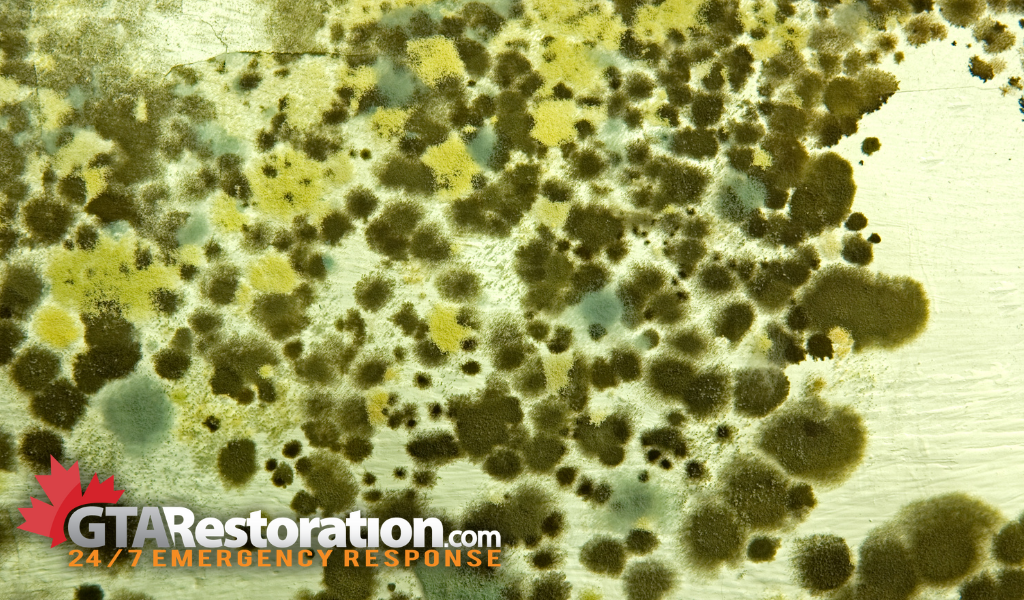
Visible mold does not appear on a reliable day-by-day schedule. Depending on the material and conditions, growth may become noticeable sooner in one location and much later in another.
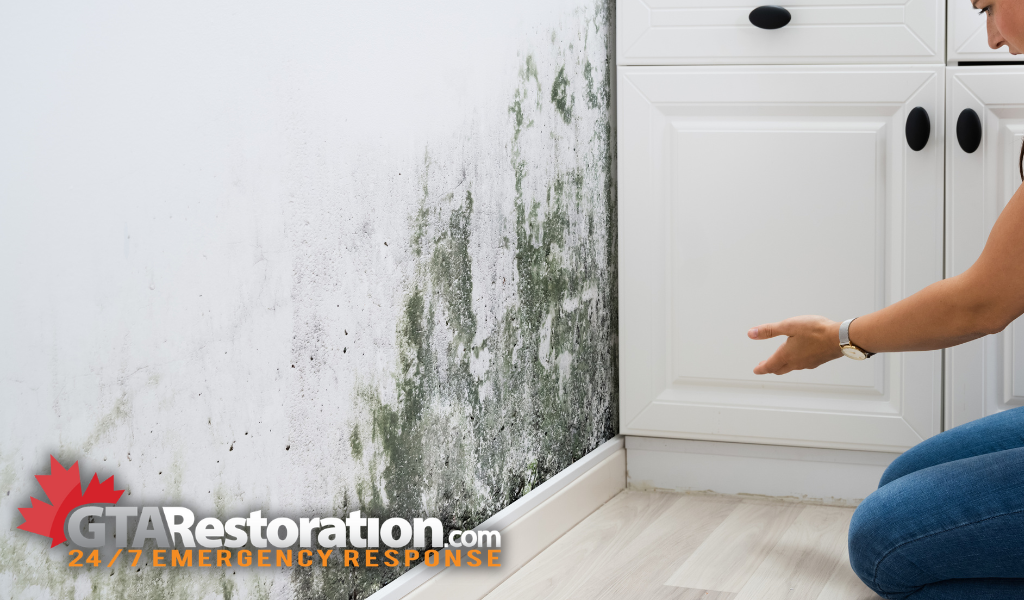
As a result, waiting for visible mold before investigating moisture is not a good strategy. Water stains, damp materials, peeling finishes, condensation, or a persistent musty odour may justify further inspection even when no growth is visible.
Hidden Mold Growth After Water Damage
Hidden mold can develop wherever moisture remains trapped. Health Canada notes that growth may occur behind walls or above ceiling tiles, especially where water damage has occurred.
For example, leaks may affect insulation, wall cavities, flooring systems, cabinets, or other enclosed materials without creating obvious surface growth.
Because of this, a moisture assessment can be useful when the source or extent of water damage is unclear.
Mold Growth Timeline on Different Materials
Mold Growth on Drywall
Drywall can absorb water quickly, especially along cut edges and paper surfaces. If it stays wet, mold may develop on or beneath the surface.
Mold Growth on Wood and Framing
Wood can absorb and hold moisture. However, whether it needs removal depends on contamination, physical damage, how wet it became, and whether it can dry properly.
Mold Growth in Carpet and Underpad
Carpet systems can trap water beneath the visible surface. Therefore, the source of the water and the length of exposure matter when deciding whether materials can remain.
Mold on Concrete and Hard Surfaces
Concrete itself does not provide the same food source as paper or wood. However, dust, debris, coatings, or nearby materials may still support mold when moisture remains.
Seasonal Conditions and Mold Growth
Seasonal conditions can affect the mold growth timeline by changing indoor humidity and condensation levels.
During warm, humid weather, basements and other cool areas may develop condensation or higher humidity. Meanwhile, winter conditions can produce moisture on cold windows, exterior walls, or poorly insulated surfaces.
As a result, moisture control remains important throughout the year.
Reducing Mold Growth After Water Damage
The most effective approach is to remove excess moisture and correct the source as soon as possible.
Stop leaks or water entry when safe.
Remove standing water.
Dry affected materials promptly.
Use dehumidification when needed.
Improve ventilation in damp areas.
Check hidden areas for trapped moisture.
Remove materials that cannot be cleaned or dried properly.
Health effects vary from person to person. Health Canada notes that exposure to mold can cause eye, nose, and throat irritation and may worsen asthma symptoms in some people.
However, symptoms alone do not confirm that mold is present in a building. If you have health concerns, speak with a health professional while also addressing the moisture problem in the property.
When Professional Mold Assessment Makes Sense
Professional help may be appropriate when mold is extensive, keeps returning, is suspected behind walls or ceilings, or follows sewage-contaminated flooding.
Health Canada recommends professional assessment and cleanup when a single mold patch is larger than 3 m². In addition, professional help may be useful when the moisture source is unclear or flooding has entered wall, ceiling, or floor cavities.
Water Damage and the Mold Growth Timeline
First, correct the source of the water when it can be done safely. Next, remove standing water and begin drying affected materials.
Afterward, check surrounding areas for moisture because water can travel beneath flooring, behind walls, and into other concealed spaces.
Yes. Health Canada advises that mold can begin growing in areas with excess moisture within about 48 hours. However, visible growth and the extent of the problem vary by material and conditions.
Does mold always grow after water damage?
No. Water damage does not automatically lead to visible mold. Prompt drying and moisture control can reduce the likelihood of growth.
How quickly can hidden mold develop?
There is no exact hidden-mold timetable. Instead, the amount of trapped moisture, affected materials, airflow, humidity, and duration of wetting all influence growth.
How can I tell if mold is hidden?
Possible warning signs include musty odours, water stains, recurring dampness, peeling finishes, or a history of leaks. However, these signs do not prove hidden mold by themselves.
What humidity level helps reduce mold growth?
Health Canada recommends maintaining relative humidity between about 30% and 50% where practical.
When should I call a mold professional?
Professional help may be appropriate for large areas, recurring mold, suspected hidden growth, contaminated flooding, or situations where the moisture source remains unclear.
Concerned About the Mold Growth Timeline After Water Damage?
GTA Restoration provides mold assessment, remediation, moisture checks, and water damage restoration throughout Toronto and the GTA.
Controlling moisture is one of the most important ways to reduce indoor mould problems. Therefore, leaks, condensation, high humidity, and poor ventilation should be addressed before they become long-term issues. Regular moisture checks can also help identify small problems before they spread.
Improve Ventilation
Use kitchen and bathroom exhaust fans when cooking or showering, and make sure they vent outdoors. In addition, ventilation can help reduce excess humidity in basements, laundry areas, and other damp spaces. Good airflow can also help surfaces dry more quickly after normal daily moisture exposure.
Control Indoor Humidity
Health Canada recommends keeping indoor relative humidity between about 30% and 50%. A dehumidifier or air conditioner may help when indoor humidity remains high. Monitoring humidity during warmer months can be especially useful in basements and other cool areas.
Act Quickly After Leaks
Repair plumbing leaks, roof leaks, and other sources of moisture as soon as possible. Then, remove standing water and begin drying wet materials. The sooner excess moisture is controlled, the easier it is to reduce the chance of a larger mould problem.
Check Moisture-Prone Areas
Bathrooms, basements, attics, window areas, closets, and spaces around plumbing deserve regular attention. For example, staining, condensation, warped materials, or musty odours may point to excess moisture. Also check areas around sinks, tubs, appliances, and exterior walls where water problems may go unnoticed.
Clean Small Areas Properly
Health Canada recommends water and dish detergent for many small mould areas and says bleach is generally not needed. However, extensive or recurring mould may require professional help. If growth returns after cleaning, the underlying moisture source should be investigated.
Address the Cause
Finally, cleaning visible mould without fixing the moisture source may allow the problem to return. The long-term solution should address both the growth and the conditions that allowed it to develop. Therefore, moisture control should remain part of the prevention plan even after cleanup is complete.
Service Areas Across Canada
GTA Restoration serves communities across Canada, including Toronto and the GTA. U.S. locations are opening. Browse our Canadian service areas below, and contact us to confirm services and availability for your address.




 Facebook
  Instagram
  LinkedIn
  X / Twitter
  YouTube