
Tags: Carpet Water Damage, Water Damage,
For non-emergencies use our contact form


Emergency? 24-Hours
416-800-0000Carpet water damage can spread below the surface. Wet carpet may also mean the pad and floor below are damp. For this reason, the full area should be checked.
First, find out where the water came from. A clean pipe leak needs a different plan from sewage or dirty floodwater.
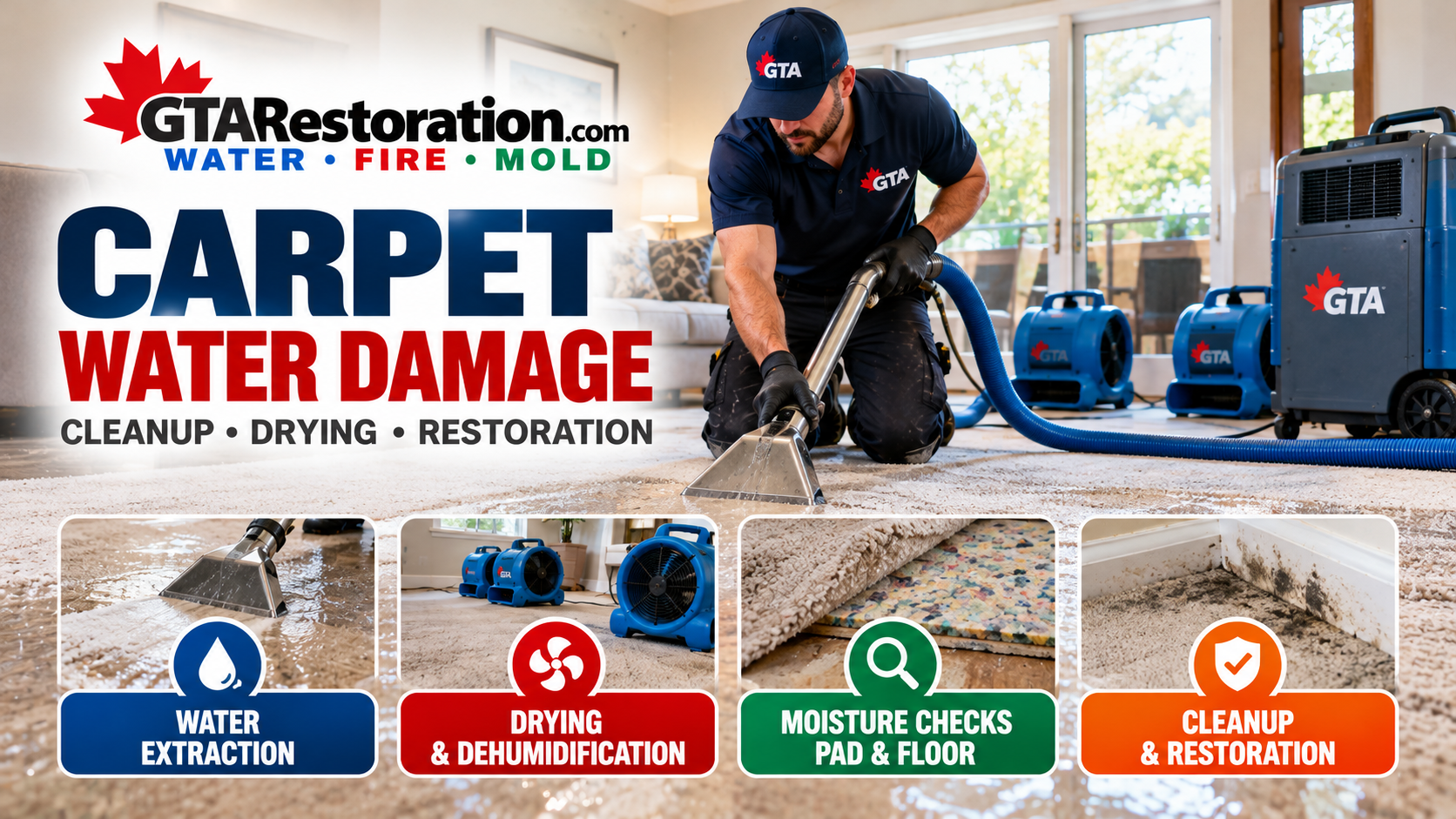
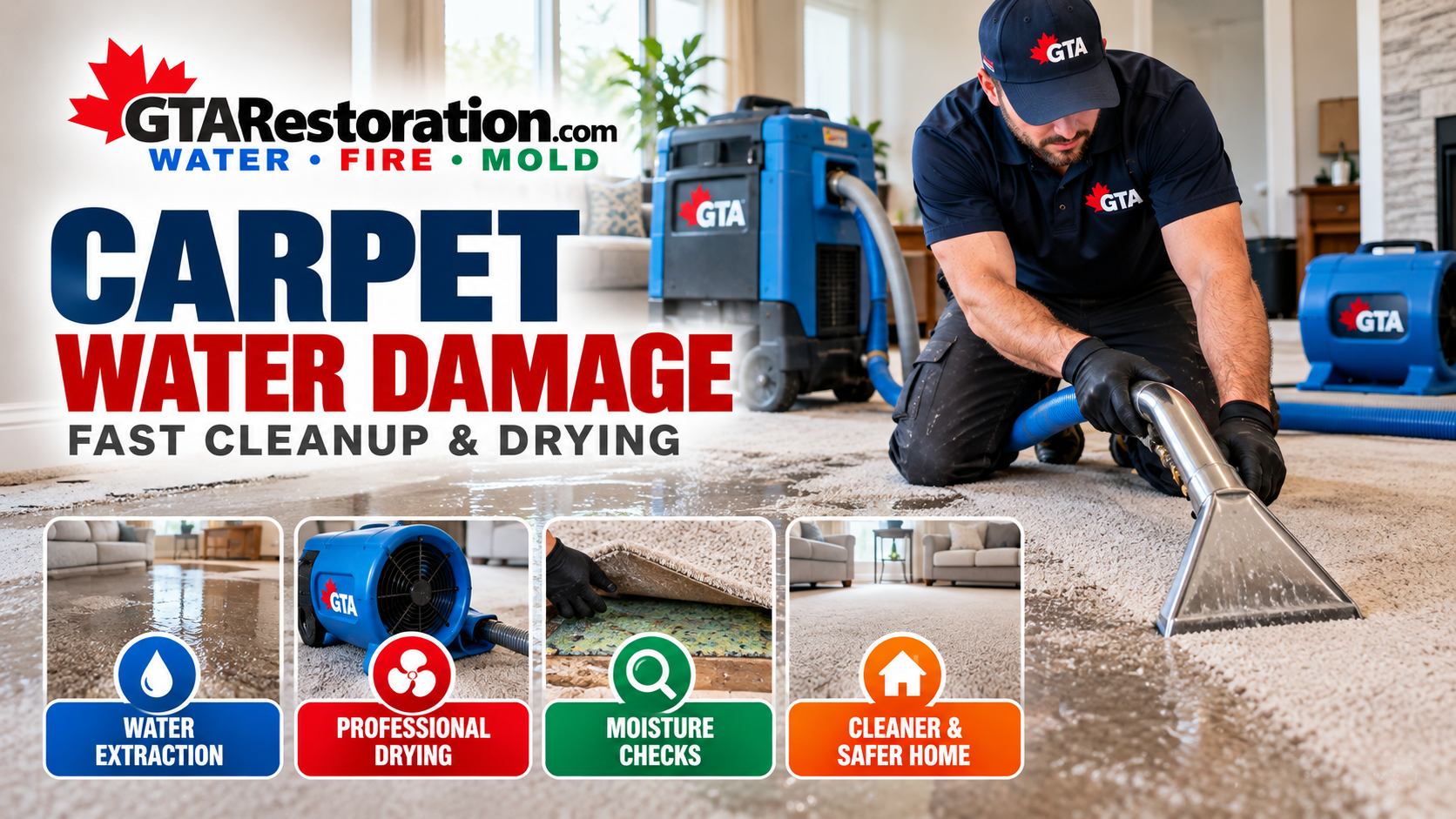
Standing water should be removed as soon as it is safe. Fast water extraction can help limit more damage.
The carpet may feel dry while the pad below is still wet. Therefore, the pad should also be checked.
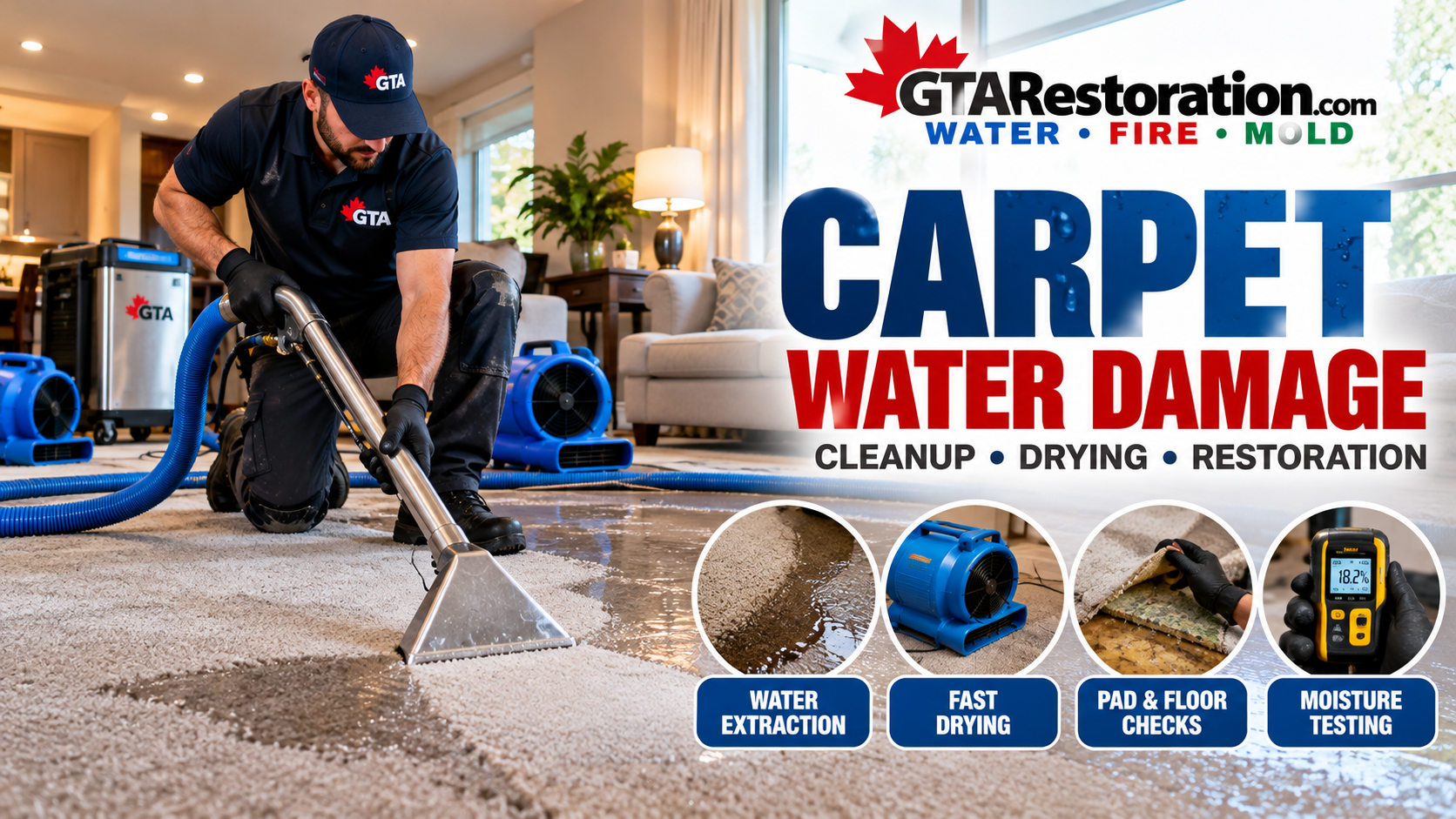
Water can reach wood, concrete, or other flooring below the carpet. Moisture checks can help find wet areas.
Air movers can help dry wet carpet. Dehumidifiers also help remove moisture from the room.
Some carpet padding may need removal. This is more likely if it is badly soaked, dirty, or hard to dry.
A musty smell may mean moisture is still present. For this reason, do not assume the area is dry based only on touch.
Mold can grow when materials stay wet. Therefore, fast drying and moisture control are important after a leak or flood.
Sewage and dirty floodwater may contain harmful material. Avoid direct contact and keep children and pets away.
Move dry furniture away from the wet area when possible. This can help protect furniture and make cleanup easier.
Take photos before major cleanup if it is safe. Also, keep bills and other records if you plan to contact your insurer.
GTA Restoration can help with carpet water extraction, drying, moisture checks, and cleanup. We serve homes and businesses across Toronto and the GTA.
Wet carpet after a leak or flood?
GTA Restoration can help with water removal, drying, and cleanup.
Service Areas Across Canada
GTA Restoration serves communities across Canada, including Toronto and the GTA. U.S. locations are opening. Browse our Canadian service areas below, and contact us to confirm services and availability for your address.
Search
Sometimes. Clean-water damage may be dried if cleanup starts fast and the carpet is still in good condition.
Sometimes. Badly soaked, dirty, or damaged padding may need to come out.
First, remove the water. Then use air movers and dehumidifiers to help dry the area.
Yes. Mold may grow when carpet, padding, or flooring stays wet for too long.
Sewage needs extra care. Avoid contact and have the carpet and padding checked before deciding what can stay.
Learn more ↴ 
Latest Articles
Direct Billing & Insurance Claims
Ask your insurer about coverage, deductibles and the records it needs.

In-House Financing Available
Financing up to 24 months. No interest. No money down. Ask us about the terms.
Certifications & Insurance
View our firm certification, technician qualifications and insurance documents.

IICRC Certified Firm
GTA Restoration Inc.
Firm number 199912
Valid through
Business Insurance
GTA Restoration Group Inc.
$5 million general liability per occurrence
$8 million contractors pollution per claim
–
IICRC Technician Qualifications
Tony Sokol T. Lleshi · Registration 214520
Valid through
Water Damage Restoration · Fire & Smoke Damage Restoration · Applied Microbial Remediation · Odor Control · Trauma & Crime Scene
View technician verification (PDF) — opens in a new tabInsurance is subject to policy terms, conditions and exclusions.





Call Us 416-800-0000