
Tags: Fire Damage, Fire Damage Restoration, Fire Damage Vacation, Mold Remediation, Water Damage Restoration,
For non-emergencies use our contact form


Emergency? 24-Hours
416-800-0000The fire damage triple threat can leave you with several tasks at once. First, sort out safe access. Then, plan who will handle cleanup, drying and repairs.
Follow the entry rules from fire officials. Also, ask which rooms remain off limits and who needs to check the gas and power systems.
Keep photos, notes and receipts in one place. In addition, save the team’s work reports for your insurer. Your policy and insurer determine coverage.
Choose one main contact for updates. This helps owners, crews and building staff share news. Then, confirm work times and any changes to the plan.
Ask how crews will keep soot and dirt out of clean spaces. For example, agree on paths for moving tools and damaged items.
Tell the team about items that matter most to you. However, heat, smoke and water may limit what they can safely clean and return.
Ask which areas still hold moisture. Next, check when crews will review progress. Our specialty drying team can help with wet building materials.
Report new damp patches or musty smells. These signs may point to trapped moisture. Therefore, ask for a closer check if they persist.
Note where smoke smells remain after cleaning. Then, discuss whether nearby surfaces or items need more work. Covering the smell will not remove its source.
Crews may find hidden damage as work goes on. For this reason, ask for a clear list of added work, costs and timing before approval.
Finally, confirm which safety checks and repairs remain before you move back in. GTA Restoration offers fire and smoke cleanup across Toronto and the GTA.
Need help after fire, water or mould damage?
Call GTA Restoration for 24/7 cleanup and recovery support.
Service Areas Across Canada
GTA Restoration serves communities across Canada, including Toronto and the GTA. U.S. locations are opening. Browse our Canadian service areas below, and contact us to confirm services and availability for your address.
Search
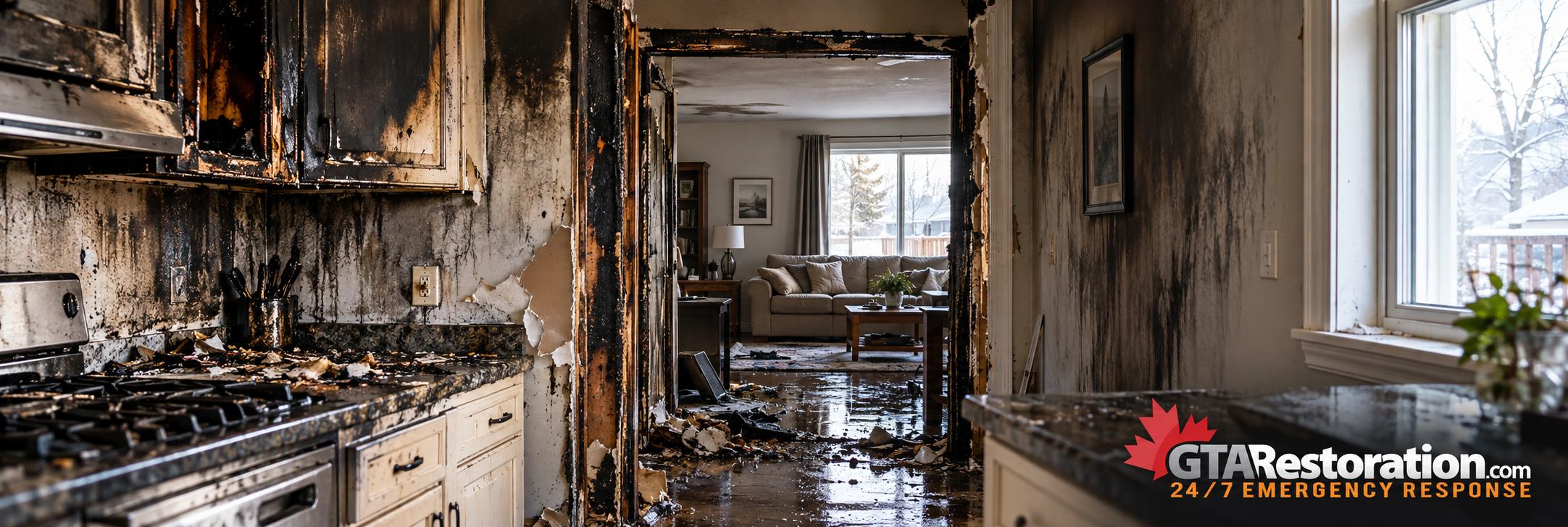
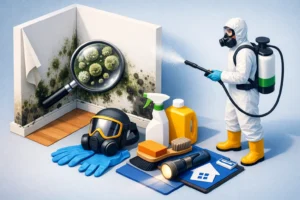
It means fire and smoke damage, water from fire crews, and the risk of mould. A cleanup plan should address all three.
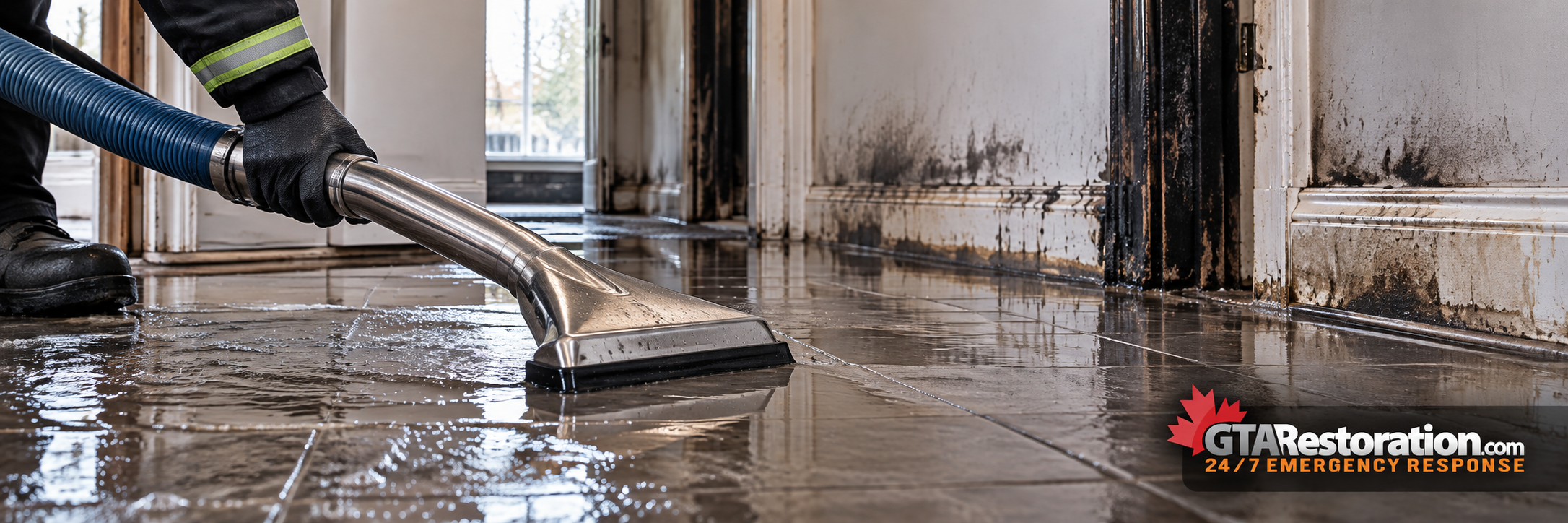
No. However, wet materials can support mould growth. Prompt water removal and drying help reduce this risk.
Yes. Water can spread to nearby rooms or floors below. Therefore, crews should check beyond the burn area.
Paint does not remove soot or smoke smells. Instead, arrange proper cleaning before crews prepare the walls for new paint.
Crews should address hazards, harmful residue and drying needs first. Then, they can plan repairs for each area.
Yes. We provide 24/7 fire cleanup, water removal and drying support in Toronto and the GTA. Call 416-800-0000 for help.
Direct Billing & Insurance Claims
Ask your insurer about coverage, deductibles and the records it needs.

In-House Financing Available
Financing up to 24 months. No interest. No money down. Ask us about the terms.
Learn more ↴ 
RELATED ARTICLES





Call Us 416-800-0000
Emergency? 24/7 Restoration Help
We cover all GTA 24/7.
Head Office:
250 Consumers Rd,
#10
Toronto, ON
M2J 4V6,
Open 24 hours
Downtown Office:
1 Toronto St,
#10
Toronto, ON
M5W 1A1,
Open 24 hours
For non-emergencies use our contact form
Not sure what you need?
Call us today to find the best product for your situation.
Head Office:
101 Lebovic Ave,
Unit #10
Scarborough,
ON, M1L 4T7
Hours
24-Hours Open
Downtown Office:
250 Yonge Street,
Unit #1A
Toronto,
ON, M5B 2L7
Hours
24-Hours Open
Fire Damage Triple Threat: Fire, Water and Mould
Get a quote today


