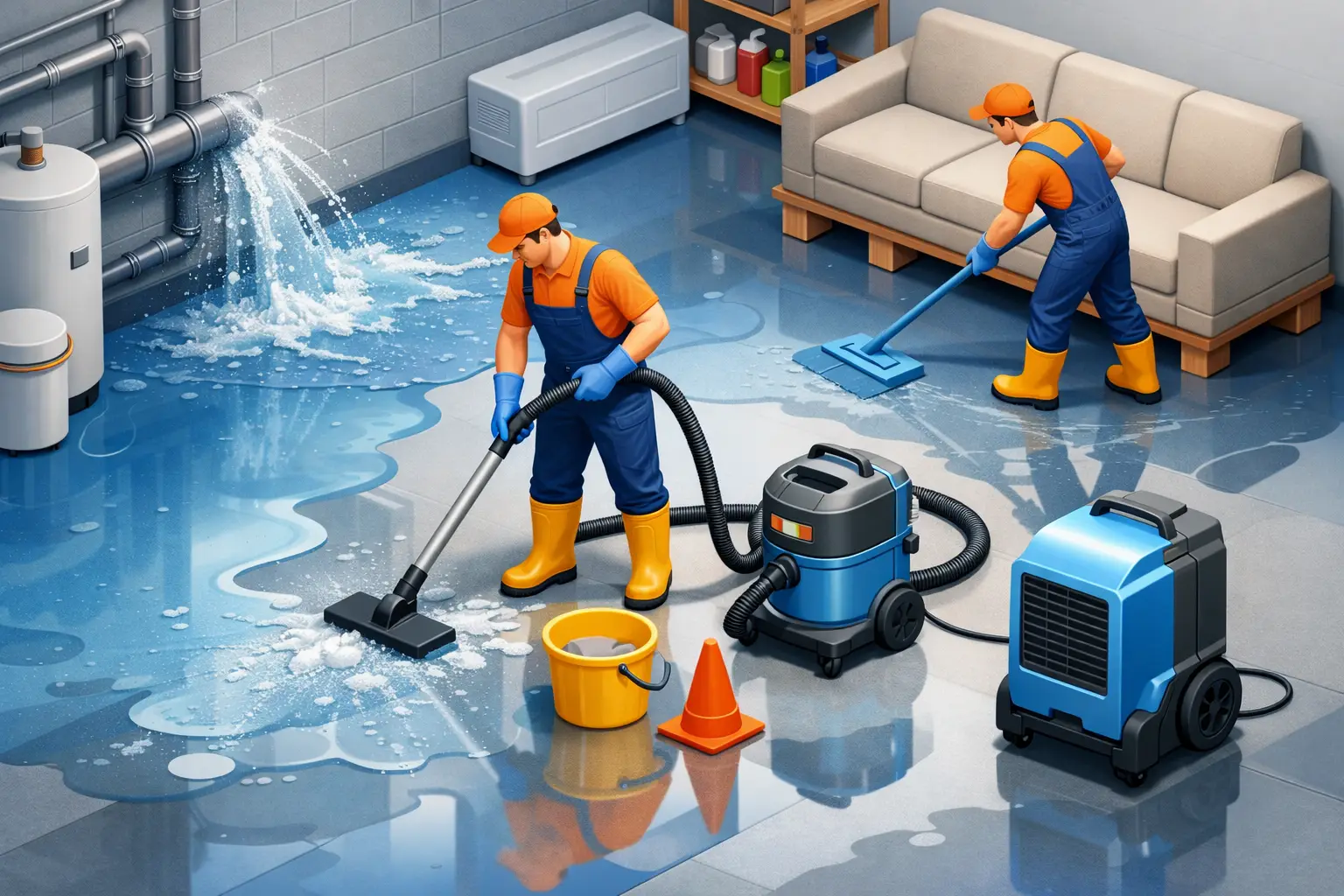
A burst pipe rarely gives you time to think. One minute everything is normal, and the next you are dealing with soaked floors, damaged drywall, rising humidity, and the risk of serious structural loss. Burst pipe water cleanup needs to start immediately because every hour matters when water is spreading behind walls, under flooring, and into building materials.
For homeowners, condo residents, landlords, and property managers, the first priority is not cosmetic damage. It is stopping the water, protecting people in the space, and preventing the situation from getting worse. Fast action can reduce repair costs, shorten downtime, and improve the chances of restoring materials instead of replacing them.
What to do first after a pipe bursts
The most important step is to shut off the water supply as quickly as possible. If the burst is isolated to a fixture line, a local shutoff valve may solve the immediate problem. If the source is unclear or the flow is heavy, turn off the main water supply to the property.
Once the water is off, think about electrical safety. If water is approaching outlets, appliances, or electrical panels, keep clear of the affected area until it is safe to enter. In some situations, the safest move is to wait for qualified help rather than trying to manage the emergency alone.
After that, remove what you can from the wet area. Furniture, electronics, boxes, rugs, and inventory should be moved out of standing water if it is safe to do so. The goal is simple – reduce the amount of material absorbing water while preparing the space for extraction and drying.
If you can document the damage safely, take photos and videos early. This can help with insurance reporting and creates a record of how widespread the water intrusion was before cleanup begins.
Why burst pipe water cleanup is time-sensitive
Water damage does not stay visible for long. What you see on the floor is often only part of the problem. Water moves into subfloors, baseboards, insulation, wall cavities, cabinetry, and ceiling spaces. In commercial properties and multi-unit buildings, it can also travel between suites and through shared service areas.
That is why burst pipe water cleanup is not just about mopping up visible water. Proper mitigation means identifying where the moisture has migrated and drying those materials before deterioration, swelling, staining, delamination, and microbial growth begin.
In winter, burst pipes often happen after freezing temperatures put pressure on plumbing lines. In older buildings, corrosion, weak fittings, or poor insulation may be part of the cause. In either case, the cleanup process has to address both the source of loss and the resulting water damage. If the pipe is repaired but the moisture is left inside the structure, the problem is only half solved.
What professional cleanup should include
A proper response starts with emergency plumbing control and water damage mitigation working together. That combined approach matters because it avoids delays between stopping the leak and drying the structure.
The first stage is water extraction. Standing water must be removed quickly using pumps, vacuums, and other extraction equipment suited to the volume of water and the type of surface affected. A small residential bathroom flood is one situation. A flooded basement, condo unit, retail space, or mechanical room is another.
The next stage is moisture detection. Wet drywall and flooring are obvious, but hidden moisture is what often leads to bigger repair costs later. Professional crews use moisture meters, thermal imaging, and inspection methods that help locate trapped water in areas that cannot be judged by sight alone.
Then comes structural drying. Air movers, dehumidifiers, and controlled drying systems are set up based on the size of the loss and the materials involved. Drying is not a one-size-fits-all process. Hardwood, laminate, concrete, drywall, insulation, and commercial finishes all respond differently to moisture, and the wrong drying plan can lead to avoidable demolition or prolonged moisture retention.
Sanitizing may also be necessary, especially if the water has sat for too long or mixed with contaminants from building materials or affected areas. Even with clean water from a supply line, conditions can change quickly once moisture spreads into enclosed spaces.
When materials can be saved and when they cannot
Not every wet material has to be torn out, but not every material can be saved either. The right decision depends on how long the material has been wet, how much water it absorbed, and whether drying can be achieved within a safe timeframe.
Tile and concrete often recover well if underlying moisture is addressed properly. Hardwood may sometimes be saved, but cupping, warping, and trapped moisture beneath the boards can change that assessment. Drywall is one of the most common problem areas. A small wet section may be manageable, but saturated drywall, insulation, and baseboards often require removal to allow proper drying and prevent hidden damage.
For landlords and commercial operators, there is also a business decision involved. Even if a material might be technically restorable, replacement may be the faster option if occupancy, tenant turnover, or business continuity is on the line. That is where experience matters – the cheapest short-term decision is not always the least expensive overall.
Burst pipe water cleanup in condos and commercial spaces
Burst pipe water cleanup becomes more complex in condos, apartment buildings, offices, and mixed-use properties. Water can spread vertically through ceilings and service penetrations, or horizontally into neighboring units, corridors, and shared amenities. In those situations, the response has to be controlled, documented, and fast.
Condo owners may be dealing with unit damage while building management is addressing common elements. Property managers need clear communication, documented moisture readings, containment where needed, and a plan that limits disruption to residents or tenants. Commercial properties may also need after-hours work, staging around operations, and detailed reporting for insurers and stakeholders.
This is why many property owners want one team that can handle the plumbing emergency, the mitigation, and the restoration path that follows. GTA Restoration is built around that kind of response, which helps reduce handoff delays during high-pressure losses.
The insurance side of a burst pipe loss
One of the most stressful parts of a pipe burst is not the water itself. It is figuring out what to document, who to notify, and how to keep the claim moving while the property is still in crisis.
Most insurers expect reasonable steps to prevent further damage. That usually means shutting off the source, arranging mitigation, documenting affected areas, and preserving damaged materials when appropriate. Waiting too long to start cleanup can complicate the claim and increase the extent of loss.
Good documentation helps. Photos, notes about when the incident was discovered, records of emergency plumbing work, and moisture reports from the mitigation team can all support the claim process. For larger residential or commercial losses, having a restoration contractor that can communicate clearly with adjusters and property stakeholders often makes the process easier.
Common mistakes that make damage worse
The biggest mistake is underestimating how far the water has traveled. A floor that looks mostly dry can still have wet underlayment. A wall with a minor stain may be saturated inside. Surface drying alone is not enough.
Another common mistake is using household fans without a real drying plan. Air movement helps, but if humidity is not controlled and moisture is not measured, you may only be pushing damp air around the property.
Delaying cleanup is another expensive error. Mold does not need a major flood to become a problem. It needs moisture, time, and the right surface conditions. Even before mold becomes visible, materials can start deteriorating and odors can settle in.
There is also the issue of incomplete repairs. If the burst pipe is patched but the cause is not addressed, another failure may follow. Frozen lines, pressure issues, poor insulation, aging plumbing, and hidden leaks all deserve attention after the emergency is stabilized.
How to reduce the risk of another burst pipe
Prevention is never perfect, but a few steps can lower the odds of repeat damage. Exposed pipes in cold areas should be insulated. Buildings with older plumbing systems should be inspected before winter and after signs of pressure fluctuation or leaks. Vacant properties need special attention because bursts can go unnoticed longer, which usually means heavier damage.
For property managers and landlords, response planning matters almost as much as prevention. Make sure shutoff locations are known, emergency contact procedures are current, and access to mechanical spaces is not delayed by keys, tenant communication gaps, or after-hours confusion.
A burst pipe is disruptive, but it does not have to turn into a prolonged property disaster. Fast mitigation, proper drying, and coordinated repair work can make the difference between a controlled recovery and a much larger restoration project. When water is moving through your property, the right next step is the one that happens immediately.
Need a Fast Service? Let the experts help! Guarantee 100% satisfaction.
We Service all GTA within 45 Min Response Time!
“FREE VISUAL Estimate”
“Restoration & Remediation”
Do you need water removal services in your home or office? Are your floors, walls, or furniture suffering from a flood? If you have water damage in your home or office, let the professionals give you a free estimate on water removal. Permanent Damage and Mold Contamination can be avoided, but the longer you wait to call the more damage is being done to your property!
Water Damage Cleanup
Occasionally, you can remove the water yourself. However, depending on the amount of water, a professional restoration company may be needed to properly disinfect and sanitize affected areas to prevent unhealthy living conditions and additional damage to your property.
Water damage can cause mold and mildew to start forming on the damaged areas. This will cause a musky odor to be emitted throughout your living spaces. Various reports issued by professionals in the medical field state it is dangerous for your family, or people suffering from breathing problems.
Water Damage Repair
We operate 24 hours a day, 7 days a week. We will deploy a certified technician immediately to assist with clean up and sanitation. It is essential that all of the infected areas are treated, including floor boards, carpets, walls, or furniture.
Commercial & Residential Property Inspection
GTA Restoration uses the newest technology and equipment, as well as takes advantage of years of experience to quickly and efficiently find the cause of problems. Our latest equipment lets us find problems without having to take buildings apart or destroy anything.
Helping you, every step of the way!
We understand that any situation involving Biohazards Waste Contamination in your home or business can cause stress and anxiety, which is why ContactGTA Restorationright away @ (800) 506-6048 for dependable & experienced biohazard cleanup & remediation services.
Nationwide, Local Pricing
GTA Restoration offers local flood & water damage repair, mold removal/remediation, asbestos removal/abatement, fire/smoke damage repair services and much more.