Mold Remediation Montreal: Testing, Removal & Repair
Mold Remediation Montreal: Testing, Cleanup & Repair
Mold remediation Montreal helps remove mold and deal with damp areas. A leak or flood can leave walls and floors wet. Mold may also grow near pipes or in a damp basement. Over time, the growth can spread.
Mold cleanup starts with finding the water source. If a room stays damp, mold may come back. So, fixing the cause is just as vital as cleaning the area.
GTA Restoration helps with mold inspection, testing, removal, drying, and repairs in Montreal. We serve homes, condos, shops, and other buildings. Our team checks for mold, leaks, musty smells, and wet materials.
Mold Inspection Montreal
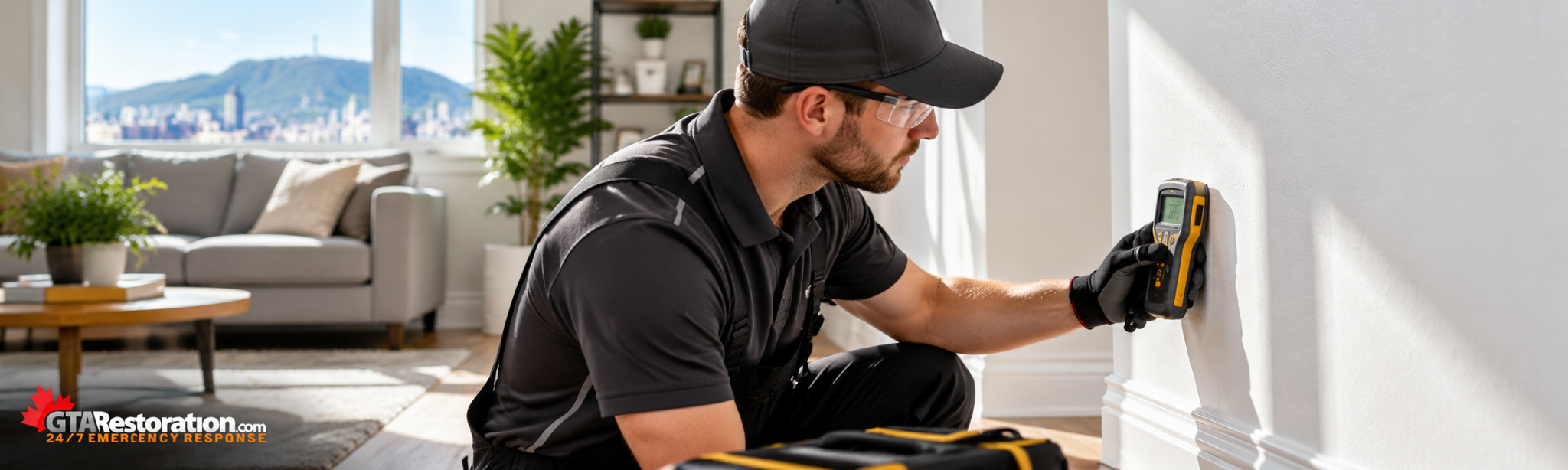
A mold inspection in Montreal starts with the problem area. Our team checks walls, floors, ceilings, and nearby rooms. We also look near pipes, sinks, and past leaks.
Dark stains and musty smells can be signs of mold. However, some wet spots hide behind walls. For this reason, moisture meters help us find damp areas that need a closer look.
Finding Hidden Moisture Before Mold Repair
Water can stay inside walls or under floors after a leak stops. During a site check, crews look for signs of damage. They also compare wet spots with nearby dry areas.
Infrared cameras can help find places worth checking. However, an infrared image alone cannot prove mold is present. A close inspection and moisture readings provide more clues.
Mold Testing Montreal and Inspection
When Mold Testing May Help
Mold testing Montreal is not needed for every mold problem. If you can see mold, cleanup and moisture control are often the main goals.
Health Canada does not suggest routine air tests for mold in homes. Such tests may not show why mold grew. Also, the results cannot predict health effects.
Still, testing may help in some cases. For example, an expert may suggest samples when the cause is unclear. Some jobs may also need a written report.
Read Health Canada’s guide to moisture and mould for more advice.
Independent Mold Testing and Reports
If testing is needed, a trained expert can take samples. The report may include photos, test results, and areas that need more work.
Testing should help guide the cleanup plan. However, it should not replace a proper site check. Crews must still find the source of the dampness.
Mold Removal, Containment & Cleanup
Mold Removal Montreal: Planning the Work
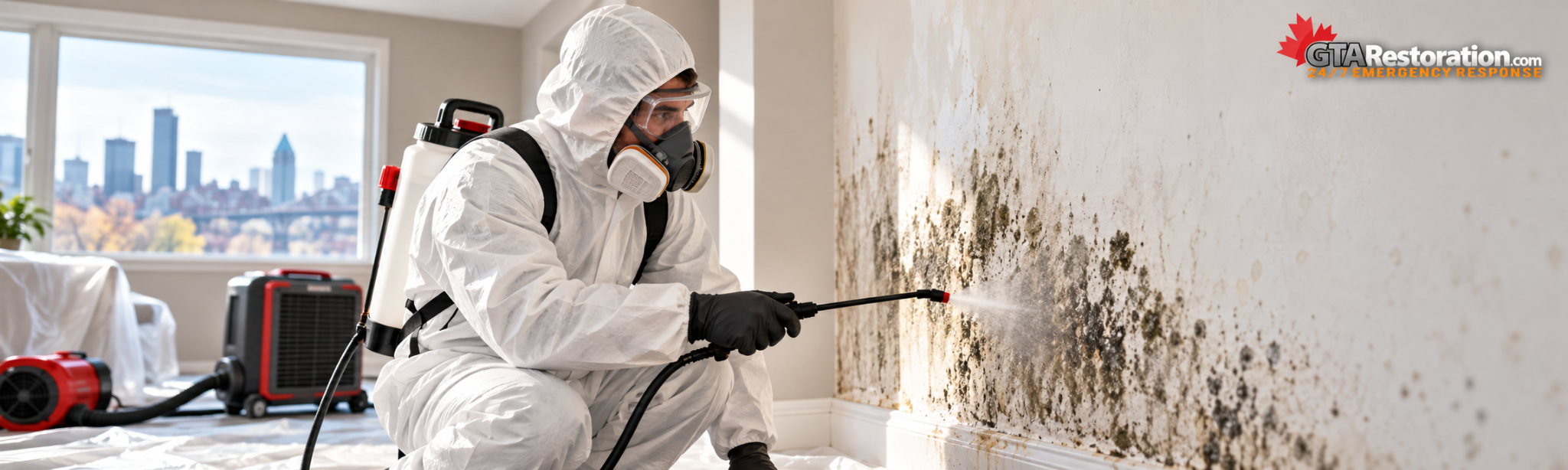
A mold removal Montreal plan starts with a site check. Crews look at the size of the mold problem and the wet materials. Next, they decide what can stay and what must go.
A small patch may need less work than a flooded room. As a result, each mold cleanup plan should match the damage. The goal is to clean the area and deal with the cause.
Containment During Mold Remediation Montreal
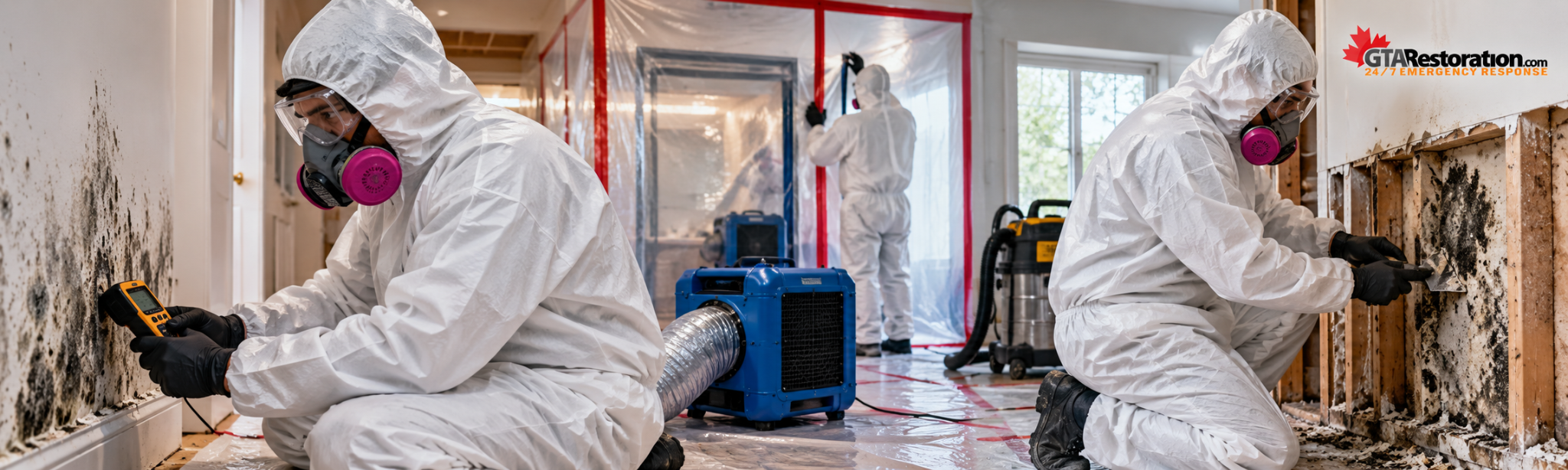
Some mold jobs need barriers around the work area. These help keep dust away from clean rooms.
For larger jobs, crews may use plastic barriers, HEPA air filters, and safe waste handling. The exact steps depend on the work and the site.
Removing Mold-Damaged Materials
Some hard surfaces can be cleaned. However, mold can grow deep inside wet drywall or insulation. In these cases, the damaged parts may need removal.
Surface cleaning cannot fix mold hidden inside a wet wall. The right method depends on the material and the size of the problem.
The Government of Québec’s mold cleanup guide explains how to find mold and deal with damp areas. It also offers tips on when to seek help.
Cleaning Mold-Affected Surfaces
After removing damaged parts, crews can clean the surfaces that remain. The work may include HEPA vacuuming and other safe cleaning methods.
Do not paint over mold or wet materials. Instead, clean the area and fix the moisture source first. New finishes can go in after the area is dry.
Drying After Mold Remediation Montreal
Drying is a key part of mold remediation Montreal. Leaks and floods can leave water inside floors and walls. Even damp indoor air may cause problems.
Crews may use fans and dehumidifiers to help dry the area. They can also check moisture levels as the work goes on.
If a leak caused the damage, see our Water Damage Repair Montreal service. For a larger flood, visit Montreal Flood Cleanup.
Mold Repair Montreal & Moisture Control
Repairing Walls, Ceilings and Flooring
After cleanup and drying, crews can plan repairs. Some jobs need new drywall or insulation. Others may need flooring, trim, ceilings, or paint.
Mold repair Montreal should begin only when the area is ready. Otherwise, new materials may trap water and cause more damage.
Preventing Mold From Returning
Keeping your property dry helps lower the risk of mold. Fix leaks, check damp areas, and improve airflow. Also, keep indoor humidity under control.
Pay extra attention to past problem spots. For example, check basements and bathrooms after leaks or heavy rain.
Residential and Commercial Mold Remediation Montreal
GTA Restoration provides mold remediation Montreal support for homes, condos, offices, shops, and rental units.
Some large jobs may need several trades. For this reason, clear work plans help owners and crews stay informed. Good records also help track the work.
Learn more about Montréal Mold Removal. You can also visit Montreal Water Leak Detection if hidden water may be the cause.
Need Mold Remediation, Testing or Repair in Montreal?
GTA Restoration helps with mold checks, testing, cleanup, drying, and repairs.
Contact our team to discuss the mold or water damage at your Montreal property.
Find the cause, remove the mold, and keep the area dry.
Learn More
Montréal Mold Removal | Water Damage Repair Montreal | Montréal Water Damage | Montreal Flood Cleanup | Montreal Water Leak Detection | Montreal Emergency Plumber | Montréal Emergency Plumbing
For non-emergencies use our contact form
Mold Remediation Montreal: Inspection, Cleanup & Repair
Mold remediation Montreal should address both mold growth and the moisture behind it. GTA Restoration helps homeowners and businesses with inspections, mold removal, drying, and repair planning.
Finding the cause is just as important as cleaning the damage. Without proper moisture control, mold may return and affect the same areas again.
Mold Inspection Montreal
An inspection can reveal visible growth, musty smells, and water damage. To begin, technicians review the areas of concern. They also check nearby walls, floors, and ceilings for damp spots.
Moisture readings help find wet building materials that may need a closer look.
Mold Testing Montreal
Not every mold problem needs a lab test. However, testing may help when the cause remains unclear or hidden growth is suspected.
In these cases, an independent expert may recommend samples to support the inspection findings.
Moisture Source Investigation
Leaks, floods, and high humidity can create damp conditions where mold grows. Poor airflow may also allow moisture to build up.
A good mold cleanup plan starts with moisture control. Therefore, the team should find and address the water problem.
Mold Removal and Containment
Some mold jobs need barriers around the work area. With these controls in place, crews can help keep dust away from nearby rooms.
Depending on the site, technicians may use containment barriers and HEPA air filtration during removal and cleanup.
Cleaning Mold-Affected Materials
Hard surfaces may allow cleaning in some cases. However, drywall, insulation, and other soft materials may need removal when mold grows inside them.
The right method depends on the material and amount of damage. How long the area stayed wet also matters.
Drying After Mold Remediation
Drying helps remove moisture left by leaks and floods. Before setting up equipment, crews check the wet materials. Next, they choose a suitable drying plan.
Regular moisture checks help track drying progress. These readings also help the team decide when repairs can begin.
Mold Repair Montreal
After mold cleanup and drying, some finishes may need replacement. Repairs can include drywall, insulation, ceilings, flooring, trim, and paint.
However, new materials should not cover an active moisture problem. The area must be ready before repair work starts.
Residential Mold Remediation
Homes may develop mold after basement floods, roof leaks, or broken pipes. Damp bathrooms and kitchens can also have problems.
Early cleanup and moisture control can help limit further damage. Routine checks may also help spot new problems.
Commercial Mold Remediation Montreal
Commercial mold work may involve owners, managers, tenants, and contractors. As a result, clear planning becomes important.
Good communication helps crews coordinate cleanup, drying, and repairs. It also helps owners manage access to affected rooms.
Preventing Mold From Returning
Fix leaks, improve airflow, and control indoor humidity. Remember to check areas with past water damage.
Mold that keeps returning often points to a moisture problem. For this reason, do not ignore new stains or damp smells.
24/7 Mold Remediation Montreal Assistance
GTA Restoration provides 24/7 emergency restoration support for homes and businesses in Montreal.
If you find mold after a leak or flood, contact our team. We can discuss inspection, cleanup, drying, and repair options.
Prompt action can help reduce the size of the damage. Taking early steps also makes repairs easier to plan.
Concerned about mold, hidden moisture, or recurring water damage?
Contact GTA Restoration for mold remediation, drying, and repair support in Montreal.
Service Areas Across Canada
GTA Restoration serves communities across Canada, including Toronto and the GTA. U.S. locations are opening. Browse our Canadian service areas below, and contact us to confirm services and availability for your address.
Search
- Air Duct Cleaning Montreal
- Ajax Asbestos Removal
- Ajax Mold Removal
- Ajax Water Damage
- Asbestos Removal Calgary
- Asbestos Removal Edmonton
- Asbestos Removal Fort Saskatchewan
- Asbestos Removal Gloucester
- Asbestos Removal Grimsby
- Asbestos Removal Hamilton
- Asbestos Removal Kanata
- Asbestos Removal Kitchener
- Asbestos Removal Laval
- Asbestos Removal Lincoln
- Asbestos Removal Montreal
- Asbestos Removal Nepean
- Asbestos Removal Niagara Falls
- Asbestos Removal Orleans
- Asbestos Removal Ottawa
- Asbestos Removal Sherwood Park
- Asbestos Removal Spruce Grove
- Asbestos Removal St Catharines
- Asbestos Removal St-Albert
- Asbestos Removal Thorold
- Asbestos Testing Hamilton
- Asbestos Testing Montreal
- Asbestos Testing Petersburg
- Aurora Mold Removal
- Aurora Water Damage
- Beaconsfield Asbestos Removal
- Brampton Asbestos Removal
- Brampton Mold Removal
- Brampton Water Damage
- Burlington Asbestos Removal
- Burlington Mold Removal
- Burlington Water Damage
- Burst Pipe Montreal Frozen Pipe
- Burst Pipe Repair Edmonton
- Burst Pipe Repair Ottawa
- Caledon Mold Removal
- Caledon Water Damage
- Calgary Mold Removal
- Calgary Water Damage
- Cambridge Mold Removal
- Cambridge Water Damage
- Clarington Mold Removal
- Concord Mold Removal
- Concord Water Damage
- Cooksville Mold Removal
- Edmonton Water Damage
- Emergency Roofing Vancouver
- Etobicoke Asbestos Removal
- Etobicoke Mold Removal
- Etobicoke Water Damage
- Fire Damage Grimsby
- Fire Damage Lincoln
- Fire Damage Niagara Falls
- Fire Restoration Fort McMurray
- Fire Damage Restoration Thorold
- Fire Damage St Catharines
- Flood Cleanup Grimsby
- Flood Cleanup Lincoln
- Flood Cleanup Niagara Falls
- Flood Cleanup St Catharines
- Flood Cleanup Thorold
- London Mold Removal
- London Water Damage
- Markham Asbestos Removal
- Markham Mold Removal
- Markham Water Damage
- Mississauga Asbestos Testing
- Mississauga Mold Removal
- Mississauga Water Damage
- Mold Inspection Removal Kitchener
- Mold Remediation Montreal
- Mold Removal & Inspection LaSalle
- Mold Removal Anjou
- Mold Removal Boucherville
- Mold Removal Brossard
- Mold Removal Burnaby
- Mold Removal Chambly
- Mold Removal Chateauguay
- Mold Removal Chomedey
- Mold Removal Coquitlam
- Mold Removal Dollard Des Ormeaux
- Mold Removal Dorval
- Mold Removal Edmonton
- Mold Removal Fort Saskatchewan
- Mold Removal Gloucester
- Mold Removal Grimsby
- Mold Removal Hamilton Inspection
- Mold Removal Ile Bizard
- Mold Removal in Osgoode
- Mold Removal Beaconsfield
- Mold Removal Kahnawake
- Mold Removal Kanata
- Mold Removal Kirkland
- Mold Removal Laval
- Mold Removal Lincoln
- Mold Removal Longueuil
- Mold Removal Montreal East
- Mold Removal Mount Royal
- Mold Removal Nepean
- Mold Removal New Westminster
- Mold Removal Niagara Falls
- Mold Removal Orleans
- Mold Removal Ottawa
- Mold Removal Cumberland
- Mold Remediation Hampstead
- Mold Removal Remediation Roxboro
- Mold Removal Richmond BC
- Mold Removal Rideau Lakes
- Mold Removal Rockcliffe Park
- Mold Removal Saint Hubert
- Mold Removal Saint Laurent
- Mold Removal Sherwood Park
- Mold Removal Spruce Grove
- Mold Removal St Catharines
- Mold Removal Ste Dorothee
- Mold Removal St۔ Albert
- Mold Removal Surrey
- Mold Removal Thorold
- Mold Removal Vancouver
- Mold Removal Vanier
- Mold Removal Westmount
- Montreal Biohazard Cleanup
- Montreal Emergency Plumber
- Montreal Fire Restoration
- Montreal Flood Cleanup
- Montreal Odor Removal
- Montreal Roofing Emergency
- Montreal Sewer Backup Cleanup
- Montreal Water Leak Detection
- Montréal Asbestos Removal
- Montréal Emergency Plumbing
- Montréal Mold Removal
- Montréal Pipe Burst Emergency
- Montréal Water Damage
- Newmarket Mold Removal
- Newmarket Water Damage
- North York Mold Removal
- Oakville Mold Removal
- Oakville Water Damage
- Oshawa Mold Removal
- Oshawa Water Damage
- Ottawa Air Duct Cleaning
- Pickering Mold Removal
- Pickering Water Damage
- Red Deer Water Damage
- RedDeer Mold Removal
- Richmond Hill Mold Removal
- Richmond Hill Water Damage
- Roof Repair Lincoln
- Roof Repair Niagara Falls
- Roof Repair St Catharines
- Scarborough Asbestos Removal
- Scarborough Mold Removal
- Scarborough Water Damage
- Sewage Cleanup Edmonton
- Sewer Backup Lincoln
- Sewer Backup Niagara Falls
- Sewer Backup Ottawa
- Sewer Backup St Catharines
- Thornhill Mold Removal
- Toronto & GTA Asbestos Removal
- Toronto & GTA Mold Removal
- Toronto Air Duct Cleaning
- Toronto Water Damage
- Unionville Mold Removal
- Unionville Water Damage
- Vancouver Asbestos Removal
- Vancouver Biohazard Cleanup
- Vancouver Emergency Plumber
- Vancouver Emergency Plumbing
- Vancouver Fire Restoration
- Vancouver Flood Cleanup
- Vancouver Mold Removal
- Vancouver Odor Removal
- Vancouver Pipe Burst Emergency
- Vancouver Sewer Backup Cleanup
- Vancouver Water Damage
- Vancouver Water Leak Detection
- Vaughan Mold Removal
- Vaughan Water Damage
- Vermiculite Removal Ottawa
- Water Damage Grimsby
- Water Damage Kanata
- Water Damage Kitchener
- Water Damage Lincoln
- Water Damage Longueuil
- Water Damage Nepean
- Water Damage Niagara Falls
- Water Damage Orleans
- Water Damage Ottawa
- Water Damage Repair Montreal
- Water Damage Laval Montreal
- Water Damage Restoration Thorold
- Sewage Backup Cleanup Montreal
- Water Damage St Catharines
- Water Damage Vancouver
- Water Flood Damage Repair Hamilton
- Flood Damage Repair Hampstead
- Whitby Water Damage
- Woodbridge Asbestos Removal
- Woodbridge Mold Removal
- Woodbridge Water Damage
- Restoration Equipment Rental
Mold Remediation Montreal FAQs
What does mold remediation include?
Mold remediation deals with mold growth and its cause. The work may include inspection, moisture checks, cleanup, drying, and repairs. However, the steps depend on the damage.
Do I always need mold testing in Montreal?
No. Visible mold often does not need routine air testing. An independent expert may still suggest testing when the cause remains unclear.
What causes mold to return after cleanup?
Moisture can allow mold to return. For example, leaking pipes, high humidity, and poor airflow may create damp areas. Therefore, moisture control is important.
Can mold-damaged drywall be cleaned?
It depends on the damage. Minor surface problems may allow cleaning in some cases. However, drywall with deep mold growth may need removal.
When can mold repairs begin?
Repairs should begin after cleanup and drying are complete. Before installing new finishes, crews should also confirm that the moisture source is under control.
Learn more ↴ 
Latest Blog
Latest Articles
Direct Billing & Insurance Claims
Ask your insurer about coverage, deductibles and the records it needs.

In-House Financing Available
Financing up to 24 months. No interest. No money down. Ask us about the terms.
Certifications & Insurance
View our firm certification, technician qualifications and insurance documents.

IICRC Certified Firm
GTA Restoration Inc.
Firm number 199912
Valid through
Business Insurance
GTA Restoration Group Inc.
$5 million general liability per occurrence
$8 million contractors pollution per claim
–
IICRC Technician Qualifications
Richard Mark Provence · Registration 55726
Certificate expires
Water Damage Restoration · Fire & Smoke Restoration · Applied Microbial Remediation · Odor Control · Trauma & Crime Scene
View technician verification (PDF) — opens in a new tabInsurance is subject to policy terms, conditions and exclusions.
 Facebook
 Instagram
 LinkedIn
 X / Twitter
 YouTube