Calgary Water Damage Restoration & Flood Cleanup
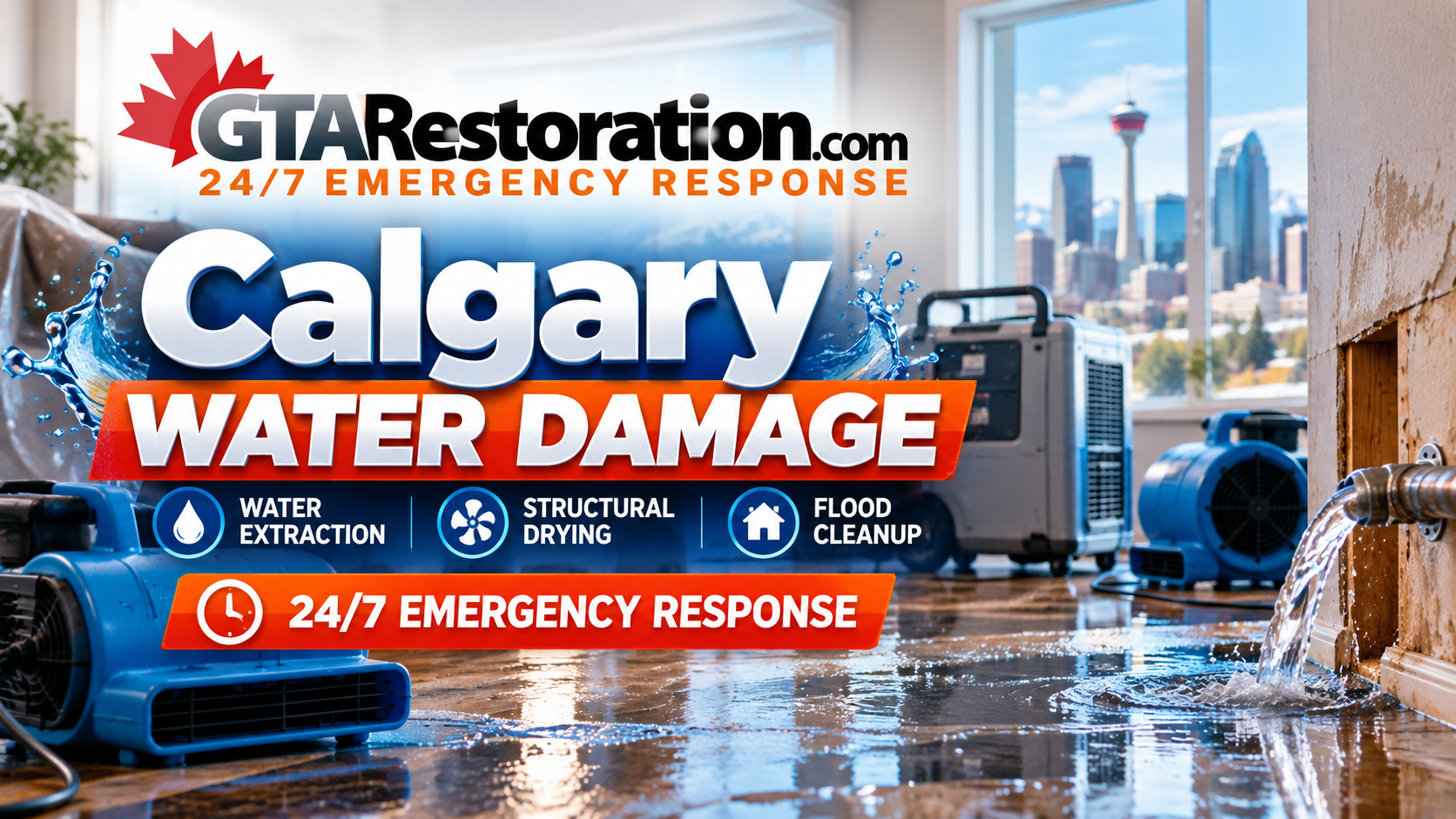
Calgary Water Damage Restoration & Emergency Cleanup
Calgary water damage can begin with a burst pipe, plumbing leak, flooded basement, appliance failure, sewer backup or storm. Fast action can help limit how far water travels through flooring, drywall, insulation and other building materials. Therefore, GTA Restoration provides water damage cleanup, moisture assessment, water extraction, structural drying and restoration support for residential and commercial properties.
Water often spreads farther than the visible wet area. For example, moisture can move beneath flooring, behind baseboards, inside wall cavities and through ceilings. As a result, simply removing standing water may not solve the full problem. A proper assessment helps locate hidden moisture and determine which materials may dry in place.
24/7 Emergency Water Damage Response
A water emergency rarely happens at a convenient time. Because water can move quickly through a building, early response is important. First, the source should be stopped when it is safe to do so. Then the affected area can be checked for hidden moisture, contamination and damage.
Our Calgary water damage service can address problems involving homes, rental properties, offices and commercial spaces. However, every loss requires a different plan. The response depends on the water source, affected materials, contamination level and how long the area has remained wet.
What to Do First After Water Damage
- Stop the water source if you can do so safely.
- Keep people and pets away from contaminated water.
- Avoid wet areas near electrical outlets, panels or equipment.
- Take photos of visible damage for your records.
- Move dry contents away from the affected area when safe.
- Call for professional water extraction and moisture assessment.
Water Extraction and Moisture Detection
Once conditions are safe, standing water should be removed before drying begins. After extraction, technicians can check walls, floors, ceilings and nearby rooms for moisture that may not be visible from the surface.
In addition, moisture meters and inspection tools can help identify how far water has travelled. This information guides equipment placement and helps reduce the chance of overlooking wet building materials.
Structural Drying and Dehumidification
After water removal, air movement and dehumidification help reduce moisture inside the affected area. Different materials dry at different rates, so technicians should monitor conditions throughout the process instead of relying only on how a surface looks or feels.
For example, floors, drywall, wood framing and cabinets may need different drying methods. Meanwhile, concealed spaces may require specialty drying when moisture becomes trapped behind finished materials.
Our Calgary Water Damage Restoration Process
1. Inspect the Source and Affected Areas
First, the inspection identifies where the water came from and how far it travelled. It can also reveal electrical, structural or contamination concerns that should be addressed before cleanup continues.
2. Remove Standing Water
Next, professional extraction equipment removes excess water from floors, basements and other affected areas. Removing water early also makes the structural drying stage more effective.
3. Check Damaged Building Materials
Not every wet material requires removal. However, badly damaged, contaminated or deteriorated materials may need to come out so the structure behind them can be cleaned and dried properly.
For additional safety information, the Government of Alberta provides flood cleanup and safety guidance covering utilities, protective equipment, contaminated materials and safe cleanup practices.
4. Dry and Monitor the Structure
After extraction, air movers, dehumidifiers and targeted drying equipment help reduce moisture in suitable building materials. During this stage, technicians can continue checking moisture levels and adjust equipment as conditions improve.
5. Clean and Prepare for Repairs
Finally, cleanup depends on the type of water and the amount of damage. The work may include surface cleaning, removal of affected materials, odour control and preparation for repairs. In particular, sewage and other contaminated water require added precautions.
Water Damage Documentation and Insurance
Whenever it is safe, take clear photos before major cleanup or repairs begin. Also, keep receipts, invoices and other records related to the loss. These records may help when discussing the claim with your insurance company.
GTA Restoration can provide restoration documentation related to the work performed. In addition, property owners can review our insurance claims support page for more information. Coverage varies by policy and cause of loss, so your insurer or broker should confirm what your policy covers.
Common Causes of Water Damage in Calgary
Burst and Frozen Pipes
Cold conditions and damaged plumbing can lead to sudden water releases. If a pipe breaks, shut off the water supply when it is safe. Then arrange the plumbing repair and begin water removal before moisture spreads into nearby materials.
Flooded Basements
Basement water may enter because of plumbing failures, drainage problems, sump pump issues or heavy rain. As a result, drywall, flooring, contents and mechanical areas may all become affected. Our flooded basement cleanup information explains the main steps involved in extraction and drying.
Sewer Backups
Sewage requires careful handling because the water may contain harmful contaminants. Therefore, keep people and pets away from the affected area and avoid unnecessary contact. Professional sewer backup cleanup may include water removal, cleaning, drying and disposal of damaged materials.
Hidden Plumbing Leaks
Slow leaks can remain unnoticed behind walls, beneath sinks or under flooring. For instance, water stains, soft drywall, damaged flooring, musty odours or an unexplained increase in water use can point to a hidden problem. In these cases, water leak detection can help identify the source and affected areas.
Water Damage and Mold
Moisture left inside walls, floors or other materials can create conditions that support mold growth. Therefore, the first priority is to correct the water source and dry the affected materials. If mold becomes a concern after Calgary water damage, an inspection can help determine the next step.
For related local information, visit our Calgary mold removal page.
Residential and Commercial Water Damage
Every property presents different restoration needs. For example, a flooded basement in a house may require a different drying plan than water damage in an office, retail property or multi-unit building. Building access, flooring, wall systems, contents and occupancy can all affect the response.
Ultimately, the goal is to control the water, locate hidden moisture, dry suitable materials and prepare damaged areas for repair. When you need Calgary water damage restoration, early action can help limit additional damage and make the cleanup process easier to manage.
Need Help With Calgary Water Damage?
GTA Restoration provides water extraction, moisture assessment, structural drying and water damage restoration support for homes and businesses.
Active leak, flood or water damage? Get help before moisture spreads farther.
Learn More
Calgary Mold Removal | Asbestos Removal Calgary | Water Damage Restoration | Water Damage Restoration
For non-emergencies use our contact form
Emergency Calgary Water Damage Help
Water can move quickly through floors, walls and ceilings. Early action helps limit the affected area and gives technicians a better chance to dry suitable materials before additional repairs become necessary.
Water Extraction
Standing water should be removed as soon as conditions are safe. Professional extraction equipment can handle larger amounts of water and prepare the affected area for structural drying.
Moisture Inspection
Visible water does not always show the full extent of a loss. Moisture can remain beneath flooring, behind walls and inside other concealed spaces. Moisture checks help technicians plan drying around the actual affected area.
Structural Drying
Air movement and dehumidification help move moisture out of suitable building materials. Technicians monitor conditions during drying and adjust equipment when needed.
Flooded Basement Cleanup
Basement flooding may affect drywall, flooring, insulation, stored contents and mechanical areas. Water extraction and moisture assessment help determine which materials can remain and which may require removal.
Burst Pipe Water Damage
A burst pipe can release water very quickly. Shut off the water supply when it is safe, arrange the plumbing repair and begin water removal before moisture spreads into adjoining areas.
Sewage and Contaminated Water
Keep people and pets away from sewage-contaminated areas. Cleanup may require removal of affected porous materials along with detailed cleaning and drying.
Hidden Water Leaks
Slow leaks can damage materials before obvious signs appear. Stains, damaged flooring, soft drywall or musty odours may point to moisture behind finished surfaces.
Commercial Water Damage
Businesses, offices and multi-unit properties may need a drying plan that works around occupied areas, building access and ongoing operations. Early assessment helps organize the response and reduce disruption.
Insurance Documentation
Photographs, moisture readings, work records and invoices can help document a water loss. Property owners should also contact their insurer or broker because coverage depends on the policy and cause of damage.
Calgary Water Damage Restoration
GTA Restoration provides water extraction, moisture assessment, drying and restoration support for water-damaged properties. The response depends on the source, contamination level, building materials and extent of the damage.
Concerned About Water Damage or Hidden Moisture?
Get professional help locating moisture, removing water and drying affected building materials before the damage spreads farther.
Service Areas Across Canada
GTA Restoration serves communities across Canada, including Toronto and the GTA. U.S. locations are opening. Browse our Canadian service areas below, and contact us to confirm services and availability for your address.
Search
- Air Duct Cleaning Montreal
- Ajax Asbestos Removal
- Ajax Mold Removal
- Ajax Water Damage
- Asbestos Removal Calgary
- Asbestos Removal Edmonton
- Asbestos Removal Fort Saskatchewan
- Asbestos Removal Gloucester
- Asbestos Removal Grimsby
- Asbestos Removal Hamilton
- Asbestos Removal Kanata
- Asbestos Removal Kitchener
- Asbestos Removal Laval
- Asbestos Removal Lincoln
- Asbestos Removal Montreal
- Asbestos Removal Nepean
- Asbestos Removal Niagara Falls
- Asbestos Removal Orleans
- Asbestos Removal Ottawa
- Asbestos Removal Sherwood Park
- Asbestos Removal Spruce Grove
- Asbestos Removal St Catharines
- Asbestos Removal St-Albert
- Asbestos Removal Thorold
- Asbestos Testing Hamilton
- Asbestos Testing Montreal
- Asbestos Testing Petersburg
- Aurora Mold Removal
- Aurora Water Damage
- Beaconsfield Asbestos Removal
- Brampton Asbestos Removal
- Brampton Mold Removal
- Brampton Water Damage
- Burlington Asbestos Removal
- Burlington Mold Removal
- Burlington Water Damage
- Burst Pipe Montreal Frozen Pipe
- Burst Pipe Repair Edmonton
- Burst Pipe Repair Ottawa
- Caledon Mold Removal
- Caledon Water Damage
- Calgary Mold Removal
- Calgary Water Damage
- Cambridge Mold Removal
- Cambridge Water Damage
- Clarington Mold Removal
- Concord Mold Removal
- Concord Water Damage
- Cooksville Mold Removal
- Edmonton Water Damage
- Emergency Roofing Vancouver
- Etobicoke Asbestos Removal
- Etobicoke Mold Removal
- Etobicoke Water Damage
- Fire Damage Grimsby
- Fire Damage Lincoln
- Fire Damage Niagara Falls
- Fire Restoration Fort McMurray
- Fire Damage Restoration Thorold
- Fire Damage St Catharines
- Flood Cleanup Grimsby
- Flood Cleanup Lincoln
- Flood Cleanup Niagara Falls
- Flood Cleanup St Catharines
- Flood Cleanup Thorold
- London Mold Removal
- London Water Damage
- Markham Asbestos Removal
- Markham Mold Removal
- Markham Water Damage
- Mississauga Asbestos Testing
- Mississauga Mold Removal
- Mississauga Water Damage
- Mold Inspection Removal Kitchener
- Mold Remediation Montreal
- Mold Removal & Inspection LaSalle
- Mold Removal Anjou
- Mold Removal Boucherville
- Mold Removal Brossard
- Mold Removal Burnaby
- Mold Removal Chambly
- Mold Removal Chateauguay
- Mold Removal Chomedey
- Mold Removal Coquitlam
- Mold Removal Dollard Des Ormeaux
- Mold Removal Dorval
- Mold Removal Edmonton
- Mold Removal Fort Saskatchewan
- Mold Removal Gloucester
- Mold Removal Grimsby
- Mold Removal Hamilton Inspection
- Mold Removal Ile Bizard
- Mold Removal in Osgoode
- Mold Removal Beaconsfield
- Mold Removal Kahnawake
- Mold Removal Kanata
- Mold Removal Kirkland
- Mold Removal Laval
- Mold Removal Lincoln
- Mold Removal Longueuil
- Mold Removal Montreal East
- Mold Removal Mount Royal
- Mold Removal Nepean
- Mold Removal New Westminster
- Mold Removal Niagara Falls
- Mold Removal Orleans
- Mold Removal Ottawa
- Mold Removal Cumberland
- Mold Remediation Hampstead
- Mold Removal Remediation Roxboro
- Mold Removal Richmond BC
- Mold Removal Rideau Lakes
- Mold Removal Rockcliffe Park
- Mold Removal Saint Hubert
- Mold Removal Saint Laurent
- Mold Removal Sherwood Park
- Mold Removal Spruce Grove
- Mold Removal St Catharines
- Mold Removal Ste Dorothee
- Mold Removal St۔ Albert
- Mold Removal Surrey
- Mold Removal Thorold
- Mold Removal Vancouver
- Mold Removal Vanier
- Mold Removal Westmount
- Montreal Biohazard Cleanup
- Montreal Emergency Plumber
- Montreal Fire Restoration
- Montreal Flood Cleanup
- Montreal Odor Removal
- Montreal Roofing Emergency
- Montreal Sewer Backup Cleanup
- Montreal Water Leak Detection
- Montréal Asbestos Removal
- Montréal Emergency Plumbing
- Montréal Mold Removal
- Montréal Pipe Burst Emergency
- Montréal Water Damage
- Newmarket Mold Removal
- Newmarket Water Damage
- North York Mold Removal
- Oakville Mold Removal
- Oakville Water Damage
- Oshawa Mold Removal
- Oshawa Water Damage
- Ottawa Air Duct Cleaning
- Pickering Mold Removal
- Pickering Water Damage
- Red Deer Water Damage
- RedDeer Mold Removal
- Richmond Hill Mold Removal
- Richmond Hill Water Damage
- Roof Repair Lincoln
- Roof Repair Niagara Falls
- Roof Repair St Catharines
- Scarborough Asbestos Removal
- Scarborough Mold Removal
- Scarborough Water Damage
- Sewage Cleanup Edmonton
- Sewer Backup Lincoln
- Sewer Backup Niagara Falls
- Sewer Backup Ottawa
- Sewer Backup St Catharines
- Thornhill Mold Removal
- Toronto & GTA Asbestos Removal
- Toronto & GTA Mold Removal
- Toronto Air Duct Cleaning
- Toronto Water Damage
- Unionville Mold Removal
- Unionville Water Damage
- Vancouver Asbestos Removal
- Vancouver Biohazard Cleanup
- Vancouver Emergency Plumber
- Vancouver Emergency Plumbing
- Vancouver Fire Restoration
- Vancouver Flood Cleanup
- Vancouver Mold Removal
- Vancouver Odor Removal
- Vancouver Pipe Burst Emergency
- Vancouver Sewer Backup Cleanup
- Vancouver Water Damage
- Vancouver Water Leak Detection
- Vaughan Mold Removal
- Vaughan Water Damage
- Vermiculite Removal Ottawa
- Water Damage Grimsby
- Water Damage Kanata
- Water Damage Kitchener
- Water Damage Lincoln
- Water Damage Longueuil
- Water Damage Nepean
- Water Damage Niagara Falls
- Water Damage Orleans
- Water Damage Ottawa
- Water Damage Repair Montreal
- Water Damage Laval Montreal
- Water Damage Restoration Thorold
- Sewage Backup Cleanup Montreal
- Water Damage St Catharines
- Water Damage Vancouver
- Water Flood Damage Repair Hamilton
- Flood Damage Repair Hampstead
- Whitby Water Damage
- Woodbridge Asbestos Removal
- Woodbridge Mold Removal
- Woodbridge Water Damage
- Restoration Equipment Rental
Calgary Water Damage – Frequently Asked Questions
What should I do first after water damage?
Stop the water source when it is safe, stay away from electrical hazards, document visible damage and arrange water extraction and moisture assessment.
How do professionals find hidden water damage?
Technicians use moisture readings and inspection tools to check floors, walls, ceilings and other areas where water may have travelled.
Can wet drywall and flooring be dried?
Sometimes. The answer depends on the material, amount of water, contamination and physical damage. An inspection helps determine whether drying or removal makes more sense.
Does water damage always lead to mold?
No. However, leaving building materials damp can create conditions that support mold growth. Correct the water source and dry affected materials as soon as possible.
Can GTA Restoration help with water damage insurance documentation?
Yes. Restoration records can help document the work performed. Your insurance company or broker determines what your individual policy covers.
Learn more ↴ 
Latest Articles
Direct Billing & Insurance Claims
Ask your insurer about coverage, deductibles and the records it needs.

In-House Financing Available
Financing up to 24 months. No interest. No money down. Ask us about the terms.
Certifications & Insurance
View our firm certification, technician qualifications and insurance documents.

IICRC Certified Firm
GTA Restoration Inc.
Firm number 199912
Valid through
Business Insurance
GTA Restoration Group Inc.
$5 million general liability per occurrence
$8 million contractors pollution per claim
–
IICRC Technician Qualifications
Richard Mark Provence · Registration 55726
Certificate expires
Water Damage Restoration · Fire & Smoke Restoration · Applied Microbial Remediation · Odor Control · Trauma & Crime Scene
View technician verification (PDF) — opens in a new tabInsurance is subject to policy terms, conditions and exclusions.
 Facebook
 Instagram
 LinkedIn
 X / Twitter
 YouTube