GTA Restoration provides asbestos removal Ottawa services for homes, commercial buildings, renovation projects, and properties with suspect building materials.
Canadian builders commonly used asbestos in many products before 1990 because of its strength, heat resistance, and durability. Older buildings may still contain it in insulation, plaster, floor and ceiling tiles, siding, roofing products, cement products, and some heating systems.
Health Canada advises property owners to avoid disturbing suspect asbestos-containing materials. In many cases, intact material creates less concern than material that someone cuts, drills, sands, breaks, or removes.
Why Careful Asbestos Handling Matters
Breathing airborne asbestos fibres can increase the risk of serious disease. Therefore, asbestos work should focus on controlling fibre release and keeping the work area properly managed.
Before major renovation, demolition, or removal begins, a qualified professional can test building materials that may contain asbestos. Health Canada recommends professional testing before people disturb suspect materials.
Testing Before Asbestos Removal
Professional testing can confirm whether a suspect material contains asbestos before renovation or demolition begins. In addition, test results can help determine the precautions required for the project.
Ontario Regulation 278/05 divides asbestos operations into Type 1, Type 2, and Type 3. The material, condition, quantity, and type of work determine the classification.
Understanding Type 1, Type 2 and Type 3 Asbestos Work
Lower-risk Type 1 work generally involves certain non-friable asbestos-containing materials where workers can complete the task without creating significant dust or fibre release.
Type 2 operations involve greater potential exposure. As a result, workers must follow additional procedures and use added protective measures.
Higher-risk Type 3 work requires the strongest controls. Ontario includes removal or disturbance of more than 1 m² of friable asbestos-containing material among Type 3 operations, along with certain other higher-risk activities.
Because each classification has different requirements, the contractor should match containment, worker protection, decontamination, and work procedures to the actual project.
Repair, Encapsulation and Enclosure Options
Removal is not always the only option. Depending on the material’s condition and location, a professional may recommend leaving it undisturbed, enclosing it, or using an appropriate encapsulation method.
Encapsulation uses a suitable coating or sealant to help control fibre release from certain asbestos-containing materials.
By comparison, enclosure places a secure barrier around the material to help protect it from disturbance during normal building use.
How the Asbestos Removal Process Works
When removal becomes necessary, the work plan should reflect the asbestos type, quantity, location, condition, and project classification.
First, identify the asbestos-containing material and project scope.
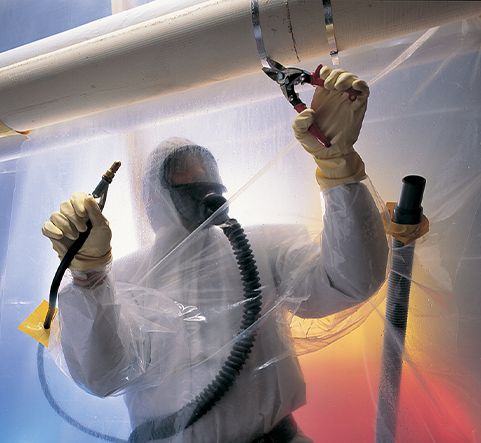
Next, prepare the work area and install the required containment.
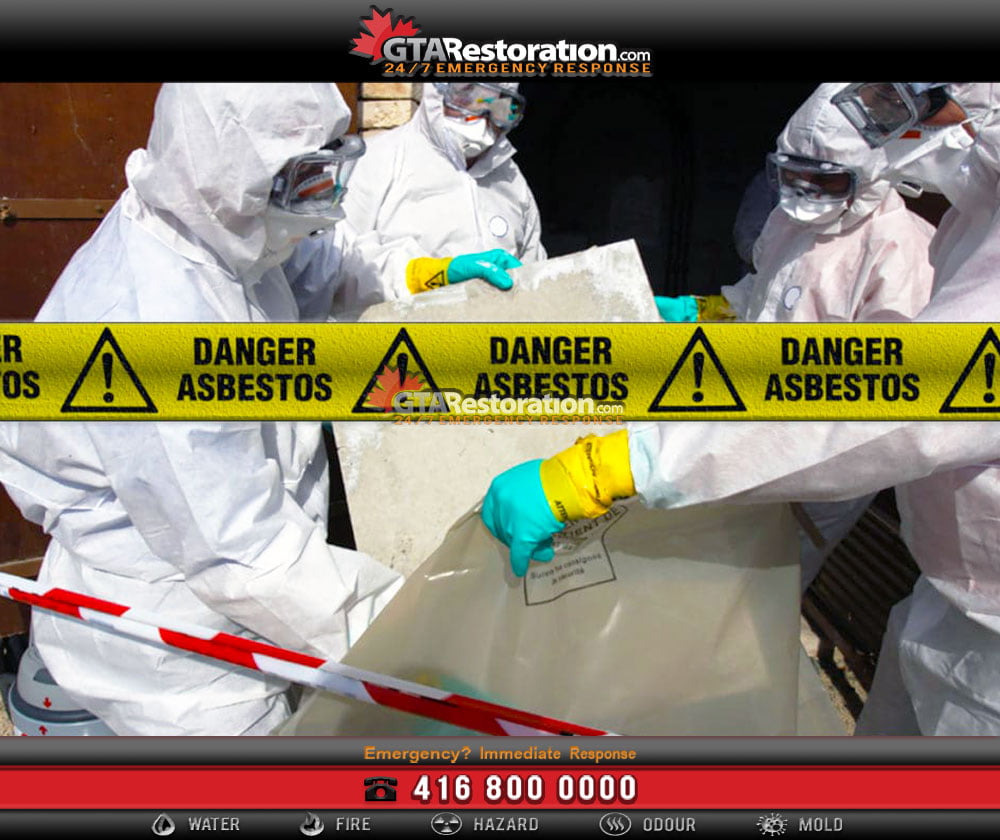
Workers use suitable respiratory protection and protective clothing.
The crew controls dust and fibre release during removal.
HEPA-filtered equipment supports cleaning of the work area.
The team packages asbestos waste according to applicable requirements.
Finally, workers clean and inspect the area after removal.
For larger or higher-risk work, crews may also use negative-pressure enclosures and decontamination facilities when Ontario rules require them.
Workers must handle asbestos waste carefully from removal through final disposal. The waste type and project conditions determine the packaging, transport, and disposal requirements.
During removal and transport, the crew should keep waste contained and prevent unnecessary fibre release. The final disposal must follow applicable Ontario requirements and the rules of the receiving facility.
Containment and Worker Protection
Ontario asbestos rules set different controls for different types of work. Depending on the operation, crews may need barriers, negative-pressure equipment, HEPA filtration, respirators, protective clothing, warning signs, and decontamination procedures.
In addition, employers must give workers the instruction and training required for the asbestos operations they perform.
When Clearance Air Testing Applies
Not every asbestos project requires clearance air testing. However, Ontario Regulation 278/05 requires testing after certain Type 3 operations before workers dismantle specific enclosures and decontamination facilities.
In those situations, the work area must meet the applicable clearance requirements before the crew removes the enclosure.
No. A professional may recommend leaving intact and undisturbed material in place when its condition and location allow it.
Should I test an older home before renovation?
Testing may make sense before major renovation or demolition when the property contains materials that could include asbestos, especially in buildings constructed before 1990.
Is air testing necessary after every asbestos project?
No. Ontario requires clearance air testing for specific asbestos operations rather than every project. The classification and work methods determine whether the requirement applies.
What should homeowners do with suspect asbestos?
Health Canada recommends avoiding unnecessary disturbance. Instead, arrange professional testing or advice before cutting, drilling, sanding, demolishing, or removing suspect material.
Can GTA Restoration handle commercial asbestos projects?
Yes. GTA Restoration provides asbestos-related services for residential, commercial, renovation, and property-management projects in Ottawa, depending on project scope and service availability.
GTA Restoration provides asbestos assessment and removal support for homes, commercial buildings, renovations, and property-management projects throughout Ottawa.
Testing Before Renovation
Older buildings may contain asbestos in several materials, especially properties built before 1990. Therefore, professional testing can help identify suspect materials before renovation or demolition begins.
Residential and Commercial Projects
Asbestos may occur in insulation, plaster, floor tiles, ceiling tiles, cement products, roofing materials, and other building components. As a result, the project plan should reflect the material, condition, location, and amount involved.
Containment During Removal
Depending on the operation type, crews may use barriers, negative pressure, HEPA filtration, protective clothing, respirators, and decontamination procedures to control fibre release.
Ontario Asbestos Requirements
Ontario Regulation 278/05 divides asbestos work into Type 1, Type 2, and Type 3 operations. Each category carries different requirements for work methods, containment, protective equipment, training, and clearance testing where applicable.
Waste Handling and Disposal
After removal, crews must package and handle asbestos waste carefully. In addition, they must follow the applicable requirements for transport and disposal to keep fibres contained.
Ottawa Asbestos Service
Contact GTA Restoration to discuss suspected asbestos, testing, removal, or renovation-related concerns. Our team can review the project and explain the next steps.
GTA Restoration serves communities across Canada, including Toronto and the GTA. U.S. locations are opening. Browse our Canadian service areas below, and contact us to confirm services and availability for your address.




 Facebook
  Instagram
  LinkedIn
  X / Twitter
  YouTube