Mold Removal Caledon – Inspection & Remediation
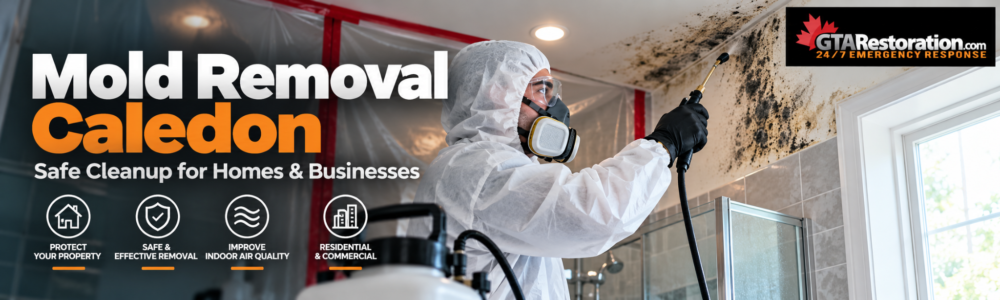
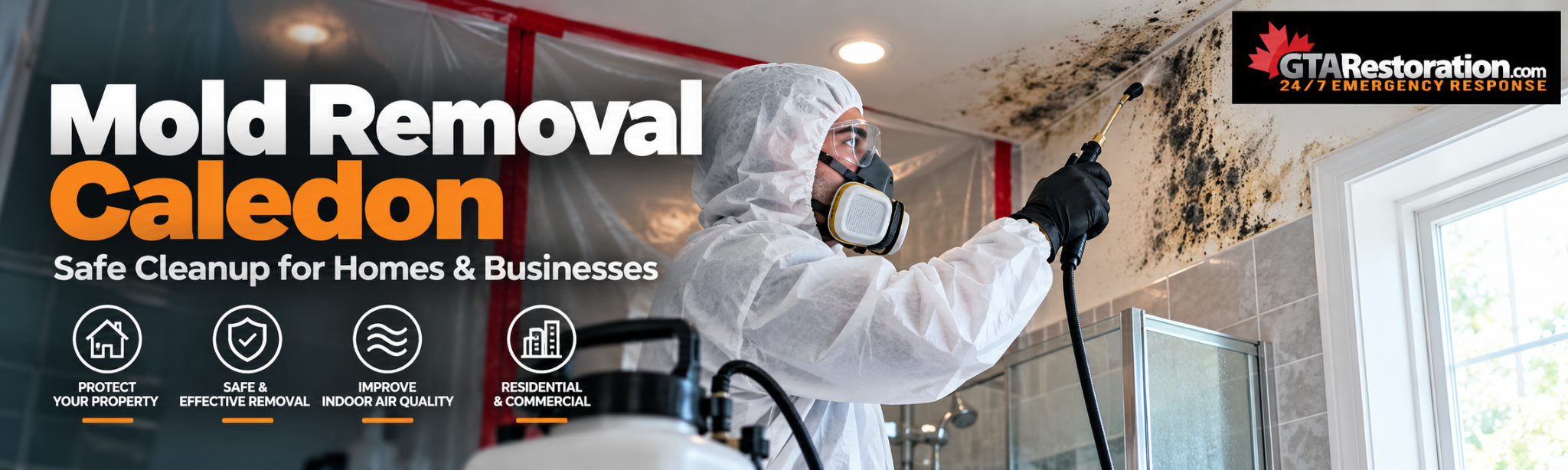
Mold removal Caledon services help property owners deal with visible mould, musty odours and moisture problems before they spread further through the building. Mould can develop after leaks, flooding, condensation, plumbing problems or prolonged high humidity.
However, the visible growth is only part of the problem. Successful mould remediation also means finding and correcting the moisture condition that allowed the growth to develop. Without that step, mould can return even after the affected surface has been cleaned.
GTA Restoration provides professional mould inspection and remediation for houses, condos, rental properties and businesses throughout Caledon and surrounding communities.
Call 416-800-0000
When Mold Removal Caledon May Be Needed
Visible Mold and Musty Odours
Mould often appears as staining or patches on drywall, ceilings, wood, insulation and other building materials. Sometimes there is no obvious visible growth. However, a persistent musty or earthy odour can suggest that damp materials need further investigation.
For example, bathrooms, basements, attics, closets and areas around plumbing are common places to check because they can remain damp or have limited ventilation.
Water Damage and Hidden Moisture
A previous flood or plumbing leak may leave moisture behind walls, under flooring or inside insulation. As a result, damp materials can continue supporting mould growth even when the surface looks dry.
Our water damage restoration Caledon service can help address active water damage before mould remediation begins.
Recurring Mold Problems
If mould keeps returning after cleaning, the underlying moisture issue may still be present. For instance, a leaking pipe, foundation moisture, roof problem, poor ventilation or elevated indoor humidity can all contribute.
Repeated mould growth should not be treated as a surface-cleaning problem alone. Instead, the moisture source needs attention as part of the overall solution.
Our Mold Remediation Caledon Process
1. Inspect the Affected Area
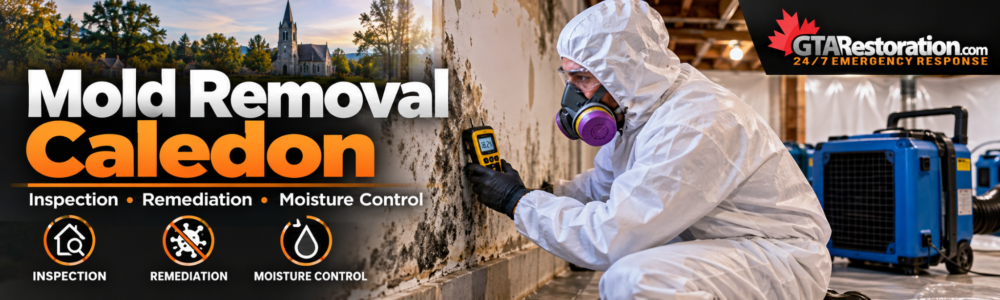
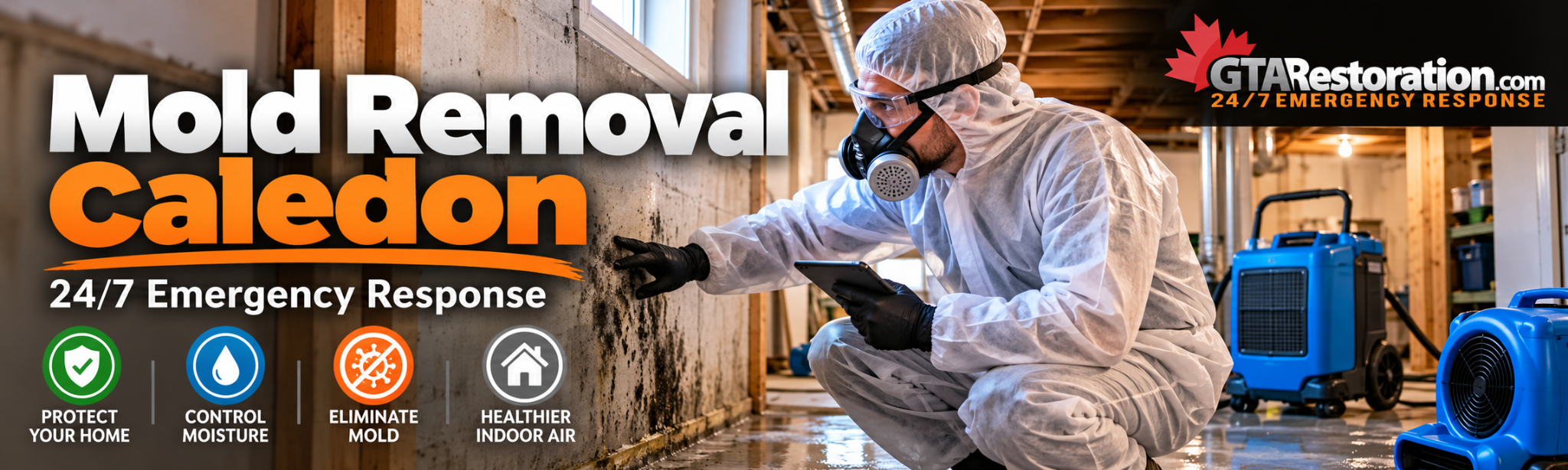
First, technicians look at the visible growth, surrounding materials and possible moisture sources. In addition, they may use moisture meters or other inspection tools to better understand conditions behind or around the affected area.
Health Canada notes that in most situations, homeowners do not need to identify the exact mould species or measure airborne mould concentrations. Instead, the priority is to find the moisture problem and address the mould that is present.
For additional guidance, see Health Canada’s mould and moisture information.
2. Determine the Remediation Scope
Next, the amount of mould and the type of material involved help determine how the work should proceed. A small patch on a washable surface is different from extensive growth affecting drywall, insulation, framing or several rooms.
For larger areas, professional assessment may be appropriate. As a result, technicians can choose a remediation approach that matches the actual conditions instead of using the same method everywhere.
3. Control the Work Area
For larger remediation projects, technicians may need to isolate the affected area from clean parts of the property. In addition, containment and HEPA-filtered equipment can help control dust and airborne particles during removal and cleaning when the project requires them.
4. Remove or Clean Affected Materials
Some hard, non-porous materials can often be cleaned. However, other materials may need removal when mould has penetrated them or caused significant deterioration.
Drywall, insulation, carpet and other porous materials require individual assessment. Therefore, the final decision depends on the extent of contamination and the condition of each material.
5. Address Moisture and Dry the Area
Cleaning mould without addressing moisture leaves the main cause unresolved. Once the source has been corrected, drying equipment may be used where necessary to reduce excess moisture in surrounding materials.
In addition, our specialty drying services can support projects where building materials require additional moisture control.
Black Mold and Other Mold Growth in Caledon
People often use the term “black mold” for dark-coloured growth. However, colour alone does not tell you the mould species or how a specific patch may affect someone. Mould can appear black, green, white, brown or other colours.
For property restoration purposes, the practical approach remains the same. First, identify the moisture problem. Then, determine the extent of growth and choose an appropriate cleanup method.
Do You Need Mold Testing?
Not every mould problem requires laboratory testing. For example, when visible mould and a clear moisture problem are already present, testing may not change the remediation approach.
Still, sampling can be useful in certain situations when a qualified professional determines that additional information is needed. Inspection and moisture investigation should guide that decision instead of automatically testing every property.
Mold Removal Caledon for Homes & Businesses
Basements and Lower Levels
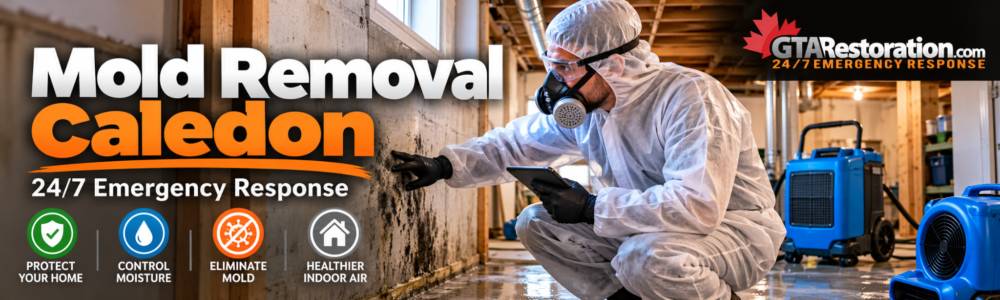
Basements often experience moisture from foundation leaks, flooding, plumbing failures or high humidity. As a result, mould may develop on drywall, wood framing, stored cardboard, carpet and other materials that remain damp.
Bathrooms and Kitchens
Bathrooms and kitchens generate moisture every day. Therefore, working exhaust fans, proper ventilation and quick repair of plumbing leaks can help reduce conditions that support mould growth.
Attics and Roof Leaks
Attic mould can develop when roof leaks, condensation or ventilation problems leave roof sheathing or insulation damp. For this reason, the moisture source should be corrected before cosmetic repairs cover the affected area.
Commercial Mold Remediation Caledon
Offices, retail properties, rental buildings and other commercial spaces can also experience mould after water damage or ongoing moisture problems. Accordingly, GTA Restoration can assess affected areas and develop a remediation plan based on the building and operating conditions.
Reducing the Chance of Mold Returning
Once remediation is complete, prevention becomes important. For example, repair leaks promptly, dry water damage quickly and make sure bathrooms, kitchens and dryers vent properly.
Health Canada recommends maintaining indoor relative humidity between about 30% and 50%. Therefore, a hygrometer can help homeowners monitor humidity, while a dehumidifier may help when indoor levels remain too high.
Most importantly, pay attention to recurring dampness, staining and musty odours. Early moisture control is one of the best ways to reduce future mould problems.
Need Mold Removal in Caledon?
GTA Restoration provides mould inspection, remediation, moisture assessment and restoration support for homes and businesses throughout Caledon.
If mould keeps returning, address the moisture source as well as the visible growth.
Call 416-800-0000
Learn More
Water Damage Caledon | Mold Removal Remediation Mould Inspection Testing | Emergency Restoration Services in Toronto: Your Complete Guide | Montréal Mold Removal | Property Inspection




 Facebook
  Instagram
  LinkedIn
  X / Twitter
  YouTube



You must be logged in to post a comment.