St. Albert Mold Removal & Mold Remediation
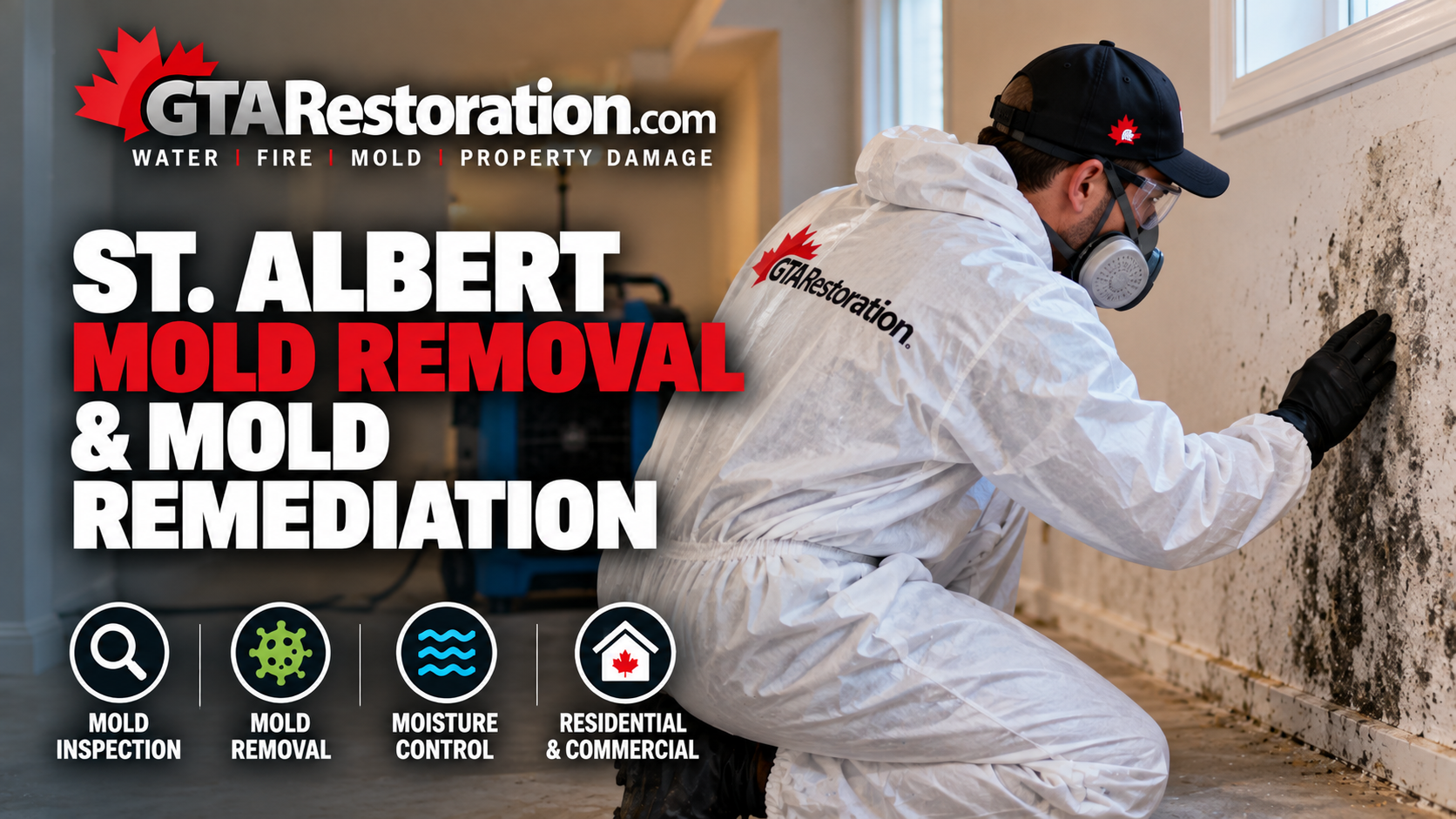
Mold Removal St Albert & Mold Remediation
Mold removal St Albert services help property owners deal with visible mold, musty odours, moisture problems and mold growth after leaks or flooding. Because mold usually develops where materials remain damp, successful remediation must address both the growth and the moisture source. Therefore, simply cleaning a stained surface may not solve the full problem.
GTA Restoration provides mold inspection, containment, cleanup and remediation for homes and businesses in St. Albert. First, our team evaluates the affected materials and checks for moisture. Next, we develop a cleanup plan based on the size, location and condition of the affected area.
When to Consider Mold Removal in St Albert
Mold is not always immediately visible. However, several warning signs may point to an indoor moisture problem. For example, recurring odours or stains can appear before a larger area of growth becomes obvious.
- Visible black, green, white or grey growth
- Musty or earthy odours
- Water stains on walls or ceilings
- Peeling paint or damaged drywall
- Recurring condensation
- Past flooding or plumbing leaks
- Mold that returns after cleaning
- Damp basement or attic areas
If growth keeps returning, surface cleaning alone will not solve the underlying problem. Instead, the moisture source should be identified and corrected. As a result, the chance of recurring mold can be reduced.
Mold Inspection St Albert
A mold inspection begins with the visible condition of the property and its history of water or moisture problems. During the inspection, technicians may check basements, bathrooms, attics, walls, ceilings, window areas and other places where moisture can collect.
In addition, moisture meters and other tools can help identify damp building materials. Thermal imaging may also reveal temperature patterns that deserve closer inspection. However, thermal imaging does not directly measure moisture.
Does Every Mold Problem Need Air Testing?
No. Health Canada does not recommend routine air testing for mold in most situations. In many cases, visible growth, musty odours and moisture problems already provide enough information to begin investigating the cause.
However, a qualified professional may recommend testing in specific situations when concerns remain unexplained after inspection or when hidden growth is suspected. Therefore, testing should support an inspection rather than replace one.
The Health Canada guide to moisture and mould recommends focusing first on finding the moisture source, correcting it and cleaning mold appropriately.
St Albert Mold Remediation Process
Mold Containment and Work Area Setup
For larger remediation projects, technicians may isolate the affected area to help limit dust and mold particles from moving into nearby rooms. Therefore, proper setup becomes an important early step in the remediation process.
Depending on the project, containment may include plastic barriers, controlled access and air filtration equipment. In addition, workers use suitable personal protective equipment while handling affected materials.
HEPA Cleaning and Mold Removal
During cleanup, technicians may use HEPA-filtered equipment to capture fine particles. The exact method depends on the materials involved, the amount of growth and the location of the problem.
For example, some hard surfaces can often be cleaned. In contrast, heavily affected porous materials such as drywall, insulation or ceiling tiles may need removal because mold can grow inside the material.
Remove Damaged Mold-Contaminated Materials
During remediation, technicians inspect affected drywall, insulation, wood and other materials. If a material cannot be properly cleaned or restored, removal may be necessary.
Afterward, remaining surfaces can be cleaned according to the remediation plan. In addition, the work area can be checked before the next stage begins.
Correct the Moisture Source
Mold remediation will not provide a lasting result if the building remains wet. Therefore, technicians also look for the condition that allowed growth to develop in the first place.
Common moisture sources include:
- Plumbing leaks
- Foundation water entry
- Roof leaks
- Flooding
- High indoor humidity
- Bathroom condensation
- Poor ventilation
- Window and door leaks
For example, a leaking pipe should be repaired before damaged materials are replaced. Likewise, recurring foundation moisture may require drainage or waterproofing work.
If water damage caused the problem, our emergency flood and water damage cleanup service can help with extraction and drying.
Drying After Mold Remediation
After correcting the water source, affected materials must remain dry. Therefore, air movement and dehumidification may be used when building materials still contain excess moisture.
In addition, property owners can monitor indoor humidity with a hygrometer. Health Canada recommends keeping indoor relative humidity around 30% to 50% to help control excess moisture and reduce the conditions that support mold growth.
Prevent Mold From Returning in St Albert
Control Indoor Humidity
High indoor humidity can cause condensation on windows, exterior walls and other cold surfaces. Therefore, use bathroom and kitchen exhaust fans and consider a dehumidifier where needed.
In addition, a basic hygrometer can help you monitor humidity rather than relying only on how the room feels. This makes it easier to notice moisture problems early.
Check Basements for Mold and Moisture
Basements can develop moisture from foundation leaks, plumbing problems, flooding or condensation. For this reason, check exterior walls, flooring, storage areas and mechanical rooms for dampness or musty odours.
Also, avoid storing cardboard directly on damp basement floors because it absorbs moisture easily. Instead, raised shelving or plastic containers can help protect stored contents.
Inspect Bathrooms and Kitchens
Bathrooms and kitchens regularly produce moisture. Therefore, use exhaust fans during showers and cooking, and repair leaking sinks, tubs, toilets and appliance connections promptly.
In addition, check caulking and seals around wet areas. Damaged seals can allow water to enter walls, cabinets and flooring over time.
Watch Attics, Ceilings and Windows
Roof leaks, condensation and poor airflow may lead to moisture problems in attics and ceilings. Likewise, repeated condensation around windows can keep nearby drywall and trim damp.
Instead of repeatedly cleaning stains, correct the water source first. Afterward, damaged materials can be assessed and repaired where needed.
Small Mold Areas vs. Larger Mold Problems
Health Canada considers a small mold area to be up to about one square metre in total. However, larger areas, recurring mold or growth caused by significant water damage may require professional assessment and remediation.
In particular, extensive growth or mold hidden inside walls can require additional containment and material removal. Therefore, the size and location of the problem should guide the cleanup approach.
Health Concerns Around Mold
People living in damp or moldy buildings may experience eye, nose or throat irritation, coughing, wheezing, shortness of breath or worsening asthma symptoms. However, these symptoms can have many causes, so symptoms alone do not prove that mold caused the health problem.
Anyone with ongoing or worsening symptoms should speak with a health care professional. Meanwhile, property owners should correct indoor moisture and mold problems instead of trying to determine a supposedly safe mold level.
Professional Mold Removal St Albert
Professional mold removal St Albert should focus on three key areas: removing affected materials when needed, controlling contamination during the work and correcting the moisture source that allowed mold to grow.
GTA Restoration provides inspection and mold removal St Albert services for residential and commercial properties. First, our team assesses the affected area. Then, we develop a remediation plan based on the actual condition of the property.
Ultimately, proper mold remediation involves more than surface cleaning. By controlling moisture, removing damaged materials and cleaning affected areas, property owners can reduce the chance of the problem returning.
Mold Problem in St. Albert?
GTA Restoration provides mold inspection, moisture assessment, containment, cleanup and mold remediation in St. Albert.
Visible mold, musty odour or recurring moisture? Find and correct the source before the problem becomes larger.
Learn More
Asbestos Removal St. Albert | Mold Removal & Remediation | Toronto Mold Removal | How To Know When Mold Remediation is Required | The Significance of Professional Mold Inspection in Maintaining a Healthy | Why you Should Trust the Experts for Mold Remediation in Toronto
For non-emergencies use our contact form
Mold Inspection in St Albert
Visible mold, musty odours and repeated moisture are common reasons to arrange an inspection. A proper assessment should focus on both the affected material and the moisture source.
St Albert Mold Remediation
Larger mold problems may require containment, controlled material removal and detailed cleaning. Therefore, the remediation plan should match the size and location of the affected area.
Find the Moisture Source
Mold usually returns when leaks, humidity or water entry remain unresolved. For that reason, moisture control is one of the most important parts of remediation.
Basement Mold Removal
Basements may develop mold after flooding, foundation leaks or high humidity. Check walls, floors and stored materials for dampness and musty odours.
Bathroom Mold Problems
Steam, leaking plumbing and poor ventilation can keep bathroom surfaces damp. Exhaust fans and prompt leak repairs can reduce recurring moisture.
Attic and Ceiling Mold
Roof leaks and condensation may affect attic insulation, roof sheathing and ceilings. Therefore, identify the source before repairing visible finishes.
HEPA Cleaning
HEPA-filtered equipment can help capture fine particles during remediation work. Technicians may use it alongside containment and detailed surface cleaning.
Remove Materials That Cannot Be Restored
Some contaminated porous materials may require removal. The decision depends on their condition, contamination level and whether they can be cleaned and dried.
Control Indoor Humidity
Health Canada recommends keeping indoor relative humidity around 30% to 50%. Proper ventilation and dehumidification can help control excess moisture.
Mold After Water Damage
Leaks and floods should be addressed quickly because prolonged dampness can support mold growth. Repair the source and dry affected materials as soon as practical.
Professional Mold Cleanup St Albert
GTA Restoration provides mold inspection and remediation services for homes and businesses in St. Albert. Our team focuses on moisture control, containment, cleaning and appropriate material removal.
Concerned About Mold in St. Albert?
Get help identifying the moisture source and planning mold remediation before the affected area becomes larger.
Service Areas Across Canada
GTA Restoration serves communities across Canada, including Toronto and the GTA. U.S. locations are opening. Browse our Canadian service areas below, and contact us to confirm services and availability for your address.
Search
- Air Duct Cleaning Montreal
- Ajax Asbestos Removal
- Ajax Mold Removal
- Ajax Water Damage
- Asbestos Removal Calgary
- Asbestos Removal Edmonton
- Asbestos Removal Fort Saskatchewan
- Asbestos Removal Gloucester
- Asbestos Removal Grimsby
- Asbestos Removal Hamilton
- Asbestos Removal Kanata
- Asbestos Removal Kitchener
- Asbestos Removal Laval
- Asbestos Removal Lincoln
- Asbestos Removal Montreal
- Asbestos Removal Nepean
- Asbestos Removal Niagara Falls
- Asbestos Removal Orleans
- Asbestos Removal Ottawa
- Asbestos Removal Sherwood Park
- Asbestos Removal Spruce Grove
- Asbestos Removal St Catharines
- Asbestos Removal St-Albert
- Asbestos Removal Thorold
- Asbestos Testing Hamilton
- Asbestos Testing Montreal
- Asbestos Testing Petersburg
- Aurora Mold Removal
- Aurora Water Damage
- Beaconsfield Asbestos Removal
- Brampton Asbestos Removal
- Brampton Mold Removal
- Brampton Water Damage
- Burlington Asbestos Removal
- Burlington Mold Removal
- Burlington Water Damage
- Burst Pipe Montreal Frozen Pipe
- Burst Pipe Repair Edmonton
- Burst Pipe Repair Ottawa
- Caledon Mold Removal
- Caledon Water Damage
- Calgary Mold Removal
- Calgary Water Damage
- Cambridge Mold Removal
- Cambridge Water Damage
- Clarington Mold Removal
- Concord Mold Removal
- Concord Water Damage
- Cooksville Mold Removal
- Edmonton Water Damage
- Emergency Roofing Vancouver
- Etobicoke Asbestos Removal
- Etobicoke Mold Removal
- Etobicoke Water Damage
- Fire Damage Grimsby
- Fire Damage Lincoln
- Fire Damage Niagara Falls
- Fire Restoration Fort McMurray
- Fire Damage Restoration Thorold
- Fire Damage St Catharines
- Flood Cleanup Grimsby
- Flood Cleanup Lincoln
- Flood Cleanup Niagara Falls
- Flood Cleanup St Catharines
- Flood Cleanup Thorold
- London Mold Removal
- London Water Damage
- Markham Asbestos Removal
- Markham Mold Removal
- Markham Water Damage
- Mississauga Asbestos Testing
- Mississauga Mold Removal
- Mississauga Water Damage
- Mold Inspection Removal Kitchener
- Mold Remediation Montreal
- Mold Removal & Inspection LaSalle
- Mold Removal Anjou
- Mold Removal Boucherville
- Mold Removal Brossard
- Mold Removal Burnaby
- Mold Removal Chambly
- Mold Removal Chateauguay
- Mold Removal Chomedey
- Mold Removal Coquitlam
- Mold Removal Dollard Des Ormeaux
- Mold Removal Dorval
- Mold Removal Edmonton
- Mold Removal Fort Saskatchewan
- Mold Removal Gloucester
- Mold Removal Grimsby
- Mold Removal Hamilton Inspection
- Mold Removal Ile Bizard
- Mold Removal in Osgoode
- Mold Removal Beaconsfield
- Mold Removal Kahnawake
- Mold Removal Kanata
- Mold Removal Kirkland
- Mold Removal Laval
- Mold Removal Lincoln
- Mold Removal Longueuil
- Mold Removal Montreal East
- Mold Removal Mount Royal
- Mold Removal Nepean
- Mold Removal New Westminster
- Mold Removal Niagara Falls
- Mold Removal Orleans
- Mold Removal Ottawa
- Mold Removal Cumberland
- Mold Remediation Hampstead
- Mold Removal Remediation Roxboro
- Mold Removal Richmond BC
- Mold Removal Rideau Lakes
- Mold Removal Rockcliffe Park
- Mold Removal Saint Hubert
- Mold Removal Saint Laurent
- Mold Removal Sherwood Park
- Mold Removal Spruce Grove
- Mold Removal St Catharines
- Mold Removal Ste Dorothee
- Mold Removal St۔ Albert
- Mold Removal Surrey
- Mold Removal Thorold
- Mold Removal Vancouver
- Mold Removal Vanier
- Mold Removal Westmount
- Montreal Biohazard Cleanup
- Montreal Emergency Plumber
- Montreal Fire Restoration
- Montreal Flood Cleanup
- Montreal Odor Removal
- Montreal Roofing Emergency
- Montreal Sewer Backup Cleanup
- Montreal Water Leak Detection
- Montréal Asbestos Removal
- Montréal Emergency Plumbing
- Montréal Mold Removal
- Montréal Pipe Burst Emergency
- Montréal Water Damage
- Newmarket Mold Removal
- Newmarket Water Damage
- North York Mold Removal
- Oakville Mold Removal
- Oakville Water Damage
- Oshawa Mold Removal
- Oshawa Water Damage
- Ottawa Air Duct Cleaning
- Pickering Mold Removal
- Pickering Water Damage
- Red Deer Water Damage
- RedDeer Mold Removal
- Richmond Hill Mold Removal
- Richmond Hill Water Damage
- Roof Repair Lincoln
- Roof Repair Niagara Falls
- Roof Repair St Catharines
- Scarborough Asbestos Removal
- Scarborough Mold Removal
- Scarborough Water Damage
- Sewage Cleanup Edmonton
- Sewer Backup Lincoln
- Sewer Backup Niagara Falls
- Sewer Backup Ottawa
- Sewer Backup St Catharines
- Thornhill Mold Removal
- Toronto & GTA Asbestos Removal
- Toronto & GTA Mold Removal
- Toronto Air Duct Cleaning
- Toronto Water Damage
- Unionville Mold Removal
- Unionville Water Damage
- Vancouver Asbestos Removal
- Vancouver Biohazard Cleanup
- Vancouver Emergency Plumber
- Vancouver Emergency Plumbing
- Vancouver Fire Restoration
- Vancouver Flood Cleanup
- Vancouver Mold Removal
- Vancouver Odor Removal
- Vancouver Pipe Burst Emergency
- Vancouver Sewer Backup Cleanup
- Vancouver Water Damage
- Vancouver Water Leak Detection
- Vaughan Mold Removal
- Vaughan Water Damage
- Vermiculite Removal Ottawa
- Water Damage Grimsby
- Water Damage Kanata
- Water Damage Kitchener
- Water Damage Lincoln
- Water Damage Longueuil
- Water Damage Nepean
- Water Damage Niagara Falls
- Water Damage Orleans
- Water Damage Ottawa
- Water Damage Repair Montreal
- Water Damage Laval Montreal
- Water Damage Restoration Thorold
- Sewage Backup Cleanup Montreal
- Water Damage St Catharines
- Water Damage Vancouver
- Water Flood Damage Repair Hamilton
- Flood Damage Repair Hampstead
- Whitby Water Damage
- Woodbridge Asbestos Removal
- Woodbridge Mold Removal
- Woodbridge Water Damage
- Restoration Equipment Rental
Mold Removal St Albert – Frequently Asked Questions
What causes mold in St. Albert homes?
Common causes include plumbing leaks, flooding, foundation moisture, roof leaks, condensation, high humidity and poor ventilation.
Do I always need mold air testing?
No. Health Canada does not recommend routine air testing in most situations. Visual inspection and finding the moisture source are usually more useful first steps.
Can small areas of mold be cleaned?
Some small areas on suitable surfaces can be cleaned with proper precautions. Larger, recurring or hidden mold problems may require professional remediation.
How do you stop mold from coming back?
Fix the water or humidity problem first, then clean or remove affected materials and keep the area dry.
Does GTA Restoration provide mold remediation in St. Albert?
Yes. GTA Restoration provides mold inspection, moisture assessment, containment, cleanup and mold remediation services in St. Albert.
Direct Billing & Insurance Claims
Ask your insurer about coverage, deductibles and the records it needs.

In-House Financing Available
Financing up to 24 months. No interest. No money down. Ask us about the terms.
Learn more ↴ 
RELATED ARTICLES
 Facebook
 Instagram
 LinkedIn
 X / Twitter
 YouTube