Water Damage Repair Hampstead | Flood Cleanup & Repair
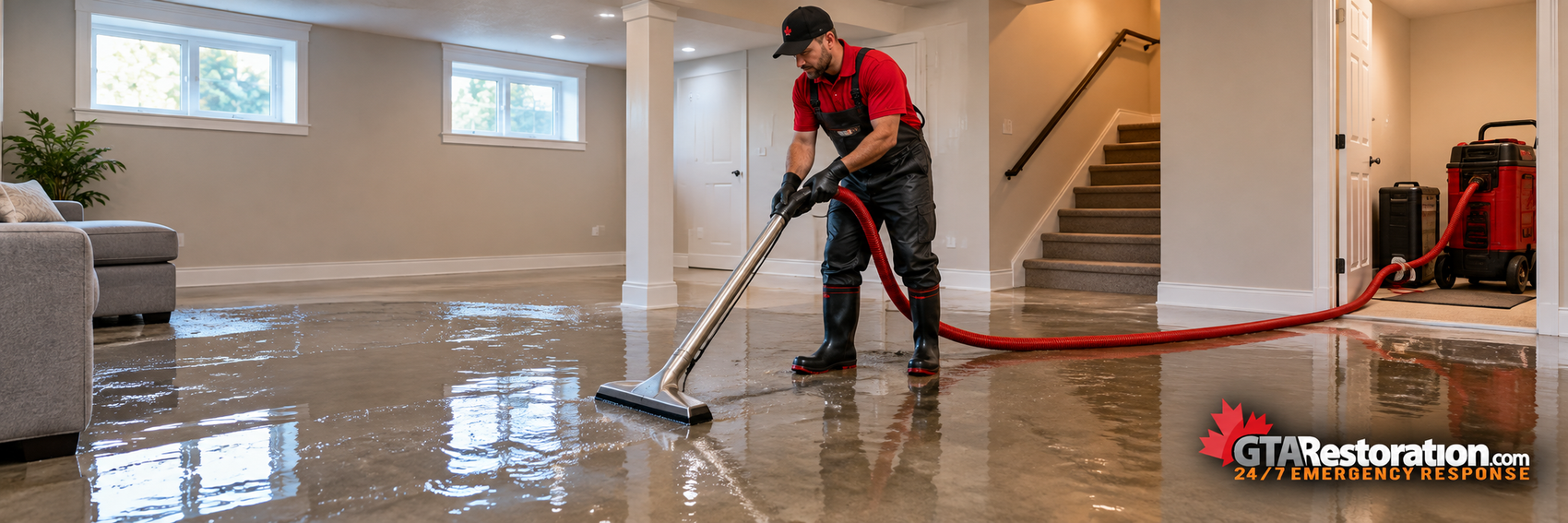
Water Flood Damage Repair Hampstead
GTA Restoration provides water damage repair Hampstead services for homes and businesses. We remove standing water, check for hidden moisture, dry wet areas and plan repairs. Whether a pipe leaks or a basement floods, our team can help you take the next step.
Water can spread beneath floors and behind walls. As a result, a room may feel dry while building materials still hold moisture. Our water flood damage repair Hampstead service addresses both visible damage and the damp areas you cannot easily see.
First Steps After a Leak or Flood
First, keep people and pets away from the wet area. Stop the leak only if you can reach the shut-off valve safely. Do not enter floodwater or touch electrical equipment near water. If flooding may have affected the wiring, have an electrician check it before you enter.
Then, call for help and explain where the water came from. Share any signs of sewage, ceiling damage or water near outlets. These details help the team plan the visit.
Water Damage Assessment in Hampstead
We check the water source, the affected rooms and the condition of wet materials. Moisture meters help us find damp spots around floors, walls and cabinets. Next, we outline the cleanup and drying work. The plan depends on the type of water and how far it has spread.
Flood Cleanup and Water Removal
Pumps and extraction tools remove standing water. This step helps limit further soaking and prepares the area for drying. However, water removal alone does not complete the job. Our water damage repair and flood cleanup service also covers the next stages of recovery.
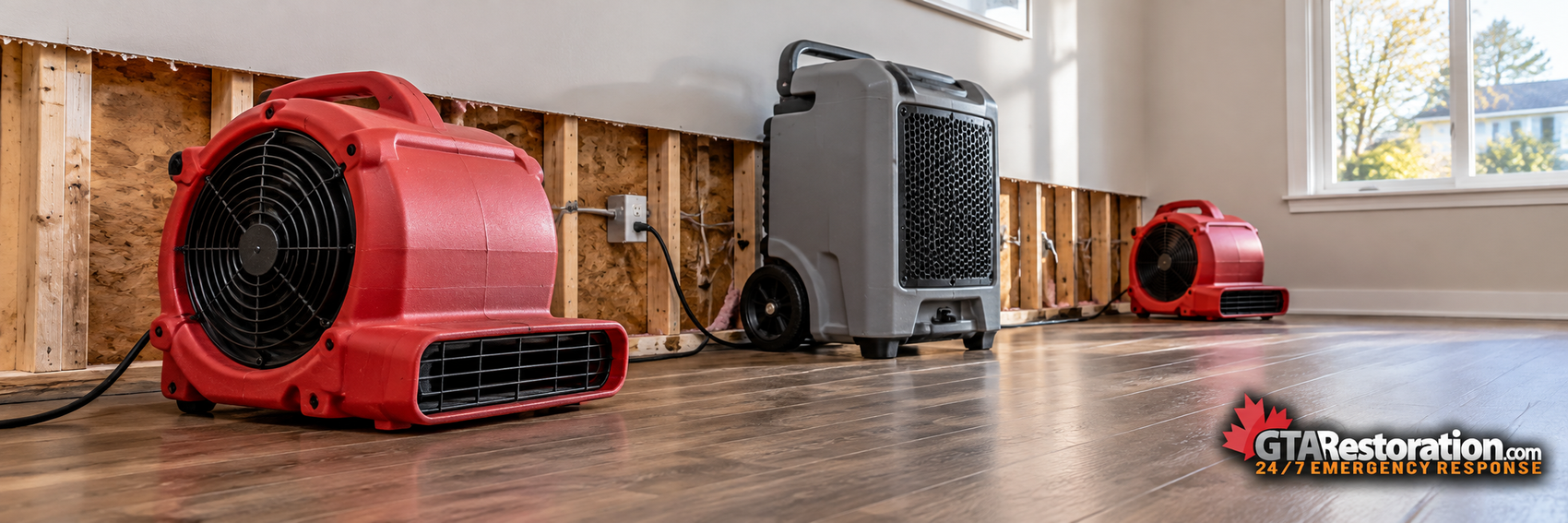
Drying Walls, Floors and Hidden Spaces
Once we remove the water, we use air movers and dehumidifiers to dry materials that we can save. Air movers help moisture leave damp surfaces. Meanwhile, dehumidifiers draw moisture from the air. We track readings and adjust the setup as drying progresses. Learn more about our specialty drying methods.
Cleaning and Mould Concerns
The water source guides the cleanup method. For example, sewage or outdoor floodwater can leave waste and dirt behind. Some soaked items need removal because cleaning and drying cannot make them safe to keep.
Health Canada’s flood cleanup guidance explains why prompt drying and removal of damaged materials matter. If mould is already present, ask about mould removal in Hampstead as part of the recovery plan.
Flood Damage Repairs in Hampstead
After cleanup and drying, we review which materials need repair or replacement. The work may include drywall, insulation, flooring or trim. We explain the scope before repairs begin. In addition, moisture checks help us avoid covering areas that still need drying.
Planning the Work and Keeping Records
Drying time and repair costs depend on the size of the loss and the materials involved. Therefore, an assessment gives a better picture than a fixed estimate based on photos alone. Keep photos, quotes and receipts together. If you plan to make a claim, contact your insurer about its requirements.
Need Water Damage Repair in Hampstead?
Call GTA Restoration to discuss water removal, flood cleanup, drying and repairs for your property.
Learn More
Water Damage Repair & Flood Cleanup | Toronto Flood Cleanup | Mold Removal Remediation Hampstead | Flood Cleanup Toronto | Mold Removal Remediation Mould Inspection Testing | Flooded Basement Repair For non-emergencies use our contact form
Planning Water Damage Cleanup in Hampstead
Water damage can disrupt your home or business. A few simple steps can help you prepare for cleanup and keep track of the work. Use these tips alongside your restoration team’s advice.
Share the Leak History
Tell the team when you first noticed the water. Also, mention earlier leaks or repairs in the same area. These details may help explain hidden damage.
Arrange Safe Access for Flood Cleanup
Explain how crews can reach the property. If you live in a shared building, contact the manager about entry, parking and access to common areas.
Keep Children and Pets Clear
Keep children and pets away from wet rooms, tools and drying equipment. Instead, use a separate dry space while crews work.
Photograph Water Damage
Take photos from a safe, dry spot before cleanup begins. Include wide views and close-ups. Then, note when you discovered the damage.
List Affected Belongings
Make a list of wet furniture, rugs and other items. Ask the team which items may be worth saving before you move or discard them.
Check Before Using Appliances
Do not switch on appliances that floodwater has reached. First, ask a qualified professional to check them and advise whether repair or replacement is necessary.
Leave the Drying Setup in Place
Follow the crew’s advice about doors, windows and equipment. Moving fans or turning off dehumidifiers can slow drying. Therefore, ask before changing the setup.
Report Changes During Water Damage Repairs
Tell the team about new stains, drips or musty odours. Also, report floors that begin to lift. These changes may need another moisture check.
Keep Flood Cleanup Records
Store photos, estimates and receipts in one place. If you make an insurance claim, ask your insurer what records it needs and what your policy covers.
Review the Final Repair Plan
Before repairs start, confirm the work, materials and expected schedule. Finally, ask how the team will check drying progress and explain any changes to the plan.
Need help planning water damage repairs in Hampstead?
Call GTA Restoration to discuss your property and the next steps.
Service Areas Across Canada
GTA Restoration serves communities across Canada, including Toronto and the GTA. U.S. locations are opening. Browse our Canadian service areas below, and contact us to confirm services and availability for your address.
Search
- Air Duct Cleaning Montreal
- Ajax Asbestos Removal
- Ajax Mold Removal
- Ajax Water Damage
- Asbestos Removal Calgary
- Asbestos Removal Edmonton
- Asbestos Removal Fort Saskatchewan
- Asbestos Removal Gloucester
- Asbestos Removal Grimsby
- Asbestos Removal Hamilton
- Asbestos Removal Kanata
- Asbestos Removal Kitchener
- Asbestos Removal Laval
- Asbestos Removal Lincoln
- Asbestos Removal Montreal
- Asbestos Removal Nepean
- Asbestos Removal Niagara Falls
- Asbestos Removal Orleans
- Asbestos Removal Ottawa
- Asbestos Removal Sherwood Park
- Asbestos Removal Spruce Grove
- Asbestos Removal St Catharines
- Asbestos Removal St-Albert
- Asbestos Removal Thorold
- Asbestos Testing Hamilton
- Asbestos Testing Montreal
- Asbestos Testing Petersburg
- Aurora Mold Removal
- Aurora Water Damage
- Beaconsfield Asbestos Removal
- Brampton Asbestos Removal
- Brampton Mold Removal
- Brampton Water Damage
- Burlington Asbestos Removal
- Burlington Mold Removal
- Burlington Water Damage
- Burst Pipe Montreal Frozen Pipe
- Burst Pipe Repair Edmonton
- Burst Pipe Repair Ottawa
- Caledon Mold Removal
- Caledon Water Damage
- Calgary Mold Removal
- Calgary Water Damage
- Cambridge Mold Removal
- Cambridge Water Damage
- Clarington Mold Removal
- Concord Mold Removal
- Concord Water Damage
- Cooksville Mold Removal
- Edmonton Water Damage
- Emergency Roofing Vancouver
- Etobicoke Asbestos Removal
- Etobicoke Mold Removal
- Etobicoke Water Damage
- Fire Damage Grimsby
- Fire Damage Lincoln
- Fire Damage Niagara Falls
- Fire Restoration Fort McMurray
- Fire Damage Restoration Thorold
- Fire Damage St Catharines
- Flood Cleanup Grimsby
- Flood Cleanup Lincoln
- Flood Cleanup Niagara Falls
- Flood Cleanup St Catharines
- Flood Cleanup Thorold
- London Mold Removal
- London Water Damage
- Markham Asbestos Removal
- Markham Mold Removal
- Markham Water Damage
- Mississauga Asbestos Testing
- Mississauga Mold Removal
- Mississauga Water Damage
- Mold Inspection Removal Kitchener
- Mold Remediation Montreal
- Mold Removal & Inspection LaSalle
- Mold Removal Anjou
- Mold Removal Boucherville
- Mold Removal Brossard
- Mold Removal Burnaby
- Mold Removal Chambly
- Mold Removal Chateauguay
- Mold Removal Chomedey
- Mold Removal Coquitlam
- Mold Removal Dollard Des Ormeaux
- Mold Removal Dorval
- Mold Removal Edmonton
- Mold Removal Fort Saskatchewan
- Mold Removal Gloucester
- Mold Removal Grimsby
- Mold Removal Hamilton Inspection
- Mold Removal Ile Bizard
- Mold Removal in Osgoode
- Mold Removal Beaconsfield
- Mold Removal Kahnawake
- Mold Removal Kanata
- Mold Removal Kirkland
- Mold Removal Laval
- Mold Removal Lincoln
- Mold Removal Longueuil
- Mold Removal Montreal East
- Mold Removal Mount Royal
- Mold Removal Nepean
- Mold Removal New Westminster
- Mold Removal Niagara Falls
- Mold Removal Orleans
- Mold Removal Ottawa
- Mold Removal Cumberland
- Mold Remediation Hampstead
- Mold Removal Remediation Roxboro
- Mold Removal Richmond BC
- Mold Removal Rideau Lakes
- Mold Removal Rockcliffe Park
- Mold Removal Saint Hubert
- Mold Removal Saint Laurent
- Mold Removal Sherwood Park
- Mold Removal Spruce Grove
- Mold Removal St Catharines
- Mold Removal Ste Dorothee
- Mold Removal St۔ Albert
- Mold Removal Surrey
- Mold Removal Thorold
- Mold Removal Vancouver
- Mold Removal Vanier
- Mold Removal Westmount
- Montreal Biohazard Cleanup
- Montreal Emergency Plumber
- Montreal Fire Restoration
- Montreal Flood Cleanup
- Montreal Odor Removal
- Montreal Roofing Emergency
- Montreal Sewer Backup Cleanup
- Montreal Water Leak Detection
- Montréal Asbestos Removal
- Montréal Emergency Plumbing
- Montréal Mold Removal
- Montréal Pipe Burst Emergency
- Montréal Water Damage
- Newmarket Mold Removal
- Newmarket Water Damage
- North York Mold Removal
- Oakville Mold Removal
- Oakville Water Damage
- Oshawa Mold Removal
- Oshawa Water Damage
- Ottawa Air Duct Cleaning
- Pickering Mold Removal
- Pickering Water Damage
- Red Deer Water Damage
- RedDeer Mold Removal
- Richmond Hill Mold Removal
- Richmond Hill Water Damage
- Roof Repair Lincoln
- Roof Repair Niagara Falls
- Roof Repair St Catharines
- Scarborough Asbestos Removal
- Scarborough Mold Removal
- Scarborough Water Damage
- Sewage Cleanup Edmonton
- Sewer Backup Lincoln
- Sewer Backup Niagara Falls
- Sewer Backup Ottawa
- Sewer Backup St Catharines
- Thornhill Mold Removal
- Toronto & GTA Asbestos Removal
- Toronto & GTA Mold Removal
- Toronto Air Duct Cleaning
- Toronto Water Damage
- Unionville Mold Removal
- Unionville Water Damage
- Vancouver Asbestos Removal
- Vancouver Biohazard Cleanup
- Vancouver Emergency Plumber
- Vancouver Emergency Plumbing
- Vancouver Fire Restoration
- Vancouver Flood Cleanup
- Vancouver Mold Removal
- Vancouver Odor Removal
- Vancouver Pipe Burst Emergency
- Vancouver Sewer Backup Cleanup
- Vancouver Water Damage
- Vancouver Water Leak Detection
- Vaughan Mold Removal
- Vaughan Water Damage
- Vermiculite Removal Ottawa
- Water Damage Grimsby
- Water Damage Kanata
- Water Damage Kitchener
- Water Damage Lincoln
- Water Damage Longueuil
- Water Damage Nepean
- Water Damage Niagara Falls
- Water Damage Orleans
- Water Damage Ottawa
- Water Damage Repair Montreal
- Water Damage Laval Montreal
- Water Damage Restoration Thorold
- Sewage Backup Cleanup Montreal
- Water Damage St Catharines
- Water Damage Vancouver
- Water Flood Damage Repair Hamilton
- Flood Damage Repair Hampstead
- Whitby Water Damage
- Woodbridge Asbestos Removal
- Woodbridge Mold Removal
- Woodbridge Water Damage
- Restoration Equipment Rental
Water Flood Damage Repair Hampstead FAQs
What should I do first after a flood?
Stay out of floodwater and keep others away. Stop the leak only if you can do so safely. Then, call for an assessment.
How do you remove water and dry the property?
We use pumps and extraction tools to remove standing water. Next, air movers and dehumidifiers help dry wet materials. Moisture readings track progress.
Can water damage hide behind walls?
Yes. Water can collect behind walls and beneath floors. Therefore, we check moisture levels instead of relying only on how a surface looks or feels.
Can flooding lead to mould?
Yes. Mould can grow on damp materials. Prompt cleanup and drying help reduce that risk. However, existing mould may also need removal.
Does all wet drywall need replacement?
No. Some drywall may dry well enough to keep. However, sewage exposure, damage or trapped moisture may make removal necessary. An assessment guides that choice.
Learn more ↴ 
Latest Blog
Direct Billing & Insurance Claims
Ask your insurer about coverage, deductibles and the records it needs.

In-House Financing Available
Financing up to 24 months. No interest. No money down. Ask us about the terms.
Certifications & Insurance
View our firm certification, technician qualifications and insurance documents.

IICRC Certified Firm
GTA Restoration Inc.
Firm number 199912
Valid through
Business Insurance
GTA Restoration Group Inc.
$5 million general liability per occurrence
$8 million contractors pollution per claim
–
IICRC Technician Qualifications
Richard Mark Provence · Registration 55726
Certificate expires
Water Damage Restoration · Fire & Smoke Restoration · Applied Microbial Remediation · Odor Control · Trauma & Crime Scene
View technician verification (PDF) — opens in a new tabInsurance is subject to policy terms, conditions and exclusions.
 Facebook
 Instagram
 LinkedIn
 X / Twitter
 YouTube