
Mold Removal and Mould Remediation Toronto - GTA Restoration

Emergency? 24-Hrs

416.800.0000
  • Home Restore
  • Emergency Services
    • Emergency Plumbers 24/7
    • Water Damage Restoration
    • Flooded Basement
    • Mold Remediation Toronto
    • Sewer Backup Remediation
    • Fire & Smoke Restoration
    • Odour Removal Toronto
    • Biohazard Cleanup
    • Emergency Roofing Repair
    • Water Leak and Detection
    • Condominium Restoration
    • Basement WaterProofing
    • Property Inspection Toronto
    • Sanitizing and Disinfection
    • Insurance Claim Appraisers
    • Equipment for Rent Toronto
    • Privacy Policy & Service Terms
  • Commercial Restoration
  • Blog
  • Our Team
  • Contact
30 January 2022 - Categories: GTA Restoration Articles

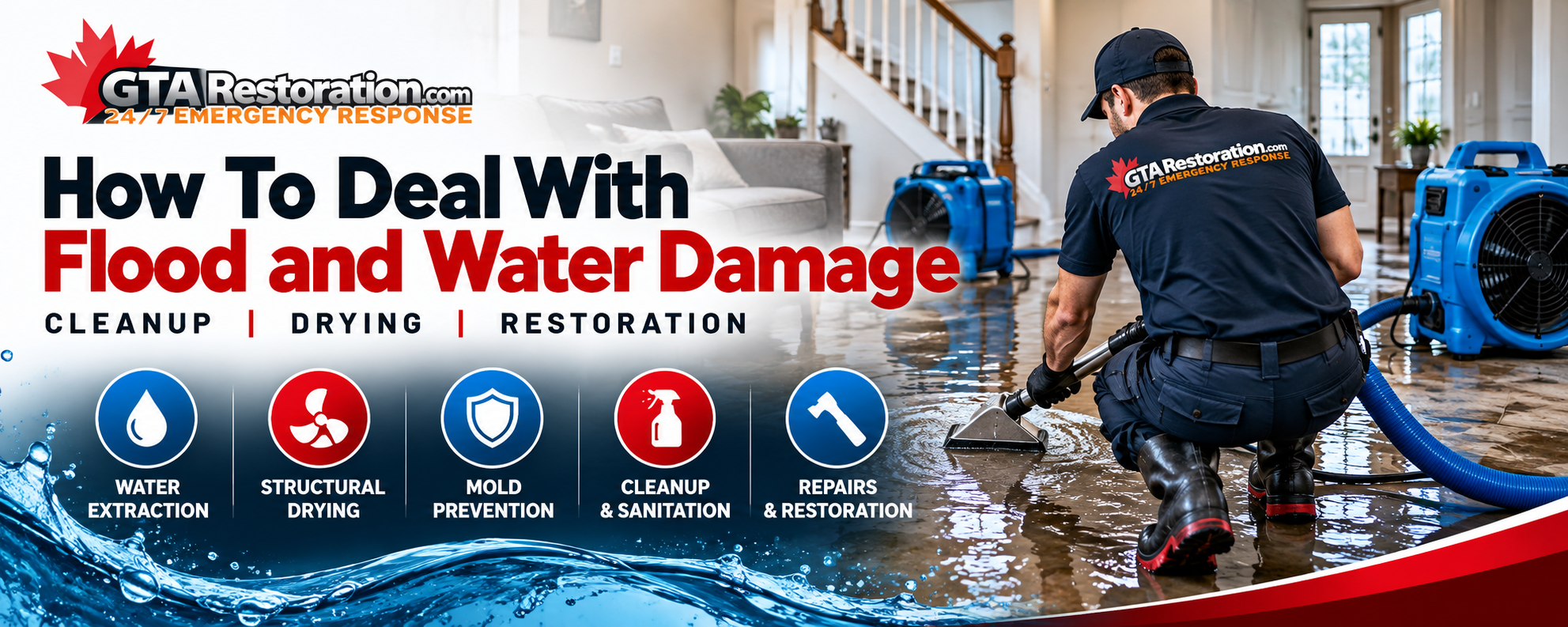
How To Deal With Flood and Water Damage


Disaster Restoration Emergency Plumbing Service Blog Icon

Professional flood and water damage cleanup and restoration by GTA Restoration


How To Deal With Flood and Water Damage

Knowing how to deal with flood and water damage can help you protect your property, reduce additional damage and make the restoration process easier to manage. Flooding may result from heavy rain, a burst pipe, sewer backup, overflowing plumbing, appliance failure or water entering through the foundation. Whatever the cause, safety should come before cleanup.

Water can spread beneath flooring, enter wall cavities and soak drywall, insulation, furniture and personal belongings. Therefore, removing visible water is only one part of the recovery process. GTA Restoration provides water extraction, moisture checks, structural drying and cleanup for homes and businesses across Toronto and the GTA.

Call 416-800-0000

Identify the Cause of Flood and Water Damage

First, determine where the water is coming from when you can do so safely. Common causes include burst pipes, leaking supply lines, overflowing fixtures, failed sump pumps, roof leaks, foundation water entry and sewer backups. Heavy rainfall and melting snow may also place additional pressure on drainage systems.

If a plumbing supply line caused the loss and you can safely reach the main water shutoff, stopping the flow may reduce further damage. However, do not enter a flooded area when water may be in contact with electrical equipment, outlets or wiring.

How To Deal With Flood and Water Damage Safely

Electrical hazards require particular care. Never step into standing water when electrical outlets, appliances or cords may still have power. Also, do not attempt to reach an electrical panel if doing so requires standing in water. Contact the appropriate utility or a qualified electrician when the electrical system may have been affected.

Floodwater may also contain sewage, bacteria or other contaminants. Keep children and pets away from affected rooms, and avoid unnecessary contact with contaminated water.

What To Do After Flood and Water Damage

Document the Water Damage

Learning how to deal with flood and water damage also means knowing what to document. When conditions are safe, take photographs and videos of affected rooms, building materials and belongings before major cleanup begins. Record where the water came from and when the damage occurred.

In addition, keep restoration estimates, invoices and lists of damaged contents together. Contact your insurance provider promptly and ask what information they require for a potential claim.

Remove Standing Water

Once the area is safe, standing water should be removed as part of the cleanup process. Depending on the amount of water, restoration technicians may use extraction equipment and pumps to remove water from floors and other accessible areas.

A key part of how to deal with flood and water damage is removing excess water before beginning structural drying. For major basement losses, our flooded basement cleanup service provides water extraction, drying and related restoration support.

Check for Hidden Water Damage

Surfaces may appear dry while moisture remains underneath. Water can travel beneath finished flooring, behind baseboards, into drywall and through insulation. As a result, moisture readings can help identify areas that still require attention.

Our water damage restoration service includes inspection, extraction and structural drying based on the conditions at the property.

Flood and Water Damage Drying Process

Dry Wet Building Materials Quickly

Understanding how to deal with flood and water damage includes drying affected building materials as soon as conditions allow. After water extraction, technicians may use air movers to increase evaporation and commercial dehumidifiers to remove moisture from the air. Meanwhile, moisture readings help track drying progress.

Health Canada recommends cleaning and drying flood-affected areas as soon as it is safe to do so. It also advises acting quickly when materials remain wet. You can review Health Canada’s flood cleanup and indoor air quality guidance for additional information.

Remove Materials That Cannot Be Saved

Some wet materials can dry and remain in place. Others may require removal, especially when floodwater contains sewage or when porous materials cannot be thoroughly cleaned and dried.

Depending on the loss, affected materials may include drywall, insulation, carpet, underpad and certain types of furniture. However, removal decisions should reflect the type of water, material condition and extent of contamination rather than assuming every wet item must be discarded.

Clean After Flood and Water Damage

After extraction and material removal, affected surfaces may require cleaning according to the type of water damage. Sewage-contaminated flooding requires additional precautions because it can carry harmful microorganisms and other contaminants.

A professional restoration team can separate salvageable materials from items that require disposal and plan cleaning without spreading contamination into unaffected rooms.

Prevent Mold After Flood and Water Damage

Why Moisture Control Matters

Another important part of how to deal with flood and water damage is preventing moisture from remaining inside the property. Damp building materials can support mold growth. Therefore, stop the water source, remove excess water and dry affected materials promptly.

If mold growth already exists, avoid simply painting or covering the affected surface. The moisture source also needs correction. Our mold removal and remediation service can help when water damage has resulted in visible growth or related moisture concerns.

Check the Property Before Repairs Begin

Do not rush to install new drywall, flooring or finishes while building materials remain damp. Instead, confirm that affected areas have reached suitable drying conditions and that the original source of water has been corrected.

For example, a flooded basement may also require repairs to a sump pump, drainage system, foundation or plumbing. Addressing the cause before reconstruction can reduce the chance of another loss affecting the same area.

When Professional Water Damage Restoration Helps

A small plumbing spill may allow straightforward cleanup when the water is clean and the affected area is limited. However, professional help becomes more important when water spreads through several rooms, enters wall or floor assemblies, contains sewage, creates electrical concerns or leaves significant standing water.

Professional restoration also provides equipment for water extraction, dehumidification and moisture monitoring. Most importantly, the process should address both the visible damage and moisture that may remain inside building materials.

If you are unsure how to deal with flood and water damage safely, avoid electrical hazards, contaminated water and unstable materials. Professional assessment can help determine the appropriate extraction, drying and cleanup steps for the property.


Need Help With Flood and Water Damage?

Contact GTA Restoration for water extraction, structural drying, moisture checks and professional flood damage cleanup across Toronto and the GTA.

Call 416-800-0000

Learn More

Water Damage Restoration | How to deal with Flood Damage? | How To Deal with Fire and Smoke | Toronto Flood Cleanup | Water Damage Restoration GTA
Share this... Spread the word!


Tags: Basement Flood, Flood Cleanup, Flood Damage, Flood Restoration, Flooded Basement, Mold Remediation, Water Damage, Water Damage Toronto,
☛ ☛ Related Restoration Articles You May Also Like!

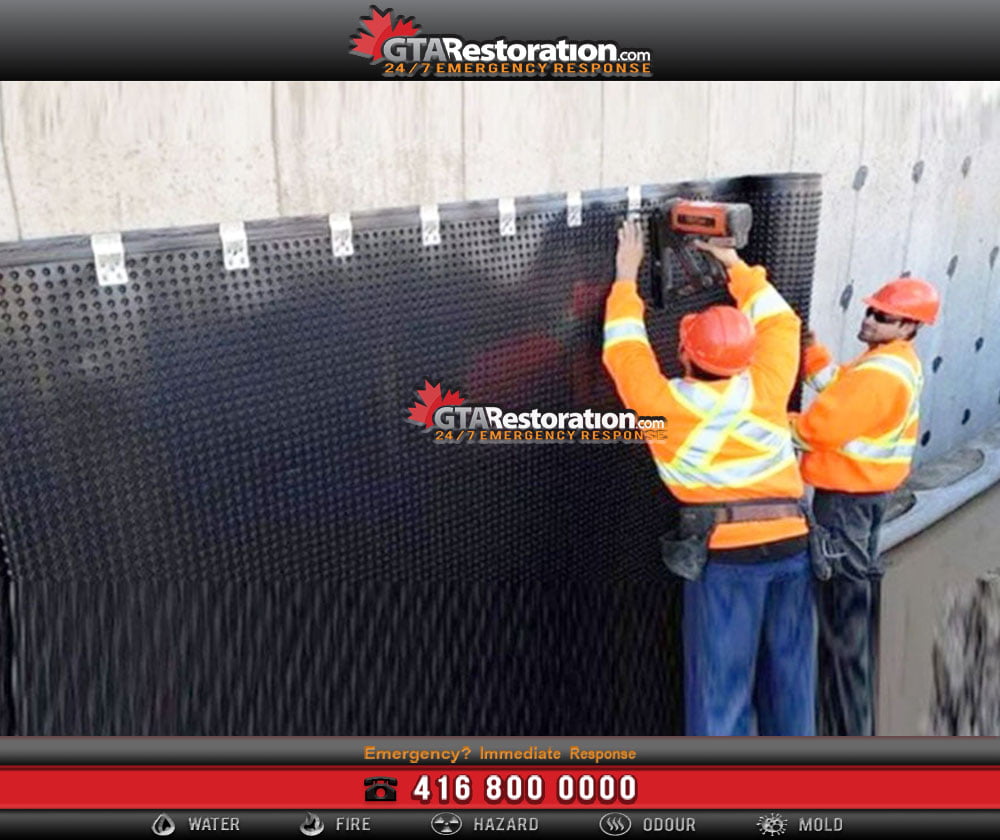
Waterproofing  Properties in  Toronto
Waterproofing Properties in Toronto
Guide to Condo Flood Recovery – Cleanup, Drying & Restoration
Warehouse Mold Remediation Example – From Leak to Reopening
How to prevent water damage in the summer

Emergency? Immediate response 24/7

416.800.0000 416.800.0000

For non-emergencies use our contact form

Flood and Water Damage Cleanup Support

Flood and water damage can affect flooring, walls, ceilings, furniture and personal belongings. A clear recovery plan helps organize water removal, drying, cleaning and repairs. GTA Restoration provides flood and water damage cleanup for homes and businesses across Toronto and the GTA.

Emergency Water Damage Inspection

Start by identifying the affected rooms and possible water source. In addition, tell the restoration team about previous leaks, plumbing problems or flooding that may help explain the damage.

Flooded Basement Cleanup

Basement flooding may result from heavy rain, sewer backups, sump pump failure or plumbing leaks. First, address the source when possible. Then, begin water extraction and structural drying once conditions are safe.

Water Extraction

Removing standing water reduces the amount of moisture left inside the property. Therefore, technicians normally complete extraction before placing drying equipment throughout the affected areas.

Structural Drying

Air movers and dehumidifiers help dry wet materials and control indoor moisture. Meanwhile, moisture readings help track progress in walls, flooring and other affected building materials.

Hidden Water Damage

Water may travel beneath flooring, behind baseboards and inside wall cavities. As a result, an area can look dry while moisture remains below the surface.

Sewage and Contaminated Water

Floodwater that contains sewage requires additional precautions. Keep children and pets away from affected rooms, and avoid moving contaminated belongings through clean areas without a proper handling plan.

Cleaning After Flood Damage

Some surfaces can remain after cleaning and drying, while damaged porous materials may require removal. The appropriate approach depends on the water source, contamination and condition of each material.

Preventing Mold After Water Damage

Prompt drying helps reduce conditions that support mold growth. However, drying alone cannot fix an active leak. Repair the moisture source before installing replacement flooring, drywall or finishes.

Water-Damaged Contents

Move dry belongings away from affected areas when you can do so safely. Also, photograph damaged furniture and personal items before disposal when documentation may be needed for an insurance claim.

Flood Damage Insurance Records

Keep photographs, videos, estimates, invoices and damaged-content lists together. Contact your insurer promptly and ask which records they require before major disposal or reconstruction begins.

Repairs After Water Damage

Finally, confirm that affected materials have dried and the original water source has been corrected. Then, plan repairs to drywall, flooring, insulation, trim or other damaged finishes.


Dealing with flood or water damage?
Contact GTA Restoration for water extraction, structural drying, moisture checks and cleanup support.

Call 416-800-0000


Nationwide, Local Pricing

GTA Restoration offers local flood & water damage repair, mold removal/remediation, asbestos removal/abatement, fire/smoke damage repair services and much more.

Search

  • Ajax Asbestos Removal
  • Ajax Mold Removal
  • Ajax Water Damage
  • Anjou Mold Removal
  • Aurora Mold Removal
  • Aurora Water Damage
  • Beaconsfield Asbestos Removal
  • Beaconsfield Mold Removal
  • Boucherville Mold Removal
  • Brampton Asbestos Removal
  • Brampton Asbestos Removal
  • Brampton Mold Removal
  • Brampton Water Damage
  • Brossard Mold Removal
  • Burlington Asbestos Removal
  • Burlington Mold Removal
  • Burlington Water Damage
  • Burnaby Mold Removal
  • Burst Frozen Pipe Edmonton
  • Caledon Mold Removal
  • Caledon Water Damage
  • Calgary Asbestos Removal
  • Calgary Mold Removal
  • Calgary Water Damage
  • Cambridge Mold Removal
  • Cambridge Water Damage
  • Chambly Mold Removal
  • Chateauguay Mold Removal
  • Chomedey Mold Removal
  • Clarington Mold Removal
  • Concord Mold Removal
  • Concord Water Damage
  • Mississauga Mold Removal
  • Coquitlam Mold Removal
  • Cumberland Mold Removal
  • Dollard-des-Ormeaux Mold Removal
  • Dorval Mold Removal
  • Edmonton Asbestos Removal
  • Edmonton Mold Removal
  • Edmonton Water Damage
  • Etobicoke Asbestos Removal
  • Etobicoke Mold Removal
  • Etobicoke Water Damage
  • McMurray Fire Damage Services
  • Saskatchewan Asbestos Removal
  • Saskatchewan Mold Removal
  • Frozen Burst Pipe Repair Montreal
  • Frozen Burst Pipe Repair Ottawa
  • Gloucester Asbestos Removal
  • Gloucester Mold Removal
  • Hamilton Asbestos Removal
  • Hamilton Asbestos Testing
  • Hamilton Mold Removal
  • Hamilton Water Damage
  • Hampstead Mold Removal
  • Hampstead Water & Flood Damage
  • L'île-Bizard Mold Removal
  • Kahnawake Mold Removal
  • Kanata Asbestos Removal
  • Kanata Mold Removal
  • Kanata Water Damage
  • Kirkland Mold Removal
  • Kitchener Asbestos Removal
  • Kitchener Mold Removal
  • Kitchener Water Damage
  • Lasalle Mold Removal
  • Laval Asbestos Removal
  • Laval Mold Removal
  • Laval Water Damage
  • London Mold Removal
  • London Water Damage
  • Longueuil Mold Removal
  • Longueuil Water Damage
  • Markham Asbestos Removal
  • Markham Mold Removal
  • Markham Water Damage
  • Mississauga Asbestos Testing
  • Mississauga Mold Removal
  • Mississauga Water Damage
  • Montreal Air Duct Cleaning
  • Montreal Asbestos Removal
  • Montreal Asbestos Testing
  • Montreal East Mold Removal
  • Montreal Mold Removal
  • Montreal Water Damage
  • Mount-Royal Mold Removal
  • Nepean Asbestos Removal
  • Nepean Mold Removal
  • Nepean Water Damage
  • New Market Water Damage
  • New Westminster Mold Removal
  • Newmarket Mold Removal
  • North York Mold Removal
  • Oakville Mold Removal
  • Oakville Water Damage
  • Orleans Asbestos Removal
  • Orleans Mold Removal
  • Orleans Water Damage
  • Osgoode Mold Removal
  • Oshawa Mold Removal
  • Oshawa Water Damage
  • Ottawa Air Duct Cleaning
  • Ottawa Asbestos Removal
  • Ottawa Mold Removal
  • Ottawa Vermiculite Removal
  • Ottawa Water Damage
  • Pickering Mold Removal
  • Pickering Water Damage
  • Red Deer Mold Removal
  • Red Deer Water Damage
  • Richmond Hill Mold Removal
  • Richmond Hill Water Damage
  • Richmond Mold Removal
  • Rideau Lakes Mold Removal
  • Rockcliffe Park Mold Removal
  • Roxboro Mold Removal
  • Saint Laurent Mold Removal
  • Saint-Hubert Mold Removal
  • Scarborough Asbestos Removal
  • Scarborough Mold removal
  • Scarborough Water Damage
  • Sewer Backup Edmonton
  • Sewer Backup Montreal
  • Sewer Backup Ottawa
  • Sherwood Park Asbestos Removal
  • Sherwood Park Mold Removal
  • Spruce Grove Asbestos Removal
  • Spruce Grove Mold Removal
  • St. Albert Asbestos Removal
  • St. Albert Mold Removal
  • Ste.Dorothee Mold Removal
  • Surrey Mold Removal
  • Thornhill Mold Removal
  • Toronto & GTA Asbestos Removal
  • Toronto & GTA Mold Removal
  • Toronto Air Duct Cleaning
  • Toronto Water Damage
  • Unionville Mold Removal
  • Unionville Water Damage
  • Vancouver Asbestos Removal
  • Vancouver Mold Removal
  • Vancouver Water Damage
  • Vanier Mold Removal
  • Vaughan Mold Removal
  • Vaughan Water Damage
  • Westmount Mold Removal
  • Whitby Water Damage
  • Woodbridge Asbestos Removal
  • Woodbridge Mold Removal
  • Woodbridge Water Damage
  • Waterproofing
  • Kitchen & Bath Pro
  • Condo Restoration

Main Head Office


Flood and Water Damage FAQs

What should I do first after flood or water damage?

Make safety your first priority. Stay away from electrical hazards, stop the water source when you can do so safely, document the damage and arrange cleanup.

How quickly should water damage cleanup begin?

Start as soon as conditions are safe. Early water extraction and drying can help limit additional damage and reduce the time wet materials remain exposed to moisture.

Can water remain hidden after the floor looks dry?

Yes. Water can remain beneath flooring, behind baseboards and inside walls. Therefore, moisture readings may help locate wet materials that are not immediately visible.

Can flood and water damage cause mold?

Persistent moisture can support mold growth. For this reason, correct the water source, remove excess water and dry affected materials promptly.

Should I contact my insurance company after water damage?

Yes. Contact your insurer promptly and ask what documentation they require. Take photographs or videos when safe and keep estimates, invoices and damaged-content records together.

When should I call a professional restoration company?

Professional help is useful when water affects several rooms, enters walls or flooring, contains sewage, creates electrical concerns or leaves significant standing water.


We Work Direct with All Insurance Companies

Wᴇ ᴀʀᴇ ᴄᴏᴍᴍɪᴛᴛᴇᴅ ᴏɴ ᴡᴏʀᴋɪɴɢ ᴡɪᴛʜ ᴇᴠᴇʀʏ ɪɴsᴜʀᴀɴᴄᴇ ᴄᴏᴍᴘᴀɴʏ ᴀᴄʀᴏss Cᴀɴᴀᴅᴀ & USA.


In House Financing Available

In House Financing Available

FREE Financing Up To 24 Months NO INTEREST NO MONEY DOWN


Contact Us

Learn more ↴ GTA Restoration Tips

RELATED ARTICLES

  • How To Avoid Sprinkler Water Damage?
  • How To Deal With Floods & Water Damage?
  • Signs of Mould Growth In Your Property?
  • Avoid Mould Damage from Melting Snow
  • How to Prevent Water Damage In Summer
  • Avoid Mold Growth With Proper Air Flow
  • Prevent House Floods from Spring Rains
  • Prevent Frozen Burst Pipes in Winter
  • What To Do on Your Flooded Basement?


follow us on  LinkedIn Instagram Twitter Facebook YouTube


Our Clients

Our Vendor Clients


Affiliates

fully certified


GTA Restoration Toronto

Copyright © 2009 - 2026 All Rights Reserved. Sitemap/Links

LinkedInInstagram Twitter Facebook YouTube

Call Us 416-800-0000

Emergency? Immediate response 24/7

416.800.0000

416.800.0000

We cover all GTA 24/7.

Head Office:
250 Consumers Rd,
#10
Toronto, ON
M2J 4V6,
Open 24 hours

Downtown Office:
1 Toronto St,
#10
Toronto, ON
M5W 1A1,
Open 24 hours

For non-emergencies use our contact form


    Not sure what you need?

    Call us today to find the best product for your situation.

    416-800-0000 416-800-0000

    Head Office:
    101 Lebovic Ave,
    Unit #10
    Scarborough,
    ON, M1L 4T7
    Hours
    24-Hours Open

    Downtown Office:
    250 Yonge Street,
    Unit #1A
    Toronto,
    ON, M5B 2L7
    Hours
    24-Hours Open

    How To Deal With Flood and Water Damage

    Get a quote today



      GTA Restoration Assistant 24/7 Emergency Restoration Help
      Hi! I'm GTA Restoration's virtual assistant. How can I help with your property damage today?
      Emergency? Call 416-800-0000
      Loading Comments...

      You must be logged in to post a comment.