
Water Damage Etobicoke – 24/7 Flood Cleanup & Restoration
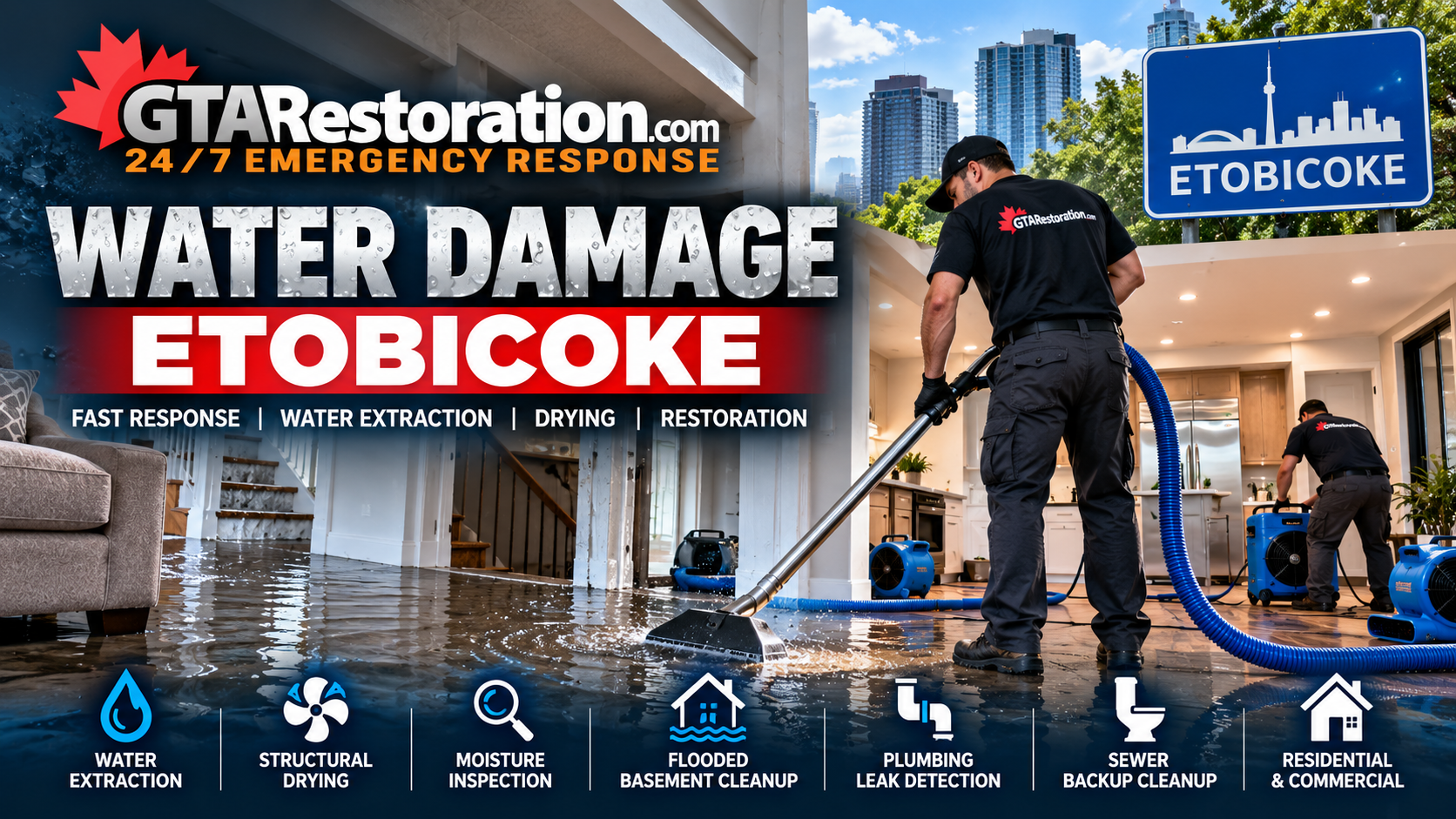
Etobicoke Water Damage Cleanup and Repairs
Etobicoke water damage can start with a burst pipe, a leaking appliance or a flooded basement. Water may reach walls and floors before you notice the full problem. GTA Restoration helps homes and businesses with water extraction, moisture checks and drying after leaks and floods.
First, the cleanup plan must address the source and any safety risks. Then, crews can assess which materials need drying, cleaning or removal. Our water damage restoration team explains the work ahead. You can then plan for cleanup, drying and the repairs your home needs.
Safe First Steps After a Leak or Flood
Check safety before entering. Water near outlets, heaters or an electrical panel can create a shock risk. Stay out and contact your electric utility to arrange a safe power shutoff. Also, follow the Electrical Safety Authority’s flood advice. Have a licensed electrical contractor check any system that floodwater may have damaged.
- Stop the leak only if you can reach the shutoff safely.
- Keep children and pets away from floodwater and sewage.
- Take photos from a safe place and contact your insurer.
- Stay clear of sagging ceilings and damaged floors.
Also, report basement flooding to Toronto 311. If you suspect a sewer backup, avoid using sinks and toilets until the problem is resolved. See the City’s basement flooding guidance for local steps.
Finding the Source of Etobicoke Water Damage
A stain shows where water appeared, but the leak may start elsewhere. For example, a pipe above a ceiling can send water into several rooms. For Etobicoke water damage, crews check the source and the path of the water. This helps them plan the right work.
Common causes include burst pipes, failed supply hoses, sump pump problems and rain entering through the building. First, a plumber or other trade may need to fix the source. Then our basement recovery team can help with wet rooms and contents.
How Water Damage Restoration Works
Water Extraction and Contamination Checks
Once access is safe, crews check the water source and choose how to clean the area. Water extraction removes standing water so the next stage can begin. However, clear-looking water is not proof that it is clean.
Sewer backups need extra care. Crews may need safety gear and barriers to keep waste out of clean rooms. Some items may also need to go. Do not aim household fans at sewage or suspected mould. First, the team must check whether the water is clean and choose safe work methods.
Structural Drying and Moisture Checks
Next, crews use suitable air movers and dehumidifiers to dry materials that can stay. Structural drying must reach wet layers below the surface too. For example, a floor may feel dry while its backing or the layer below still holds moisture.
During drying, readings from affected materials help track progress. Crews can then adjust equipment or investigate areas that stay wet. Our options for hard-to-reach areas explain targeted approaches. Ask what drying targets and follow-up checks apply to your property before equipment comes out.
Repairs After Flood Cleanup
Some materials can dry in place. Others may be too swollen, damaged or contaminated to keep. For instance, sewage-soaked insulation needs a different response from a hard surface affected by a fresh supply leak. For clean-water losses, the EPA’s guide to wet materials explains what may dry in place and what needs to go.
Finish drying before closing walls or installing new flooring. Otherwise, trapped moisture may remain behind the repairs. Ask for a clear list of items to keep, remove and replace, along with any separate plumbing or building work.
Mold Concerns After Water Damage
Damp materials can support mould growth. Therefore, fixing the moisture source belongs in every cleanup plan. Musty smells or visible patches need a closer look, especially after an old or hidden leak.
If crews find growth, the plan may need controlled mould removal as well as drying. Our local mould assessment and cleanup page explains the next steps. Spraying over a stain does not resolve wet material behind it.
Homes, Condos and Business Properties
Etobicoke water damage can affect a single room or several connected spaces. In a condo, tell the building manager early. Water may reach another unit or a shared space. Also, arrange access for the people who need to inspect those spaces.
For shops and offices, first agree on safe access and where to put equipment. The flood cleanup plan should keep staff and customers out of work areas. Also, discuss how to protect stock and which rooms must stay closed.
Cleanup Costs and Insurance Records
The cost depends on the wet area, materials, access and cleanup needs. Therefore, ask for a written scope and cost estimate. It should list the work to remove water, dry rooms and make repairs. Also, ask how the team will handle extra work if it finds hidden damage.
Also, keep photos, invoices and a list of damaged items. Ask for moisture readings and work records where relevant. However, your insurer or broker must confirm what your policy covers. A price for the work does not prove that your plan will pay.
Reducing the Risk of Another Flood
After flood cleanup, review the cause before you rebuild. A licensed plumber can assess whether a backwater valve, sump pump or other change suits the property.
The City’s flood prevention subsidy may help pay for some work. First, check who can apply, which contractor licences the City accepts and what permits you need. Funding is not automatic. You need a permit for a backwater valve. Also, leave it exposed until the City has checked the work.
Need Help With Etobicoke Water Damage?
For help with Etobicoke water damage, call GTA Restoration to discuss water removal, drying and repairs. Tell us where the water entered and which rooms it reached so we can plan the next steps.
Learn More
Basement Recovery | Drying Difficult Spaces | Local Mould Help
For non-emergencies use our contact form
Etobicoke Water Damage Support
Good water damage restoration starts with a clear plan. Use these points to prepare for the visit and understand what comes next.
1. Explain What Happened
First, share when the leak began and which rooms got wet. Also, mention any past floods or recent repairs.
2. Plan Safe Access
Tell the team about electrical concerns or sewage. Then arrange entry only when conditions allow a safe inspection.
3. Discuss Water Extraction
Ask how crews will remove standing water and protect nearby dry rooms. The approach depends on the water source.
4. Review Structural Drying
Structural drying may need several visits. Therefore, agree on access for moisture checks and instructions for the equipment.
5. Keep a Contents List
Record damaged furniture and stored goods. Also, photograph items and model numbers from a safe place before disposal.
6. Check the Flood Cleanup Scope
Ask which work the flood cleanup quote includes. Confirm separate repairs and costs before approving extra work.
7. Keep Your Records
Save photos, invoices and drying records together. Then ask your insurer what else it needs to review the loss.
8. Plan for Prevention
Finally, discuss the cause of the Etobicoke water damage. Choose repairs that address the source before replacing finishes.
Need help after a leak or flood?
Call GTA Restoration to discuss your property and the next steps.
Service Areas Across Canada
GTA Restoration serves communities across Canada, including Toronto and the GTA. U.S. locations are opening. Browse our Canadian service areas below, and contact us to confirm services and availability for your address.
Search
- Air Duct Cleaning Montreal
- Ajax Asbestos Removal
- Ajax Mold Removal
- Ajax Water Damage
- Asbestos Removal Calgary
- Asbestos Removal Edmonton
- Asbestos Removal Fort Saskatchewan
- Asbestos Removal Gloucester
- Asbestos Removal Grimsby
- Asbestos Removal Hamilton
- Asbestos Removal Kanata
- Asbestos Removal Kitchener
- Asbestos Removal Laval
- Asbestos Removal Lincoln
- Asbestos Removal Montreal
- Asbestos Removal Nepean
- Asbestos Removal Niagara Falls
- Asbestos Removal Orleans
- Asbestos Removal Ottawa
- Asbestos Removal Sherwood Park
- Asbestos Removal Spruce Grove
- Asbestos Removal St Catharines
- Asbestos Removal St-Albert
- Asbestos Removal Thorold
- Asbestos Testing Hamilton
- Asbestos Testing Montreal
- Asbestos Testing Petersburg
- Aurora Mold Removal
- Aurora Water Damage
- Beaconsfield Asbestos Removal
- Brampton Asbestos Removal
- Brampton Mold Removal
- Brampton Water Damage
- Burlington Asbestos Removal
- Burlington Mold Removal
- Burlington Water Damage
- Burst Pipe Montreal Frozen Pipe
- Burst Pipe Repair Edmonton
- Burst Pipe Repair Ottawa
- Caledon Mold Removal
- Caledon Water Damage
- Calgary Mold Removal
- Calgary Water Damage
- Cambridge Mold Removal
- Cambridge Water Damage
- Clarington Mold Removal
- Concord Mold Removal
- Concord Water Damage
- Cooksville Mold Removal
- Edmonton Water Damage
- Emergency Roofing Vancouver
- Etobicoke Asbestos Removal
- Etobicoke Mold Removal
- Etobicoke Water Damage
- Fire Damage Grimsby
- Fire Damage Lincoln
- Fire Damage Niagara Falls
- Fire Restoration Fort McMurray
- Fire Damage Restoration Thorold
- Fire Damage St Catharines
- Flood Cleanup Grimsby
- Flood Cleanup Lincoln
- Flood Cleanup Niagara Falls
- Flood Cleanup St Catharines
- Flood Cleanup Thorold
- London Mold Removal
- London Water Damage
- Markham Asbestos Removal
- Markham Mold Removal
- Markham Water Damage
- Mississauga Asbestos Testing
- Mississauga Mold Removal
- Mississauga Water Damage
- Mold Inspection Removal Kitchener
- Mold Remediation Montreal
- Mold Removal & Inspection LaSalle
- Mold Removal Anjou
- Mold Removal Boucherville
- Mold Removal Brossard
- Mold Removal Burnaby
- Mold Removal Chambly
- Mold Removal Chateauguay
- Mold Removal Chomedey
- Mold Removal Coquitlam
- Mold Removal Dollard Des Ormeaux
- Mold Removal Dorval
- Mold Removal Edmonton
- Mold Removal Fort Saskatchewan
- Mold Removal Gloucester
- Mold Removal Grimsby
- Mold Removal Hamilton Inspection
- Mold Removal Ile Bizard
- Mold Removal in Osgoode
- Mold Removal Beaconsfield
- Mold Removal Kahnawake
- Mold Removal Kanata
- Mold Removal Kirkland
- Mold Removal Laval
- Mold Removal Lincoln
- Mold Removal Longueuil
- Mold Removal Montreal East
- Mold Removal Mount Royal
- Mold Removal Nepean
- Mold Removal New Westminster
- Mold Removal Niagara Falls
- Mold Removal Orleans
- Mold Removal Ottawa
- Mold Removal Cumberland
- Mold Remediation Hampstead
- Mold Removal Remediation Roxboro
- Mold Removal Richmond BC
- Mold Removal Rideau Lakes
- Mold Removal Rockcliffe Park
- Mold Removal Saint Hubert
- Mold Removal Saint Laurent
- Mold Removal Sherwood Park
- Mold Removal Spruce Grove
- Mold Removal St Catharines
- Mold Removal Ste Dorothee
- Mold Removal St۔ Albert
- Mold Removal Surrey
- Mold Removal Thorold
- Mold Removal Vancouver
- Mold Removal Vanier
- Mold Removal Westmount
- Montreal Biohazard Cleanup
- Montreal Emergency Plumber
- Montreal Fire Restoration
- Montreal Flood Cleanup
- Montreal Odor Removal
- Montreal Roofing Emergency
- Montreal Sewer Backup Cleanup
- Montreal Water Leak Detection
- Montréal Asbestos Removal
- Montréal Emergency Plumbing
- Montréal Mold Removal
- Montréal Pipe Burst Emergency
- Montréal Water Damage
- Newmarket Mold Removal
- Newmarket Water Damage
- North York Mold Removal
- Oakville Mold Removal
- Oakville Water Damage
- Oshawa Mold Removal
- Oshawa Water Damage
- Ottawa Air Duct Cleaning
- Pickering Mold Removal
- Pickering Water Damage
- Red Deer Water Damage
- RedDeer Mold Removal
- Richmond Hill Mold Removal
- Richmond Hill Water Damage
- Roof Repair Lincoln
- Roof Repair Niagara Falls
- Roof Repair St Catharines
- Scarborough Asbestos Removal
- Scarborough Mold Removal
- Scarborough Water Damage
- Sewage Cleanup Edmonton
- Sewer Backup Lincoln
- Sewer Backup Niagara Falls
- Sewer Backup Ottawa
- Sewer Backup St Catharines
- Thornhill Mold Removal
- Toronto & GTA Asbestos Removal
- Toronto & GTA Mold Removal
- Toronto Air Duct Cleaning
- Toronto Water Damage
- Unionville Mold Removal
- Unionville Water Damage
- Vancouver Asbestos Removal
- Vancouver Biohazard Cleanup
- Vancouver Emergency Plumber
- Vancouver Emergency Plumbing
- Vancouver Fire Restoration
- Vancouver Flood Cleanup
- Vancouver Mold Removal
- Vancouver Odor Removal
- Vancouver Pipe Burst Emergency
- Vancouver Sewer Backup Cleanup
- Vancouver Water Damage
- Vancouver Water Leak Detection
- Vaughan Mold Removal
- Vaughan Water Damage
- Vermiculite Removal Ottawa
- Water Damage Grimsby
- Water Damage Kanata
- Water Damage Kitchener
- Water Damage Lincoln
- Water Damage Longueuil
- Water Damage Nepean
- Water Damage Niagara Falls
- Water Damage Orleans
- Water Damage Ottawa
- Water Damage Repair Montreal
- Water Damage Laval Montreal
- Water Damage Restoration Thorold
- Sewage Backup Cleanup Montreal
- Water Damage St Catharines
- Water Damage Vancouver
- Water Flood Damage Repair Hamilton
- Flood Damage Repair Hampstead
- Whitby Water Damage
- Woodbridge Asbestos Removal
- Woodbridge Mold Removal
- Woodbridge Water Damage
- Restoration Equipment Rental
Etobicoke Water Damage FAQs
What should I do after a leak?
For Etobicoke water damage, check safety first. Stay out of water near power sources and call for help.
Should I report basement flooding?
Yes. Call Toronto 311 to report the flood. Then let your insurer know too.
How long does structural drying take?
It depends on the materials and how wet they are. Therefore, crews use repeat readings to check progress.
Can wet flooring stay?
Sometimes. However, dirty water or damage may mean the floor needs to come out. Crews must also check underneath.
Does insurance cover flood cleanup?
It depends on your policy and what caused the loss. Ask your insurer what it will pay.
Can Toronto help fund prevention work?
The City may help pay for some work. First, check who can apply and which permits you need.
Direct Billing & Insurance Claims
Ask your insurer about coverage, deductibles and the records it needs.

In-House Financing Available
Financing up to 24 months. No interest. No money down. Ask us about the terms.
Learn more ↴ 
RELATED ARTICLES
 Facebook
 Instagram
 LinkedIn
 X / Twitter
 YouTube


