...

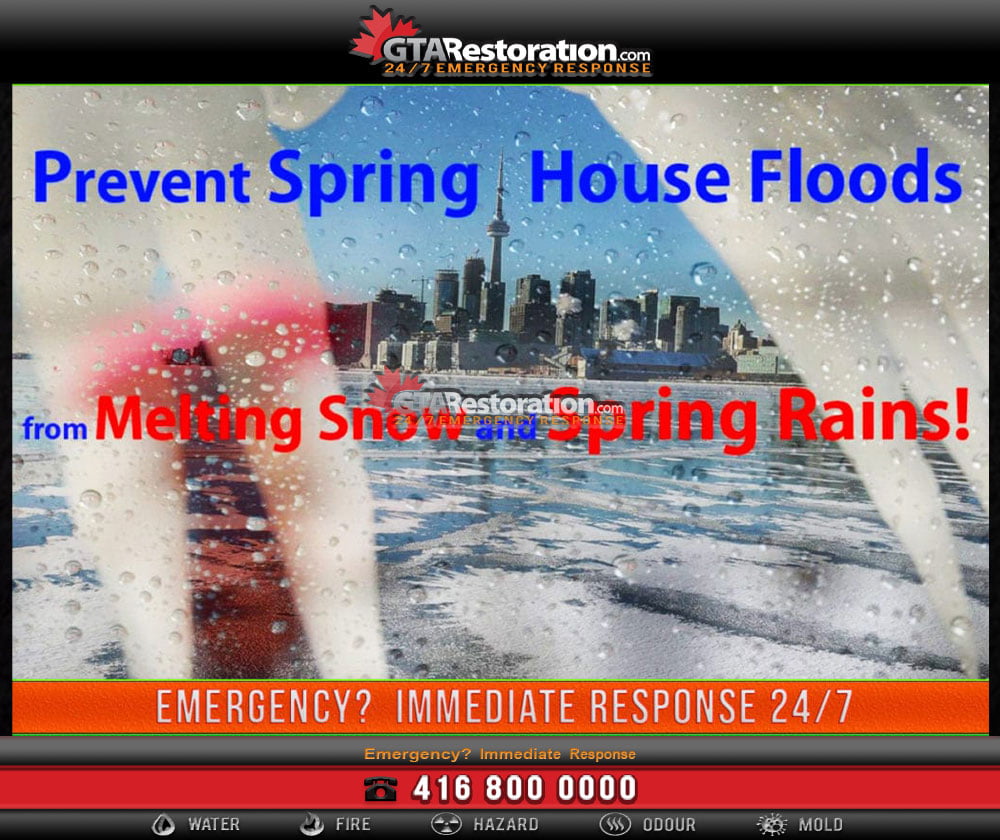
GTA Restoration spring flood prevention graphic with the Toronto skyline, melting ice and raindrops.


Spring Flood Prevention for Snowmelt and Rain

Spring flood prevention starts before the snow melts. Rain and a fast thaw can send water toward your home. Blocked drains, poor grading and leaks can then allow water into the basement.

Therefore, a spring flood prevention plan should cover outdoor drainage and indoor plumbing. These checks can reduce risk, though no measure prevents every flood. GTA Restoration helps Toronto and GTA property owners with basement flooding, water removal and cleanup.

Call Us: 416-800-0000

Snowmelt Flood Prevention Starts with Drainage

Frozen ground cannot readily absorb rain or melting snow. As a result, more water flows across the surface. Heavy rain during a thaw adds to the load.

First, look for places where water pools near your home. Then, check where it can drain. The Toronto and Region Conservation Authority’s spring safety guide explains the risks of rapid snowmelt and rising water.

Clear Gutters and Check Downspouts

Leaves, ice and debris can block roof drainage. As a result, water may spill over gutters and collect beside the foundation. Arrange safe cleaning and repairs before the thaw. Use professional help for work beyond safe ground access.

Also, check where each downspout ends. Toronto recommends that disconnected downspouts drain ideally two metres from foundation walls. Avoid sending water onto neighbouring land or creating icy paths.

For more detail, read the City’s home drainage guidance. Follow local requirements when changing drainage connections.

Keep Snow Away from Low Entry Points

Where safe and practical, move piled snow away from foundation walls, window wells and exterior doors. Also, avoid placing new snow piles where they block drains or direct meltwater toward the house.

Also, keep drainage paths clear without sending water toward another property. If a roadside drain is blocked and unsafe to reach, report it to the municipality.

The City of Mississauga’s thaw advice offers practical checks for snow and ice.

Check Grading and Window Wells

The ground beside your home should slope away from the foundation. However, soil can settle and leave low spots. Then, note where puddles form after rain or a thaw.

Also, clear accessible leaves and debris from window wells. Standing water there may signal a drainage problem. Ask for advice before changing the grade or covering a basement window.

Include these spots in your spring flood prevention checks each year.

Find the Cause of Basement Leaks

Look for new stains, damp corners and water near windows. Next, record when each sign appears. For example, a leak that follows rain may need a different repair from a leaking pipe.

Do not assume that surface caulk will fix every crack. Recurring leaks or signs of wall movement need an assessment. Our basement leak repair options explain approaches to water entry and drainage.

Spring Flood Prevention Inside Your Home

Test Your Sump Pump Before the Thaw

If your home has a sump pump, check it before wet weather. Follow the maker’s testing and care instructions. Also, check that its discharge route is clear and directs water to an approved location.

A power outage can stop a standard electric pump. Therefore, ask a plumber about suitable backup power and pump capacity. These steps support spring flood protection, but the setup must suit your home.

Backwater Valves and Spring Basement Flooding

A backwater valve helps stop sewage from flowing back through a drain line. A sump pump handles collected groundwater. Therefore, the two devices serve different purposes.

Ask a licensed plumber whether a valve suits your system. Then, follow its maintenance schedule. Do not use connected plumbing fixtures while the valve is closed, since wastewater cannot drain away.

Read our drain care and backup guide. Toronto homeowners can also review City funding and device guidance before planning eligible work.

Prepare Your Household for Heavy Rain

Store important papers and valuable items above basement floor level. Also, keep exits clear and save key contact numbers where everyone can find them.

Follow weather notices and local flood alerts. Then, discuss where to go if you must leave. A spring flood prevention plan should include what to do when drainage measures cannot keep up.

What to Do When Spring Basement Flooding Starts

Keep people and pets away from floodwater. Stay out of water near electrical equipment. Contact your local electric utility if water may have reached the electrical system.

Follow the Electrical Safety Authority’s flood advice. Do not enter the water to reach a panel or plug in a pump.

Once the area is safe, arrange water removal, cleanup and moisture checks. Our flooded basement cleanup service can help assess the next steps.


Need Help with Spring Basement Flooding?

Call GTA Restoration to discuss water entry, cleanup and drying needs.

Call Us: 416-800-0000

Learn More

Basement Leak Repairs | Drain Care and Backup Advice | Basement Cleanup Services
Share this... Spread the word!


Build Your Spring Flood Prevention Checklist

Keep a short record of checks, repairs and follow-up dates. This helps your household stay prepared as snow melts and rain returns.

1. Set a Check Date

First, plan a walk around before the thaw. Then, repeat it after heavy rain when conditions are safe.

2. Mark Trouble Spots

Note where water pools or stains appear. Also, take dated photos so you can compare changes over time.

3. Assign Drainage Tasks

Decide who will arrange gutter cleaning and drain checks. Book professional help for unsafe access before problems grow.

4. Save Pump Details

Keep the pump manual and service records together. Then, note test dates and backup needs for the plumber.

5. Review Spring Flood Protection

List the devices your home has. Also, confirm how each one works and which plumbing fixtures a backwater valve serves.

6. Store Key Items Safely

Move papers and keepsakes to a higher, dry storage area. Keep basement exits and equipment access clear at all times.

7. Plan Who to Call

Save utility, municipal and cleanup contacts. Also, make sure everyone knows how to follow local alerts and leave safely.

8. Review Repairs After Rain

Finally, recheck any area that previously leaked. Record new dampness or returning stains and arrange follow-up when needed.


Noticed a leak during the spring thaw?
Call GTA Restoration to discuss your property and next steps.

Call Us: 416-800-0000


GTA Service Centre


Spring Flood Prevention FAQs

Why can melting snow cause a flood?

Frozen ground may not absorb water fast enough. As a result, meltwater runs toward low areas.

Where should downspouts drain?

Direct water away from the foundation to a suitable area. Also, avoid neighbouring land and icy walking paths.

Does every home need a sump pump?

No. The right setup depends on your drainage system. First, ask a plumber to assess the property.

Is a backwater valve the same thing?

No. It limits sewer backflow. A sump pump moves collected groundwater. Therefore, they address different risks.

What if water reaches electrical equipment?

Stay out of the flooded area. Then, contact your local electric utility for safe disconnection advice.


Learn more ↴


Direct Billing & Insurance Claims

Ask your insurer about coverage, deductibles and the records it needs.


Payment options

In-House Financing Available

Financing up to 24 months. No interest. No money down. Ask us about the terms.


Certifications & Insurance

View our firm certification, technician qualifications and insurance documents.

IICRC Certified Firm

GTA Restoration Inc.

Firm number 199912
Valid through

View IICRC certificate (PDF) — opens in a new tab

Business Insurance

GTA Restoration Group Inc.

$5 million general liability per occurrence
$8 million contractors pollution per claim
–

View insurance certificate (PDF) — opens in a new tab

IICRC Technician Qualifications

Richard Mark Provence · Registration 55726
Certificate expires

Water Damage Restoration · Fire & Smoke Restoration · Applied Microbial Remediation · Odor Control · Trauma & Crime Scene

View technician verification (PDF) — opens in a new tab

Insurance is subject to policy terms, conditions and exclusions.


Emergency? Click to Call!