
A basement flood insurance claim example is easiest to understand when you look at what actually happens in the first 24 hours after water enters the property. A homeowner walks downstairs at 6:30 a.m. and finds two inches of water across the basement floor, soaked drywall, a damaged furnace room threshold, and boxes of stored items floating near the laundry area. The panic is real, but so is the deadline. The way the loss is documented in those first few hours can shape what the insurance company pays, what it questions, and how long the claim takes.
A real-world basement flood insurance claim example
Let’s use a practical scenario. A finished basement in a single-family home takes on water after a heavy storm overwhelms the municipal system and sewage backs up through the floor drain. The lower level includes a rec room, one bedroom, a three-piece bathroom, and a storage area. Water affects laminate flooring, baseboards, drywall up to 12 inches, a sectional sofa, an area rug, a dehumidifier, and several boxes of seasonal decorations.
The homeowner calls for emergency mitigation right away. Technicians extract standing water, set up drying equipment, remove contaminated porous materials, and photograph every affected area before demolition progresses. That response matters because sewage backup is not treated the same way as clean water. If the source is contaminated, insurers usually expect sanitary handling, disposal records, moisture readings, and detailed notes on what was removed and why.
In this example, the policy includes sewer backup coverage with a specific limit. That detail is critical. Many owners assume any basement flooding is automatically covered, but coverage depends on the cause of loss and the endorsements attached to the policy. Water entering from surface flooding, sewer backup, sump pump failure, burst plumbing, and groundwater seepage can all be treated differently.
What the insurance company may cover
In this basement flood insurance claim example, the insurer sends an adjuster after the emergency work begins. The adjuster reviews the policy, cause of loss, photos, mitigation invoice, and inventory of damaged contents. If the policy wording supports the loss, payment may be split into a few parts.
First, there is emergency mitigation. This often includes water extraction, setup of air movers and dehumidifiers, antimicrobial treatment where appropriate, and controlled demolition of wet drywall, insulation, and flooring. Carriers generally want the damage stopped from getting worse, so immediate mitigation is usually a necessary part of the claim, not an optional extra.
Second, there is building damage. In our example, the claim may include replacement of lower drywall cuts, insulation, baseboards, affected doors or trim, flooring, and repainting. If vanity toe-kicks, bathroom finishes, or built-in cabinets were water damaged, those may also be included. Some policies pay replacement cost, while others initially pay actual cash value and release the balance later after repairs are completed.
Third, there is contents damage. The insurer may consider the sofa, rug, stored clothing, holiday decor, and other personal property that had direct contact with contaminated water. Items made of porous material often cannot be safely restored after sewage exposure. On the other hand, some non-porous items may be cleaned and sanitized rather than replaced.
If the basement is a legally rented unit or the damage makes part of the home temporarily unusable, there may also be loss-of-use or additional living expense coverage. That said, this area depends heavily on policy language and actual occupancy. Owners should never assume it applies without checking.
What often gets denied or reduced
This is where claims become frustrating. Even in a valid basement flood insurance claim example, not every cost makes it through without pushback.
Stored items are one common issue. Insurers may ask for proof of ownership, age, and value. If the homeowner cannot provide photos, receipts, model numbers, or even a clear written inventory, the contents portion of the claim can shrink quickly. The same problem happens with finished basements that were renovated years ago without updated documentation.
Pre-existing moisture is another problem. If the carrier sees staining, old mold growth, long-term seepage, or deferred maintenance, it may argue part of the damage did not come from the current event. That can reduce payment or trigger a full denial for certain components.
Code upgrades can also create a gap. If damaged materials must be rebuilt to current code, the policy may not automatically cover the added cost unless ordinance or law coverage is included. Homeowners discover this late more often than they should.
How the numbers might look
Using our example, here is a realistic way a claim could be valued. Emergency extraction and drying might total several thousand dollars. Demolition and disposal of contaminated materials add more. Rebuilding the lower portion of drywall, repainting, replacing flooring in affected rooms, and reinstalling trim could bring the structural portion of the claim into the five-figure range. Contents could add several thousand more, depending on quality and quantity.
Now factor in the deductible and the coverage cap. If the sewer backup endorsement is limited to $15,000 but the total loss reaches $28,000, the homeowner may be responsible for the difference unless another part of the policy applies. This is why two homes with similar basement flooding can end up with very different claim outcomes.
What strengthens a basement flood insurance claim example
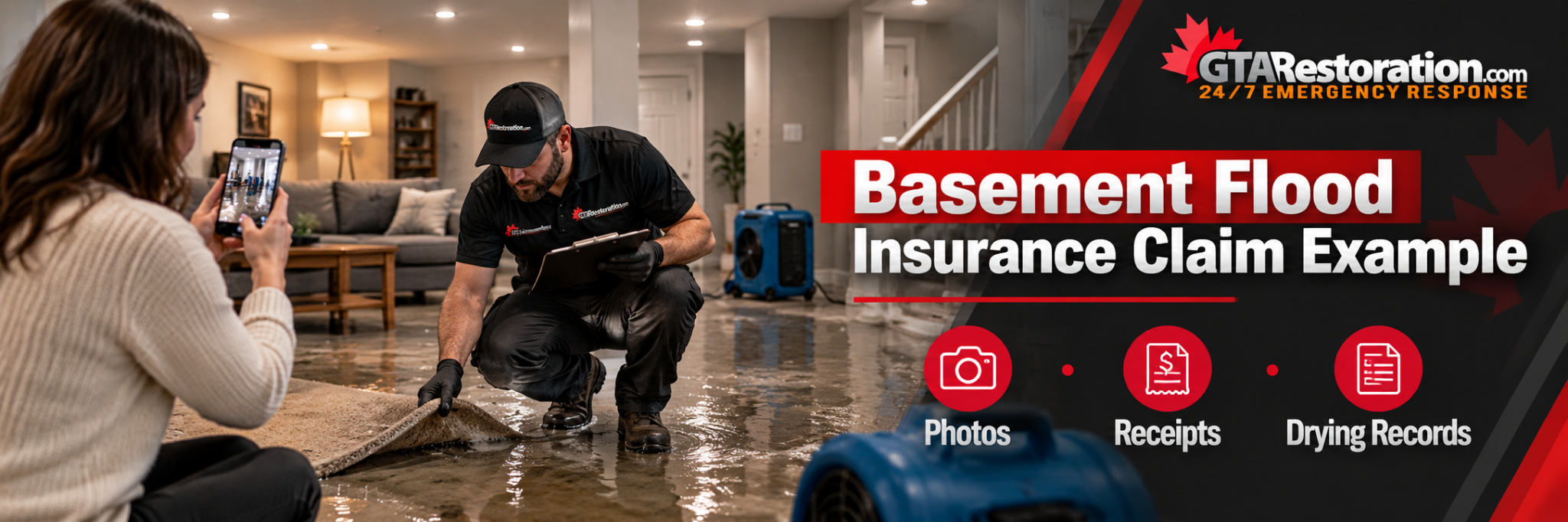
The strongest claims are organized before the adjuster asks for anything. That starts with the cause of loss. If there was a drain backup, sump failure, burst pipe, or appliance leak, document the source immediately. Photos should show both the broad damage and the close-up details. Video helps too, especially before cleanup changes the scene.
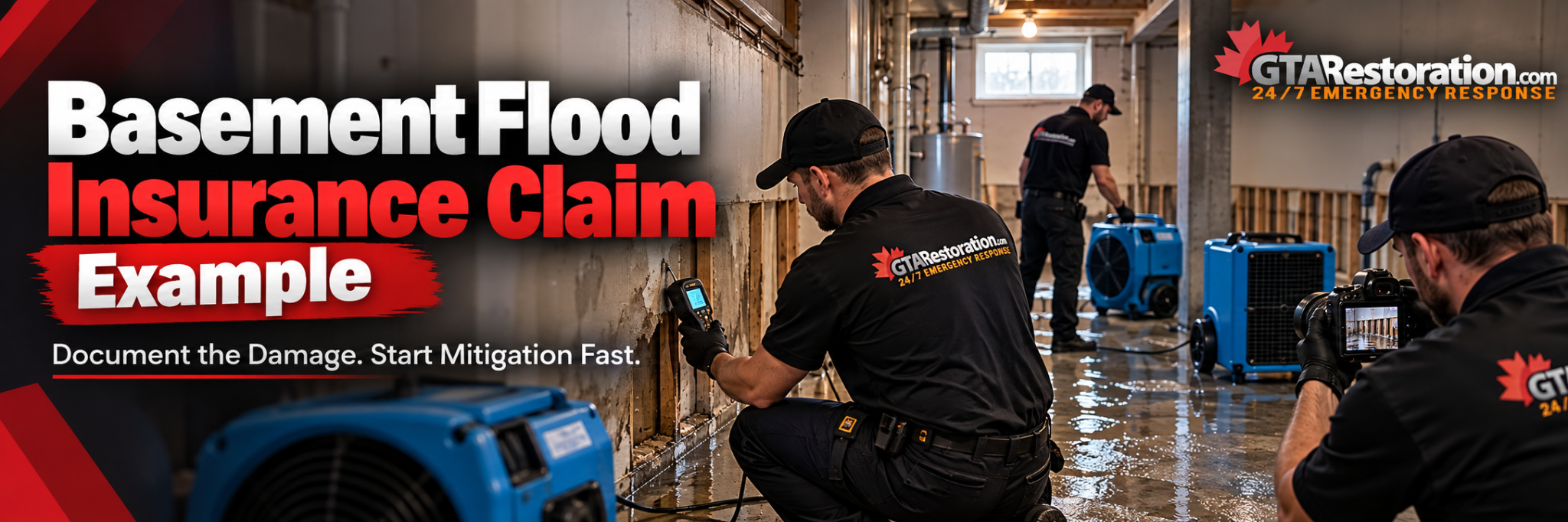
Next comes the moisture record. Professional mitigation teams use meters and thermal imaging to map wet areas and support why materials were removed. That technical documentation can make a major difference when the insurer reviews scope. It is easier to justify removing wet wall cavities when the readings are logged room by room.
Contents should be listed item by item. A vague statement like “storage boxes damaged” is weak. A stronger version identifies the contents, estimated age, condition before loss, and whether they were discarded due to contamination. If disposal happens too early without documentation, the insurer may question the entire contents claim.
Invoices also need detail. “Basement cleanup” is not enough. Carriers respond better to line items that separate extraction, equipment time, monitoring visits, demolition, disposal, cleaning, and antimicrobial application. Clear paperwork reduces disputes because the adjuster can see what was done and why.
Where homeowners make costly mistakes
The first mistake is waiting. Water damage spreads fast, and contaminated water raises safety concerns immediately. Delayed extraction can increase structural damage, create odor issues, and open the door for the insurer to argue that preventable worsening occurred after the initial event.
The second mistake is throwing everything out before proper documentation. People want the mess gone, which is understandable, but disposal without photos, counts, and notes can damage the claim.
The third mistake is assuming the policy wording says what the homeowner thinks it says. Many people use the word flood broadly, but insurers separate flood, backup, seepage, overflow, and plumbing discharge into different categories. One word can change the outcome.
The fourth mistake is using contractors who do not document for insurance review. Fast cleanup matters, but so does technical reporting. The best emergency response teams do both at once.
Why professional mitigation affects the claim
Insurance claims are not paid on emotion. They are paid on documented cause, measurable damage, policy language, and reasonable mitigation. That is why emergency restoration crews play such a large role after a basement water event.
A qualified team does more than remove water. It establishes a timeline, identifies safety risks, separates salvageable from non-salvageable materials, protects unaffected areas, and creates a record the carrier can evaluate. In higher-risk losses like sewage backup, proper containment and disposal records are especially important.
For property managers and landlords, this matters even more. Multi-unit buildings, finished rental basements, and mixed-use properties create extra exposure. There may be tenant contents, shared systems, or business interruption issues layered into the loss. The claim can get complicated fast if the response is not controlled from the start.
What to do right after a basement flood
If the area is unsafe, keep people out and shut off power to affected zones if it can be done safely. Report the loss to the insurer quickly, but do not wait for the adjuster before starting emergency mitigation. Take photos before anything is moved, then continue documenting as cleanup progresses.
Keep samples of damaged finish materials where appropriate, save invoices, and build a written timeline of events. Include when the water was discovered, who was called, what source was identified, and what actions were taken. If plumbing or drainage failures contributed to the loss, get that documented too.
Companies like GTA Restoration are brought into these situations because speed alone is not enough. The response has to stop damage, protect health, and produce claim-ready records while the property is still in crisis mode.
A basement flood claim usually feels overwhelming at first, but strong documentation turns a chaotic event into a manageable process. When the water is moving fast, clarity is what protects the property owner next.
Related