
For non-emergencies use our contact form
Four Principles of Drying After Water Damage
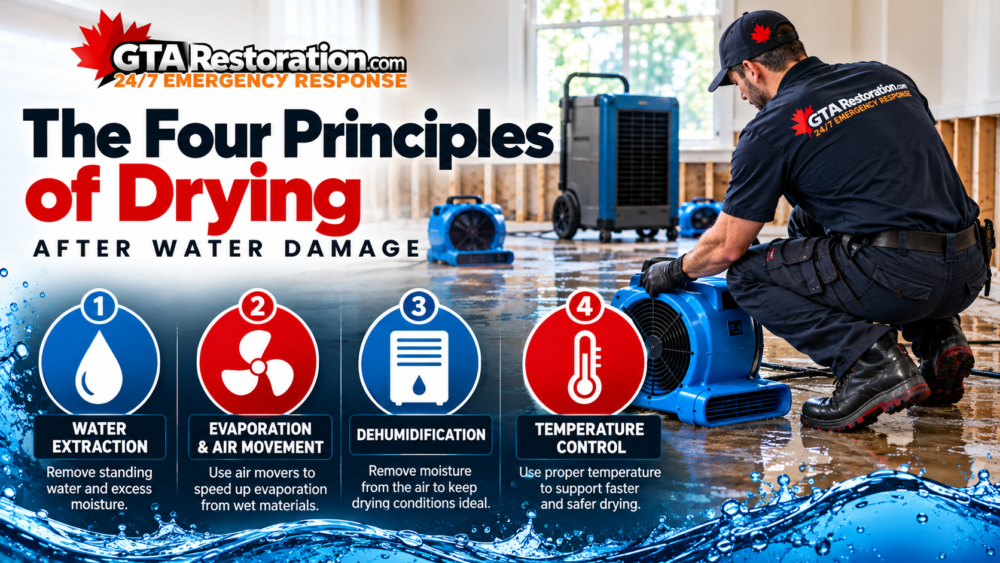
The four principles of drying are water extraction, evaporation, dehumidification and temperature control. Together, they help remove water from wet building materials. However, a floor that looks dry may still hold moisture below its surface.
This guide explains the four principles of drying in plain terms. It also shows why moisture checks matter at each stage. GTA Restoration provides water removal, drying and cleanup for homes and businesses in Toronto and the GTA.
Before the Water Damage Drying Process Starts
First, the crew checks site hazards and the source of the water. A leak can keep adding water. Our leak investigation service can help find an unclear source.
Keep people and pets out of unsafe areas. Also, stay out of standing water near electrical hazards. Do not enter rooms with sagging ceilings or other signs of damage.
Sewage and visible mold need extra care before drying equipment starts. Therefore, do not point fans at contaminated materials. The EPA’s cleanup guidance explains why the water source affects the approach.
1. Water Extraction: Remove Liquid Water
Extraction removes standing water and excess liquid from suitable wet materials. Crews may use pumps or water extractors. The choice depends on how much water is present and whether it is clean.
This step starts the water damage drying process by removing liquid first. However, extraction does not finish the drying job. Carpet backing, wood and subfloors can still hold moisture.
For example, a carpet may feel less wet after extraction. Yet the pad beneath it may remain soaked. Therefore, the crew must check the layers below the visible surface.
2. Evaporation: Help Moisture Leave Materials
Evaporation changes liquid water into water vapour. Air movers help by moving air across wet surfaces that can safely dry in place. This helps wet materials dry.
However, fan placement should suit the job. The room layout, wet materials and access all matter. A fixed spacing rule cannot cover every property.
Some finishes can trap water behind walls or under floors. In those cases, the crew may need access to hidden wet areas. More fans alone may not solve the problem.
3. Dehumidification: Remove Moisture from the Air
As wet materials release moisture, the air becomes more humid. Dehumidifiers remove water vapour from the air. This helps wet materials keep drying.
Air movers and dehumidifiers have different but linked roles. One helps surfaces dry; the other pulls moisture from the air. Therefore, the crew needs to balance both.
Also, outdoor air can affect the setup. Opening windows during warm, humid weather may add moisture. During drying after water damage, ask before changing windows, doors or equipment settings.
4. Temperature Control: Support the Drying Conditions
Temperature affects how quickly moisture leaves a material. However, turning up the heat is not enough. The drying plan must also manage airflow and humidity.
The crew checks what heat levels suit the materials and equipment. Too much heat can damage some finishes or contents. For example, wood floors need careful treatment.
These structural drying principles work together. The equipment maker Legend Brands explains the balance between airflow, humidity and temperature.
How the Four Principles of Drying Work Together
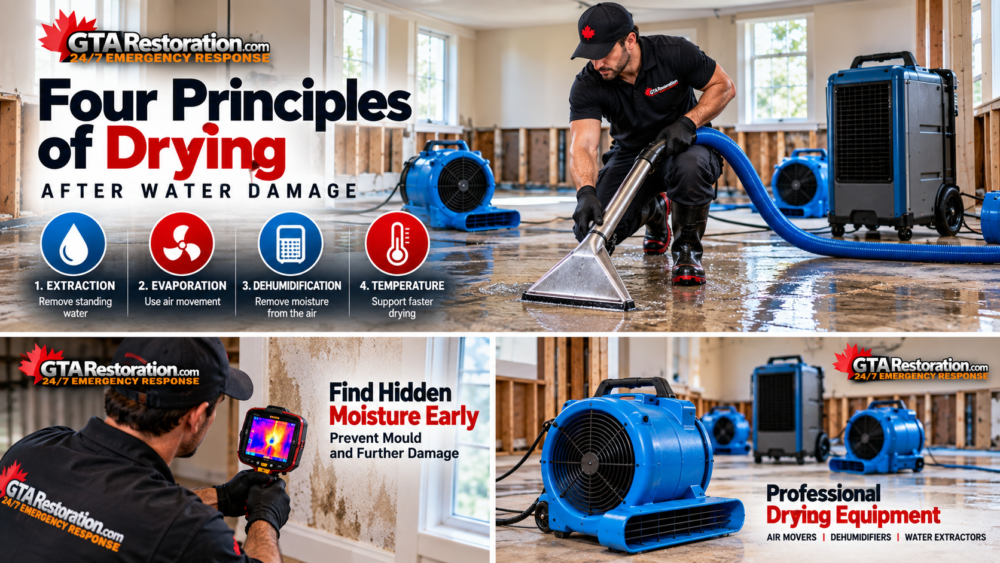
The four principles of drying form one connected process. First, the crew removes as much liquid water as practical. Then, airflow, humidity control and suitable temperatures help the remaining moisture leave.
However, running equipment does not prove that materials are dry. The team must track progress and adjust the plan when needed.
Moisture Checks During the Water Damage Drying Process
Moisture meters help locate wet materials and track changes. Crews also check air temperature and humidity. These readings show whether the drying setup needs an adjustment.
A room can feel dry while a wall or floor remains damp. Therefore, surface feel is not a reliable finish point. The EPA’s moisture investigation guide explains how meters help monitor materials.
How Long Does Drying After Water Damage Take?
There is no fixed timeline for every property. The amount of water, type of material and access to wet areas all affect progress. Also, contamination may change what the crew can save.
The four principles of drying guide the work, but moisture readings guide completion. Ask how the crew sets drying goals for each material. Then, request updates as the work progresses.
Check Materials Before Starting Repairs
Do not cover damp areas with new flooring, paint or wall finishes. First, confirm that the affected materials meet the drying goals. Some damaged items may need to go even after they dry.
Drying also does not replace cleaning or mold removal. For the wider recovery plan, see our cleanup and repair service and homeowner recovery tips.
Need Help Drying After Water Damage?
Call GTA Restoration to discuss water removal, wet materials and moisture checks.
Learn More
Cleanup and Repair Services | Find a Water Leak | Homeowner Recovery Tips 

 Facebook
  Instagram
  LinkedIn
  X / Twitter
  YouTube