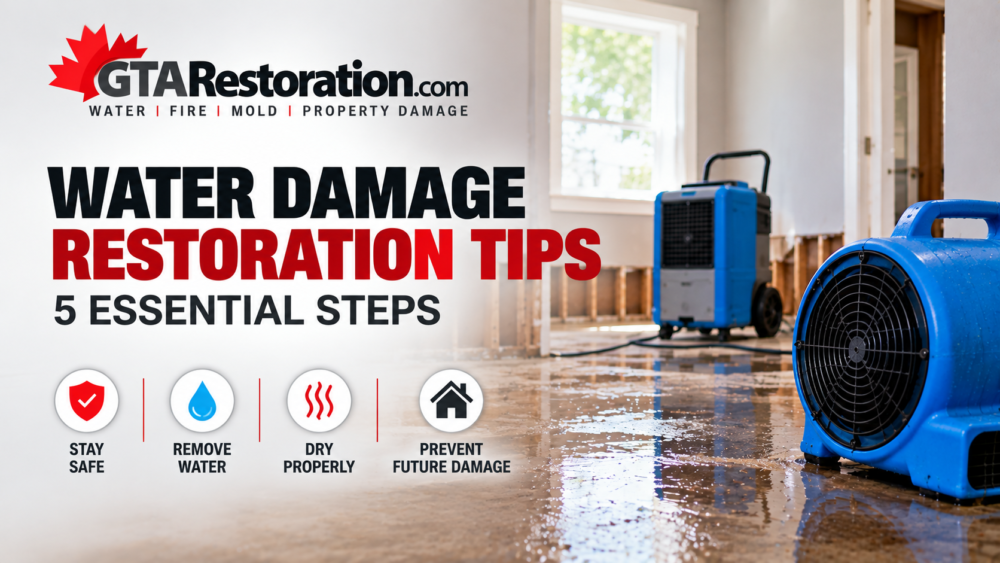
Water Damage Restoration Tips for the First Few Minutes
These water damage restoration tips can help you respond safely after a burst pipe, plumbing leak, flooded basement or other water emergency. Water can move beneath flooring, behind drywall and into nearby rooms before you see the full extent of the damage. Therefore, your first few actions can make a major difference.
Before cleanup begins, focus on safety and stop the source when possible. Next, document the damage and check how far the moisture has travelled.
1. Put Safety Before Water Cleanup
First, check for electrical hazards. Do not enter standing water if it has reached outlets, appliances, wiring or an electrical panel.
If a sewer backup or contaminated floodwater caused the damage, avoid direct contact. Keep children and pets away until trained technicians inspect and clean the area.
Also, never run fuel-powered pumps, heaters or generators indoors. These machines can produce dangerous carbon monoxide in enclosed spaces.
2. Stop the Water Source When Safe
If a plumbing leak remains active, shut off the affected fixture or main water supply when you can reach it safely. Call a plumber for burst pipes, damaged supply lines or leaks that you cannot locate.
GTA Restoration provides emergency plumbing in Toronto for urgent leaks, burst pipes and related water problems.
Document Water Damage Before Major Cleanup
Once the area is safe, take clear photos and videos. Record the water source, wet building materials, damaged belongings and nearby areas where moisture may have travelled.
In addition, keep plumbing invoices, emergency service records and repair estimates. These records can help organize the restoration process and may support an insurance claim.
Water Damage Restoration Tips for Drying and Cleanup
3. Remove Standing Water Quickly
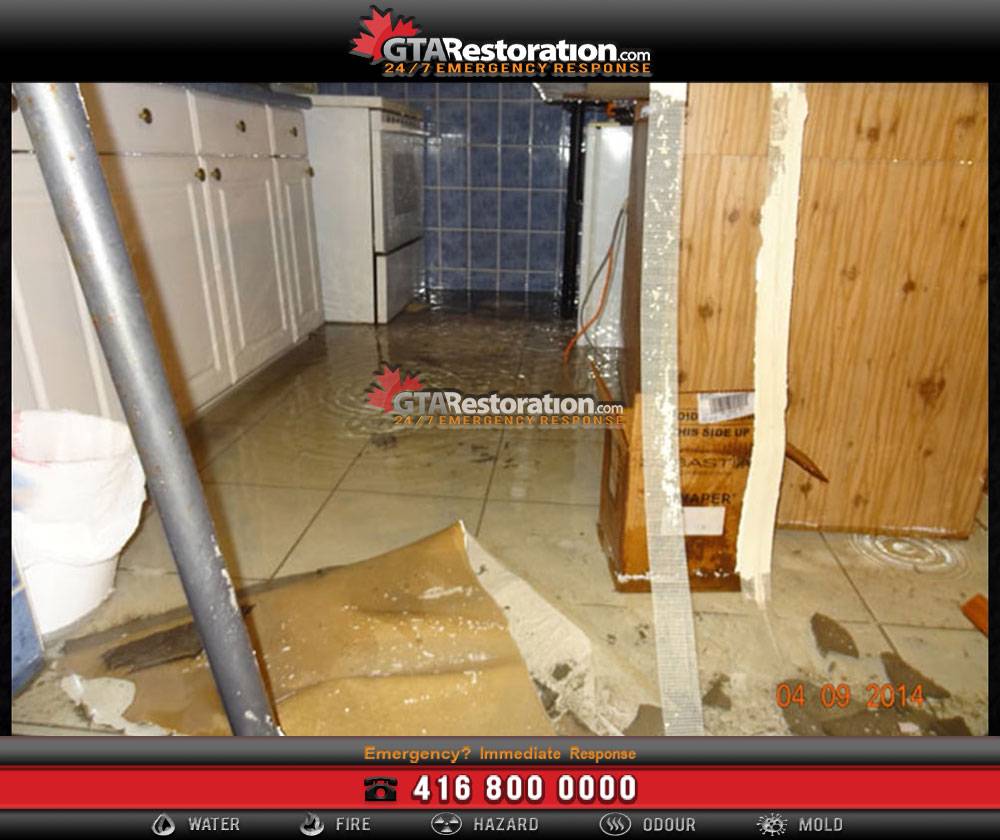
After you stop the source, remove standing water as soon as conditions allow. Small losses may require a wet vacuum, while larger floods often require professional pumps and extraction equipment.
However, visible water represents only part of the problem. Drywall, flooring, wood, cabinets and insulation can continue holding moisture after the surface looks dry.
Check for Hidden Moisture
Water can travel through wall cavities, beneath flooring and into ceilings below the original leak. Therefore, technicians use moisture readings to determine which materials still need drying.
GTA Restoration provides water leak detection and moisture assessment when the source or full extent of the damage remains unclear.
4. Start Structural Drying
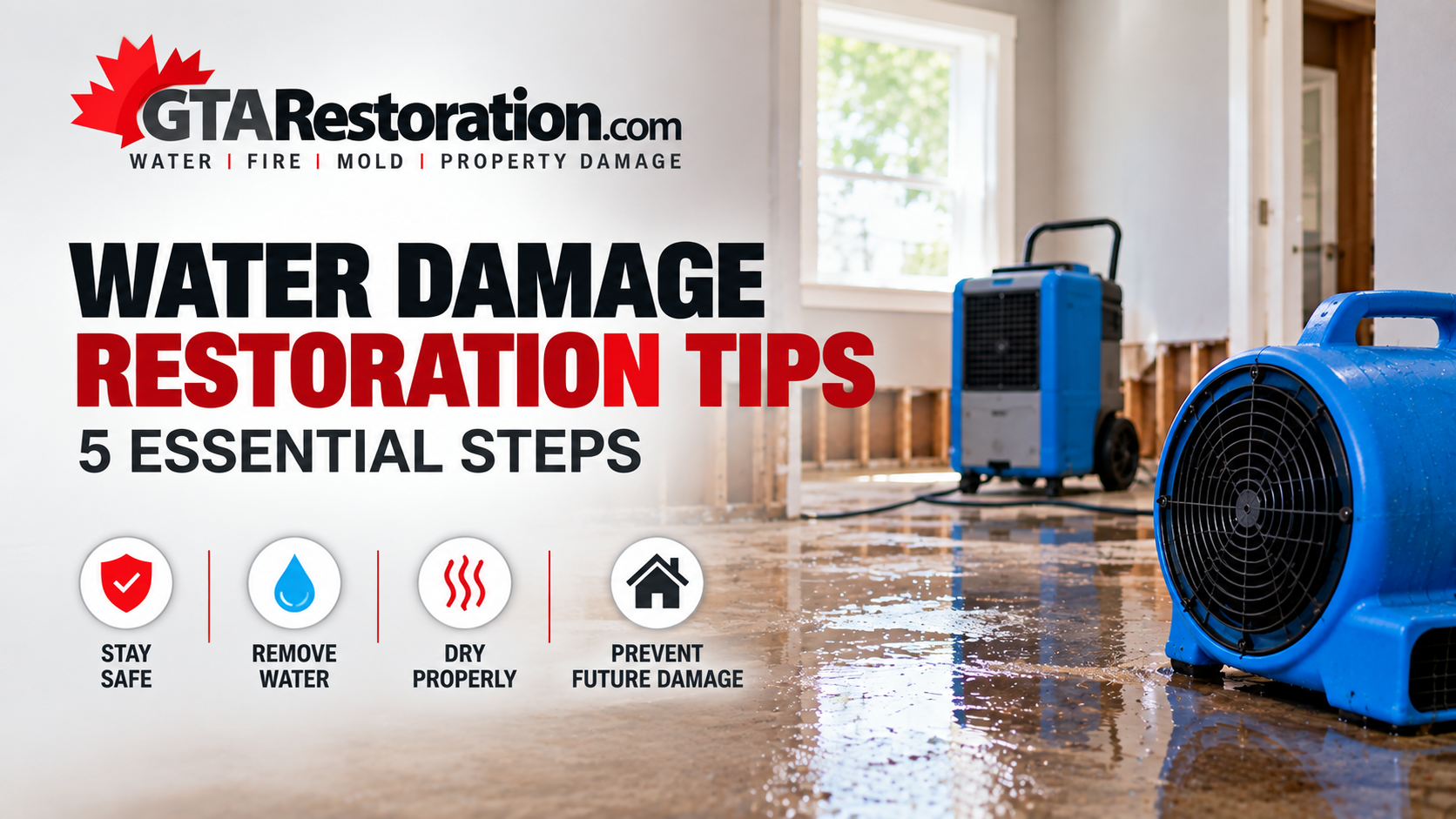
After extraction, technicians use air movement and dehumidification to remove moisture from affected materials. Larger water losses may require professional drying equipment when moisture reaches walls, flooring and other hidden areas.
Technicians also monitor drying progress instead of judging the area only by appearance. A wall or floor may feel dry on the surface while deeper layers still hold moisture.
The Health Canada flood cleanup guide recommends removing standing water and drying flood-damaged homes and belongings promptly. Fast drying can also reduce conditions that support mould growth.
Clean According to the Water Source
The water source determines the cleanup method. A clean plumbing leak requires a different approach from sewage or contaminated floodwater.
For contaminated water, technicians may remove porous materials that they cannot safely clean and dry. In comparison, they may keep some materials affected by clean water after proper extraction, cleaning and drying.
Flooded Basement Cleanup
A flooded basement can involve more than standing water. Moisture may reach electrical equipment, stored belongings, flooring, drywall and mechanical systems.
Check for electrical and contamination hazards before entering. Once the area is safe, begin extraction and drying as quickly as practical.
For larger basement losses, see our flooded basement cleanup service for water removal, drying and restoration support.
Water Damage Restoration Tips for Recovery and Prevention
5. Repair the Cause Before Finishing Restoration
Once technicians complete the drying process, repair the problem that caused the water damage. Otherwise, the same area may become wet again.
Common sources include leaking pipes, failed appliances, roof leaks, foundation seepage, damaged supply lines and sump pump problems.
Watch for Moisture After Cleanup
Continue checking the area after restoration. Look for musty odours, new stains, peeling paint or recurring dampness. These warning signs may point to remaining moisture or an unresolved leak.
If mold appears after water damage, GTA Restoration also provides mold removal and remediation.
Decide What Materials Can Stay
Water does not automatically ruin every material it touches. Technicians can sometimes dry wood, flooring and other building materials successfully when they respond early.
However, the restoration team may remove materials that have severe damage, contamination or conditions that prevent proper drying. The water source, material type and overall condition help determine the best approach.
Contact Your Insurance Provider
Insurance companies handle water losses differently depending on the policy and cause of damage. Therefore, contact your insurer or broker for information about coverage, deductibles and claim requirements.
GTA Restoration can also provide restoration documentation and insurance claims support during cleanup and repairs.
Prevent Future Water Damage
Once restoration is complete, take a few simple steps to lower the risk of another water loss. Check plumbing regularly, maintain sump pumps, inspect appliances and watch for staining around ceilings, walls and cabinets.
In addition, consider installing water-leak sensors near water heaters, washing machines, sinks and other higher-risk areas. Early alerts can help you respond before a small leak becomes a major problem.
When to Call a Water Damage Restoration Company
Consider professional help when water reaches several rooms, enters walls or flooring, involves sewage or creates damage that you cannot safely extract and dry with basic equipment.
A restoration team can inspect moisture levels, extract water, set up drying equipment and track progress until affected materials reach suitable drying conditions.
Ultimately, the most useful water damage restoration tips remain simple: stay safe, stop the source, remove standing water, dry hidden moisture and correct the original cause.
Following these water damage restoration tips can help limit further damage and make the recovery process easier to manage.
Water Damage Emergency?
GTA Restoration provides 24/7 water extraction, moisture detection, structural drying and property restoration throughout Toronto and the GTA.
Active leak or flooding? Stop the source when safe and get help before water spreads farther.
Call Us: 416-800-0000
Learn More
Emergency Flooding in Basement | What to Do After Basement Flooding Fast | Water Damage Restoration | Flooded Basement Restoration Prevention | Flooded Basement Restoration Prevention |Water Damage Restoration GTA













You must be logged in to post a comment.