A fire does not end when the flames are out. In many properties, the harder phase starts after the fire department leaves – when smoke has spread through walls, water has soaked floors and ceilings, and corrosive soot starts damaging surfaces by the hour. This guide to fire damage restoration is built for homeowners, landlords, condo managers, and commercial property operators who need clear action fast.
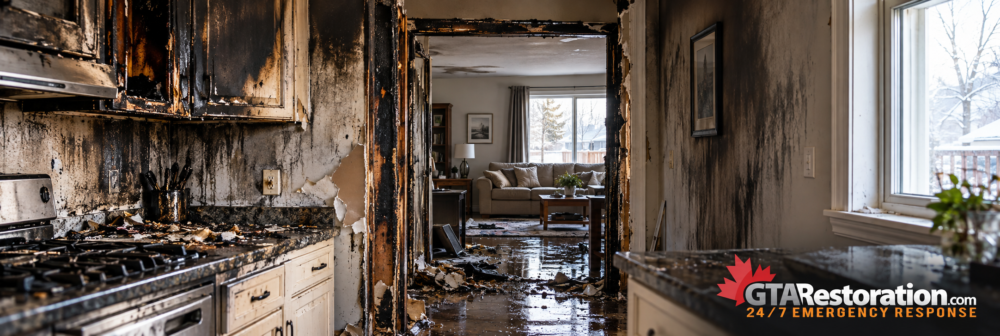
Fire damage is rarely limited to what burned. Heat can weaken structural materials. Smoke can travel through HVAC systems, wall cavities, and shared building spaces. Water used to suppress the fire can create a second emergency involving saturation, microbial growth, and hidden damage. That is why restoration has to move quickly and in the right order.
What fire damage restoration actually includes
Fire damage restoration is the controlled process of making a property safe, stable, clean, and functional again after a fire. That usually starts with emergency mitigation, then moves into cleanup, deodorization, content recovery, repairs, and in some cases full reconstruction.
In a minor kitchen fire, restoration may focus on soot cleanup, odor removal, and replacing damaged materials in one area. In a larger house fire, condo incident, or commercial loss, the work can involve board-up services, water extraction, demolition of unsafe materials, air filtration, structural drying, smoke remediation, and rebuild coordination. The scope depends on how long the fire burned, what materials were involved, how much water was used, and how far smoke traveled.
The biggest mistake property owners make is treating visible damage as the whole problem. Soot settles in places you do not immediately see. Smoke odor penetrates porous materials. Water can pool behind baseboards, under flooring, and above ceilings. A proper assessment has to account for all three damage sources – fire, smoke, and water.
The first 24 hours in a guide to fire damage restoration
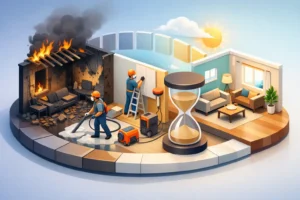
The first day matters more than most people realize. Some soot residues become harder to remove the longer they sit. Metals can begin corroding. Electronics can suffer permanent contamination. Wet materials can swell, stain, or support microbial growth if drying is delayed.
Your first priority is safety. Do not re-enter the property until the fire department or relevant authority says it is safe. Even then, safe entry does not mean safe occupancy. There may be structural instability, electrical hazards, poor air quality, or contaminated surfaces.
Once access is allowed, document the damage before moving items when possible. Photos and video help with insurance and with creating a restoration scope. Then secure the building. Broken windows, open roof areas, or compromised doors expose the property to weather, theft, and further loss.
After stabilization, the restoration team typically focuses on moisture control and contamination control. If firefighting water is present, extraction and drying start immediately. If soot and smoke are widespread, containment and air scrubbing may begin at the same time. The sequence can vary, but speed is not optional.
Step-by-step fire damage restoration process
1. Inspection and damage mapping
Every fire loss starts with a detailed inspection. The goal is to identify what is salvageable, what is unsafe, and what needs immediate mitigation. This includes structural areas, contents, HVAC systems, hidden cavities, and moisture-affected zones.
A professional team will also classify the type of smoke residue involved. Dry soot, wet soot, protein residue, and fuel-related residues behave differently and require different cleaning methods. Using the wrong method can smear contamination or drive it deeper into surfaces.
2. Emergency board-up and site stabilization
If the property envelope is compromised, openings are secured and unstable sections may be temporarily supported. This protects the building while the full restoration plan is being developed.
For condo and commercial environments, stabilization is also about limiting spread to adjacent units or tenant spaces. Fast containment helps reduce business interruption and secondary claims.
3. Water removal and structural drying
Many people are surprised to learn that water mitigation can become one of the largest parts of the job. Fire suppression often leaves behind soaked drywall, insulation, flooring, and framing. If water is not addressed immediately, the property can move from fire loss to a mixed fire-and-water loss.
Professional drying uses moisture meters, thermal imaging, air movers, and dehumidification equipment to track and reduce hidden moisture. This is not something you want guessed at. Materials may look dry on the surface while remaining saturated behind finishes.
4. Soot and smoke removal
Soot is acidic and destructive. It can stain paint, etch glass, damage metals, and permanently discolor finishes if left untreated. Smoke cleanup is more than wiping down visible residue. It often involves HEPA vacuuming, dry cleaning methods, wet cleaning methods, and specialized treatment for different material types.
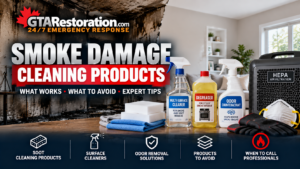
The wrong household cleaner can make things worse. On painted walls, upholstery, electronics, and finished wood, improper cleaning can spread residue and lock in odors.
5. Odor treatment and air quality control
Smoke odor does not disappear because the air smells better for a few hours. If odor-causing particles remain in porous materials, ducts, insulation, or soft contents, the smell returns. Effective odor removal usually requires source removal first, then targeted deodorization.
Depending on the loss, this can include air scrubbers, thermal fogging, hydroxyl or ozone-based treatment in controlled conditions, and duct system cleaning. The right method depends on occupancy needs, building layout, and the materials affected.
6. Content cleaning and pack-out
Furniture, clothing, electronics, documents, and inventory may be restorable even when the room itself needs major work. In some losses, contents are cleaned on site. In others, a pack-out is necessary so items can be inventoried, cleaned, stored, and returned after repairs.
This stage is especially important for landlords, condo boards, and commercial operators dealing with tenant belongings, records, or operational equipment. Chain of custody and documentation matter.
7. Repairs and reconstruction
Once mitigation and cleanup are complete, the property moves into repair. That can mean replacing drywall, insulation, flooring, cabinetry, lighting, or entire assemblies. In more severe losses, reconstruction may include framing, roofing, mechanical systems, and code-related upgrades.
This is where end-to-end coordination becomes valuable. Managing mitigation with one provider and reconstruction with another can create delays, scope gaps, and disputes over responsibility.
Why smoke damage is often worse than expected
A small contained fire can still cause large restoration costs if smoke traveled far beyond the burn area. Smoke follows airflow, so HVAC systems, stairwells, shared corridors, and ceiling cavities can all carry contamination. In condos and commercial buildings, that spread can affect neighboring spaces that never saw open flame.
Protein residue from cooking fires is a common example. It may be nearly invisible, yet it leaves a strong lingering odor and can coat surfaces throughout the property. Electrical fires create another challenge because the residue can be highly corrosive and damaging to components and finishes.
That is why a serious guide to fire damage restoration has to emphasize testing, inspection, and proper cleaning methods, not just cosmetic repair.
Insurance, records, and scope control
Insurance support is often one of the most stressful parts of a fire loss. The process moves more smoothly when damage is documented early, mitigation starts promptly, and every step is tracked clearly.
Keep records of emergency services, photos, damaged contents, temporary housing costs if applicable, and communication with your insurer. Restoration contractors should be able to provide moisture readings, equipment logs, photos, and itemized documentation that supports the claim.
It also helps to understand that not every material should be saved. Restoration is about safe recovery, not preserving every item at any cost. The right decision depends on contamination level, replacement cost, structural integrity, and whether cleaning can return the material to a sanitary and acceptable condition.
Choosing the right restoration team
Fire losses are complex because they overlap trades and risks. You may need emergency board-up, water extraction, environmental cleaning, odor control, demolition, plumbing support, and reconstruction in one coordinated response. If you have to assemble five separate vendors during an emergency, delays are almost guaranteed.
Look for a team that responds 24/7, understands smoke and soot behavior, uses commercial drying and air filtration equipment, and can document the loss properly for insurance. For multi-unit and commercial properties, experience with containment, access coordination, after-hours work, and occupant safety is just as important as technical cleanup.
In the GTA, GTA Restoration is built around that kind of response – fast stabilization, certified restoration work, and practical coordination from emergency mitigation through recovery.
What property owners should do right now
If your property has had a fire, do not wait for visible damage to get worse before calling for help. Do not turn systems back on casually, do not start wiping soot with household products, and do not assume odor will fade on its own. Fast professional intervention protects materials, improves indoor air quality, and reduces the cost of secondary damage.
The best time to organize fire restoration is not after the smell spreads and the drywall starts to stain. It is as soon as the site is cleared for response. A calm, properly sequenced restoration plan gives you the best chance of protecting the building, the contents, and the people who need to return to it.