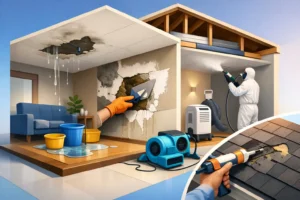
How to Stop Ceiling Leak Damage Fast
Knowing how to stop ceiling leak damage can help save your home from costly repairs. A small drip may seem harmless. However, water can spread through drywall, wood, and insulation.
A ceiling leak may come from a roof, pipe, bathroom, or air conditioner. As a result, the wet spot may be far from the actual leak.
GTA Restoration helps homeowners, condo owners, and businesses with ceiling water damage in Toronto and the GTA.
Here are the first steps to take when water starts coming through your ceiling.
First Steps to Stop Ceiling Leak Damage
1. Stay Safe Around Water and Electricity
Water near a ceiling light or power outlet can be dangerous. So, keep people away from the wet area.
If you can safely reach the electrical panel, turn off power to the affected area. However, never walk through water to reach the panel.
Call a qualified worker if water has reached wires or light fixtures.
2. Watch for a Sagging Ceiling
A ceiling may sag when water collects above the drywall. This can be a serious warning sign.
Keep people away from a ceiling that looks weak or swollen. Also, move out of the room if pieces begin to fall.
Do not cut or poke a hole in the ceiling yourself. Instead, let a trained worker check it safely.
3. Move Furniture Away From the Leak
If the room is safe, move dry furniture and other items away from the drip.
Also, place a bucket under falling water when you can reach the area safely.
However, do not stand beneath a weak ceiling to collect water.
4. Turn Off the Water When Possible
If a pipe is leaking, turn off the nearby water valve. If needed, use the main water shutoff when it is safe to do so.
For a condo leak, contact building staff. The water may come from another unit or a shared pipe.
Stopping the source can help limit more damage.
5. Take Photos of the Damage
Take photos when the area is safe. Start with a wide view of the room. Then, take close photos of stains and wet materials.
Also, note when you first saw the leak. Keep repair bills and cleanup records for your insurer.
These steps can help stop ceiling leak damage from getting worse while you arrange proper repairs.
What Causes Ceiling Water Leaks?
Roof Leaks After Rain or Snow
A damaged roof may let rain or melting snow enter your home. Water can travel along wood before dripping through the ceiling.
Common roof problems include missing shingles, damaged flashing, and blocked roof drains.
However, a stain does not show the exact point of entry. A roofer may need to check the area.
Our roof repair services in Toronto can help with roof leaks and related damage.
Leaking Pipes Above the Ceiling
A pipe may leak inside a ceiling or wall. You may hear dripping or see a stain grow even when it is not raining.
For example, a loose pipe joint may leak when someone uses a sink upstairs.
First, stop using the affected fixture. Then, arrange a plumbing check.
Bathroom and Appliance Leaks
A toilet, shower, or washing machine may cause water damage in the room below.
Water can enter through a failed seal, drain, or supply hose. As a result, the ceiling below may become wet.
Stop using the fixture until the cause has been found and repaired.
Air Conditioner and HVAC Leaks
An air conditioner can also cause a ceiling leak. A blocked drain line or leaking drain pan may be the source.
You may notice water near a ceiling vent or indoor cooling unit.
If safe, turn off the affected equipment. Then, ask an HVAC worker to check the system.
How to Repair and Dry Ceiling Water Damage
Find the Exact Water Source
Before repairs begin, find out where the water came from. A ceiling stain may be far from the actual leak.
Our water leak detection services can help assess hidden moisture and possible leak sources.
However, some problems may need a plumber, roofer, or HVAC worker to complete the repair.
Check for Hidden Moisture
Water may remain inside insulation or above ceiling drywall after the dripping stops.
For this reason, a moisture meter can help find wet materials. A trained worker may also check nearby walls and floors.
Simply waiting for the stain to dry may not be enough.
Dry Wet Ceilings and Walls
Once the water source is fixed, the affected area may need drying.
Some materials can dry and stay in place. However, badly damaged drywall or insulation may need removal.
GTA Restoration provides water damage cleanup and drying in Toronto and the GTA.
Look for Signs of Mold
Mold may grow when building materials stay wet. Also, you may notice musty smells or dark spots.
However, a water stain does not always mean mold is present.
Fix the leak and dry the area first. If mold is visible or keeps returning, professional help may be needed.
Learn more about signs that may call for mold cleanup.
Do Not Paint Over a Wet Ceiling
Fresh paint may hide a stain. However, it will not fix the water source.
Also, new drywall can trap moisture when installed too soon.
Wait until the leak is fixed and the area is dry before repairs begin.
Emergency Ceiling Leak Repair and Prevention
When Is a Ceiling Leak an Emergency?
Some leaks need help right away. For example, water near electricity or a weak ceiling can pose serious risks.
Call for urgent help when:
- Water reaches ceiling lights or wires
- The ceiling is sagging or cracking
- Water is entering quickly
- The leak affects several rooms
- Water is spreading between condo units
- The source cannot be stopped safely
- Sewage or dirty water may be involved
Above all, keep people away from unsafe areas.
Keep Records for an Insurance Claim
Take photos when safe. Also, save bills for plumbing work, roof repairs, and water cleanup.
Write down when the leak began and what steps you took.
Some policies cover sudden water damage. However, coverage depends on the cause and your policy terms.
The Insurance Bureau of Canada offers more advice about home insurance claims.
Prevent Future Ceiling Leaks
Check your roof after heavy storms. Also, look for damaged shingles and blocked drains.
Inspect hoses near washing machines and other appliances. Replace worn parts when needed.
Keep air conditioner drain lines in good working order. In addition, report new ceiling stains before they grow.
These steps may help lower the risk of another leak.
Ceiling Leak Damage Help in Toronto
GTA Restoration helps homes, condos, and businesses with ceiling leaks and water damage.
Our team can assess wet areas, remove water, and plan drying. We also help with moisture checks after plumbing and roof leaks.
The best way to stop ceiling leak damage is to control the water source and dry affected materials.
However, each leak is different. So, the right cleanup plan depends on the source and how far the water has spread.
If you need to stop ceiling leak damage in your home or business, contact our team for help.
Need Emergency Ceiling Water Damage Help?
GTA Restoration provides leak assessment, water removal, moisture checks, and drying services across Toronto and the GTA.
Water dripping from your ceiling? Stay safe, stop the source, and call for help.
Call Us: 416-800-0000
Learn More
Leak Detection Services | Water Damage Cleanup | Roof Repair Toronto