A brown ceiling stain or a soft wall under your hand usually means the same thing – you are already behind the clock. Wet drywall after leak damage does not stay a small problem for long. It can hold moisture inside the wall cavity, weaken quickly, and create the right conditions for mold within a day or two.
The first priority is not cosmetic repair. It is stopping the water source, protecting occupants, and finding out how far the moisture has traveled. A slow pipe leak behind a bathroom wall, a roof leak above an attic hatch, or water migration from an upper condo unit can all leave drywall looking minor on the surface while the real damage spreads behind it.
Why wet drywall after leak damage gets worse so quickly
Drywall is not built to tolerate saturation. The gypsum core absorbs water, the paper facing traps moisture, and insulation behind the wall can stay wet long after the visible surface starts to dry. That is why a wall that looks only slightly stained may already be compromised.
Once drywall becomes wet, several things can happen at the same time. The panel can lose strength and begin to sag or crumble. Joint tape can lift. Paint can bubble. If moisture reaches wood framing, flooring, trim, or cabinetry, the repair area expands well beyond the original stain. In finished basements and multi-unit properties, hidden moisture can move laterally and affect neighboring rooms or suites.
This is also where health concerns start. Mold growth does not wait for dramatic flooding. Persistent moisture inside drywall cavities can support mold growth quickly, especially in warm, poorly ventilated spaces like bathrooms, laundry rooms, mechanical rooms, and finished basements.
What to do immediately when drywall gets wet
Act in the right order. Shut off the water if the source is plumbing related, or contain the active leak if it is coming from the roof or another unit. Turn off power to affected areas if water is near outlets, fixtures, or electrical panels. Move furniture, electronics, and soft contents away from the wet area.
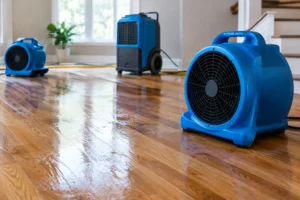
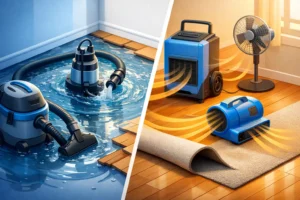
After that, document what you see. Photos of staining, active dripping, damaged contents, and affected finishes help with repair planning and insurance documentation. Then start controlled drying, not guesswork. Fans alone are not always enough. If water has entered a wall cavity, trapped moisture often requires professional moisture mapping, dehumidification, and in some cases selective demolition.
If the drywall is bulging, sagging, or actively dripping from a ceiling, do not ignore it. Water can pool above the surface and create a collapse risk. In commercial buildings and condos, that risk also extends to occupants below, shared systems, and neighboring units.
Can wet drywall be saved?
Sometimes yes, sometimes no. The answer depends on how much water got in, how long the material stayed wet, and whether the water was clean, gray, or contaminated.
If the leak was minor, caught quickly, and involved clean water, drywall may be salvageable if drying begins immediately and moisture readings return to acceptable levels. This is more likely with small, localized leaks where the panel is still firm, the paper facing is intact, and there is no swelling or odor.
If the drywall is soft, warped, swollen, crumbling, or has been wet for more than a short period, replacement is usually the safer path. The same is true if insulation behind the wall is saturated. Wet insulation loses performance and can hold moisture against framing and drywall long after the visible surface appears dry.
The source of the water matters just as much. Water from a supply line is very different from water tied to a sewer backup, toilet overflow, or long-standing drain leak. Once contamination is involved, drying and keeping the drywall is rarely the right call. Removal, cleaning, and controlled remediation become the priority.
Signs your drywall needs to be removed
A small stain does not automatically mean full tear-out, but there are clear red flags. Drywall usually needs removal when it sags, feels soft to the touch, shows bubbling paint across a wide area, or has visible microbial growth. Persistent odor is another warning sign, especially in enclosed rooms where moisture may still be trapped behind the surface.
Ceilings deserve extra caution. When ceiling drywall gets saturated, gravity works against it. Even if it has not fallen, the fasteners can loosen and the panel can fail later. That is why ceiling leaks often require more aggressive inspection than wall leaks.
In older buildings, material layers also matter. Multiple coats of paint, wallpaper, tile backer transitions, and previous repairs can trap moisture in unexpected ways. For property managers and landlords, selective opening by a trained restoration team is often the fastest way to confirm the scope and avoid repeated repair visits.
How professionals assess wet drywall after leak events
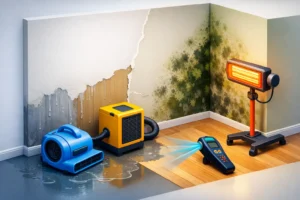
A proper assessment goes beyond what the eye can see. Moisture meters, thermal imaging, and inspection openings help determine whether water traveled into adjacent walls, insulation, subfloors, or structural cavities. This matters because drying only the visible area often leaves hidden moisture behind.
Professional restoration teams also classify the water source and evaluate how long materials were exposed. That drives the plan for containment, drying, removal, antimicrobial treatment where appropriate, and reconstruction. In active leak situations, plumbing or roofing coordination may be needed before drying can succeed.
This end-to-end response is where speed matters most. The sooner the source is controlled and the drying plan starts, the better the chance of limiting demolition, mold growth, and business or household disruption.
Common mistakes that make drywall damage worse
The biggest mistake is waiting to see if the wall dries on its own. Surface dryness is not the same as dry inside the assembly. Another common problem is patching over damage too early. Repainting a stain or replacing a small section without addressing trapped moisture often leads to peeling paint, odor, recurring stains, or mold complaints later.
Homeowners also sometimes run heat without dehumidification, which can push humidity deeper into surrounding materials. In condos and commercial spaces, another mistake is treating the visible leak as a single-unit issue when water may have moved into shared walls, corridors, lower units, or utility spaces.
If the leak came from above, do not assume the damaged drywall is the only issue. Flooring, insulation, light fixtures, HVAC boots, and framing can all be affected. Fast cosmetic repair is tempting, but incomplete drying is what turns a manageable loss into a much larger restoration job.
Insurance, documentation, and repair planning
Water losses move faster when the documentation is clear. Keep records of when the leak was discovered, what emergency steps were taken, and which rooms or units were affected. Photos, moisture readings, and a written scope of damage help support claims and reduce confusion during adjuster review.
For landlords, condo boards, and commercial operators, this documentation is even more important because responsibility can involve multiple parties. Source origin, migration path, and emergency mitigation steps should all be recorded early.
Once the area is dry and stable, repairs should be planned in the right order. That may include leak repair, drywall replacement, insulation replacement, repainting, trim work, and any required mold remediation. If one contractor handles only part of that process, delays between trades can extend downtime. A full-service response helps keep the claim and the restoration moving together.
When to call for emergency help
Call immediately if the drywall is sagging, the leak is still active, water is near electrical components, multiple rooms are affected, or there is any sign of contamination or mold. The same applies if the leak started in a ceiling, inside a wall cavity, or from another unit where the full extent is unclear.
For Toronto-area property owners, GTA Restoration responds to these situations with emergency drying, leak-related demolition, moisture detection, plumbing coordination, mold control, and insurance-ready documentation. In a water emergency, having one team manage the problem from containment through recovery saves time and reduces the chance of missed damage.
Wet drywall does not reward patience. It rewards fast decisions, proper drying, and a repair plan based on what is actually wet, not just what is visible.