Emergency? 24-Hrs
416.800.0000
Emergency? 24-Hrs
416.800.0000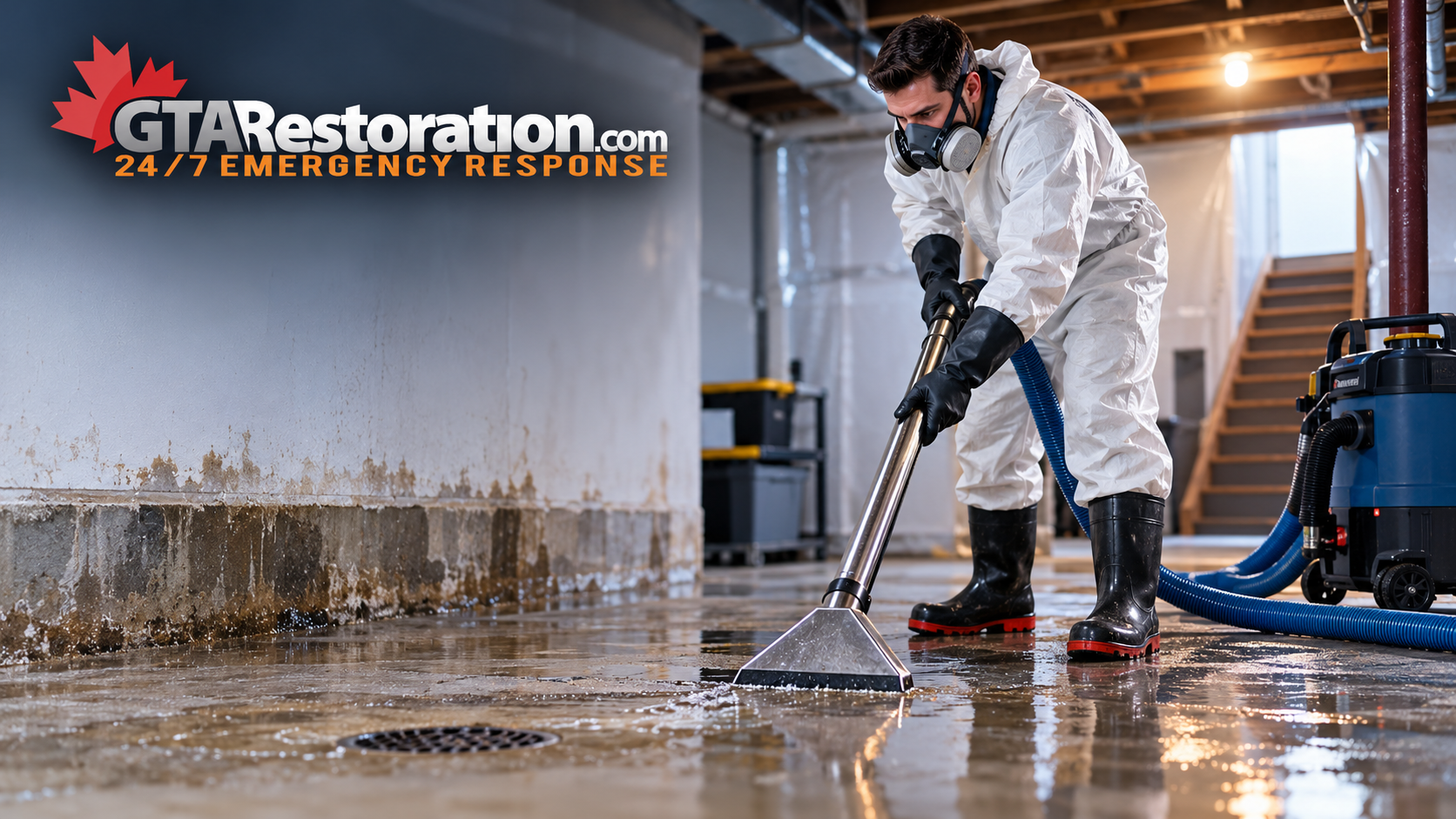
Knowing how to clean sewer backup safely can help protect people and the property. Sewage water may contain germs and other harmful waste.
A backup may come through a floor drain, toilet, sink or other fixture. Therefore, treat sewage water differently from a clean-water leak.
Most importantly, keep people and pets away from the area and watch for electrical hazards.
First, stop flushing toilets and running sinks. Also, avoid using the washing machine and dishwasher.
More water can make the backup worse. The City of Toronto gives similar advice in its basement flooding guide.
Sewage water may contain harmful germs. Therefore, keep children and pets away from the wet area.
In addition, avoid touching dirty water or wet materials without suitable protection.
Water near outlets, appliances or electrical panels can be dangerous. Therefore, do not enter the area if you are not sure it is safe.
If water is near electrical equipment, contact a qualified electrician or utility provider.
Health Canada recommends protective gear during flood cleanup. This can include gloves, goggles and an N95 mask.
Rubber boots and protective clothing can also help reduce direct contact with dirty water.
Cleanup will not solve the problem if the drain stays blocked. Therefore, a plumber may need to check the sewer or drain line.
Common causes can include clogs, roots or damaged pipes.
For urgent plumbing problems, visit our emergency plumbing service.
Once the source is under control and the area is safe, remove standing water and debris.
Small losses may allow limited cleanup. However, larger sewer backups usually need professional extraction.
In addition, keep dirty tools and wet materials away from clean rooms.
Some porous materials can absorb sewage deeply. As a result, they may not be practical to clean.
Depending on the damage, removal may include:
Therefore, check each material before deciding what can stay.
Cleaning and disinfecting are two different steps. First, remove dirt, sludge and sewage residue.
After that, use a suitable disinfectant and follow its label directions.
Never mix bleach, ammonia or other cleaning chemicals.
Some hard surfaces may allow cleaning and disinfection. For example, this may include metal, glass or tile.
However, the final decision depends on the amount of sewage and how long the material stayed wet.
Cleaning alone is not enough. Wet materials can support mould growth when moisture remains.
Therefore, remove standing water and begin drying as soon as conditions are safe.
Air movers, dehumidifiers and moisture checks may help. For larger drying jobs, visit our specialty drying service.
Sewage can move under flooring and behind walls. As a result, the visible wet area may not show the full problem.
Moisture checks can help find wet areas before repairs begin.
Wet drywall, wood and other materials can support mould growth. Therefore, deal with musty smells or new staining quickly.
If visible mould appears, visit our mould removal and remediation service.
Professional help is often the safer choice when sewage covers a large area. It may also help when several rooms are affected.
In addition, finished basements, commercial properties and multi-unit buildings may need a more controlled cleanup plan.
A surface can look clean while dirty water remains below it. Therefore, nearby floors and walls may need a closer check.
For larger water losses, visit our water damage restoration service.
After cleanup, find out why the backup happened. For example, a blocked drain or damaged sewer line may need repair.
A plumber may use a sewer camera to look for repeat problems. As a result, hidden damage or roots may become easier to find.
In some homes, a properly installed backwater valve may help reduce sewer backup risk.
The City of Toronto also provides information about basement flood protection and eligible flood-prevention work.
Take photos and video when the area is safe. In addition, keep plumbing bills, moisture readings, cleanup records and repair estimates together.
Contact your insurer for coverage questions. Your insurer decides coverage, deductibles, limits and claim payments.
The safest way to clean sewer backup safely is to control the source, protect people and remove dirty water.
Next, remove materials that cannot be cleaned. Then clean, disinfect and dry the area.
Above all, do not judge the job only by what you can see. Dirty water and moisture may remain under floors or behind walls.
GTA Restoration provides sewage cleanup, water removal, emergency plumbing and drying throughout Toronto and the GTA.
Keep people away from dirty water and stop unnecessary water use until the cause is checked.
Sewer Backup Cleanup vs Plumbing | Toronto Sewer Backup Cleanup | Commercial Sewage Cleanup | Sewer Backup Cleanup
For non-emergencies use our contact form
Sewage water can contain germs and other harmful waste. Therefore, keep people and pets away from the affected area.
Check for electrical hazards before entering. In addition, avoid touching dirty water without suitable protection.
Do not flush toilets or run sinks during an active backup. Otherwise, more water may enter the drain system.
Gloves, goggles, boots and suitable respiratory protection can help reduce contact with sewage.
A plumber may need to check the drain or sewer line. Therefore, fix the cause before cleanup continues.
Once the area is safe, remove standing water and debris. In addition, keep dirty tools away from clean rooms.
Some porous materials may not clean well after sewage exposure. Therefore, badly affected drywall, insulation or carpet may need removal.
First, remove dirt and sewage residue. Then use a suitable disinfectant according to the label.
Wet materials can support mould growth. Therefore, use suitable drying methods after cleanup.
Water can move under flooring and behind walls. As a result, nearby materials may also need moisture checks.
Musty smells or new stains may point to remaining moisture. For this reason, deal with repeat dampness quickly.
Take photos and keep plumbing and repair records together. However, your insurer decides what the policy covers.
Need help cleaning a sewer backup safely?
Contact GTA Restoration for sewage cleanup, water removal and structural drying.
Nationwide, Local Pricing
GTA Restoration offers local flood & water damage repair, mold removal/remediation, asbestos removal/abatement, fire/smoke damage repair services and much more.
Search
A very small loss may allow limited cleanup. However, larger sewage backups or hidden damage usually need professional help. First, stop unnecessary water use. Then keep people and pets away and check for electrical hazards. Badly affected drywall, insulation, carpet and other porous items may need removal if they cannot be cleaned properly. No. First remove dirt and sewage residue. Then use a suitable disinfectant according to the product label. Yes. Wet materials can support mould growth. Therefore, dry the area as soon as conditions are safe. Professional help may make sense when sewage covers a large area, affects several rooms or reaches hidden building materials.Sewer Backup Cleanup FAQs
Can I clean a sewer backup myself?
What should I do first after a sewer backup?
What materials may need to be thrown away?
Should I disinfect right away?
Can a sewer backup cause mould?
When should I call a professional?
We Work Direct with All Insurance Companies
Wᴇ ᴀʀᴇ ᴄᴏᴍᴍɪᴛᴛᴇᴅ ᴏɴ ᴡᴏʀᴋɪɴɢ ᴡɪᴛʜ ᴇᴠᴇʀʏ ɪɴsᴜʀᴀɴᴄᴇ ᴄᴏᴍᴘᴀɴʏ ᴀᴄʀᴏss Cᴀɴᴀᴅᴀ & USA.
Learn more ↴ 
RELATED ARTICLES
follow us on 




Our Clients

Affiliates

Call Us 416-800-0000
Emergency? Immediate response 24/7
We cover all GTA 24/7.
Head Office:
250 Consumers Rd,
#10
Toronto, ON
M2J 4V6,
Open 24 hours
Downtown Office:
1 Toronto St,
#10
Toronto, ON
M5W 1A1,
Open 24 hours
For non-emergencies use our contact form
Not sure what you need?
Call us today to find the best product for your situation.
Head Office:
101 Lebovic Ave,
Unit #10
Scarborough,
ON, M1L 4T7
Hours
24-Hours Open
Downtown Office:
250 Yonge Street,
Unit #1A
Toronto,
ON, M5B 2L7
Hours
24-Hours Open
How to Clean Sewer Backup Safely
Get a quote today