GTA Restoration provides specialty drying in Toronto for wet floors, walls and hard-to-reach spaces. Water can get behind a finish that feels dry to the touch. First, we check the source and the wet areas. Then, we choose a drying method that suits the materials.
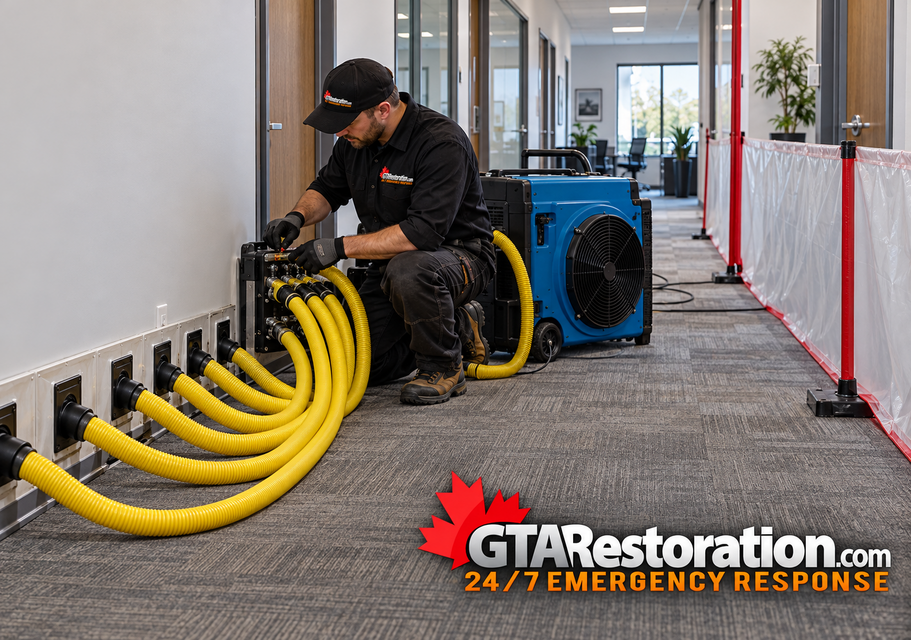
Our team may use Inject Dry systems, floor mats, air movers and dehumidifiers. These tools help reach trapped moisture and remove it from the air. However, some damaged or dirty materials need removal before drying can begin.
We help homes, condos and businesses across Toronto and the GTA. If more rooms are wet, we can include water removal and cleanup in the plan. Call 416-800-0000 to discuss the damage and arrange a site check.

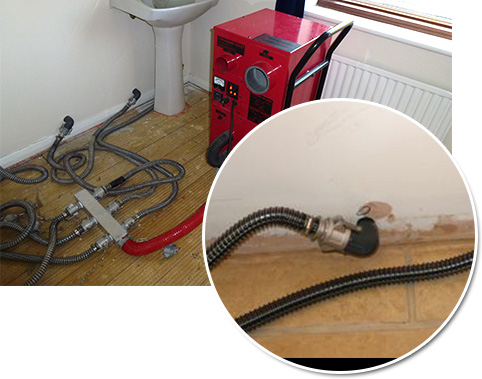
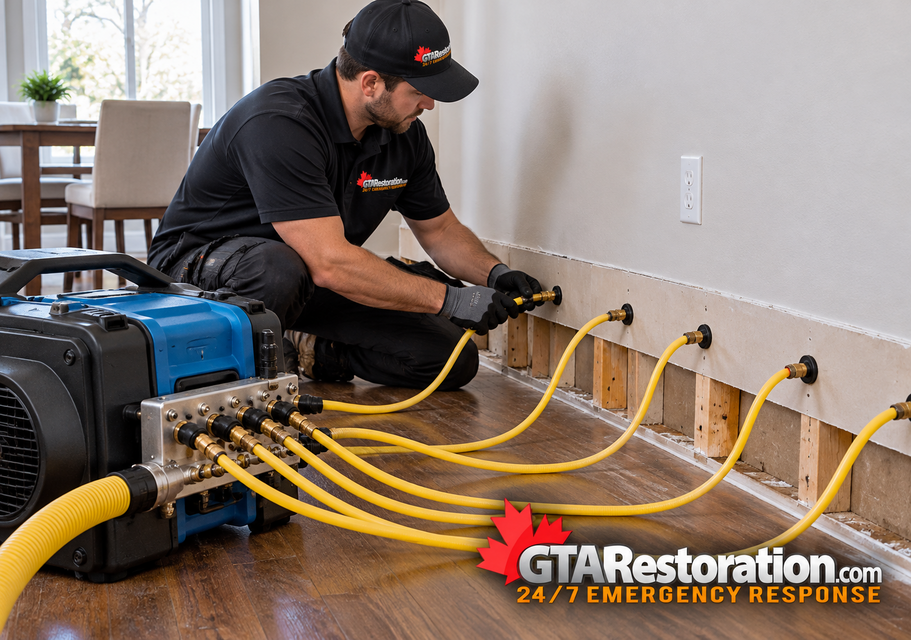
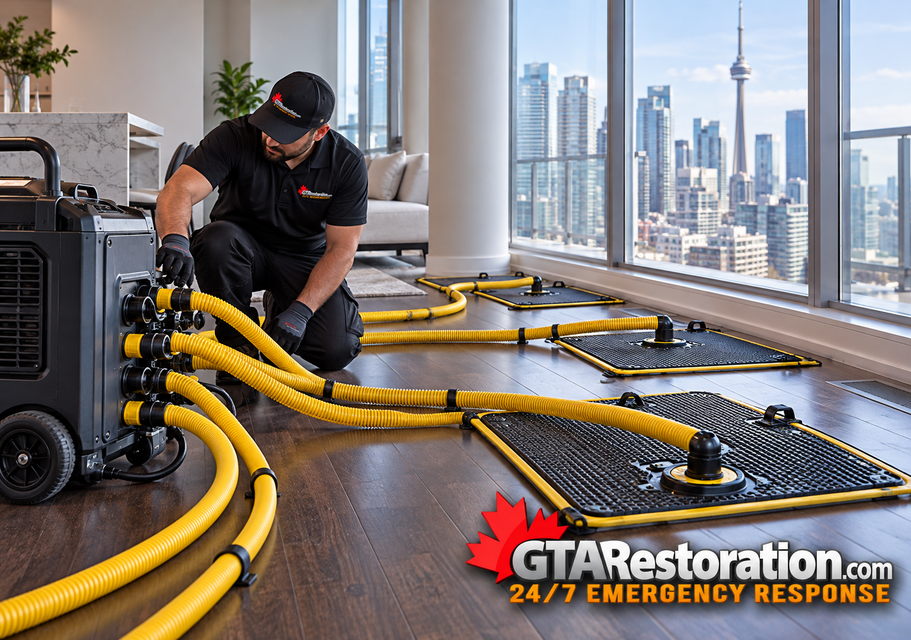
Inject Dry systems move air through spaces inside walls, floors and cabinets. One method pushes dry air in. In contrast, another draws moist air out. We check the materials, access and any risk from mould or dirty water before choosing a setup.
Not all floors and walls dry the same way. For example, a condo floor may have several layers that hold water. A basement wall may hide wet wood and insulation. For this reason, we check how the area is built before we plan the drying work.
Before / after

Move the slider to compare these specialty drying images.
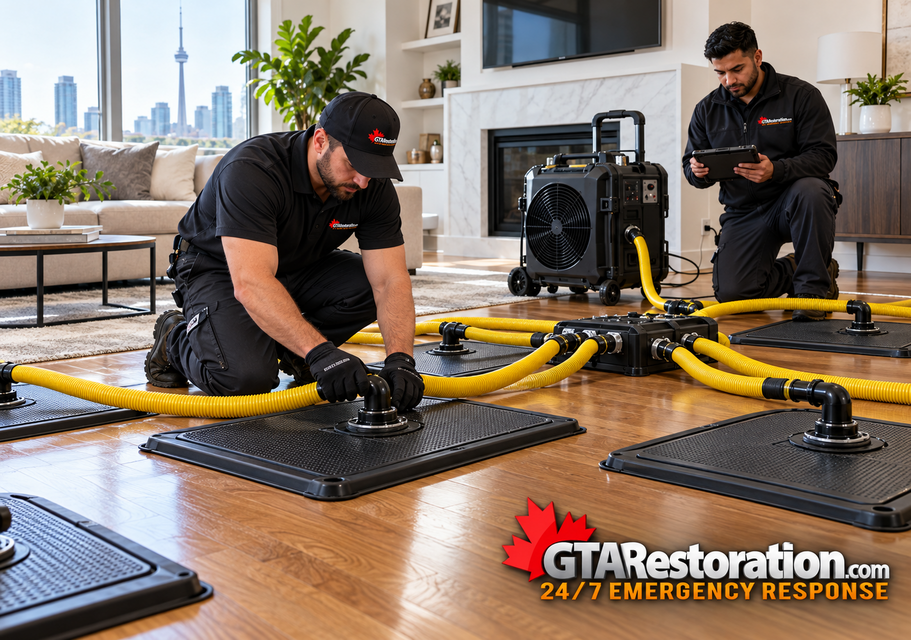
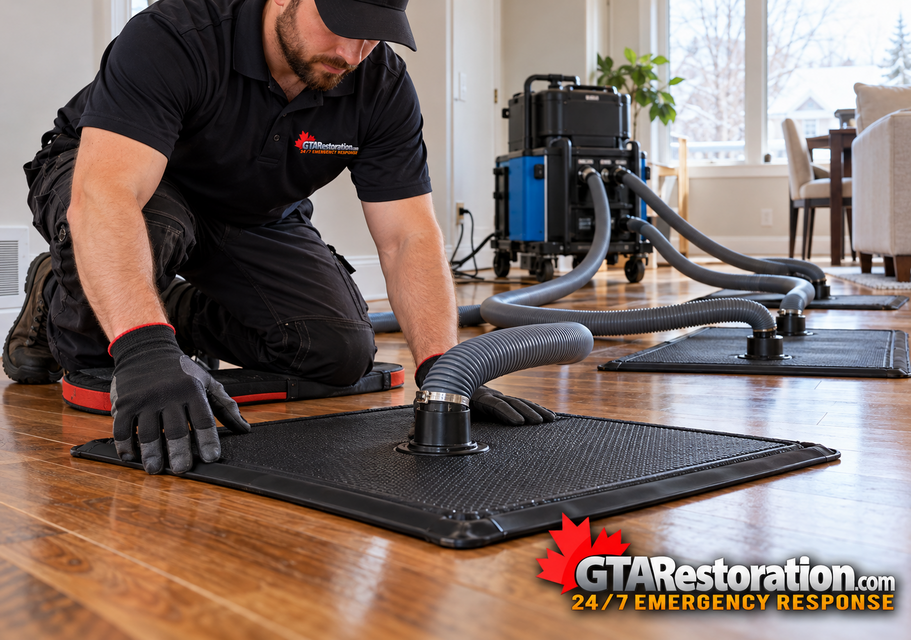
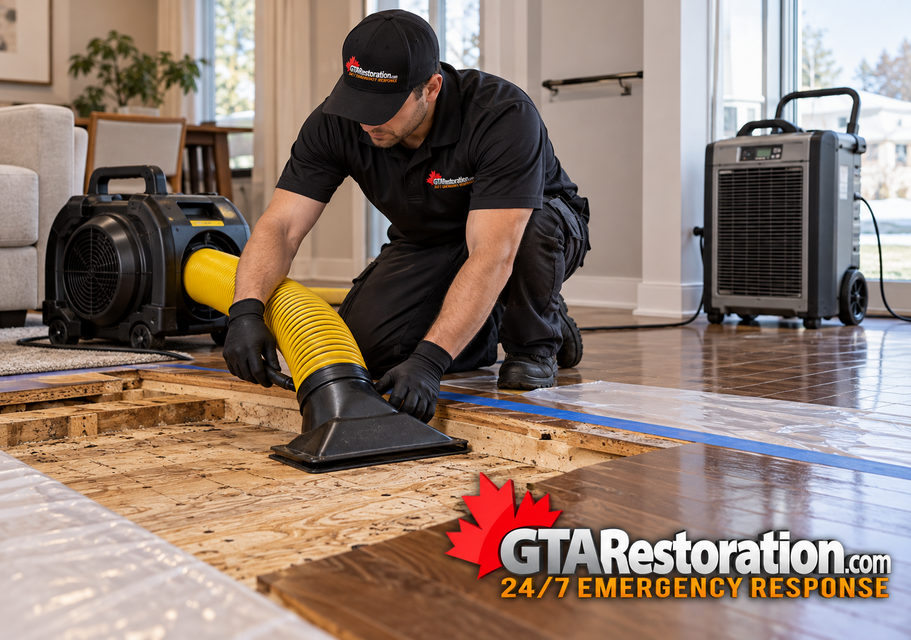
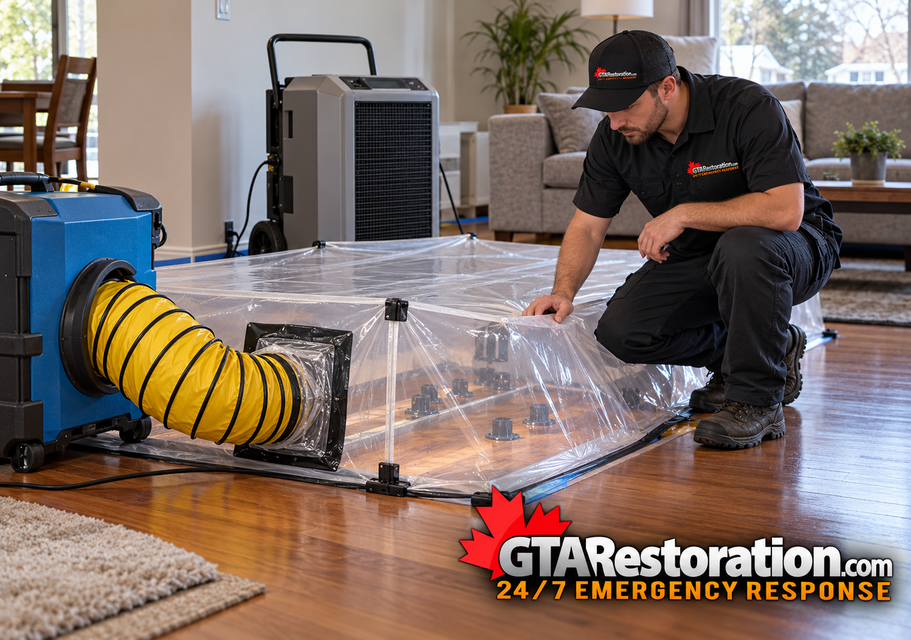
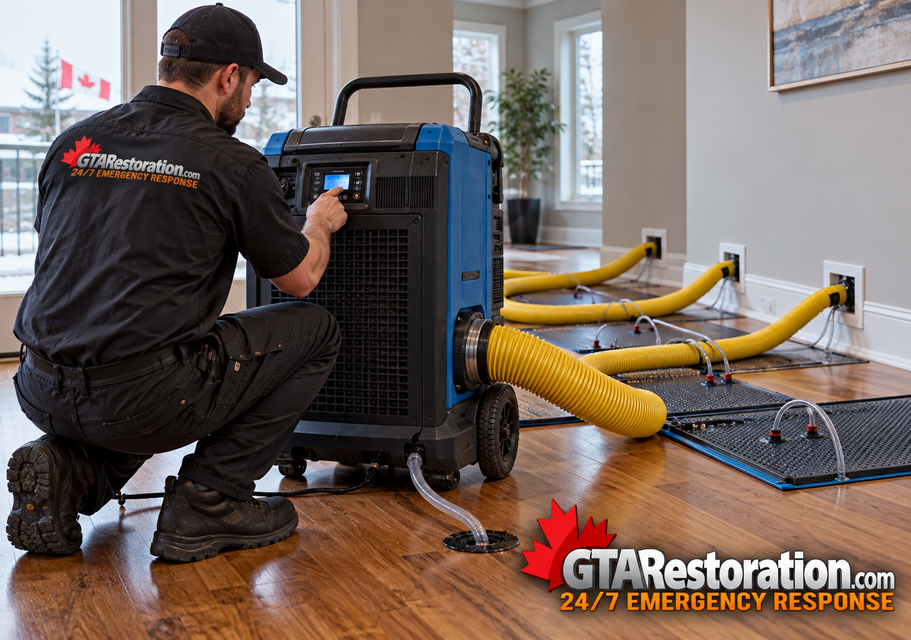
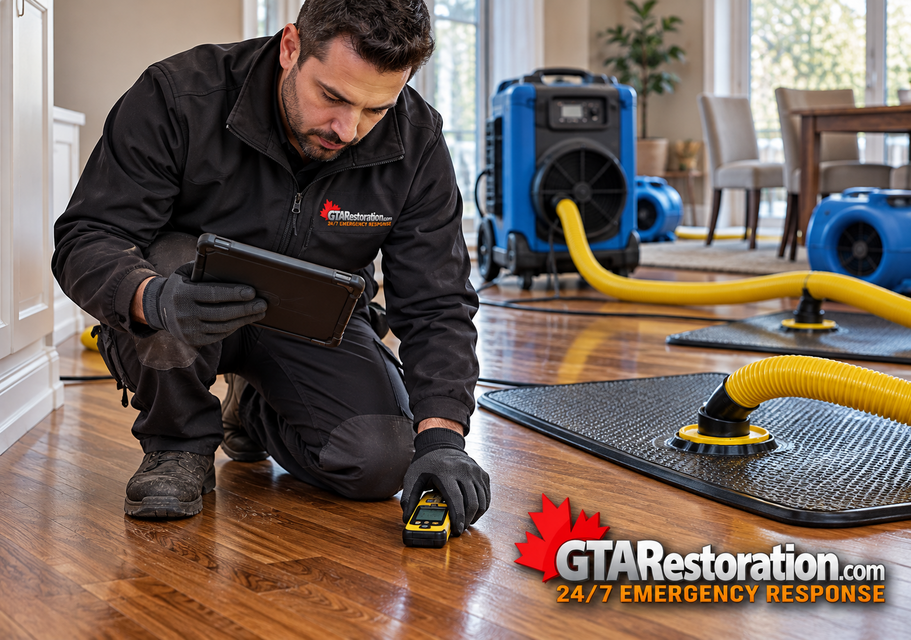
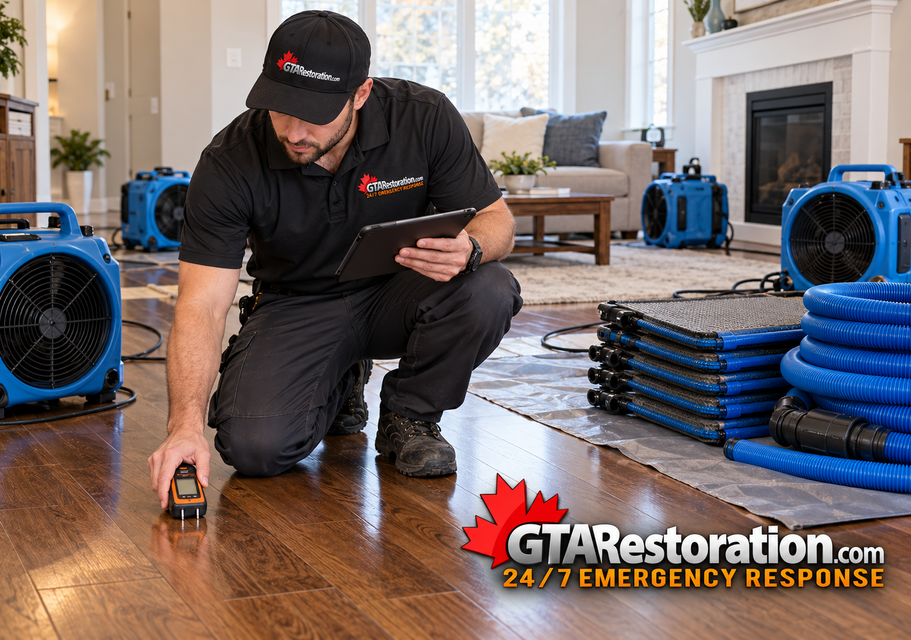
A dry floor surface may still have wet layers below it. First, we check the finish and the base beneath it. Then, we decide whether floor mats or other drying tools can reach the water. The type of floor and its condition guide that choice.
However, drying cannot fix every floor. Swollen laminate, loose layers or damage from dirty water may mean removal is needed. Some coverings also block moisture from escaping. We explain which parts may dry in place and which need further work.
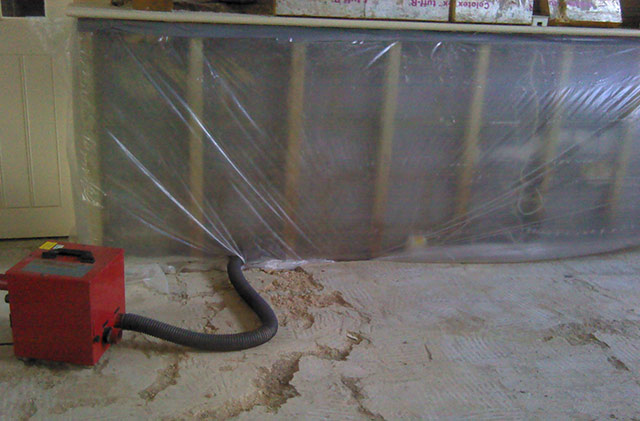
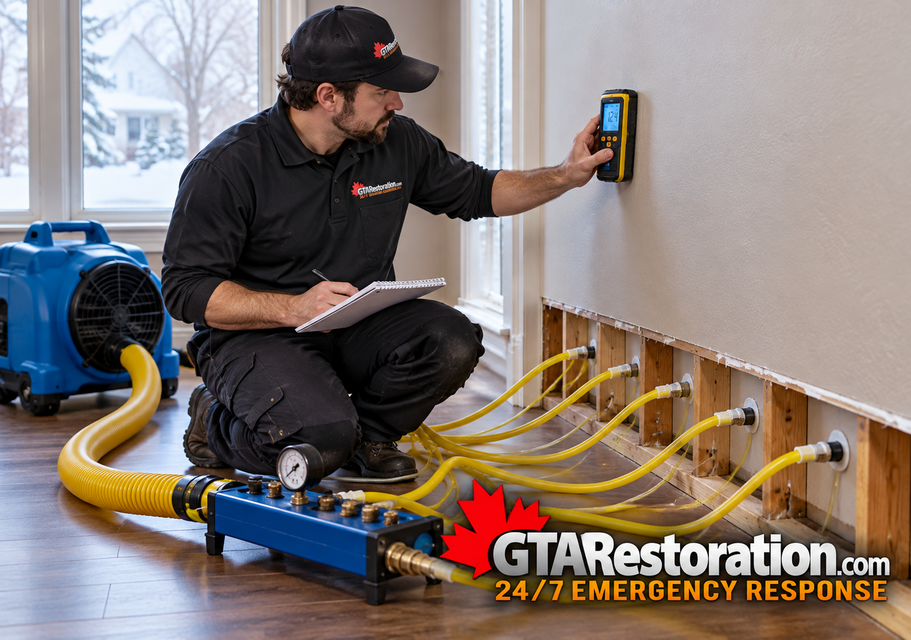
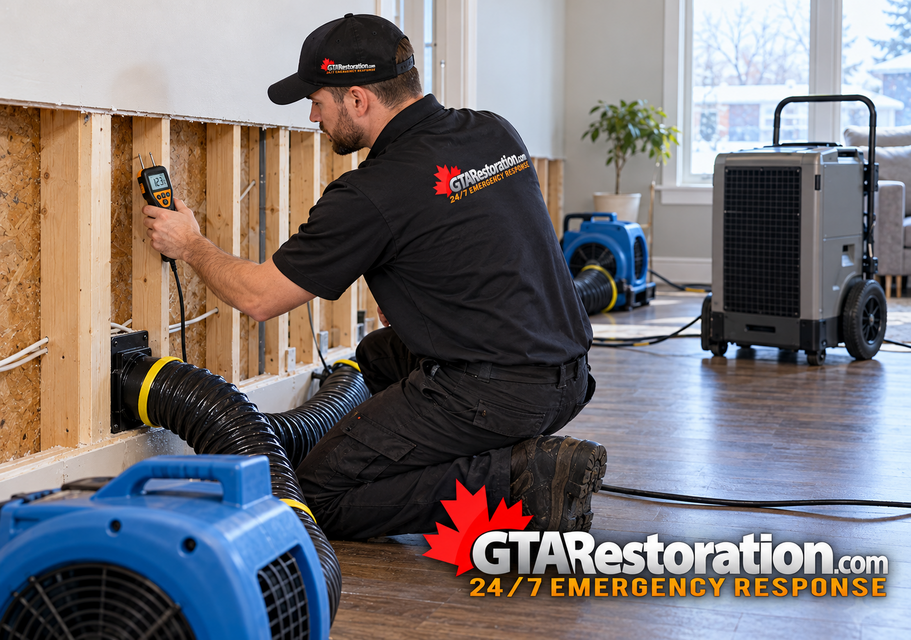
A pipe leak can leave wood, drywall and insulation wet inside a wall. Small access holes may let us reach a clear wall space. However, wet insulation or blocked areas can limit airflow. In those cases, we may need a larger opening or removal of damaged material.
Drying alone does not clean sewage or remove mould. If either is present, the work needs a cleanup plan as well. For more on what to keep or remove after a flood, read Health Canada’s flood cleanup guidance.
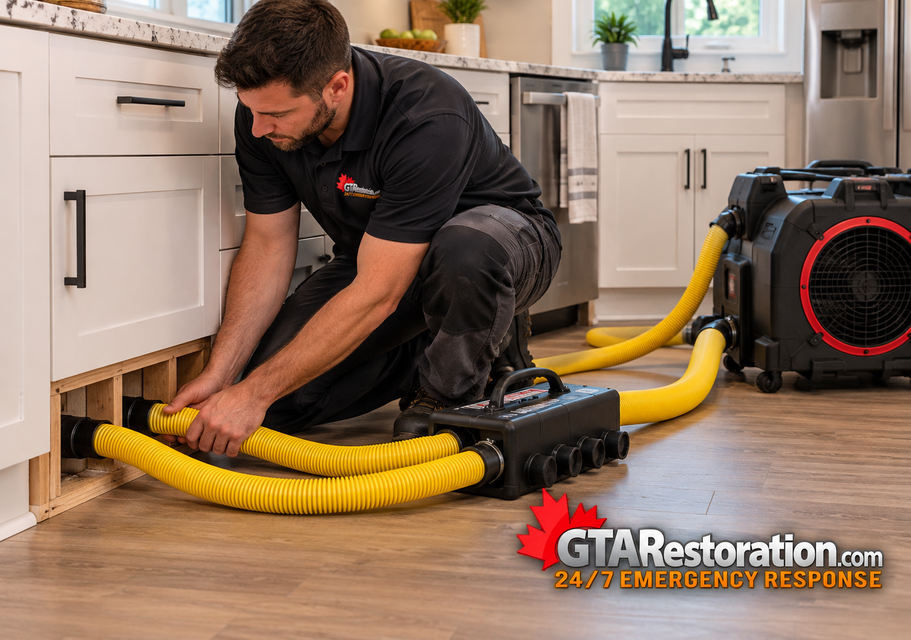
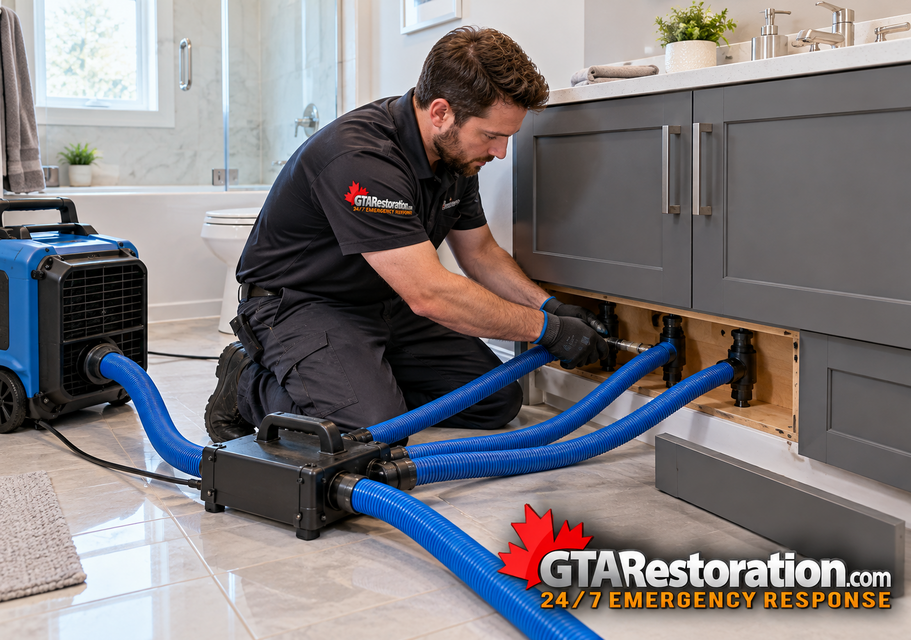
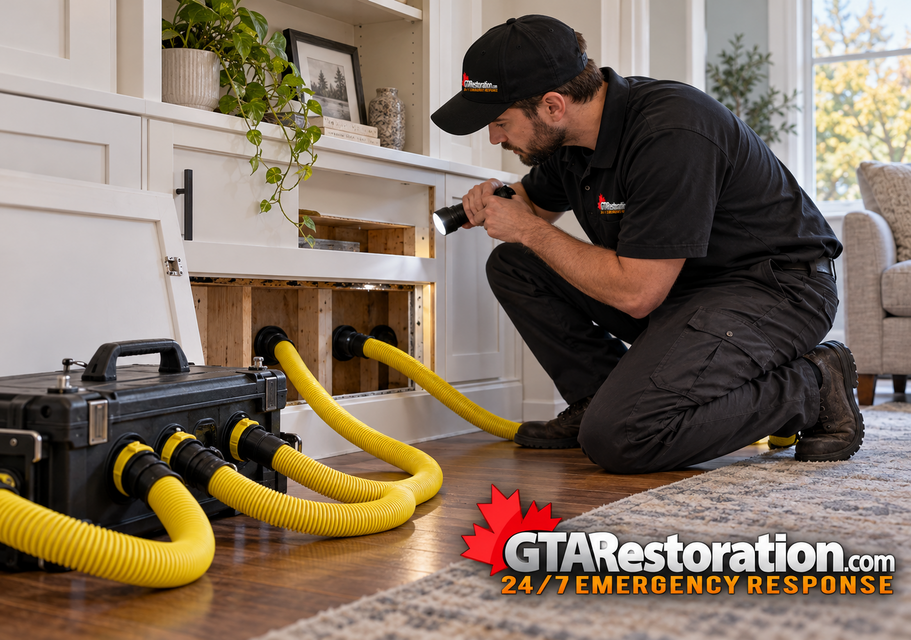
Water can sit behind a kitchen unit or beneath a bathroom vanity. First, we check how far it has spread. Where the materials are sound, hoses may help dry these hidden spaces. Access may involve taking off a base panel or making small holes.
Even so, drying cannot undo swelling or make split layers bond again. We discuss the limits before work starts. As a result, you can plan repairs with a clearer view of what may need replacing.
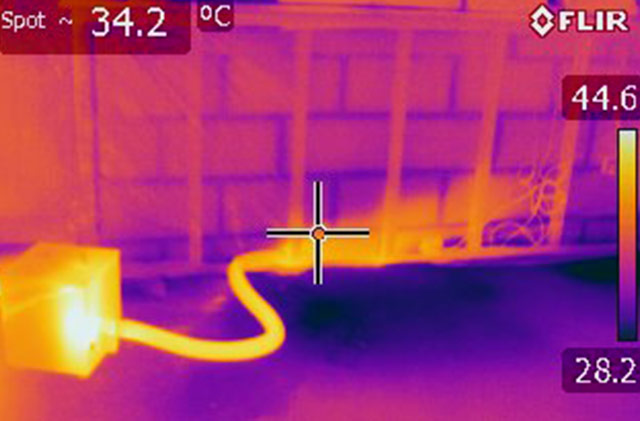
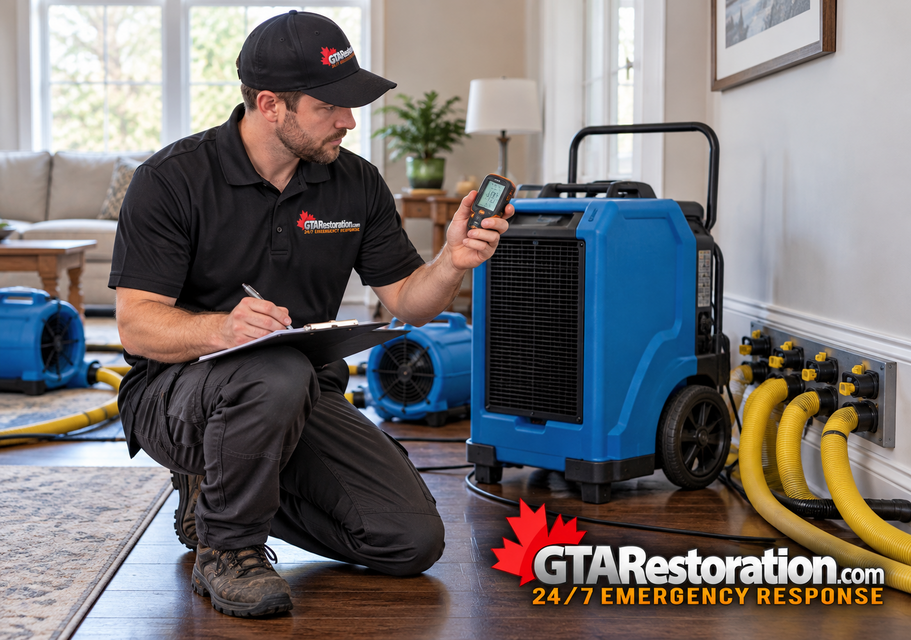
We take moisture readings and check the air during drying. Then, we use those results to review the setup. A dry area of the same material can help set a useful comparison. We also look for places where moisture is slow to fall.
Drying time varies with the materials, room conditions and amount of water. Therefore, we use readings to guide the next step instead of a fixed number of days. Ask us to explain the drying goals and the checks needed before repairs.
Call 416-800-0000 for 24/7 help. Tell us where you see water, when the leak began and whether it has stopped. Also, mention shared walls or rooms that people still use so we can discuss access.
For more detail, read our guides to wet drywall after a leak and drying basement walls. These explain why the wall’s condition matters when planning the work.
For non-emergencies use our contact form
Hidden water needs a plan that fits the building. Our specialty drying team checks wet floors, walls and built-in spaces. Then, we explain the tools, access and checks the job may need.
A dry-looking patch does not show the full extent of a leak. First, we check nearby materials for moisture. This helps us plan work beyond the stain you can see.
Air needs a clear path through the wet space. For this reason, we check the wall’s layers and any insulation inside it. Some areas need openings before drying tools can reach them.
Water can stay under a floor after surface cleanup. We check the finish, base and wet area together. Then, we discuss whether drying in place is a practical option for that floor.
Leaks may reach spaces behind fixed units. Where access allows, small hoses can help move air through them. However, we may need to remove a base panel to reach the wet area.
Pressure or suction can move air through suitable hidden spaces. The method depends on the job. Before setup, we review the materials and any cleanup needs, then plan where the air will go.
As wet materials dry, they release moisture into the air. Dehumidifiers help remove it. Meanwhile, our team checks room conditions so the drying setup can keep working as intended.
Moisture readings help show how the wet areas respond. If progress slows, we review the setup and access. We also check for a leak that may still be adding water.
Specialty drying may help keep sound materials in place. However, it cannot repair swollen boards or split layers. Nor does it replace cleanup when mould or dirty water affects the area.
Condos may need lift bookings or help from building staff. Shops may need clear routes for staff and customers. Tell us about these needs early so we can plan equipment placement.
Before closing a wall or replacing a floor, review the drying results with us. Ask what work remains and which areas need repair. Clear records can also help you follow the job’s progress.
Talk to GTA Restoration about wet floors, walls or hidden moisture. Call for 24/7 help across Toronto and the GTA.
Service Areas Across Canada
GTA Restoration serves communities across Canada, including Toronto and the GTA. U.S. locations are opening. Browse our Canadian service areas below, and contact us to confirm services and availability for your address.
Search
It targets moisture under floors, inside walls and behind fixed units. First, we check the wet materials. Then, we choose tools that can reach them.
Sometimes. Sound materials may dry in place. However, swelling, damaged layers or dirty water can make removal the better choice.
Small holes may give us access for drying hoses. However, blocked spaces or damaged insulation may need larger openings. We explain the plan before work starts.
Time varies with the materials, moisture and room conditions. We track readings to judge progress. A dry-looking surface alone does not mean the work is done.
No. Drying helps control moisture, but mould needs its own cleanup plan. Tell us about visible growth or musty smells when you call.
Direct Billing & Insurance Claims
Ask your insurer about coverage, deductibles and the records it needs.
In-House Financing Available
Financing up to 24 months. No interest. No money down. Ask us about the terms.
Learn more ↴
RELATED ARTICLES
Our Clients
Affiliates
Emergency? 24/7 Restoration Help
We cover all GTA 24/7.
Head Office:
250 Consumers Rd,
#10
Toronto, ON
M2J 4V6,
Open 24 hours
Downtown Office:
1 Toronto St,
#10
Toronto, ON
M5W 1A1,
Open 24 hours
For non-emergencies use our contact form
Not sure what you need?
Call us today to find the best product for your situation.
Head Office:
101 Lebovic Ave,
Unit #10
Scarborough,
ON, M1L 4T7
Hours
24-Hours Open
Downtown Office:
250 Yonge Street,
Unit #1A
Toronto,
ON, M5B 2L7
Hours
24-Hours Open
Specialty Drying
Get a quote today