Mold Removal Fort Saskatchewan
GTA Restoration provides professional mold removal Fort Saskatchewan services for homes, rental properties, commercial buildings, and other properties with mold or moisture problems.
Mold can grow after plumbing leaks, flooding, roof leaks, condensation, foundation moisture, or high humidity. Therefore, proper mold removal should address both the visible growth and the moisture that caused it.
Mold can develop after plumbing leaks, flooding, roof leaks, condensation, foundation moisture, or prolonged humidity. Therefore, effective remediation should address both the visible mold and the moisture conditions that allowed it to grow.
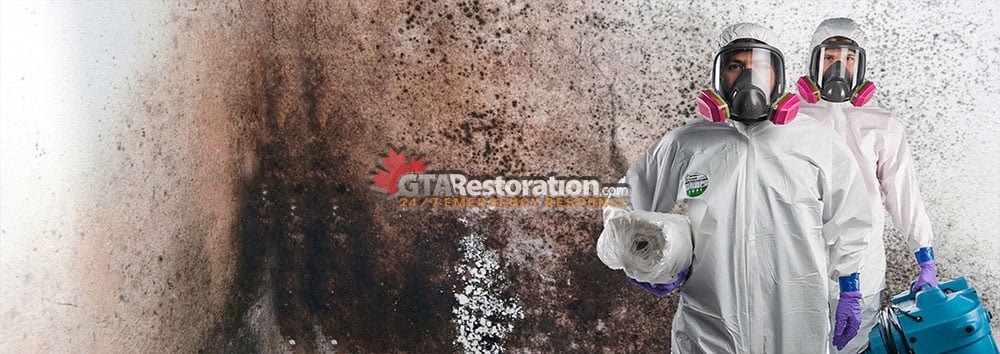
Our team can inspect affected areas, check for moisture, contain the work area when needed, remove damaged materials, clean affected surfaces, and help prepare the property for repairs.
Call 416-800-0000
Professional Mold Remediation in Fort Saskatchewan
Mold remediation involves more than cleaning stains from a wall or ceiling. First, we check the affected area and look for the source of moisture. Then, we can determine which materials need cleaning, drying, or removal.
Depending on the problem, the work may include containment, removal of damaged drywall or insulation, HEPA vacuuming, surface cleaning, moisture control, and structural drying.
Health Canada recommends fixing the source of moisture because mold can return when materials remain damp. For more information, review Health Canada’s guidance about moisture and mould in homes.
Common Signs of a Mold Problem
Sometimes mold is easy to see. However, other warning signs may appear before the problem becomes obvious.
- Visible mold on walls, ceilings, or other materials
- Musty or earthy odours
- Water stains or dark spots
- Mold that returns after cleaning
- Damp drywall, flooring, or insulation
- Peeling or bubbling paint
- Condensation or high indoor humidity
- Previous flooding, leaks, or water damage
If you notice these conditions, an inspection can help determine the size of the problem and whether moisture remains in the area.
Finding the Source of Mold Growth
Moisture control is an important part of mold removal Fort Saskatchewan. Cleaning visible mold may not solve the problem if water continues to enter the area.
Common causes include leaking pipes, roof leaks, foundation seepage, appliance leaks, condensation, flooding, and poor ventilation. In addition, drywall, flooring, insulation, and wood can stay damp after water damage.
For this reason, our technicians may use moisture meters or thermal imaging when needed. These tools can help us locate damp areas that require a closer look.
Can Mold Grow Behind Walls?
Yes. Mold can grow inside wall spaces when drywall, insulation, wood, or other materials stay damp.
Musty odours, water stains, damaged materials, past leaks, and unusual moisture readings can point to a hidden problem. However, moisture meters and thermal cameras do not detect mold directly. Instead, they help us find damp areas that may need further inspection.
Our Mold Removal Process
Every property is different. Therefore, we adjust the mold removal process based on the amount of mold, the affected materials, and the source of moisture.
- Inspection: We check visible mold, water damage, and moisture concerns.
- Moisture check: We look for the source and extent of the moisture problem.
- Containment: When needed, we isolate the work area to help control dust and mold particles.
- Material removal: We remove damaged materials that cannot be properly cleaned.
- HEPA cleaning: We clean affected surfaces and nearby areas with suitable equipment.
- Drying: We address remaining moisture and dry affected materials when required.
- Final check: We review the work area before repairs or reconstruction begin.
Basement Mold Removal
Basements often develop mold because of foundation moisture, plumbing leaks, condensation, flooding, or high humidity. Finished basements can also hide moisture behind drywall, baseboards, insulation, and flooring.
If basement mold keeps returning, we recommend finding the moisture source before completing cosmetic repairs. Otherwise, new drywall, flooring, or paint may cover an ongoing moisture problem.
Mold After Water Damage or Flooding
Wet building materials need prompt attention. Drywall, insulation, wood, flooring, and other materials can support mold growth when they stay damp.
Therefore, a property with recent or previous water damage may need a moisture check as part of the mold assessment. Finding damp materials early can help limit further damage and reduce the chance of mold spreading.
In addition, the source of the water should be repaired before mold cleanup and restoration are complete.
Does Every Mold Problem Require Testing?
No. You do not always need mold testing before cleanup. When mold is already visible, finding the moisture source and checking the affected materials may provide the information needed to plan the work.
Health Canada also advises homeowners to focus on fixing moisture and mold problems instead of relying on routine air testing.
However, mold testing may help in certain situations when a property owner needs more information or specific records.
How to Help Prevent Mold From Returning
Good mold remediation includes moisture control. Otherwise, mold may return after cleanup.
- Repair plumbing and roof leaks quickly.
- Check foundation and exterior water problems.
- Dry wet building materials as soon as possible.
- Use bathroom and kitchen exhaust fans.
- Keep indoor humidity under control.
- Check areas with recurring condensation.
- Inspect previously flooded areas for moisture.
Above all, keeping the property dry can reduce the conditions that allow mold to grow.
Professional Mold Removal Fort Saskatchewan
Whether you find mold in a basement, bathroom, ceiling, wall, commercial building, or water-damaged area, GTA Restoration can inspect the problem and help determine the next step.
Our mold removal Fort Saskatchewan service focuses on mold cleanup, moisture control, damaged material removal, and helping reduce the chance of mold returning.
Need Mold Removal in Fort Saskatchewan?
Contact GTA Restoration for professional mold assessment and remediation. We can inspect the affected area, check for moisture, and help determine the appropriate next step.
Call 416-800-0000
Learn More
Asbestos Removal Fort Saskatchewan | Fire Damage Restoration Fort McMurray | How To Know When Mold Remediation is Required | Can Mold Return After Remediation? | Five Common Questions About Mold Removal












You must be logged in to post a comment.