A sewage spill changes the risk level in a property immediately. If you are searching for how to respond to sewage spill events, the first priority is not cleanup speed – it is protecting people from contaminated water, airborne pathogens, and damage that spreads fast through flooring, walls, and contents.
Sewage is not the same as a clean water leak. It can contain bacteria, viruses, parasites, and hazardous waste from toilets, drains, and backups in the main line. In a house, condo, or commercial unit, even a small spill can turn into a much bigger loss if anyone tracks it through clean areas or delays professional drying and disinfection.
That is why response has to be controlled. The right steps in the first hour can reduce health exposure, limit structural damage, and make insurance documentation much easier.
How to respond to sewage spill: first actions
Start by keeping people and pets out of the affected area. Do not let anyone walk through black water, and do not try to save items until the area is secured. If the spill is active, stop using all plumbing fixtures that may feed the backup, including toilets, sinks, dishwashers, and washing machines.
If it is safe to do so, shut off power to affected rooms. Water and electricity are a dangerous combination, especially in basements, utility rooms, and commercial service areas. If you cannot access the panel safely, leave it alone and wait for qualified help.
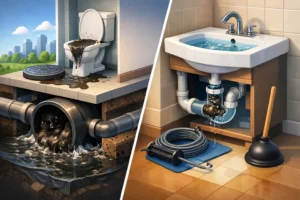
Next, identify whether the source may still be running. A sewage spill can come from a clogged drain line, a toilet overflow, a failed sump system during heavy rain, or a municipal sewer backup. The source matters because cleanup should not begin while contaminated water is still entering the property.
Once the area is isolated, document visible damage. Take clear photos and videos of standing water, floor contamination, affected walls, damaged contents, and the suspected source. This helps with insurance claims and gives restoration and plumbing teams a better starting point.
Safety comes before cleanup
The biggest mistake property owners make is treating sewage like an ordinary wet floor. It is a biohazard. That changes the standard response.
Avoid direct skin contact with contaminated water. If you must enter the area before a crew arrives, wear waterproof boots, disposable gloves, and, at minimum, a properly fitted mask. If sewage has soaked carpeting, underpad, drywall, insulation, or upholstered furniture, those materials are often not salvageable. Trying to dry them in place can spread contamination rather than solve it.
Ventilation can help in some situations, but it depends on the spill. Opening windows may reduce odor, but aggressive fan use before containment is in place can circulate aerosols and push contamination into other rooms. That is one reason sewage losses are usually handled with controlled containment, commercial extraction, and disinfecting protocols rather than basic household drying.
Anyone with asthma, a weakened immune system, recent surgery, or other health vulnerabilities should stay completely away from the area. In commercial settings, restrict access immediately and keep staff or tenants out until the site is assessed.
What you should not do
When people panic, they often make the cleanup harder.
Do not use a regular household vacuum or shop vac unless it is specifically rated and set up for contaminated water. Do not mop sewage into adjacent rooms. Do not turn on HVAC systems that could spread contaminated air through the building. Do not use bleach as a one-step fix on porous materials and assume the problem is solved.
Bleach has limits. It may disinfect certain hard surfaces when used correctly, but it does not replace extraction, removal of unsalvageable materials, moisture mapping, drying, or source repair. In many sewage spills, the real problem is not just the visible water. It is what has wicked behind baseboards, into subfloors, wall cavities, and insulation.
Containment and damage control
If the spill is localized and you can do so safely, close doors to the affected area and use towels only at the perimeter to stop migration into clean rooms. Do not reuse anything that has absorbed sewage. Anything used for temporary containment should be treated as contaminated waste.
Move unaffected items away from the edge of the spill if you can reach them without stepping through contaminated water. In retail spaces, offices, and multifamily buildings, this step can protect inventory, documents, and equipment while the response team handles extraction and remediation.
For condo owners and property managers, early notification matters. If the spill may affect neighboring units, common elements, hallways, or vertical drain stacks, building management should be informed right away. In shared buildings, sewage events rarely stay isolated for long.
When professional sewage cleanup is necessary
In most cases, immediately. A true sewage spill is not a DIY cleaning project.
Certified restoration and plumbing teams bring two things that matter right away: they stop the cause and they remediate the contamination. That may include drain inspection, emergency plumbing repair, sewage extraction, removal of contaminated materials, antimicrobial treatment, odor control, air filtration, and structural drying.
This is especially important when sewage has affected finished basements, laminate or hardwood flooring, drywall, insulation, or tenant-occupied spaces. The longer contaminated moisture sits, the greater the chance of bacterial spread, permanent material damage, and secondary mold growth.
A professional response is also critical when the spill happened overnight, during a storm, or after hours in a commercial building. Hidden migration can continue for hours before anyone notices how far it spread.
How restoration crews typically handle a sewage loss
If you have never dealt with one before, it helps to know what happens next.
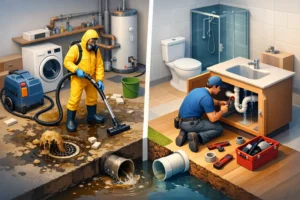
The first step is site safety and assessment. The crew identifies the category of water, confirms the source, checks for active plumbing failure, and maps affected areas using moisture detection equipment. They set containment if needed to protect clean parts of the property.
Then comes extraction and removal. Standing sewage is removed with professional equipment. Unsalvageable porous materials such as carpet, pad, drywall, insulation, and some contents may need to be cut out and disposed of under contamination protocols.
After that, the area is cleaned, disinfected, and dried. Air movers, dehumidifiers, and filtration equipment are placed based on the layout and material conditions. Odor treatment may be part of the process, especially if sewage sat for any length of time.
The final stage is documentation and recovery planning. For many owners, this is where an experienced company adds real value. Clear records, photos, readings, and scope details can support the insurance process and help move the property from emergency cleanup to repair and reconstruction without delays.
Insurance and documentation
Not every policy handles sewage backups the same way. Some include specific endorsements, limits, or exclusions. That means your response should be fast and organized.
Photograph everything before major cleanup begins, if it is safe to do so. Keep a list of damaged materials and contents. Save invoices for emergency services, temporary housing if needed, and any immediate protective measures.
If tenants are involved, document communication and access restrictions. If the event occurred in a commercial property, note any operational disruption, closures, or affected suites. The more complete the record, the easier it is to explain the scope and timing of the loss.
Preventing the next sewage spill
Not every sewage event is preventable, but many are. Recurring backups often point to a larger issue such as root intrusion, aging drain lines, grease buildup, improper flushing, or poor stormwater control.
After the emergency is stabilized, ask whether further inspection is needed. A camera inspection of the sewer line, backwater valve review, sump pump testing, or basement waterproofing assessment may reduce the chance of another event. In older properties, prevention work is often far less costly than repeated cleanup.
For multi-unit and commercial buildings, routine drain maintenance and clear reporting procedures can make a major difference. The sooner staff report slow drains, toilet bubbling, foul odors, or recurring floor drain backups, the better the chance of stopping a spill before it spreads.
How to respond to sewage spill without losing time
The clearest answer to how to respond to sewage spill incidents is this: isolate the area, protect occupants, stop using plumbing, document the damage, and bring in qualified help fast. Speed matters, but the right kind of speed matters more.
A rushed cleanup without containment or disinfection can leave you with hidden contamination, odor problems, and damaged materials that fail later. A controlled emergency response protects health first, then property, then the recovery timeline.
When sewage enters a home or building, you need more than a mop and disinfectant. You need a response that handles plumbing, contamination, drying, and documentation as one coordinated job. That is how properties get back to safe, usable condition with less disruption and fewer surprises.