At 2 a.m., a burst pipe is not just a plumbing problem. It can soak drywall, flood hardwood, contaminate insulation, shut down electrical areas, and leave you dealing with insurance before sunrise. That is where the plumber vs restoration company question matters. Calling the right team first can reduce damage, speed up drying, and keep a manageable incident from turning into a major property loss.
The short answer is simple. If the issue is limited to fixing a pipe, drain, fixture, or water line, a plumber is usually the right first call. If water has already escaped into the building, affected materials, created contamination, or needs cleanup, drying, demolition, or insurance documentation, a restoration company is often the better starting point. In many emergencies, you need both. The difference is who can control the full situation fastest.
Plumber vs restoration company: the core difference
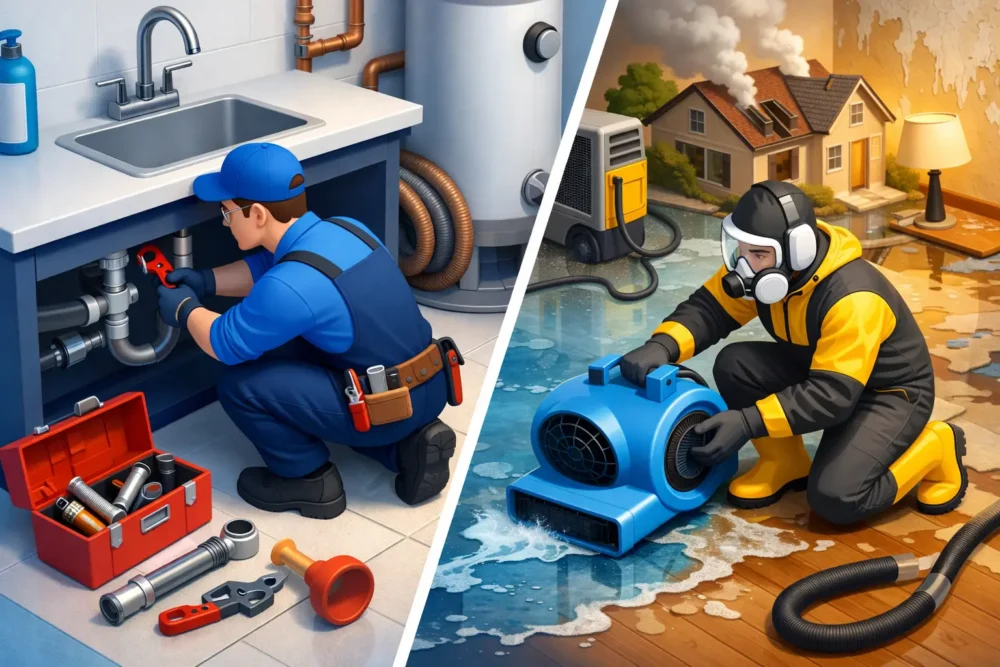
A plumber fixes the source. A restoration company manages the damage the source leaves behind.
That distinction sounds obvious until you are standing in a wet basement, a tenant is calling, and water is spreading under finished floors. A plumber is trained to repair supply lines, drains, sewer connections, valves, water heaters, sump pumps, and fixtures. Their focus is mechanical correction. They stop leaks, clear blockages, replace failed components, and restore plumbing function.
A restoration company responds to what the water, sewage, smoke, or contamination did to the property. That work includes emergency extraction, moisture mapping, structural drying, dehumidification, contaminated material removal, mold prevention, sanitization, odor control, contents handling, and documentation for insurance. In more serious losses, they also coordinate repairs needed to bring the space back to a safe, usable condition.
If your dishwasher line is leaking under the sink and nothing else is affected, a plumber may be all you need. If that same leak ran overnight and wicked into cabinets, subfloors, and adjacent walls, repairing the line is only the beginning.
When a plumber is the right call
A plumber is the right fit when the main problem is a plumbing failure and the damage is minor, contained, or not yet present.
That includes situations like a dripping shutoff valve, a clogged sink, a running toilet, a failed faucet cartridge, or a water heater issue caught early. It also includes drain cleaning, fixture replacement, and repairs where the system itself is the problem and building materials have not been affected in a meaningful way.
Plumbers are also essential when the immediate priority is isolating and repairing the cause of active water release. If a supply pipe bursts behind a wall, someone has to stop that failure at the plumbing level. Restoration crews can extract water and set drying equipment, but they do not replace every pipe, valve, or plumbing assembly.
The trade-off is that many plumbing companies are not set up for full post-loss recovery. They may stop the leak, but they usually do not handle wet drywall removal, moisture detection inside cavities, antimicrobial treatment, commercial-grade drying, or insurer-facing loss documentation. If damage has already spread, a repair-only approach can leave hidden moisture behind.
When a restoration company is the right call
A restoration company should be your first call when water has moved beyond the plumbing system and into the structure, contents, or indoor environment.
That includes flooded basements, sewer backups, overflowed toilets that affect flooring, appliance leaks that ran for hours, storm-related water intrusion, and any loss involving multiple rooms or porous materials. It also applies when the water category is unsafe. Sewage, gray water, and contaminated floodwater are not standard plumbing repair calls. They are health and safety events that require controlled cleanup, protective equipment, sanitization, and proper disposal.
Restoration companies are also better equipped when speed matters across several fronts at once. A serious water loss is not solved by one repair. You may need extraction, leak detection, thermal imaging, dehumidifiers, air movers, containment, demolition, cleaning, and insurance photos within the first few hours. That is a different operating model from a service plumber fixing a mechanical issue.
For property managers, condo boards, landlords, and commercial operators, this difference is even more important. Multi-unit or occupied spaces need coordinated response, documentation, and a plan to limit disruption. In those cases, one team that can control the site, protect unaffected areas, and manage recovery is often the more efficient choice.
Common emergencies and who to call first
Some situations are clear. Others depend on how far the damage has gone.
A burst pipe with visible flooding usually calls for a restoration company first, especially if the provider also offers emergency plumbing. Why? Because the active leak and the property damage need to be handled at the same time. Stopping the pipe matters, but extracting standing water and starting structural drying right away can save flooring, drywall, and cabinetry.
A sewer backup is firmly in restoration territory, even though a plumber may still be needed to address the line issue. The cleanup is not just messy. It is hazardous. A backed-up basement or washroom may require containment, removal of contaminated materials, deep cleaning, and deodorization.
An overflowing sink or toilet that is shut off quickly and cleaned immediately may only need a plumber. But if water seeped into ceilings, walls, or lower levels, the restoration side becomes necessary fast.
A hidden leak is where people often make the wrong call. If you notice bubbling paint, warped flooring, a musty odor, or unexplained moisture, this is no longer just about fixing a pipe. It is about finding moisture, assessing spread, opening affected areas if needed, and preventing mold growth. In that case, restoration-led investigation often makes more sense.
Why calling only a plumber can cost more later
Property damage gets more expensive when moisture remains where you cannot see it.
A plumber may repair the failed line and leave the job complete from a trade standpoint. But water does not stay where it starts. It travels under floor finishes, behind baseboards, into insulation, through ceiling cavities, and along framing. Within a short window, secondary damage begins. Materials swell, adhesives fail, microbial growth becomes a risk, and odors set in.
This is why the plumber vs restoration company decision should not be based only on who can arrive to fix a pipe. It should be based on what the incident now requires. If there is any doubt about moisture spread, contamination, or material damage, a restoration response can prevent a small claim from becoming a major rebuild.
There is also the documentation issue. Insurance carriers typically want a clear record of cause, affected areas, mitigation steps, moisture readings, photos, and itemized loss details. Plumbing invoices matter, but they do not replace full mitigation records.
The strongest response is often both
In real emergencies, the best answer is often not plumber or restoration company. It is a coordinated response that includes both capabilities.
That matters because damage unfolds in parallel. The leak source needs repair while extraction and drying begin. Sewage needs line correction while contaminated materials are removed. A commercial loss needs after-hours stabilization while tenant areas are documented and isolated. The faster those pieces work together, the lower the overall disruption.
This is where a full-service emergency provider has a clear advantage. Instead of calling one company to stop the leak, another to dry the structure, and a third to document the claim, you get one point of contact controlling the incident from emergency arrival through recovery. For many property owners, that means fewer delays, fewer handoffs, and less confusion when the situation is already stressful.
GTA Restoration is built around exactly that kind of response – emergency plumbing, mitigation, cleanup, drying, and property recovery under one roof.
How to decide in the first five minutes
Ask yourself three questions.
First, is the problem still active? If water is still flowing, shut off the nearest valve if you can do so safely. If not, shut off the main water supply and call for emergency help.
Second, has water or sewage touched building materials or contents? If yes, this is no longer a simple plumbing repair.
Third, is there contamination, hidden moisture, or a risk of spread to other units or rooms? If yes, restoration should be involved immediately.
If you are unsure, err on the side of the broader response. You can always scale down after inspection. What costs more is waiting while water migrates, materials absorb moisture, and avoidable damage expands.
The right call is the one that protects the property, not just the pipe. When the issue is isolated, a plumber may be enough. When the damage has already started, a restoration company is often the team that keeps the loss under control. In an emergency, speed matters, but complete response matters more.
Related