A flooded basement at 2 a.m. does not need guesswork. It needs the right sequence. When people compare water extraction vs drying, they often assume these are two ways to solve the same problem. They are not. They are separate stages of water damage restoration, and if either one is skipped, delayed, or done poorly, damage keeps spreading behind walls, under floors, and into the air you breathe.
For homeowners, condo owners, property managers, and commercial operators, understanding that difference matters. It affects how fast a property can be stabilized, how much material can be saved, how long the disruption lasts, and what an insurance file may ultimately look like.
Water extraction vs drying: the core difference
Water extraction is the removal of standing water and excess surface water. Drying is the controlled removal of remaining moisture trapped in building materials and contents. One is the bulk removal phase. The other is the moisture reduction phase.
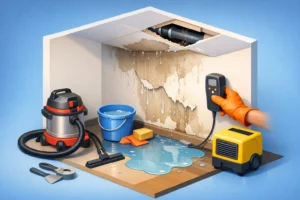
That sounds simple, but the distinction is where many costly mistakes begin. A shop vacuum, a few fans, and open windows might remove visible water from the floor. That does not mean the structure is dry. Moisture can remain in drywall, insulation, subfloors, framing, cabinetry, and concrete long after the surface looks clean.
Extraction is about speed and volume. Drying is about precision and verification. In a proper emergency response, extraction comes first because drying equipment works far more effectively after standing water has been removed.
Why extraction must happen before drying
If several inches of water are still sitting on the floor, air movers and dehumidifiers cannot do their job efficiently. The priority is to physically remove as much water as possible, as fast as possible. That reduces the amount of moisture load in the building and helps prevent water from migrating further into materials.
Fast extraction can limit swelling in wood, reduce delamination in engineered flooring, and improve the chances of saving drywall, trim, contents, and commercial finishes. It also shortens the drying timeline. The more water you remove mechanically at the start, the less time and equipment are required later.
There is also a health and safety issue. Standing water can hide electrical hazards, weaken materials, create slip risks, and become contaminated depending on the source. Clean water from a supply line is one thing. Water from a sewer backup, toilet overflow, or storm-related intrusion is another. The response protocol changes based on contamination, but extraction is still the urgent first move.
What water extraction actually includes
Extraction is more than just pumping out a basement. In professional restoration, it begins with identifying the source, stopping ongoing water intrusion, and assessing the affected areas. From there, crews use pumps, truck-mounted extraction systems, portable extractors, and specialized tools to remove standing water and pull moisture from carpets and pads.
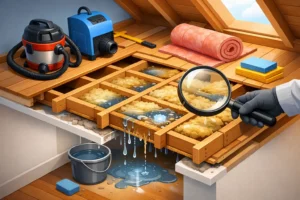
In some losses, extraction also includes removing unsalvageable wet materials that are holding water and slowing the drying process. Saturated insulation, badly damaged drywall, and waterlogged underlayment may need to be removed to expose the structure underneath. This is especially common when the water sat for too long or came from a contaminated source.
The main goal is stabilization. The faster the property is stabilized, the better the chance of containing the damage.
What drying involves after extraction
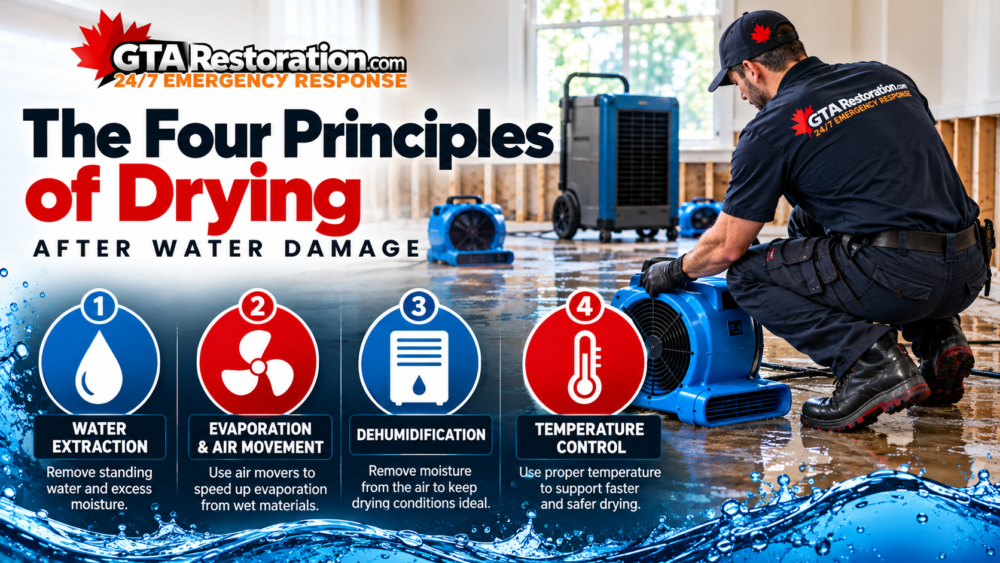
Once standing water is gone, drying begins. This stage uses air movement, dehumidification, temperature control, and moisture monitoring to return materials to an acceptable dry standard. Drying is not based on appearance. It is based on readings.
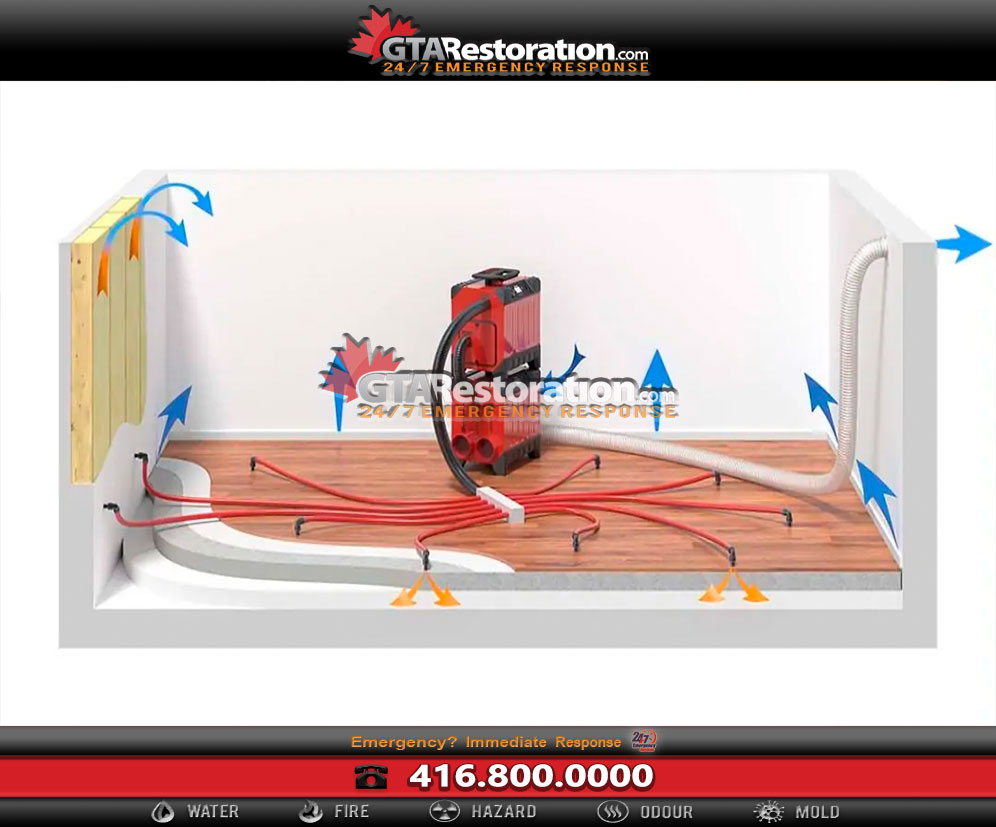
Professional drying equipment is selected according to the size of the loss, the class of water damage, the affected materials, and the indoor environment. Air movers help evaporate moisture from surfaces. Dehumidifiers remove that moisture from the air. In some cases, specialty drying systems are used for hardwood floors, wall cavities, crawl spaces, or dense materials that hold moisture longer.
Moisture meters, thermal imaging, and hygrometers help technicians track progress. That matters because drying is rarely uniform. A laminate floor may feel dry on top while the subfloor underneath remains wet. A condo unit may look unaffected, while moisture has already traveled into adjacent walls or lower levels.
Water extraction vs drying in real property emergencies
In a residential basement flood, extraction usually focuses on removing pooled water from the slab, carpets, and storage areas. Drying then addresses the framing, drywall, flooring, and air conditions. If the basement was finished, hidden moisture behind baseboards and in insulation often becomes the deciding factor in whether materials can stay or need removal.
In condos, the challenge is often migration. Water from a failed appliance or overflow can move into neighboring units, elevator shafts, common corridors, and wall assemblies. Extraction may seem limited if the floor is no longer visibly wet, but drying can become more complex because of concealed moisture and building management requirements.
In commercial properties, downtime is often the biggest concern. Extraction helps reopen access and reduce immediate hazards. Drying is what determines how quickly offices, retail units, restaurants, or multi-tenant areas can safely return to operation. In these settings, documentation is also critical for risk management and insurance reporting.
Why fans alone are not enough
A common mistake after a leak is to set up household fans and assume the issue is under control. Fans can help with evaporation, but without dehumidification and moisture tracking, they may just move humid air around. In some cases, that can even worsen the situation by pushing moisture into unaffected spaces.
Drying without measurement is guesswork. Materials dry at different rates, and enclosed assemblies can stay wet far longer than expected. That is why professional restoration teams monitor the drying chamber, check moisture content against unaffected areas, and adjust equipment as conditions change.
The same is true for extraction. Surface water can disappear quickly while wet carpet pad, subfloor seams, and lower wall cavities continue to hold moisture. If that hidden moisture is not addressed, mold growth, odor, staining, and material failure can follow.
The trade-offs that affect the response
Not every water loss is handled the same way. Clean water from a broken pipe caught quickly may allow for aggressive extraction and targeted drying with minimal demolition. A long-standing leak behind a wall may require selective removal because the damage is less about standing water and more about concealed saturation.
Contaminated water changes the equation further. When sewage or stormwater is involved, drying alone is not enough. Cleaning, disinfection, safe material removal, and containment may all be necessary. Saving materials is not always the safest option.
Time also matters. The first 24 to 48 hours are critical. After that, materials absorb more moisture, odors set in, and microbial growth becomes more likely. Delays do not just increase the drying time. They can change a simpler extraction-and-drying job into a larger remediation project.
What a professional process should look like
A reliable emergency response starts with source control and safety. Then comes inspection, water classification, extraction, removal of unsalvageable materials if needed, equipment setup, moisture mapping, and daily monitoring. Each step supports the next.
This is where experience matters. Drying a hardwood floor is different from drying a concrete basement. Restoring a single-family home is different from stabilizing a multi-unit condo or commercial facility. The equipment, containment strategy, documentation, and communication all have to match the property type and the level of damage.
For many property owners, insurance is part of the stress. Clear records of the water source, affected areas, moisture readings, mitigation steps, and drying progress can make a major difference during the claims process. That is one reason companies like GTA Restoration approach water losses as full crisis-response events, not just cleanup jobs.
When to call for emergency help
If there is standing water, ceiling collapse risk, sewage contamination, electrical danger, or water affecting multiple rooms or units, the response should be immediate. The same applies if materials have been wet for more than a few hours and you are unsure how far the moisture has spread.
Even smaller incidents deserve attention when they involve hardwood, finished basements, drywall, insulation, or commercial spaces where downtime is expensive. A minor leak can turn into a major restoration claim when hidden moisture is left behind.
The smartest approach is simple. Extract first. Dry second. Verify every stage. Visible water is only part of the problem, and a property is not restored just because the floor looks dry again.
When water enters a building, speed matters, but sequence matters just as much. The right response does not just remove water. It protects the structure, reduces health risks, supports the insurance process, and gives you a clearer path back to normal.