
For non-emergencies use our contact form
Wet Carpet Drying Guide
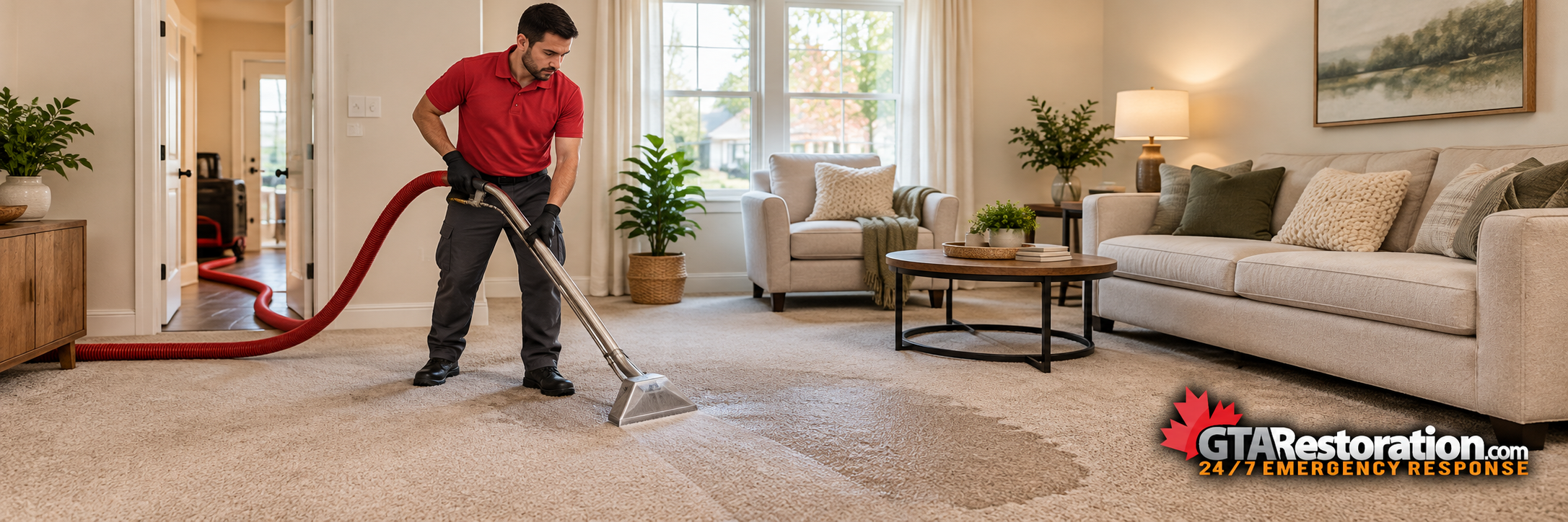
This wet carpet drying guide explains what to do when a spill, leak or flood soaks your floor. Start by checking the water source and any safety risks. Then, decide whether the carpet needs drying, professional cleanup or replacement.
A carpet can feel dry on top while its backing, underlay and subfloor still hold water. Therefore, successful drying means checking each affected layer. Quick action helps, but the right approach depends on what caused the damage.
Check the Water Source First
A small spill of drinking water differs from a sewer backup or water that has crossed the ground outdoors. Clear water does not always mean clean water. If the source is unknown, get advice before handling the carpet or starting fans.
Keep people and pets away from sewage and contaminated floodwater. Also, stay out of areas where water may have reached wiring or electrical equipment. Stop an active leak only if you can reach the shut-off valve safely.
Health Canada’s flood cleanup guidance explains why contaminated materials need special care. Drying alone does not make sewage-soaked carpet safe to keep.
Remove Water from Wet Carpet
For a small, recent spill from a known clean source, blot the area with clean towels. If more water is present, a wet/dry vacuum rated for liquid pickup may help. Follow its instructions and use it only where electrical conditions are safe. Never use a standard household vacuum on wet carpet.
Next, move small furnishings and loose items to a dry area if you can do so safely. This gives you better access to the wet patch. For a soaked room or a spreading leak, arrange professional extraction.
Removing liquid comes before drying the moisture left in materials. Our guide to water extraction versus drying explains how these stages work together.
Check the Underlay and Subfloor
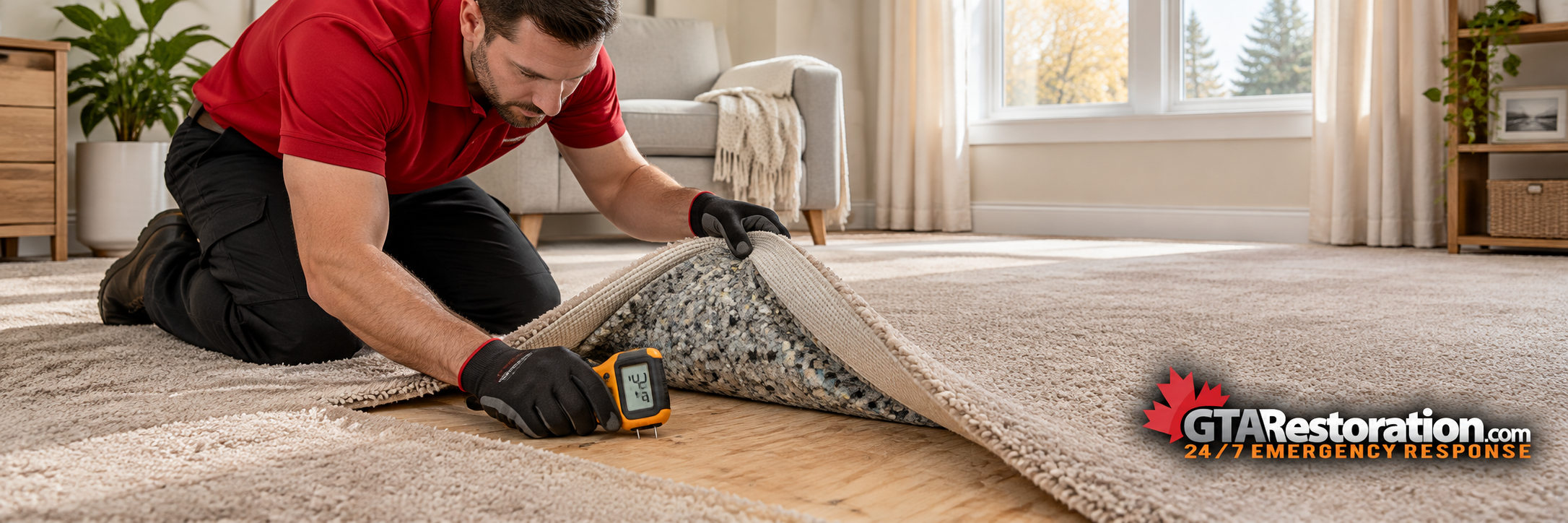
Carpet underlay is the cushioning layer beneath the carpet. It can hold water against the floor below, even after extraction. As a result, surface fans may leave part of the problem untouched.
A technician may lift an edge to inspect the backing, underlay and subfloor. Some materials can remain in place, while others need removal. Avoid pulling up large sections yourself; tack strips, seams and wet backing need careful handling.
In addition, check nearby skirting boards, doorways and adjoining rooms. The visible wet patch may not show the full extent of a leak.
Combine Airflow with Moisture Control
Once the area is safe and suitable for drying, air movers help moisture leave wet surfaces. A dehumidifier then removes moisture from the air. Together, these tools support drying more effectively than simply waiting for the carpet to feel better.
Do not aim fans at suspected mould or sewage contamination. Get professional advice first. For clean-water damage, equipment placement should suit the room and the materials below the carpet.
Opening windows may help in dry weather. However, damp outdoor air can slow the process. Follow the drying team’s advice about windows, doors and equipment settings.
How Long Does Wet Carpet Drying Take?
There is no single drying time for every carpet. A small surface spill differs from a soaked underlay over a wet timber floor. Carpet thickness, water volume, room conditions and access to the lower layers all affect progress.
The EPA’s clean-water damage guidance calls for drying carpet and backing within 24–48 hours to help limit mould growth. Treat this as a prompt-action goal, not a reason to wait or a guarantee against mould.
If the carpet stays wet or you cannot check underneath it, seek help promptly. Our article on wet carpet drying time explores the factors that can delay recovery.
Confirm Drying Before Refitting Carpet
A dry touch test cannot confirm the condition of the underlay or subfloor. Instead, restoration teams use suitable moisture readings to track progress and assess when materials are ready.
Before refitting carpet, address any remaining dampness, damage or contamination. New underlay will not solve a wet subfloor. Likewise, replacing the carpet before fixing the leak can lead to another loss.
When Wet Carpet Needs Replacement
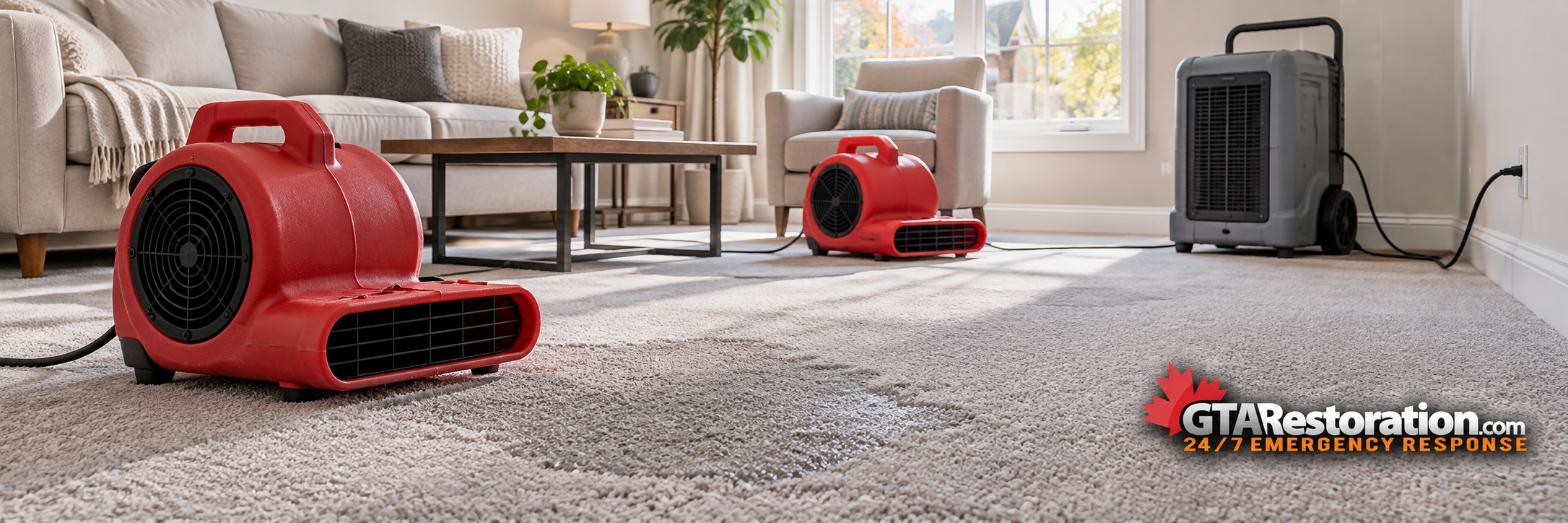
Prompt attention may save carpet after a small clean-water incident. However, sewage, outdoor floodwater, mould growth or damaged backing can make replacement necessary. A professional should assess questionable materials before you invest in drying or cleaning them.
Sometimes the carpet remains usable while the underlay needs replacement. In other cases, several layers need removal. Read about repairing or replacing wet flooring for more on this decision.
Wet Carpet Cleanup Mistakes to Avoid
Do not cover damp carpet with rugs or return heavy furniture too soon. Avoid adding shampoo, powders or scented sprays to disguise the problem. These products do not confirm dryness or remove hidden damage.
Also, avoid using high heat as a shortcut. Follow the carpet maker’s care instructions and let a drying specialist assess delicate fibres or damaged backing.
Professional Carpet Drying Support
Use this wet carpet drying guide for the first steps, then arrange an assessment when water reaches several rooms or concealed spaces. GTA Restoration provides water removal, moisture checks and specialty drying for Toronto and GTA properties.
Tell our team what caused the water, when you noticed it and which rooms feel wet. Those details help us plan the assessment and explain your options.
Need Help Drying Wet Carpet?
Speak with GTA Restoration about water removal, wet underlay and the next steps for your floor.
Learn More
Plumbing Emergencies in Toronto | Leak Detection Services That Stop Damage Fast | Thermal Leak Detection Review | Plumbing Emergencies in Toronto | 

 Facebook
  Instagram
  LinkedIn
  X / Twitter
  YouTube