Water Damage Restoration Process | Steps & Timeline
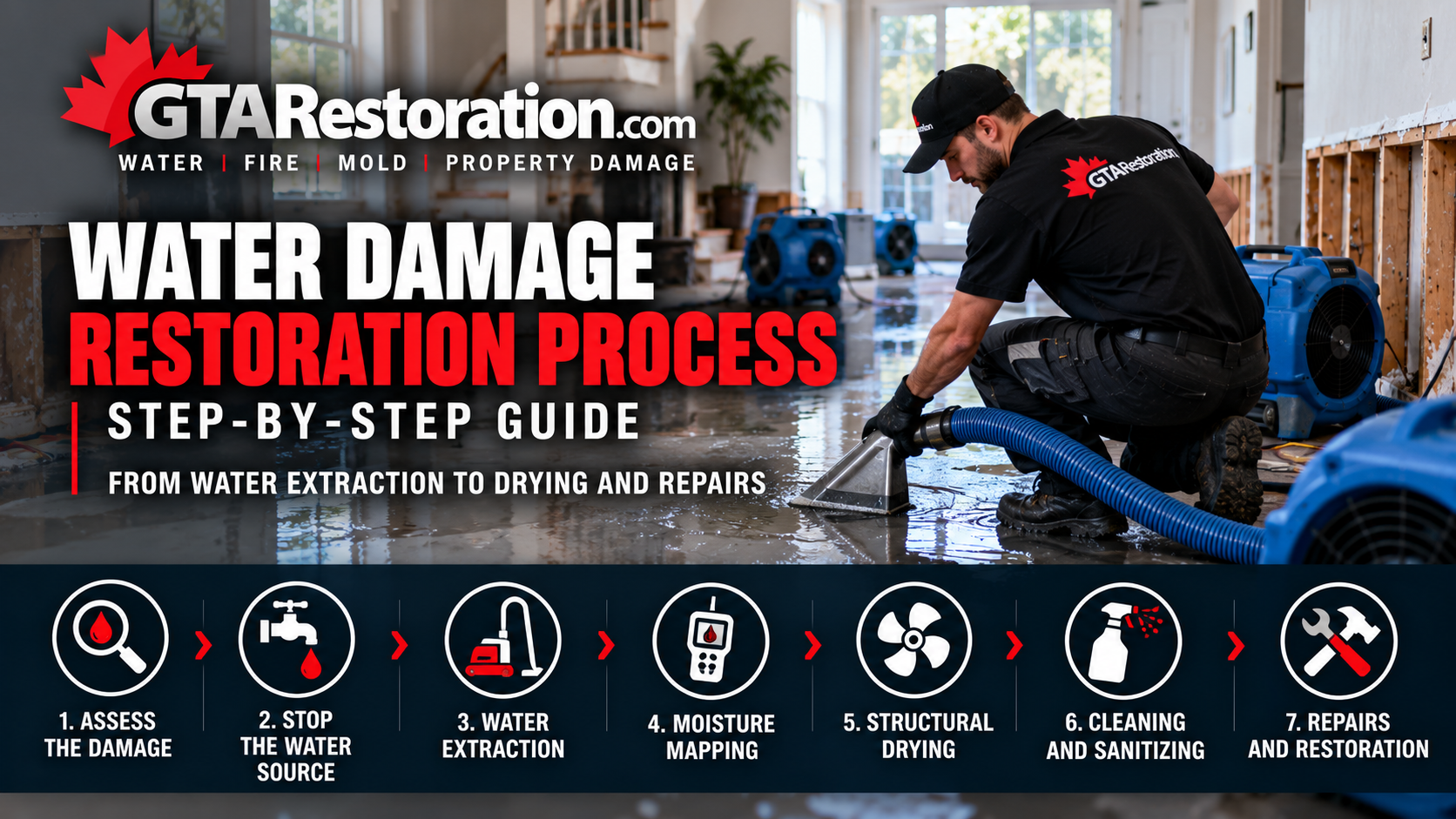
Water Damage Restoration Process: What Happens First?
The water damage restoration process starts by controlling the water source and checking how far moisture has travelled. A flood, burst pipe, appliance leak, roof leak or sewer backup can affect much more than the area you can see.
GTA Restoration provides water damage restoration throughout Toronto and the GTA. Our technicians inspect affected rooms, remove standing water, locate hidden moisture and create a drying plan based on the materials and conditions found.
Stop the Water Source
First, stop or control the source when it is safe. For example, a plumbing leak may require the main water supply to be shut off. A roof leak may need temporary protection, while a sewer backup requires extra contamination precautions.
If electrical equipment, wiring or outlets are affected by water, keep away from the area until the appropriate professional confirms that it is safe.
Inspect the Damage and Hidden Moisture
Next, technicians inspect walls, ceilings, floors, cabinets and other affected materials. Water can move beneath flooring, behind drywall and into insulation. Therefore, visible damage does not always show the full extent of the problem.
Moisture meters help technicians confirm which materials are wet. Thermal imaging may also highlight temperature differences that require further inspection. However, a thermal camera does not directly measure moisture, so technicians confirm suspicious areas with proper testing equipment.
Identify the Type of Water Loss
The source of the water affects the cleanup plan. A clean plumbing leak creates different conditions from a sewer backup or other contaminated-water event.
As a result, technicians consider the water source, affected materials, contamination level and length of exposure before deciding what can remain and what may need removal.
Step-by-Step Water Damage Restoration Process
1. Water Extraction
After the source is under control, crews remove standing water. Depending on the loss, they may use pumps, portable extractors, truck-mounted equipment or specialized floor extraction tools.
Removing as much water as possible at this stage reduces the amount of moisture that must later evaporate. Therefore, good extraction can make structural drying more effective.
2. Moisture Mapping
Technicians then determine where the water travelled. They take moisture readings in affected and nearby materials and use those readings to build a drying plan.
This step is important because a floor, wall or ceiling can feel dry on the surface while moisture remains deeper inside the assembly.
3. Remove Materials When Necessary
Not every wet material needs to be removed. Some drywall, wood and other materials may dry successfully in place when conditions allow.
However, technicians may need to remove damaged insulation, carpet underlay, drywall, flooring or other porous materials when contamination, deterioration or trapped moisture makes drying in place unsuitable.
4. Structural Drying
Once extraction and necessary removal are complete, technicians begin structural drying. Commercial air movers increase airflow across wet surfaces, while dehumidifiers remove moisture from the surrounding air.
Equipment placement depends on the size of the affected area, construction materials, temperature, humidity and moisture readings. For this reason, every property requires a slightly different drying setup.
The IICRC restoration standards provide recognized industry guidance for professional water-damage restoration and structural drying.
5. Cleaning and Contamination Control
Cleaning depends on the source of the water. For example, a clean supply-line leak usually requires a different approach from sewage or another contaminated loss.
Technicians clean affected surfaces and use suitable disinfecting products when conditions require them. In addition, badly contaminated porous materials may need removal rather than surface cleaning.
6. Monitor the Drying Process
Drying equipment should not simply run for a fixed number of days. Instead, technicians check moisture readings, temperature, humidity and equipment performance throughout the project.
As areas reach their drying goals, crews can reposition or remove equipment. This monitoring helps confirm that affected materials are drying as expected.
7. Document the Restoration Work
Professional documentation may include photographs, moisture readings, drying logs, equipment records and notes about damaged materials.
If an insurance claim applies, these records can help document the condition of the property and the work performed. However, the insurance company determines coverage based on the individual policy and cause of loss.
Drying, Repairs and Prevention After Water Damage
When Is the Property Considered Dry?
The water damage restoration process does not end because a room looks dry. Technicians compare moisture readings with suitable drying goals and unaffected materials.
Drying time varies because wood, drywall, concrete, insulation and flooring all react differently to moisture. Temperature, humidity, airflow and the amount of water also affect the timeline.
Repairs After Structural Drying
Once affected areas reach suitable drying goals, repairs can begin. Depending on the damage, reconstruction may include drywall replacement, insulation, flooring, trim, painting or cabinetry work.
Small water losses may require only minor repairs. In contrast, larger floods can involve more extensive reconstruction.
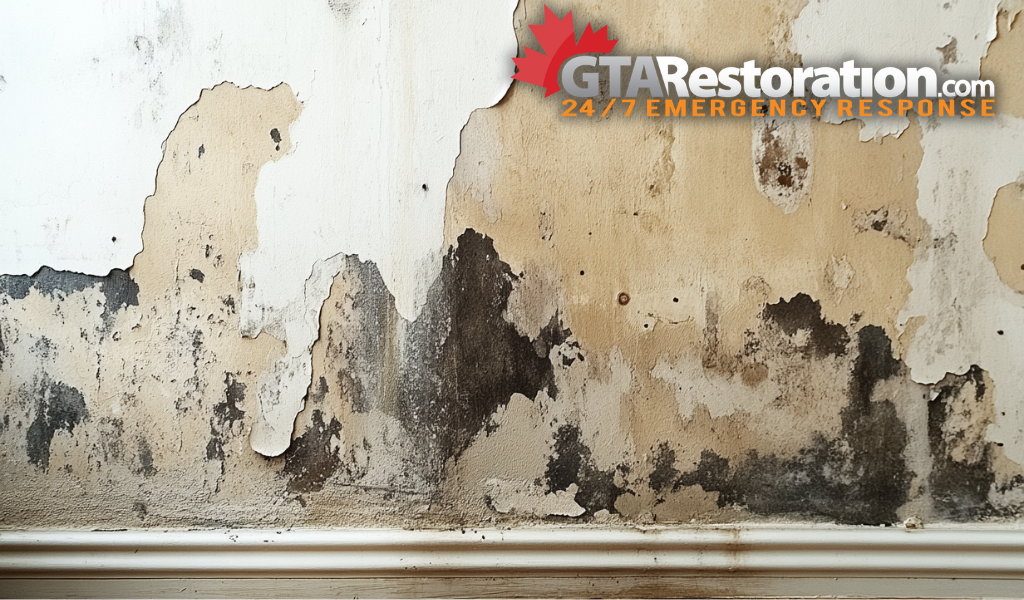
Can Water Damage Cause Mold?
Persistent moisture can create conditions that support mold growth. Therefore, correcting the water source and drying affected materials remain important parts of the water damage restoration process.
If visible mold has already developed, the property may also need mold removal and remediation.
Prevent Another Water Damage Emergency
Not every water emergency can be prevented. However, regular maintenance can reduce the chance of many common losses.
- Check plumbing connections for leaks or corrosion.
- Inspect washing machine and dishwasher supply lines.
- Know where the main water shutoff valve is located.
- Maintain sump pumps and drainage systems.
- Keep gutters and downspouts clear.
- Investigate recurring roof or foundation leaks.
- Consider water leak sensors near high-risk areas.
Our water leak detection service can also help investigate moisture when the source is not obvious.
How Long Does the Water Damage Restoration Process Take?
There is no single timeline for every property. Water extraction may take several hours, while structural drying often continues for several days. Larger projects can take longer, especially when extensive repairs are required.
Ultimately, technicians should use moisture readings rather than a fixed number of days to determine when drying is complete.
Professional Water Damage Restoration
A complete water damage restoration process involves more than removing visible water. It includes source control, extraction, moisture investigation, structural drying, cleaning, monitoring and repairs when needed.
By following these steps in the correct order, restoration crews can address both visible damage and moisture hidden inside the building.
Water Damage Emergency?
GTA Restoration provides water extraction, moisture investigation, structural drying and property restoration throughout Toronto and the GTA.
Standing water, burst pipe or hidden moisture? Control the source when safe and start the drying process before damage spreads.
Learn More
What Is a Water Damage Restoration Technician? | Water Damage Restoration | Why a Certified Mold Remediation Technician is Important | Toronto Emergency Plumber
For non-emergencies use our contact form
Control the Water Source
The first priority after water damage is stopping or controlling the source when it is safe. For example, a burst pipe may require the main water supply to be shut off before cleanup begins.
Remove Standing Water
Water extraction removes as much liquid water as possible before structural drying begins. As a result, air movers and dehumidifiers can work more effectively.
Check for Hidden Moisture
Water often travels beyond the visible wet area. Therefore, technicians use moisture meters to inspect walls, ceilings, flooring and other building materials.
Create a Drying Plan
Every water loss is different. Technicians choose drying equipment and placement based on the materials, moisture levels, temperature and humidity found at the property.
Use Air Movers and Dehumidifiers
Air movers increase airflow across wet surfaces, while commercial dehumidifiers remove moisture from the air. Together, they support controlled structural drying.
Monitor Moisture Levels
Technicians should track moisture readings throughout the project. Therefore, drying does not end simply because the walls or floors look dry.
Remove Damaged Materials When Required
Some materials can dry successfully in place. However, badly damaged or contaminated materials may require removal to allow proper cleaning and drying.
Clean Affected Areas
The cleaning process depends on the water source and materials involved. In addition, contaminated losses may require stronger precautions than a clean plumbing leak.
Document the Restoration
Photos, moisture readings, equipment logs and restoration records help document the work completed. These records may also support an insurance claim when coverage applies.
Complete Repairs After Drying
Once suitable drying goals are reached, repairs can begin. Depending on the loss, this may include drywall, flooring, insulation, painting or other reconstruction work.
Water Damage Restoration Process in Toronto
GTA Restoration provides emergency water extraction, structural drying, moisture investigation and restoration for homes and businesses throughout Toronto and the GTA.
Water Damage, Flooding or Hidden Moisture?
Get professional help removing water, checking affected materials and drying the property before damage spreads further.
Service Areas Across Canada
GTA Restoration serves communities across Canada, including Toronto and the GTA. U.S. locations are opening. Browse our Canadian service areas below, and contact us to confirm services and availability for your address.
Search
- Air Duct Cleaning Montreal
- Ajax Asbestos Removal
- Ajax Mold Removal
- Ajax Water Damage
- Asbestos Removal Calgary
- Asbestos Removal Edmonton
- Asbestos Removal Fort Saskatchewan
- Asbestos Removal Gloucester
- Asbestos Removal Grimsby
- Asbestos Removal Hamilton
- Asbestos Removal Kanata
- Asbestos Removal Kitchener
- Asbestos Removal Laval
- Asbestos Removal Lincoln
- Asbestos Removal Montreal
- Asbestos Removal Nepean
- Asbestos Removal Niagara Falls
- Asbestos Removal Orleans
- Asbestos Removal Ottawa
- Asbestos Removal Sherwood Park
- Asbestos Removal Spruce Grove
- Asbestos Removal St Catharines
- Asbestos Removal St-Albert
- Asbestos Removal Thorold
- Asbestos Testing Hamilton
- Asbestos Testing Montreal
- Asbestos Testing Petersburg
- Aurora Mold Removal
- Aurora Water Damage
- Beaconsfield Asbestos Removal
- Brampton Asbestos Removal
- Brampton Mold Removal
- Brampton Water Damage
- Burlington Asbestos Removal
- Burlington Mold Removal
- Burlington Water Damage
- Burst Pipe Montreal Frozen Pipe
- Burst Pipe Repair Edmonton
- Burst Pipe Repair Ottawa
- Caledon Mold Removal
- Caledon Water Damage
- Calgary Mold Removal
- Calgary Water Damage
- Cambridge Mold Removal
- Cambridge Water Damage
- Clarington Mold Removal
- Concord Mold Removal
- Concord Water Damage
- Cooksville Mold Removal
- Edmonton Water Damage
- Emergency Roofing Vancouver
- Etobicoke Asbestos Removal
- Etobicoke Mold Removal
- Etobicoke Water Damage
- Fire Damage Grimsby
- Fire Damage Lincoln
- Fire Damage Niagara Falls
- Fire Restoration Fort McMurray
- Fire Damage Restoration Thorold
- Fire Damage St Catharines
- Flood Cleanup Grimsby
- Flood Cleanup Lincoln
- Flood Cleanup Niagara Falls
- Flood Cleanup St Catharines
- Flood Cleanup Thorold
- London Mold Removal
- London Water Damage
- Markham Asbestos Removal
- Markham Mold Removal
- Markham Water Damage
- Mississauga Asbestos Testing
- Mississauga Mold Removal
- Mississauga Water Damage
- Mold Inspection Removal Kitchener
- Mold Remediation Montreal
- Mold Removal & Inspection LaSalle
- Mold Removal Anjou
- Mold Removal Boucherville
- Mold Removal Brossard
- Mold Removal Burnaby
- Mold Removal Chambly
- Mold Removal Chateauguay
- Mold Removal Chomedey
- Mold Removal Coquitlam
- Mold Removal Dollard Des Ormeaux
- Mold Removal Dorval
- Mold Removal Edmonton
- Mold Removal Fort Saskatchewan
- Mold Removal Gloucester
- Mold Removal Grimsby
- Mold Removal Hamilton Inspection
- Mold Removal Ile Bizard
- Mold Removal in Osgoode
- Mold Removal Beaconsfield
- Mold Removal Kahnawake
- Mold Removal Kanata
- Mold Removal Kirkland
- Mold Removal Laval
- Mold Removal Lincoln
- Mold Removal Longueuil
- Mold Removal Montreal East
- Mold Removal Mount Royal
- Mold Removal Nepean
- Mold Removal New Westminster
- Mold Removal Niagara Falls
- Mold Removal Orleans
- Mold Removal Ottawa
- Mold Removal Cumberland
- Mold Remediation Hampstead
- Mold Removal Remediation Roxboro
- Mold Removal Richmond BC
- Mold Removal Rideau Lakes
- Mold Removal Rockcliffe Park
- Mold Removal Saint Hubert
- Mold Removal Saint Laurent
- Mold Removal Sherwood Park
- Mold Removal Spruce Grove
- Mold Removal St Catharines
- Mold Removal Ste Dorothee
- Mold Removal St۔ Albert
- Mold Removal Surrey
- Mold Removal Thorold
- Mold Removal Vancouver
- Mold Removal Vanier
- Mold Removal Westmount
- Montreal Biohazard Cleanup
- Montreal Emergency Plumber
- Montreal Fire Restoration
- Montreal Flood Cleanup
- Montreal Odor Removal
- Montreal Roofing Emergency
- Montreal Sewer Backup Cleanup
- Montreal Water Leak Detection
- Montréal Asbestos Removal
- Montréal Emergency Plumbing
- Montréal Mold Removal
- Montréal Pipe Burst Emergency
- Montréal Water Damage
- Newmarket Mold Removal
- Newmarket Water Damage
- North York Mold Removal
- Oakville Mold Removal
- Oakville Water Damage
- Oshawa Mold Removal
- Oshawa Water Damage
- Ottawa Air Duct Cleaning
- Pickering Mold Removal
- Pickering Water Damage
- Red Deer Water Damage
- RedDeer Mold Removal
- Richmond Hill Mold Removal
- Richmond Hill Water Damage
- Roof Repair Lincoln
- Roof Repair Niagara Falls
- Roof Repair St Catharines
- Scarborough Asbestos Removal
- Scarborough Mold Removal
- Scarborough Water Damage
- Sewage Cleanup Edmonton
- Sewer Backup Lincoln
- Sewer Backup Niagara Falls
- Sewer Backup Ottawa
- Sewer Backup St Catharines
- Thornhill Mold Removal
- Toronto & GTA Asbestos Removal
- Toronto & GTA Mold Removal
- Toronto Air Duct Cleaning
- Toronto Water Damage
- Unionville Mold Removal
- Unionville Water Damage
- Vancouver Asbestos Removal
- Vancouver Biohazard Cleanup
- Vancouver Emergency Plumber
- Vancouver Emergency Plumbing
- Vancouver Fire Restoration
- Vancouver Flood Cleanup
- Vancouver Mold Removal
- Vancouver Odor Removal
- Vancouver Pipe Burst Emergency
- Vancouver Sewer Backup Cleanup
- Vancouver Water Damage
- Vancouver Water Leak Detection
- Vaughan Mold Removal
- Vaughan Water Damage
- Vermiculite Removal Ottawa
- Water Damage Grimsby
- Water Damage Kanata
- Water Damage Kitchener
- Water Damage Lincoln
- Water Damage Longueuil
- Water Damage Nepean
- Water Damage Niagara Falls
- Water Damage Orleans
- Water Damage Ottawa
- Water Damage Repair Montreal
- Water Damage Laval Montreal
- Water Damage Restoration Thorold
- Sewage Backup Cleanup Montreal
- Water Damage St Catharines
- Water Damage Vancouver
- Water Flood Damage Repair Hamilton
- Flood Damage Repair Hampstead
- Whitby Water Damage
- Woodbridge Asbestos Removal
- Woodbridge Mold Removal
- Woodbridge Water Damage
- Restoration Equipment Rental
Water Damage Restoration Process – Frequently Asked Questions
What are the main steps in water damage restoration?
The main steps include controlling the source, water extraction, moisture inspection, structural drying, cleaning, monitoring and repairs when needed.
How long does the water damage restoration process take?
Drying often takes several days, but the timeline depends on the amount of water, affected materials and moisture readings. Larger repairs can take longer.
Does all wet drywall need to be removed?
No. Some drywall may dry successfully in place. However, contamination, damage or trapped moisture may make removal necessary.
How do technicians know when a building is dry?
Technicians use moisture readings and suitable drying goals rather than relying only on appearance or touch.
Can water damage cause mold?
Yes. Long-lasting moisture can support mold growth. Therefore, fixing the source and drying affected materials promptly are important.
Learn more ↴ 
RELATED ARTICLES
Direct Billing & Insurance Claims
Ask your insurer about coverage, deductibles and the records it needs.

In-House Financing Available
Financing up to 24 months. No interest. No money down. Ask us about the terms.
Certifications & Insurance
View our firm certification, technician qualifications and insurance documents.

IICRC Certified Firm
GTA Restoration Inc.
Firm number 199912
Valid through
Business Insurance
GTA Restoration Group Inc.
$5 million general liability per occurrence
$8 million contractors pollution per claim
–
IICRC Technician Qualifications
Tony Sokol T. Lleshi · Registration 214520
Valid through
Water Damage Restoration · Fire & Smoke Damage Restoration · Applied Microbial Remediation · Odor Control · Trauma & Crime Scene
View technician verification (PDF) — opens in a new tabInsurance is subject to policy terms, conditions and exclusions.
 Facebook
 Instagram
 LinkedIn
 X / Twitter
 YouTube