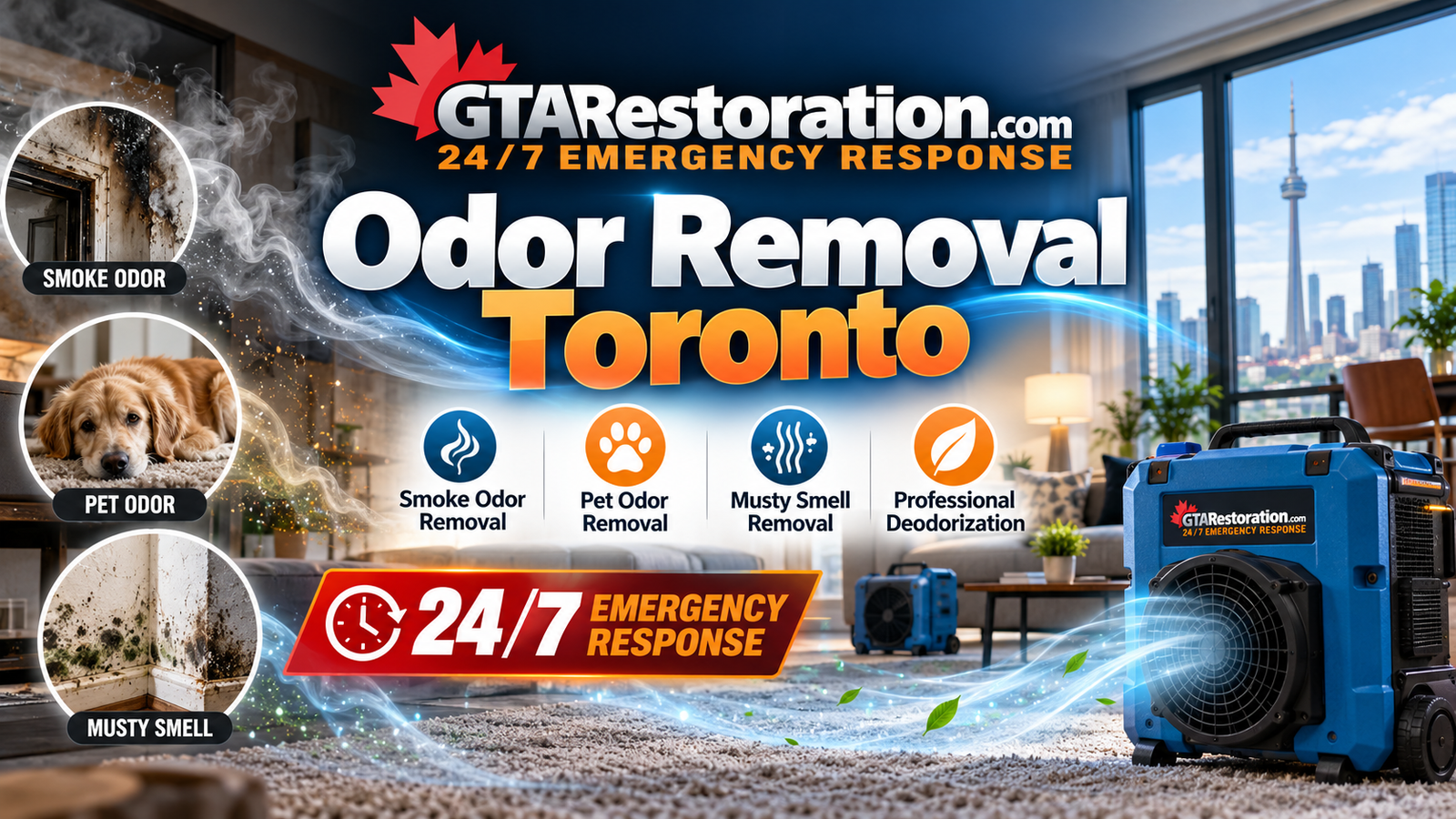
Professional Odor Removal Toronto Services
Odor Removal Toronto services help remove persistent smells from homes, condos, offices and commercial properties. Sources such as smoke, pet urine, sewage, moisture, mould and other contamination can leave odours behind long after the original problem starts. Therefore, GTA Restoration focuses on finding the source, cleaning affected materials and reducing the smell at its origin.
Persistent odours can move into carpet, drywall, wood, furniture, insulation and other porous materials. As a result, air fresheners alone rarely solve a serious odour problem. Instead, a proper inspection helps determine where the smell started, which materials hold the contamination and what treatment may provide the best result.
Smoke and Fire Odor Removal
Smoke can travel through rooms, wall openings, fabrics and ventilation systems. In addition, soot and smoke residue may remain on surfaces even when visible fire damage looks limited.
Our Toronto odor removal process can include surface cleaning, contents cleaning and deodorization after fire or smoke damage. When fire-related contamination is present, our fire restoration Toronto service can address both the visible damage and the source of lingering smoke odours.
Pet and Urine Odor Removal
Pet urine can move below carpet and into underpad, subflooring, baseboards and nearby building materials. Because of this, surface cleaning may improve the smell for a short time but fail to remove the source.
First, technicians inspect the affected area and determine how far the contamination has spread. Next, the cleaning and deodorizing process can target the materials that actually hold the odour.
Musty and Damp Odours
A musty smell can point to excess moisture, water damage or mould growth. However, treating the smell without fixing the moisture source may only provide temporary results.
If moisture or mould is suspected, our mold removal and remediation team can inspect the affected area and help identify the underlying problem. Once the moisture source is controlled, odour treatment usually becomes more effective.
How Our Toronto Odor Removal Process Works
1. Find the Source of the Odour
The first step is to determine where the smell comes from. Common sources include smoke residue, pet contamination, sewage, mould, damp materials, food waste, biohazard contamination and damaged contents.
Health Canada recommends identifying and reducing sources of indoor air pollution as an important step toward better indoor air quality. In addition, its indoor air quality guidance explains the value of ventilation and source control.
2. Remove Contaminated Materials When Needed
Some materials can be cleaned successfully, while others may hold contamination too deeply. For example, heavily affected carpet underpad, insulation or damaged porous materials may need removal before deodorizing begins.
Removing the source can make later treatment more effective. At the same time, it may help prevent the smell from returning after cleaning.
3. Clean the Affected Surfaces
Next, technicians clean surfaces and materials that can remain in place. The cleaning method depends on the source of the smell and the type of material involved.
Smoke residue requires a different approach from pet urine or sewage contamination. Therefore, professional odor removal Toronto should use a treatment plan based on the actual source rather than one method for every situation.
4. Apply the Right Deodorization Method
After source removal and cleaning, deodorization can target remaining odour. Depending on the situation, treatment may include controlled fogging, odour-neutralizing products, air filtration or other professional restoration methods.
Some treatments require special safety controls or an unoccupied work area. For that reason, technicians should select the method according to the property, contamination source and materials involved.
5. Recheck the Property
Finally, technicians can check the treated area for any remaining odour source. If a smell returns, the cause may still exist behind walls, beneath flooring or inside another concealed area.
In that case, further inspection may be needed before another treatment is applied. Finding the actual source remains the most important part of lasting odour control.
Common Odours We Remove in Toronto
Cigarette and Tobacco Smoke
Tobacco smoke can settle on walls, ceilings, cabinets, flooring and fabrics. Over time, these residues may create a persistent smell that regular household cleaning does not fully remove.
For better results, affected surfaces should be cleaned before deodorizing begins. Otherwise, the remaining residue may continue releasing odour into the room.
Sewage Odours
Sewage smells require more than deodorizing because contaminated water and materials may also be present. Therefore, keep people and pets away from the affected area and arrange professional sewer backup cleanup.
Once contaminated materials have been addressed, deodorization can become part of the final cleanup process. This approach deals with both the source and the remaining smell.
Biohazard and Decomposition Odours
Biohazard situations may involve bodily fluids, decomposition or other contamination. As a result, these losses require controlled cleaning, removal and deodorization.
Our biohazard and crime scene cleanup team can manage these situations with the proper precautions. After source removal, targeted odour treatment can address any smell that remains.
Water Damage and Musty Smells
Wet drywall, flooring and other building materials can develop musty odours when they remain damp. Therefore, the water source and moisture must be addressed before lasting odour control is possible.
Once the area is properly dried, technicians can focus on cleaning and deodorizing affected materials. This order helps reduce the chance of the smell returning.
Commercial Odor Removal
Restaurants, offices, rental properties, retail spaces and multi-unit buildings may develop persistent odours from smoke, water damage, waste, plumbing problems or previous occupants. Commercial Odor Removal Toronto services can target the source while also considering access, operating hours and occupied areas.
In addition, commercial properties may require a treatment plan that limits disruption to staff, tenants or customers. Scheduling and containment can therefore become part of the overall cleanup strategy.
Why Masking Odours Does Not Work
Fragrances can make a room smell different without removing the contamination. Once the fragrance fades, the original smell often returns.
In contrast, professional odour removal focuses on the source, affected materials and surrounding surfaces. This approach is especially important after fire damage, sewage, mould or biohazard contamination because the smell may point to a larger restoration issue.
Residential Odor Removal Toronto
GTA Restoration provides Odor Removal Toronto services for houses, condos, apartments and other residential properties. Whether the problem involves smoke, pets, moisture or another source, the goal is to identify what is causing the smell and choose a practical treatment plan.
Early action can also make cleaning easier because odours may become harder to remove after they remain in porous materials for a long period. For that reason, persistent smells should be investigated instead of repeatedly covered with fragrance.
Need Professional Odor Removal in Toronto?
GTA Restoration provides odor source inspection, cleaning and professional deodorization for homes and businesses throughout Toronto and the GTA.
Persistent smoke, pet, sewage or musty odour? Deal with the source before the smell spreads farther.
Call Us: 416-800-0000
Learn More
Toronto Odor Removal | Vancouver Odor Removal | How to Remove the Musty Smell from Your Basement | Why Does Basement Smell Musty? Find the Cause | Signs of Hidden Mold in Your Home




 Facebook
  Instagram
  LinkedIn
  X / Twitter
  YouTube