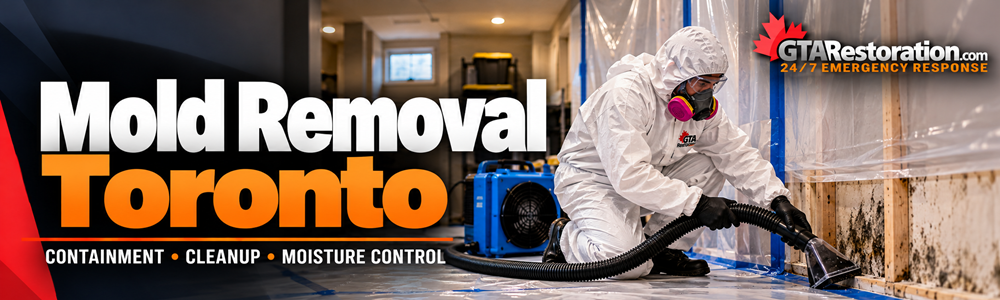
Mold Removal in Toronto
Mold removal in Toronto starts with finding the growth and its moisture source. GTA Restoration helps homeowners, condo owners and businesses assess affected rooms. Then, we plan cleanup, drying and repairs around the materials and conditions we find.
A small stain may need a closer look, while hidden or recurring mould may need a wider assessment. Tell us when you first noticed the problem and whether it followed a leak. These details help us plan the visit for mold removal in Toronto situations.
Call Us: 416-800-0000
Signs You May Need Mold Removal
Look for musty odours, damp spots and new stains near windows, pipes or roof leaks. However, a dark mark alone does not prove mould. An inspection helps explain what needs attention. Arrange a mould removal assessment for large areas, hidden growth or mould that returns after cleaning, particularly in Toronto where mold removal requirements differ by location and severity.
Find the Moisture Source
Mold cleanup can fail when a leak or damp patch remains. For example, water may collect behind a cabinet or beneath flooring. Our leak detection service can help investigate the source. Moisture meters help check wet materials. For homes and businesses needing mold removal in Toronto, thermal cameras show temperature patterns, although they do not detect mould directly.
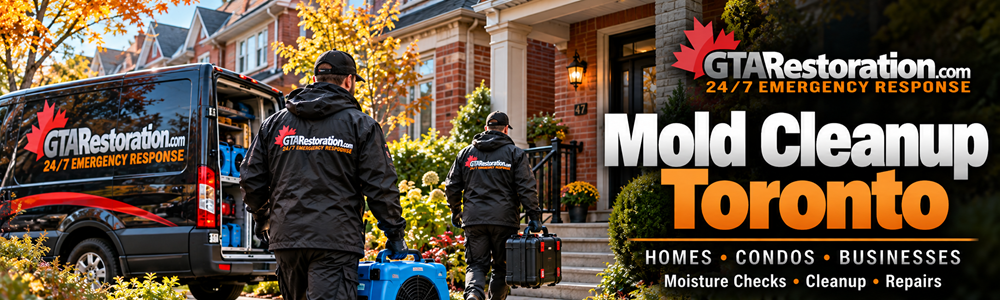
How Mold Removal Works
Each property needs a clear mold cleanup plan. Before work starts, discuss access, affected items and the areas that crews may need to open. Also, ask which repairs the quote includes and what happens if crews find more damage. In Toronto, mold removal professionals can outline every step for you.
Contain the Work Area
During mould removal, barriers and suitable HEPA filtration can help limit the spread of dust and spores. The setup depends on the work area and planned removal. Meanwhile, keep people and pets away from the work zone. Crews should explain access limits before work begins. For challenging cases of mold removal in Toronto, containment is essential.
Assess Damaged Materials
Some hard surfaces allow cleaning, but damaged drywall, carpet or insulation may need removal. The choice depends on the material and extent of growth. Ask which items crews can save before you discard them. Painting over mould does not fix the problem underneath. In Toronto, mold removal experts can assess each material for the best outcome.
Dry the Area Before Repairs
After mould removal, crews check for remaining moisture before repairs proceed. Our structural drying service can support this stage when needed. A surface may look dry while deeper layers still hold water. Therefore, moisture readings help guide the next step, an important stage in mold removal in Toronto homes.
Does Mold Removal Always Need Testing?
Routine air testing is not necessary for every mold cleanup project. Instead, start with an inspection and moisture checks. If someone recommends samples, ask what question the test will answer. Testing may help investigate an unclear issue, but it does not replace cleanup or leak repairs in most Toronto mold removal scenarios.
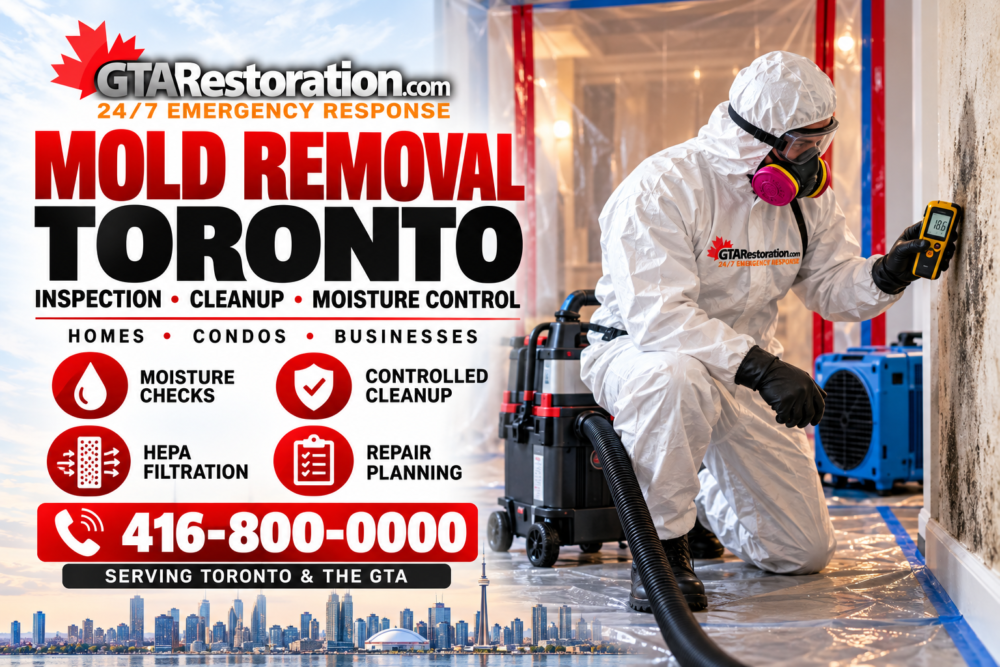
Plan Mould Cleanup for Homes and Businesses
Before mould cleanup in shared buildings, tell the property manager about affected walls or nearby units. Then, arrange access and confirm who will approve repairs. For homes and shops, discuss rooms or stock that crews need to protect. Keep photos and written estimates together. For both homes and multi-unit buildings, mold removal in Toronto often calls for advance coordination.
The cost and time for mold removal in Toronto depend on the size of the area, access and repairs. For example, growth inside a finished ceiling may take more work than a patch on an open wall. Ask for a written scope, likely schedule and limits on room use.
Reduce the Chance of Mould Returning
After cleanup, repair leaks and use bathroom and kitchen exhaust fans. Also, check old problem spots for new dampness. The City of Toronto’s moisture guidance explains why humidity control and leak repairs matter. These steps support lasting moisture control after completing mold removal in Toronto properties.
Need Mold Removal in Toronto?
Speak with GTA Restoration about visible growth, hidden moisture and cleanup options. If you are looking for experts in mold removal in Toronto, our team can help.
Call Us: 416-800-0000
Learn More
Leak Detection | Structural Drying | Facts About Mold




 Facebook
  Instagram
  LinkedIn
  X / Twitter
  YouTube

