
For non-emergencies use our contact form
Best Moisture Meters for Homeowners: What to Look For
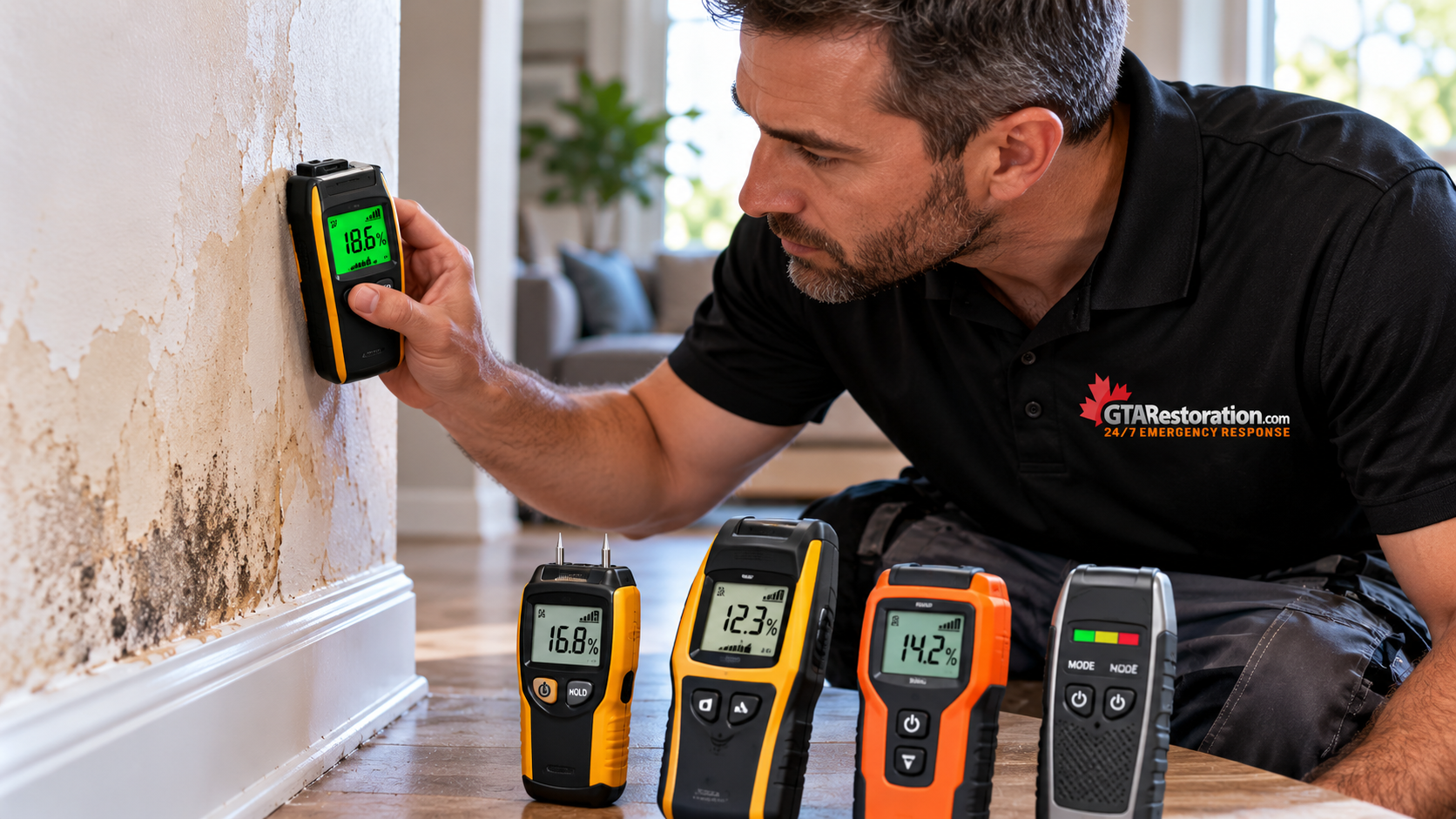
The best moisture meters for homeowners make it easier to spot damp building materials before obvious water damage appears. A small plumbing leak, roof leak, appliance problem, or basement seepage can leave moisture inside drywall, wood, flooring, and trim. Therefore, a simple meter can help you compare suspicious areas with nearby dry materials and decide whether the problem needs more attention.
However, not every moisture meter works the same way. Some use pins, while others scan the surface without making holes. Dual-mode meters combine both methods. The right choice depends on what you want to test and how often you expect to use the tool.
Best Moisture Meters for Homeowners by Type
For most homes, you do not need the most expensive professional restoration meter. Instead, look for a tool that gives clear, repeatable readings and works well with the materials you plan to inspect.
Pin Moisture Meters for Wood and Trim
A pin moisture meter uses two small probes that enter the material. It works especially well on wood, framing, window trim, baseboards, and other surfaces where tiny pin marks will not cause a problem.
Because the pins test a specific point, this style can help you compare several spots around a known leak. For example, you can check dry framing first and then test wood closer to the damaged area.
Best Uses for a Pin Meter
Choose a pin meter when you mainly want to test exposed wood, subflooring, framing, window sills, or unfinished materials. In addition, it can help track drying after a small leak when you can access the affected material directly.
Pinless Moisture Meters for Walls and Floors
A pinless meter scans an area without puncturing the surface. Therefore, it works well for painted drywall, ceilings, finished flooring, cabinets, and other surfaces where you want to avoid small holes.
Pinless meters also make it faster to scan a wider area. For example, you can move across a ceiling below a bathroom or along a basement wall to look for changes in the readings.
However, metal fasteners, pipes, material thickness, and other objects behind the surface can affect some readings. For that reason, look for patterns rather than relying on one number.
Best Uses for a Pinless Meter
A pinless model usually makes sense for finished living spaces. It can help homeowners check drywall, ceilings, laminate, hardwood, cabinets, and walls after leaks or condensation problems.
Dual-Mode Moisture Meters for More Flexibility
Dual-mode meters combine pin and pinless testing. First, you can scan a larger area without making holes. Then, when appropriate, you can use the pins for a closer reading on accessible material.
As a result, a dual-mode model can be one of the best moisture meters for homeowners who maintain several properties or want one tool for different surfaces.
How to Choose a Home Moisture Meter
Choose the Meter for the Material
Start with the areas you expect to inspect most often. If you mainly check finished walls and ceilings, a pinless meter may be easier to use. On the other hand, a pin meter may suit exposed wood and framing better.
For mixed use, dual-mode gives you more options. However, extra features only help when you understand how to use them.
Look for Clear and Repeatable Readings
A simple display can matter more than a long list of settings. During a leak, you want to compare areas quickly and see whether one location reads differently from another.
Therefore, look for an easy-to-read display, simple controls, useful material settings, and a hold function if you expect to inspect tight spaces.
Use a Dry Area as Your Comparison
One of the easiest ways to use a home moisture meter is to compare similar materials. First, test an area that appears dry. Next, move toward the suspected leak and watch for a clear change in readings.
This method can be especially useful on drywall because readings from different materials do not always mean the same thing. Therefore, avoid treating every displayed number as a universal moisture percentage.
Do Not Confuse a Moisture Meter With a Hygrometer
A material moisture meter checks moisture in building materials. A hygrometer measures moisture in the air as relative humidity. Both can help around the home, but they answer different questions.
For example, Health Canada recommends keeping indoor relative humidity around 30% to 50% and fixing moisture problems quickly to help reduce mould risk. You can read its guidance on moisture, humidity and mould for more information.
Do Not Buy Based on Price Alone
The cheapest meter may be enough for occasional checks. However, poor repeatability can make the tool less useful when you need to compare several areas.
Instead, focus on build quality, clear instructions, suitable material modes, useful scanning depth, and consistent readings. A reliable basic meter usually provides more value than an overloaded model that is difficult to use.
How to Use Moisture Readings After a Leak
Check More Than One Spot
Never make a decision from a single reading. Instead, test several points around the suspected wet area and compare them with dry areas made from the same material.
For example, after a sink leak, test the cabinet base, nearby trim, drywall, and accessible flooring. A pattern of higher readings can help show how far moisture may have travelled.
Track Whether Materials Are Drying
A meter becomes more useful when you record readings over time. Take readings from the same locations and note the date. Then, compare the numbers during the drying process.
If readings fall steadily, the material may be drying. However, readings that remain high or rise again may point to trapped moisture or a leak that has not stopped.
Know What a Moisture Meter Cannot Tell You
Even the best moisture meters for homeowners have limits. A meter can help locate unusual moisture, but it cannot always tell you why the material is wet or how far water has travelled inside a wall, floor, or ceiling.
It also cannot determine whether water contains sewage or other contamination. Likewise, a meter alone cannot confirm that every hidden cavity has dried.
Professional inspections may combine moisture meters with thermal imaging, visual inspection, controlled testing, and other tools. GTA Restoration’s property inspection services use inspection equipment to help locate water and moisture problems without unnecessary damage.
When Home Testing Is No Longer Enough
Small, controlled leaks may be suitable for basic homeowner checks. However, call for professional help when water affects several rooms, moves under flooring, reaches insulation, comes through a ceiling, or continues to appear after the source should be dry.
You should also use extra caution with sewage, contaminated water, electrical areas, or extensive flooding. In those cases, moisture readings are only one part of the inspection.
If you cannot find the source, our water leak detection service can help locate hidden leaks. For larger losses, water damage restoration may include extraction, drying, moisture monitoring, and repairs.
Which Moisture Meter Is Best for Most Homeowners?
For finished homes, a good pinless meter offers a simple starting point because it can scan walls and floors without leaving marks. Meanwhile, homeowners who mainly test wood may prefer a pin meter.
For the widest range of uses, a dual-mode meter provides both options. Ultimately, the best moisture meters for homeowners are the ones that match the materials you need to test and give readings you can repeat and compare.
Use the meter as an early warning tool rather than proof that an entire wall or floor is dry. When readings stay high or the source remains unclear, further inspection can prevent a small moisture problem from becoming a larger repair.
Found High Moisture Readings in Your Home?
GTA Restoration provides moisture inspections, water leak detection and water damage restoration throughout Toronto and the GTA.
Active leak or water damage? Get help before moisture spreads further.
Learn More
Water Leak Detection | Property Inspection | Water Damage Restoration | Mold Removal Toronto | Is Your Home Secretly Leaking? Your Guide to Catching Water Leaks Early | Water Leak Detection GTA | How to Spot Hidden Leaks Before Damage Spreads | Top 5 Best Water Damage Service Providers in Toronto | Five Common Questions About Mold Removal Process! 

 Facebook
  Instagram
  LinkedIn
  X / Twitter
  YouTube