A small leak rarely stays small for long. What starts behind a wall, under a slab, or above a ceiling can turn into soaked insulation, damaged flooring, mold growth, electrical risk, and expensive repairs before you see the first stain. That is why professional leak detection services matter. The goal is not just to find water – it is to find the exact source quickly, reduce disruption, and stop damage from spreading.
For homeowners, condo owners, landlords, property managers, and commercial operators, speed changes the outcome. The longer hidden water moves through a structure, the more likely it is to affect multiple materials and multiple units. A fast response protects the building, limits downtime, and gives you a clearer path to repair, drying, and insurance documentation.
What leak detection services actually involve
Many people assume leak detection means looking for a wet spot and opening a wall. In reality, the work is more technical than that. Professional technicians use a combination of inspection methods and specialized equipment to locate active or intermittent leaks with as little demolition as possible.
That can include moisture mapping, thermal imaging, acoustic listening devices, pressure testing, and visual inspection of plumbing systems, fixtures, drain lines, roofs, ceilings, and building envelopes. In some cases, the problem is a supply line under pressure. In others, it is a drain leak that only appears when a fixture is used, or water entering from outside during rain.
The difference matters because the source determines the next step. A pinhole pipe leak behind drywall needs a different response than a failed shower pan, a leaking flat roof, or water migration from a neighboring unit in a condo building.
Why hidden leaks become major losses
Water follows the path of least resistance, but buildings are full of voids, joints, and materials that let moisture travel farther than most people expect. By the time water appears on a ceiling or floor, the source may be several feet away or on another level.
That delay is what makes hidden leaks so destructive. Drywall softens, wood swells, insulation traps moisture, and flooring adhesives break down. If the leak continues, conditions become favorable for microbial growth. In commercial settings, even a moderate leak can interrupt operations, damage inventory, affect tenant spaces, or create slip hazards.
There is also the issue of false assumptions. Property owners often replace visible materials before confirming the source. If the leak is misdiagnosed, the damage returns and costs rise. Accurate detection first usually saves time and money later.
Signs you need leak detection services
Some leaks announce themselves with a burst pipe or active drip. Others build slowly and quietly. If you notice a sudden increase in your water bill, unexplained musty odors, bubbling paint, warped baseboards, recurring ceiling stains, damp flooring, or the sound of running water when fixtures are off, it is worth treating the issue as urgent.
In condos and multi-unit properties, the warning signs may be indirect. A resident below may report ceiling damage while the actual source is in the unit above. In commercial buildings, you may see isolated staining in one area while the leak path extends through mechanical spaces or shared walls. Leak detection is especially valuable when the visible symptom and the actual source do not line up.
How professionals find the source without tearing everything apart
The best leak detection work is systematic. Technicians start by narrowing down whether the leak comes from plumbing, drainage, HVAC, roofing, windows, or exterior water entry. From there, they use non-invasive tools to build evidence before any opening is done.
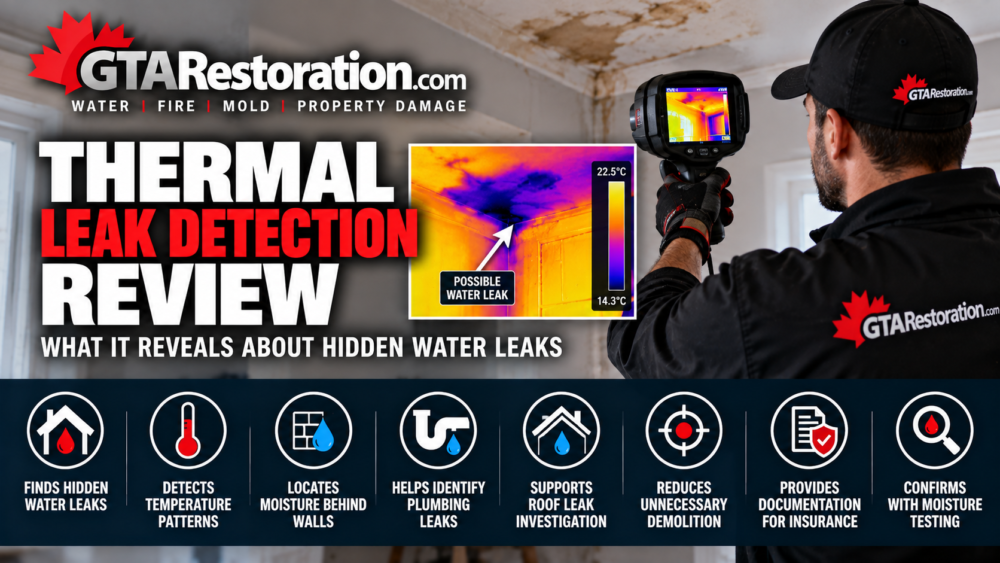
Thermal imaging can help identify temperature differences linked to moisture patterns, but it does not see through walls like X-ray vision. It is one tool, not a final answer. Moisture meters confirm whether building materials are wet and help define the spread. Acoustic equipment can detect pressurized water escaping from pipes. Pressure testing can isolate plumbing sections to confirm whether a line is losing water.
Sometimes a small access opening is still necessary. That is not a failure of the process. It is often the most efficient way to confirm the source and move directly into repair. The real advantage is that targeted access is very different from opening multiple walls based on guesswork.
Leak detection services for homes, condos, and commercial properties
Every property type brings different challenges. In a single-family home, the priority is often protecting finishes, preventing mold, and restoring normal use quickly. In a condo, the issue may involve shared systems, neighboring units, building management, and documentation for liability and insurance. In a commercial property, response time affects operations, tenant relations, compliance, and revenue.
That is why leak detection should not be treated as a stand-alone trade in every case. If the leak has already caused water damage, the next steps may include emergency plumbing, extraction, structural drying, containment, cleaning, and repair coordination. Working with one company that can move from detection to mitigation and restoration reduces delay and avoids the handoff problems that happen when multiple contractors are involved.
For urgent calls across Toronto and the GTA, GTA Restoration approaches leak events as a full property emergency, not just a search for the wet spot. That matters when the problem has already affected walls, floors, ceilings, or multiple occupied spaces.
When a leak is active, the first priority is stabilization. That may mean shutting off water, protecting contents, isolating affected areas, and assessing whether there are immediate electrical or slip hazards. Once the site is safe, technicians can focus on locating the source and documenting the extent of the damage.
Documentation is not a minor detail. Photos, moisture readings, affected area mapping, and notes on the source all help support repair planning and insurance communication. A good emergency response team is thinking about containment and documentation at the same time, because property owners need both.
The timeline depends on access, building type, and the kind of leak involved. A visible supply line leak may be confirmed quickly. An intermittent building-envelope leak tied to weather conditions can take more testing. The point is not speed at any cost. It is accurate detection without wasting time.
The trade-off between fast action and complete investigation
Property owners sometimes worry that calling for leak detection too early will be unnecessary if the leak seems minor. More often, the bigger risk is waiting until more materials are affected. On the other hand, not every moisture issue is caused by a plumbing leak. Condensation, humidity imbalance, and air leakage can mimic leak symptoms.
That is where experienced assessment matters. Good technicians do not force every problem into the same diagnosis. They rule out alternatives, confirm the source, and explain what is known versus what still needs testing. That clarity helps you avoid both overreaction and underreaction.
Why insurance support and reporting matter
Many leak claims become more stressful because the property owner is trying to manage emergency repairs and paperwork at the same time. If a service provider can document the source, affected materials, mitigation steps, and moisture conditions clearly, the claim process is usually easier to follow.
That does not mean every leak is covered in the same way. Coverage depends on the policy, the cause of loss, maintenance history, and whether the damage was sudden or ongoing. Still, organized reporting gives you a stronger record of what happened and what was done to reduce further damage.
Choosing the right leak detection services
Not all providers are equipped for emergency property damage. Some can locate leaks but do not handle mitigation. Others can dry a structure but have limited diagnostic capability. In urgent situations, the best fit is a team that can identify the source, stop the spread, document conditions, and coordinate the next phase of recovery.
Look for real emergency availability, experience with residential and commercial buildings, modern detection equipment, certified restoration knowledge, and a clear process for reporting findings. If you manage condos or commercial sites, capacity matters too. Multi-unit and after-hours losses require a provider that can respond under pressure and keep the situation organized.
A hidden leak does not wait for a convenient time, and it rarely fixes itself. The sooner the source is found, the more options you keep, the less damage you face, and the faster your property can move from uncertainty to recovery.