Basement Waterproofing Interior System Guide: How It Works
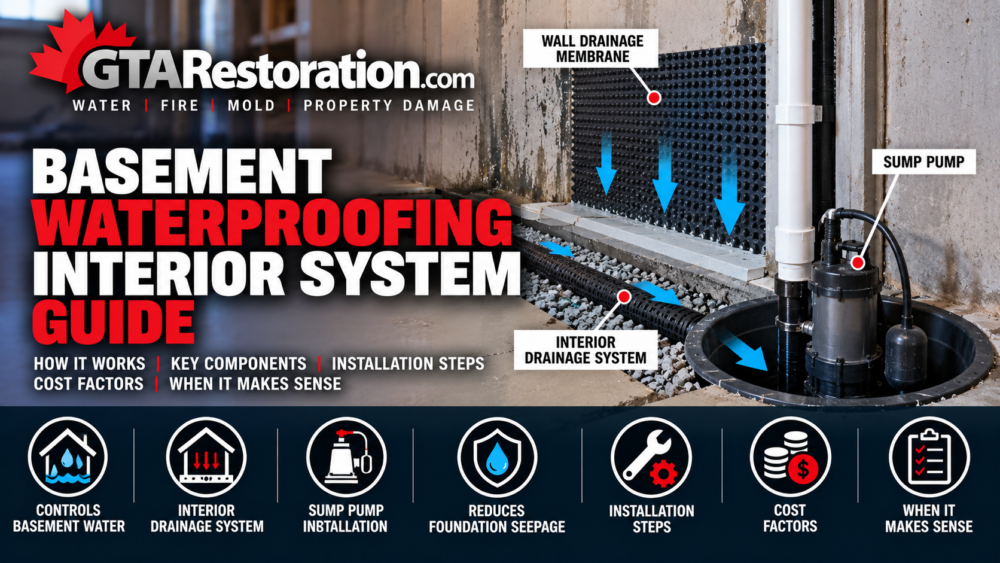
This basement waterproofing interior system guide explains how an interior drainage system controls water around a basement foundation. Instead of excavating the entire outside wall, contractors work from inside the basement. They collect water near the footing or wall-floor joint and direct it toward a sump system.
Interior waterproofing can work well when groundwater, foundation seepage or hydrostatic pressure causes recurring basement moisture. However, the correct solution depends on where the water comes from. Therefore, a proper inspection should come before any major waterproofing work.
What Is an Interior Basement Waterproofing System?
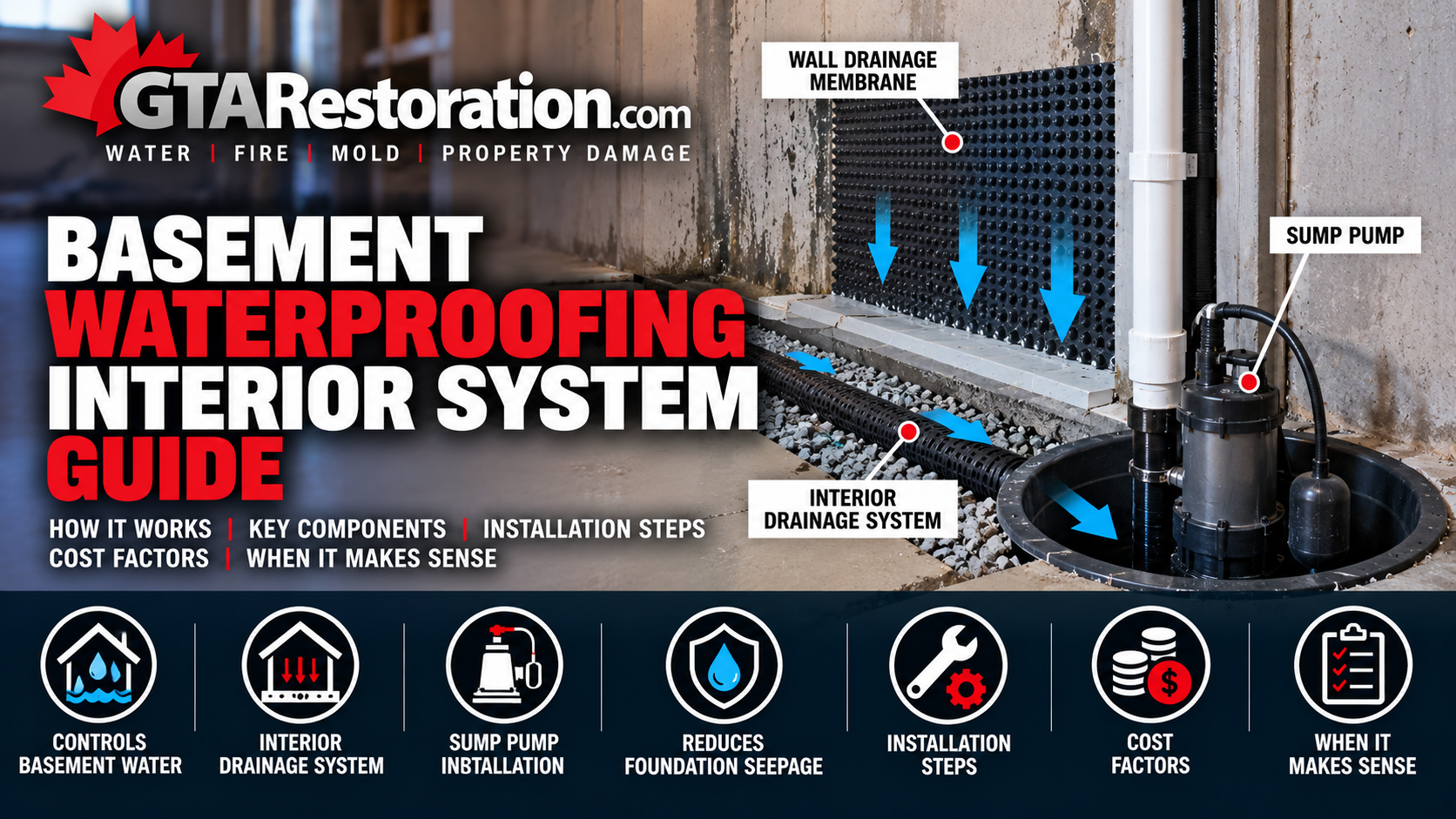
An interior basement waterproofing system usually combines a perimeter drainage channel, drainage stone, a sump pit and a sump pump. In some installations, contractors also add a wall drainage membrane that directs wall seepage into the perimeter system.
The system does not simply cover a wet wall. Instead, it creates a controlled path for incoming groundwater. As a result, water moves toward the sump rather than spreading across the basement floor.
Where Basement Water Usually Enters
Water can enter a basement in several ways. For example, common entry points include:
- The joint between the foundation wall and floor
- Cracks in concrete foundation walls
- Floor cracks
- Areas around plumbing or utility openings
- Groundwater rising below the basement slab
- Old or damaged foundation drainage
In addition, poor grading, blocked downspouts, plumbing leaks and sewer backups can create similar symptoms. Therefore, identifying the source matters before choosing an interior waterproofing system.
Hydrostatic Pressure and Basement Seepage
After heavy rain or snowmelt, water can collect in the soil around and below a foundation. That water can create pressure against foundation walls and beneath the floor slab.
Eventually, water may find a path through cracks, joints or weak areas. An interior drainage system helps manage this water by giving it a lower-resistance path toward the sump pit.
Signs You May Need Interior Waterproofing
A major basement flood is not always the first warning. Instead, watch for smaller signs such as:
- Water appearing where the wall meets the floor
- Damp concrete after heavy rain
- White mineral deposits on foundation walls
- Peeling paint or damaged wall finishes
- Musty basement odours
- Wet flooring near exterior walls
- Repeated puddles in the same area
- A sump pump that runs frequently during storms
If the basement is already taking on water, our flooded basement cleanup and restoration service can address the immediate water damage before permanent waterproofing work begins.
Interior Basement Waterproofing Installation and Components
Step 1: Inspect the Basement and Water Source
First, the contractor should inspect the foundation, floor, wall-floor joint, drainage conditions and existing sump system. Moisture readings can also help locate areas that remain wet behind finished materials.
This step is important because waterproofing cannot repair every type of basement water problem. For example, a leaking supply pipe requires plumbing repair, while a sewer backup requires a different response.
Step 2: Open the Perimeter Floor
Next, contractors remove a narrow section of concrete along the affected basement perimeter. This creates access beside the footing for the new drainage system.
The exact layout depends on the foundation and the water pattern. Therefore, some properties may need drainage around the full perimeter, while others may only need work in a specific area.
Step 3: Install the Interior Drainage System
The contractor then installs a drainage channel or perforated drain pipe near the footing. Clean drainage stone commonly surrounds the system to help water move toward the drain.
When water enters around the foundation, the drainage system collects it and carries it toward the sump pit. As a result, water has a planned drainage route instead of travelling across the floor.
Step 4: Add Wall Drainage Where Needed
If water enters through the foundation wall, contractors may install a wall drainage membrane or similar system. The membrane directs seepage downward into the perimeter drain.
However, wall coverings should not simply hide an active leak. The drainage system still needs a clear path to move the collected water away.
Step 5: Connect the Drainage to a Sump Pump
The interior drainage system normally directs water into a sump pit. The sump pump then moves the collected water away from the foundation through a discharge line.
Pump capacity, discharge location, check valves and backup power can affect system performance. In addition, homeowners should inspect and maintain the sump pump regularly.
Toronto homeowners can review the City of Toronto Basement Flooding Protection Subsidy Program for current requirements related to eligible sump pumps, backwater valves and certain basement flood-protection work.
Step 6: Restore the Basement Floor
Finally, contractors cover the drainage area with concrete and restore the opened floor section. Once the system is complete, water should flow below the finished surface and toward the sump.
If water damage affected drywall, insulation, flooring or other materials before installation, those areas may also require drying or restoration.
When an Interior Waterproofing System Is the Right Choice
Interior Waterproofing vs. Exterior Waterproofing
Interior and exterior waterproofing address water differently. Exterior waterproofing generally involves excavation beside the foundation, repairs to the wall and installation of drainage or waterproofing materials outside.
By comparison, an interior system manages water from inside the basement. Therefore, it may cause less disruption to driveways, decks, gardens and nearby structures.
However, neither option is automatically better for every property. Exterior repairs may make more sense when a specific foundation wall needs direct repair. Meanwhile, an interior perimeter system can work well for recurring groundwater around the footing or basement slab.
When Exterior Access Is Limited
Toronto properties often have narrow spaces between buildings, paved driveways, decks, additions or landscaping beside foundation walls. In those cases, exterior excavation may become difficult.
An interior system can provide another way to manage basement water without excavating the entire outside perimeter. Still, the contractor should inspect the building before deciding which approach makes the most sense.
Interior Waterproofing Cost Factors
The cost of an interior waterproofing system depends on the project. For example, pricing can change based on:
- Basement size
- Length of drainage required
- Concrete slab thickness
- Foundation conditions
- Sump pump requirements
- Access to the work area
- Finished walls or flooring
- Existing water or mold damage
Therefore, an inspection usually provides more useful information than relying on a general price per foot.
Do Not Ignore Existing Water Damage
A waterproofing system can help control future water, but it does not automatically dry materials that are already wet. If drywall, insulation, flooring or wood framing contains moisture, those materials may need separate restoration work.
Persistent dampness can also support mold growth. Therefore, visible mold or a strong musty odour may require a separate mold inspection and remediation assessment.
Maintain the Sump and Drainage System
After installation, inspect the sump pump and drainage components regularly. In addition, make sure the discharge area remains clear and directs water away from the foundation.
A battery backup can also provide extra protection when severe weather causes a power outage. However, every property is different, so choose equipment based on the home’s drainage needs.
Choose the System Based on the Water Source
The most important lesson in this basement waterproofing interior system guide is that the system must match the problem. A contractor should not recommend perimeter drainage without first checking why the basement gets wet.
For example, foundation seepage may call for waterproofing. A failed sump pump may need repair or replacement. Meanwhile, a plumbing leak, sewer backup or surface drainage problem requires a different solution.
GTA Restoration provides basement waterproofing, inspection and water damage services throughout Toronto and the GTA. We can assess the water source, identify affected materials and recommend an appropriate next step.
Ultimately, a properly planned interior waterproofing system can help control recurring basement seepage while reducing disruption around the exterior of the property. Most importantly, correcting the water source early can help prevent a small moisture problem from turning into a larger basement restoration project.
Need an Interior Basement Waterproofing System?
GTA Restoration provides basement waterproofing, sump drainage solutions, moisture inspections and flooded basement restoration throughout Toronto and the GTA.
Recurring basement water? Find the source first, then choose a waterproofing system designed for the problem.
Call Us: 416-800-0000
Learn More
Basement Waterproofing | Basement Waterproofing Toronto | How to Stop Basement Flooding Fast | Best Basement Waterproofing Methods That Work | Sump Pump Cleanup services in Toronto












You must be logged in to post a comment.