Mold Removal St Catharines – Inspection & Mold Remediation
Mold Removal St Catharines
Mold Removal St Catharines services help homeowners and businesses deal with visible mold, musty odours, damp materials, and moisture problems after leaks or flooding. Growth often develops where building materials stay damp for too long. Therefore, effective cleanup should address both the visible problem and the moisture source behind it.
GTA Restoration provides inspection, moisture checks, cleanup, drying, and mold remediation services. First, our technicians review the affected area for signs of water damage. Based on those findings, the team explains which materials may need cleaning, removal, drying, or a closer inspection.
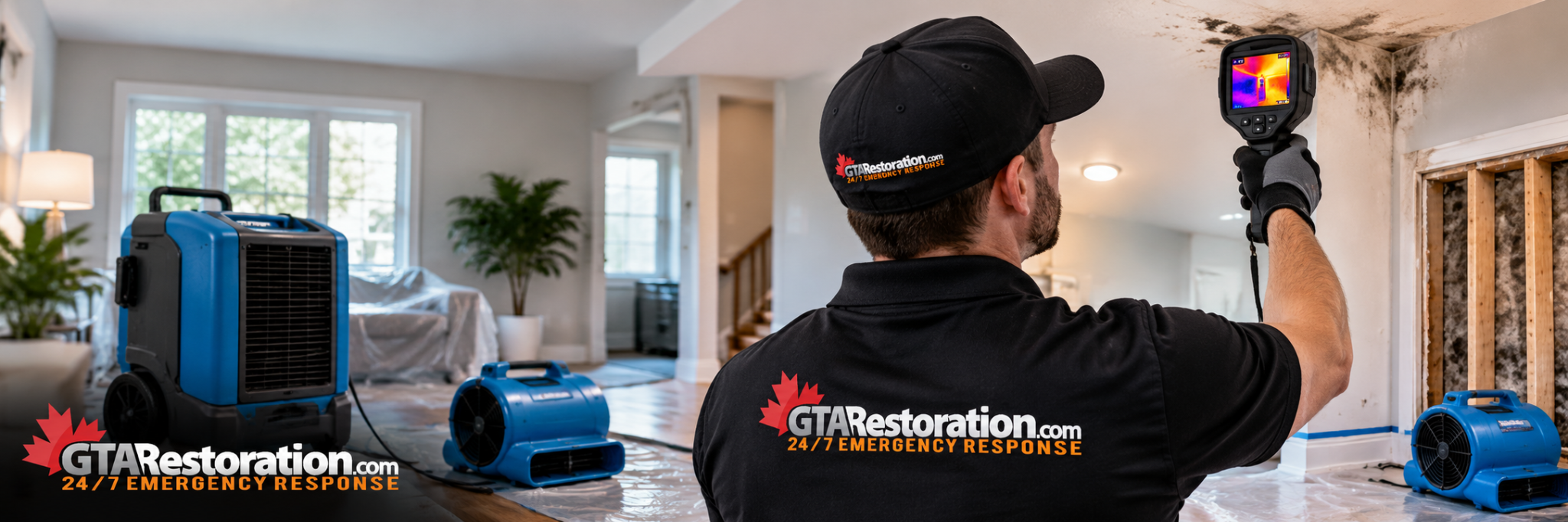
A professional inspection can help identify visible growth and conditions that support mold. For example, our team checks for water stains, damp drywall, peeling finishes, condensation, plumbing leaks, foundation moisture, and signs of earlier flooding.
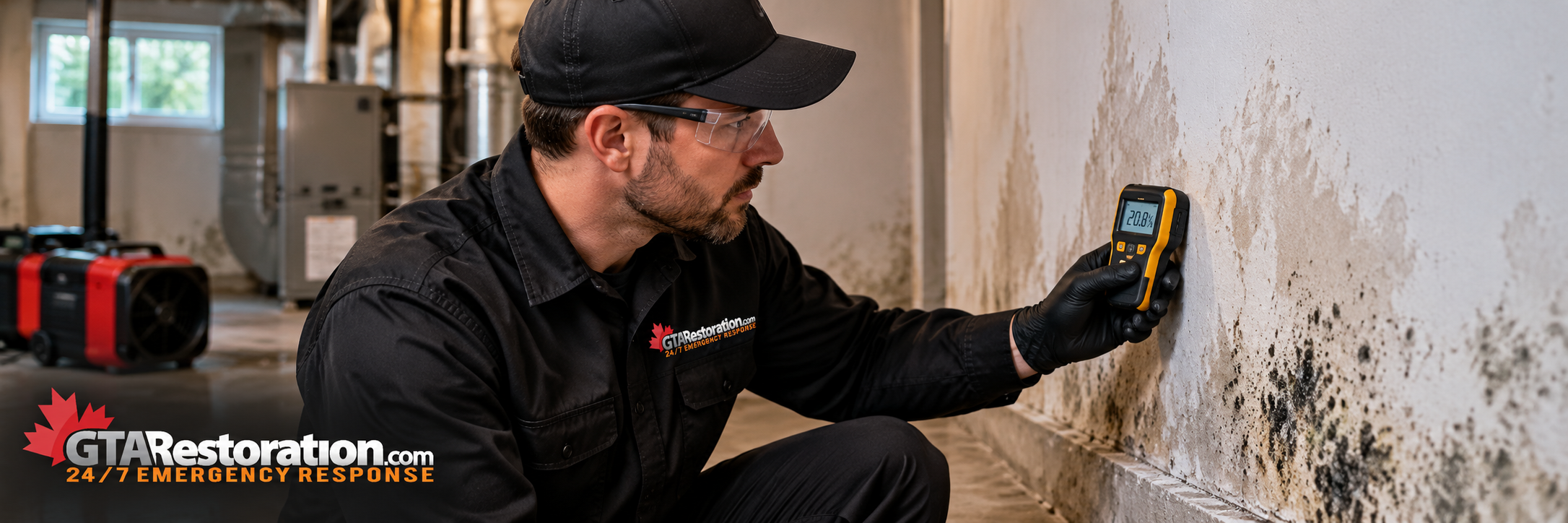
Hidden moisture may remain behind walls, beneath flooring, around windows, or inside cabinets. For this reason, technicians can use moisture meters and other tools when an area needs a closer look.
Signs You May Need Mold Removal in St Catharines
Some mold problems are easy to see. However, warning signs can also appear before a large affected area becomes visible.
Consider arranging an inspection when you notice:
Visible mold or unusual staining
Persistent musty odours
Recurring condensation
Water stains on walls or ceilings
Peeling or bubbling paint
Damp drywall, carpet, or flooring
Past basement flooding
Roof or plumbing leaks
Growth that returns after cleaning
A professional mold removal St Catharines assessment can help identify the likely cause and determine what work may be needed next.
Mold Remediation St Catharines and Moisture Control
Find the Moisture Source Before Mold Removal
Successful mold remediation starts with moisture control. Plumbing leaks, roof leaks, foundation seepage, flooding, poor ventilation, and excess humidity can all create damp conditions.
If water damage caused the problem, review our Water Damage St Catharines page for information about extraction and drying. In addition, larger flooding events may require the steps covered on our Flood Cleanup St Catharines page.
Mold Testing St Catharines When Needed
Testing is not required for every mold problem. When growth is clearly visible and the moisture source is known, the main goal is usually to correct the moisture issue and clean the affected materials.
However, testing may help in selected situations when the cause remains unclear or more information is needed. Health Canada advises property owners to focus on finding and correcting moisture and mold problems rather than relying on routine air testing.
At the start of the project, technicians check visible growth, water damage, and moisture conditions. Nearby building materials also receive attention so the team can understand how far the problem may extend.
Mold Remediation Containment
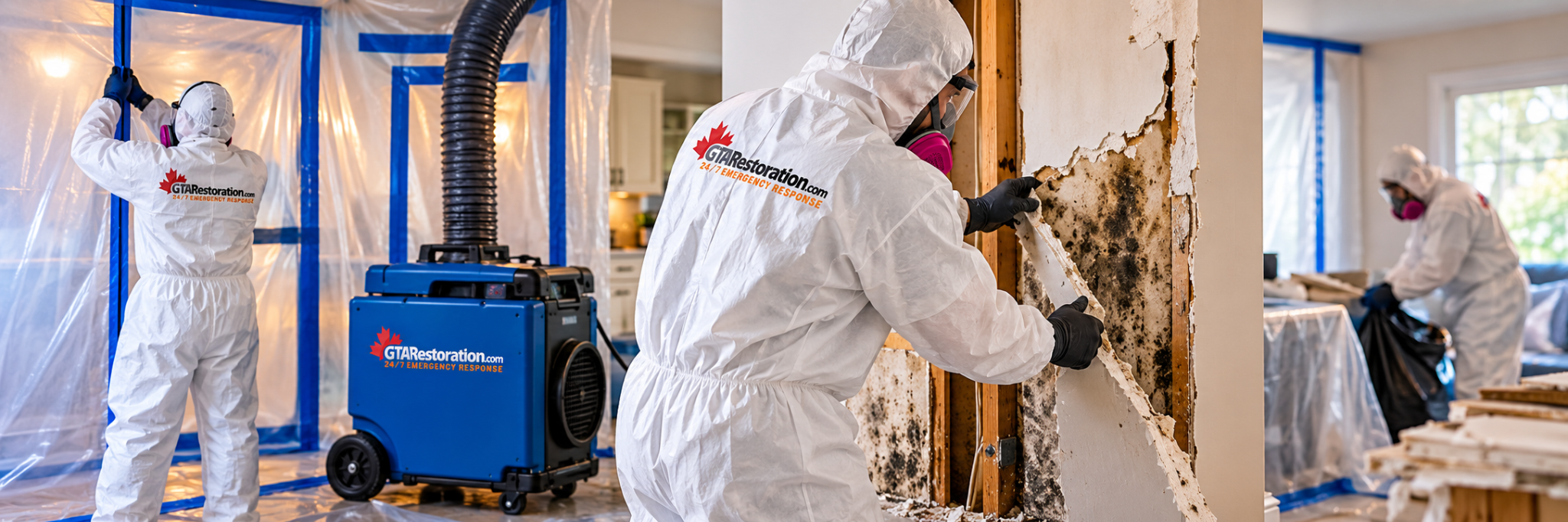
Next, the work area may need separation from unaffected parts of the property. This step helps control dust and particles while technicians remove damaged materials and complete detailed cleaning.
Mold-Damaged Material Removal
Some porous materials cannot remain after significant mold growth. Therefore, affected drywall, insulation, carpet, ceiling material, or other damaged products may require removal.
Not every surface needs replacement, however. Suitable materials may remain when their condition allows proper cleaning and drying.
HEPA Cleaning During Mold Remediation
HEPA vacuums can help collect fine particles during detailed cleanup. In addition, air filtration equipment may support the remediation process while technicians work inside the contained area.
Cleaning alone will not solve an active moisture problem. As a result, the source of dampness must also be corrected.
Drying After Mold Removal
Wet building materials need suitable drying conditions before repairs begin. Depending on the property, the drying plan may include air movement, dehumidification, and moisture checks.
Throughout the project, technicians can continue checking affected materials until conditions support the next stage of work.
Repairs After Mold Removal St Catharines
Finally, repairs can begin once cleanup and drying reach the required stage. Depending on the damage, restoration may include drywall, insulation, trim, flooring, paint, or other building finishes.
Basement Mold Removal St Catharines
Basements can develop mold because of foundation seepage, plumbing leaks, flooding, condensation, or high humidity. In addition, stored cardboard, carpet, drywall, and other porous materials may hold moisture when the space remains damp.
For this reason, basement mold cleanup should include a review of the surrounding moisture conditions rather than focusing only on visible stains.
When Professional Mold Removal May Help
Small surface areas may sometimes allow straightforward cleanup with suitable precautions. However, professional help becomes more important when growth covers a larger area, keeps returning, affects several building materials, or develops after significant water damage.
Property owners should also consider professional assessment when the source of moisture remains unclear.
Prevent Mold From Returning
Long-term mold control starts with keeping the property dry. Therefore, repair leaks promptly, investigate recurring dampness, improve ventilation where needed, and control excess indoor humidity.
Repair plumbing and roof leaks
Dry wet materials after water damage
Use bathroom and kitchen exhaust fans
Control high indoor humidity
Check basements for seepage or condensation
Investigate musty odours that return
A professional Mold Removal St Catharines service should address both affected materials and the moisture conditions that contributed to the problem.
Need Mold Removal St Catharines Service?
Contact GTA Restoration for mold inspection, cleanup, remediation, moisture checks, and related restoration services.
GTA Restoration provides mold removal St Catharines services for residential and commercial properties. Our team checks visible mold, moisture conditions, and affected building materials. Based on those findings, we explain the cleanup, drying, and repair steps that may fit the property.
Mold Inspection St Catharines
An inspection helps identify visible growth and moisture concerns. In addition, technicians can check nearby materials when water damage may extend beyond the surface.
Mold Moisture Detection
Finding the moisture source is an important part of remediation. Therefore, we check for leaks, damp materials, condensation, and other signs of excess moisture.
Residential Mold Removal St Catharines
Mold can develop in basements, bathrooms, kitchens, attics, and wall spaces. Our team assesses the affected area and explains which materials may require cleaning or removal.
Commercial Mold Remediation St Catharines
Commercial properties can also develop mold after plumbing leaks, roof damage, or flooding. As a result, early assessment can help property owners plan the required cleanup.
Basement Mold Cleanup St Catharines
Basement moisture can come from foundation seepage, flooding, plumbing leaks, or humidity. For this reason, cleanup should also address the source of dampness.
Mold Containment
Containment can help separate the work area from nearby rooms during remediation. In addition, air filtration equipment may help control particles during removal.
HEPA Mold Cleaning
HEPA vacuums help collect fine particles during detailed cleaning. Technicians can then clean suitable surfaces before moving to drying and repair work.
Water Damage and Mold
Leaks and floods often contribute to mold problems. Therefore, prompt water removal and drying can help reduce additional damage.
Mold Testing St Catharines
Not every property needs mold testing. However, targeted testing may help when a specific concern remains unclear after an inspection.
Repairs After Mold Removal
Some projects require repairs once cleanup finishes. For example, restoration may include drywall, insulation, trim, flooring, or paint.
24/7 Property Damage Assistance
Leaks and water damage can happen without warning. GTA Restoration provides assistance for urgent property damage and can discuss the next steps for mold or moisture concerns.
Concerned about mold in your St Catharines property?
Contact GTA Restoration for mold inspection, cleanup, remediation, drying, and restoration support.
GTA Restoration offers local flood & water damage repair, mold removal/remediation, asbestos removal/abatement, fire/smoke damage repair services and much more.
Leaks, flooding, condensation, high humidity, and damp building materials can support mold growth. Therefore, fixing the moisture source is an important part of cleanup.
Do I always need mold testing in St Catharines?
No. Visible mold with a clear moisture problem often does not require routine testing. However, selected situations may need further assessment.
Can mold grow behind walls?
Yes. Moisture and mold may develop behind drywall, beneath flooring, or above ceilings. Moisture readings and visible signs can help identify areas that need closer inspection.
When should I call for mold removal in St Catharines?
Consider professional help when mold covers a larger area, keeps returning, affects several building materials, or follows major water damage.
Can mold return after remediation?
Yes. Mold may return when moisture problems remain. Therefore, fixing leaks, drying damp materials, and controlling humidity are important.
Does GTA Restoration provide mold removal St Catharines services?
Yes. GTA Restoration provides mold inspection, cleanup, remediation, moisture checks, and related restoration services in St Catharines.