Water Damage St Catharines – Cleanup, Drying & Restoration
Water Damage St Catharines: Cleanup and Restoration
This Water Damage St Catharines guide explains what to do after a leak or flood, how professional cleanup works, and what to check before repairs begin. Water can spread beneath flooring, behind walls, and into stored belongings. Therefore, recovery should address both visible damage and moisture that remains out of sight.
GTA Restoration provides water extraction, moisture checks, drying, cleanup, and repair planning. When you call, describe the water source, affected rooms, and any safety concerns. Our team can discuss your location, service availability, and the next steps.
Put safety before cleanup. Stay out of standing water when it may reach wiring, outlets, appliances, or electrical panels. Never cross a wet area to reach a breaker or shutoff valve.
Keep children, pets, and other occupants away from the damage.
Stop an active plumbing leak only when you can safely reach the water shutoff.
Notify building management if water affects a rental, condo, or shared property.
Take photographs from a safe location and arrange qualified help.
If you suspect sewage, avoid contact with the water and nearby materials. Follow emergency instructions during wider flooding, and do not re-enter an unsafe building until the appropriate professionals clear access.
Common Causes of Water Damage
Burst pipes, appliance leaks, overflowing fixtures, roof leaks, foundation seepage, and sewer backups can all cause property damage. However, each source may require a different repair and cleanup plan.
For example, extracting water does not fix a broken supply line. A plumber, roofer, or other qualified trade may need to correct the source before drying can succeed.
Water Damage Cleanup and Drying in St Catharines
Inspect the Water Source and Hidden Moisture
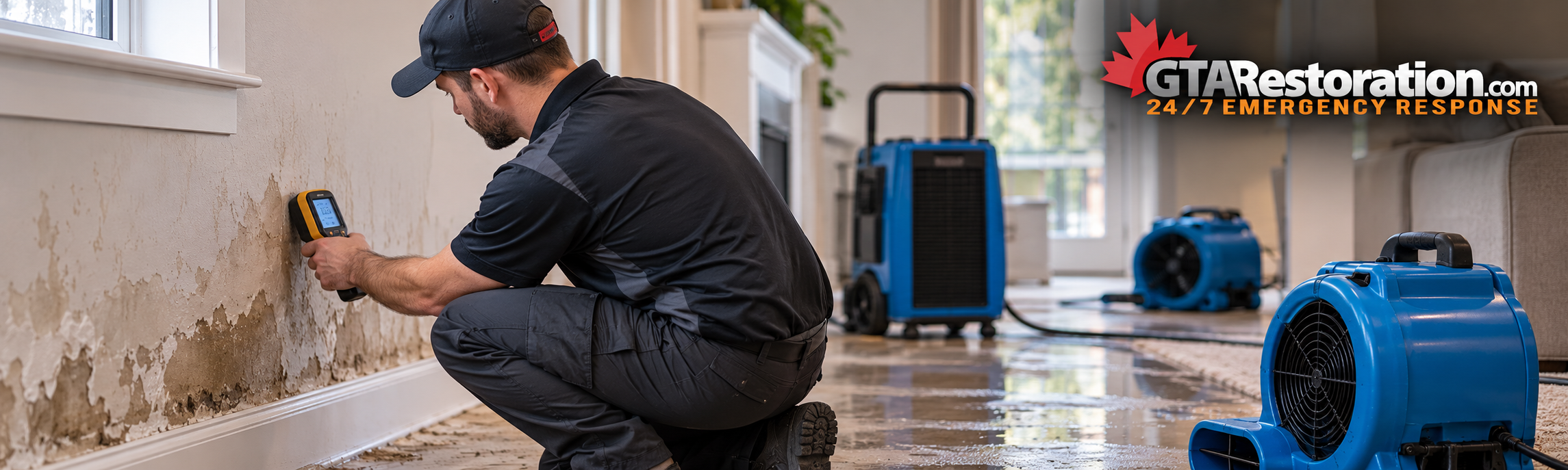
First, technicians assess the source, affected materials, and possible contamination. Moisture readings help identify damp areas beyond the visible water line.
Water may collect beneath carpet, behind baseboards, inside cabinets, or within wall cavities. For this reason, a dry-looking surface does not confirm that the materials underneath have dried.
Flood Cleanup and Water Extraction in St Catharines
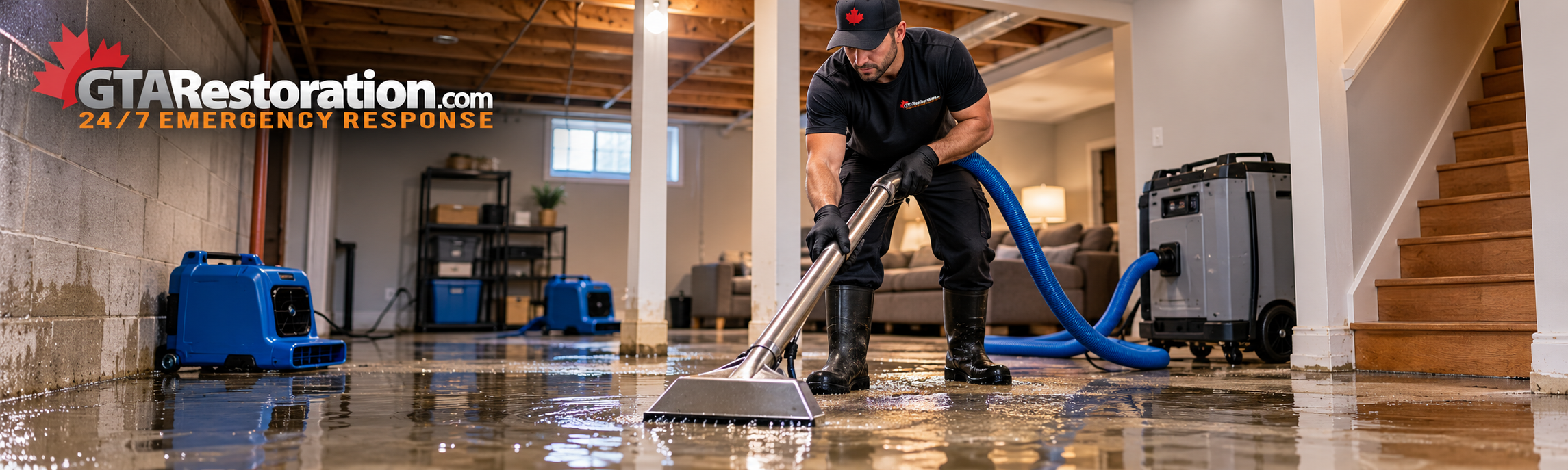
Next, the cleanup team uses suitable extraction equipment once site conditions allow safe work. Removing standing water reduces the moisture load before full drying begins.
Not every wet material needs removal. However, contamination, physical damage, prolonged dampness, and poor drying access can make replacement necessary.
For example, sewage-soaked carpet and underpad generally require removal rather than routine carpet cleaning. Suitable hard surfaces may allow cleaning and drying. Technicians should assess each material instead of treating every room the same way.
Clean Affected Areas Before Full Drying
The team removes materials that cannot remain and cleans suitable surfaces. Where the water source requires it, the plan also includes appropriate disinfection and contamination controls.
Do not aim household fans at sewage or visible mold. Instead, arrange an assessment before moving air through the affected space. Our sewer backup cleanup page explains this type of loss.
Health Canada provides guidance on sorting damaged materials, cleaning, and drying after a flood. Review its flood cleanup and indoor air quality advice for additional precautions.
Drying After Water Damage in St Catharines
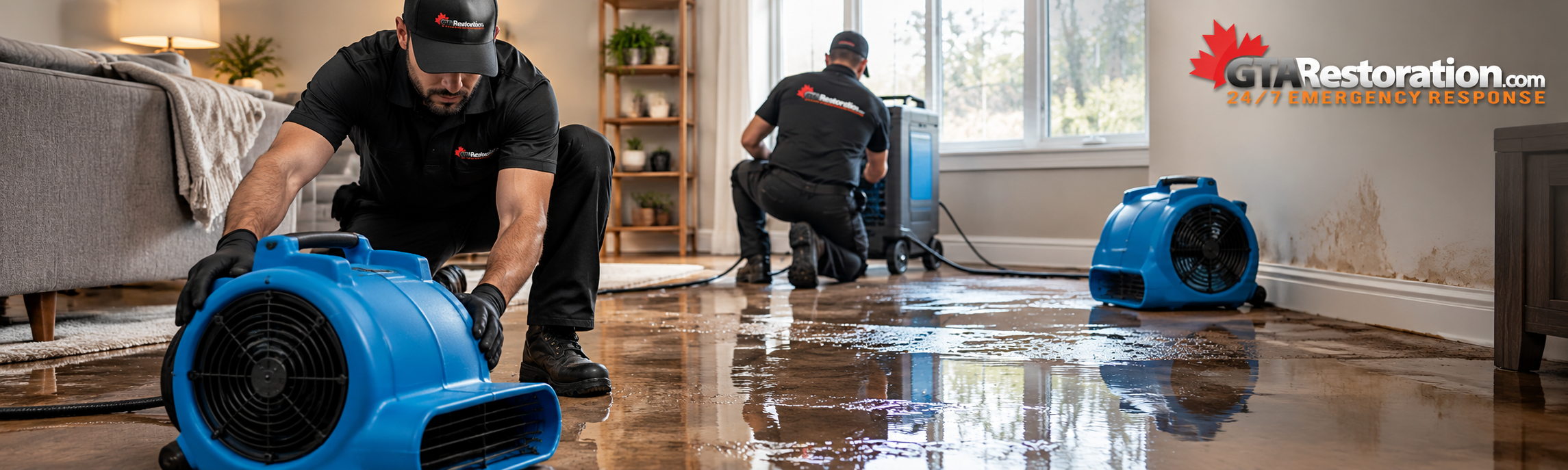
Air movers support evaporation when conditions allow their use. Meanwhile, dehumidifiers remove moisture from the air. Technicians check affected materials and adjust equipment as the work progresses.
Some floor and wall systems need targeted drying or further access. Our specialty drying services address suitable spaces that standard equipment may not reach.
Reduce Mold Risk After Water Damage
Persistent dampness can support mold growth. Therefore, prompt cleanup, moisture control, and thorough drying matter more than simply removing stains or masking odours.
Watch for musty smells, damp drywall, or growth that appears after the initial cleanup. Rather than painting over these signs, ask for a moisture check and further assessment.
Water Damage St Catharines: Repair Planning
Water Damage Cleanup: Time and Costs in St Catharines
No single timeline fits every loss. The affected area, water source, materials, access, and drying progress all influence the schedule. Repairs may continue after the emergency cleanup stage ends.
Ask for a written estimate that separates extraction, cleaning, drying, disposal, and repairs. In addition, confirm how the team will explain extra work before you approve a change.
Keep Records for Your Insurer
Take photographs when safe, list damaged belongings, and save receipts for emergency work. Then, keep estimates, moisture readings, drying records, and repair invoices together.
Your policy and the circumstances of the loss determine coverage. Do not assume that every type of water damage has the same protection. The Financial Consumer Agency of Canada’s home insurance guidance explains why reviewing coverage with your insurer or broker matters.
Condo and Commercial Flood Recovery
Notify the property manager when water affects shared areas or neighbouring units. Also, agree on access, work hours, equipment locations, and one contact for updates.
Before repairs begin, confirm building requirements and review the drying results. Installing new finishes over wet materials can leave the original moisture problem unresolved.
Preventing Water Damage in St Catharines
Finally, address the cause of the loss. Repair leaks, maintain drainage, and investigate recurring dampness. Where appropriate, ask a plumber about sump pump maintenance or backwater protection.
Water alarms near appliances and plumbing fixtures can provide an early warning of leaks. Keep this Water Damage St Catharines guide with your project records to help organize cleanup, drying, and repairs.
Need Water Damage Cleanup in St Catharines?
Contact GTA Restoration to discuss water extraction, drying, moisture checks, and restoration options for your property.
Stay out of flooded areas when electrical hazards, sewage, or structural damage may be present.
A clear recovery plan helps you understand the work after a leak or flood. Before approving cleanup, discuss the affected rooms, water source, safety concerns, and proposed repairs. Then, keep the estimate and project records together as the work moves forward.
Emergency Cleanup Planning
Explain whether water still enters the property and which areas need attention. Also, mention any electrical concerns, sewage, or access limits before arranging a visit.
Water Extraction and Access
Discuss how technicians will reach the affected rooms and place equipment. Clear access helps the team plan the work without moving wet belongings through unaffected areas unnecessarily.
Basement Flood Cleanup
Basements may contain finished rooms, storage, and mechanical equipment. Therefore, point out every area the water reached, including closets and spaces beneath stairs.
Wet Flooring and Underpad
A carpet surface may feel dry while moisture remains below it. Ask whether the inspection includes the underpad, subfloor, flooring edges, and nearby trim.
Hidden Moisture Checks
Moisture readings help guide drying and repair decisions. In addition, ask the team to explain any areas that need closer inspection or access behind finished surfaces.
Sewage Cleanup Precautions
A sewer backup needs more than routine mopping. Keep occupants away and discuss controlled removal, cleaning, and drying with a team that handles contaminated water.
Flood-Damaged Belongings
List furniture, stored items, and equipment near the damage. Before disposal, document their condition and discuss any items that need separate cleaning or review.
Drying Equipment and Monitoring
Ask about equipment noise, access needs, and progress checks. Meanwhile, leave equipment settings to the technicians and report interruptions that could affect the drying plan.
Condo and Business Coordination
Choose one contact for scheduling and updates. Also, confirm building rules for elevators, work hours, shared corridors, and debris removal before repairs begin.
Water Damage Repair Estimates
Review the emergency work separately from replacement finishes. For example, flooring, drywall, trim, and painting may form a later stage with its own estimate.
Requesting Water Damage Help
Contact GTA Restoration with your full address and a description of the loss. Our team can discuss service availability, the affected materials, and the next steps.
Dealing with a leak, flooded room, or hidden moisture?
Contact GTA Restoration to discuss cleanup, drying, and water damage restoration.
GTA Restoration offers local flood & water damage repair, mold removal/remediation, asbestos removal/abatement, fire/smoke damage repair services and much more.
Keep away from electrical hazards and contaminated water. Stop the leak only when safe. Then, contact the appropriate professionals and building management.
How long does water damage cleanup take?
The timeline depends on the affected materials, water source, and drying progress. Repairs may continue after extraction and drying finish.
Does all wet flooring need replacement?
No. However, contamination, physical damage, and moisture beneath the floor can make removal necessary. Technicians should assess the complete flooring system.
Can mold grow after a leak or flood?
Yes, lingering moisture can support mold growth. Therefore, prompt cleanup and thorough drying help reduce the risk.
Does insurance cover water damage cleanup?
Coverage depends on your policy and the cause of the loss. Ask your insurer about coverage, required records, and any applicable deductible.
How do I request cleanup in St Catherine?
Call GTA Restoration at 416-800-0000 with your full address and details of the damage. The team can confirm service availability and next steps.












You must be logged in to post a comment.