Toronto Flood Cleanup | Flood Damage Restoration
Toronto Flood Cleanup
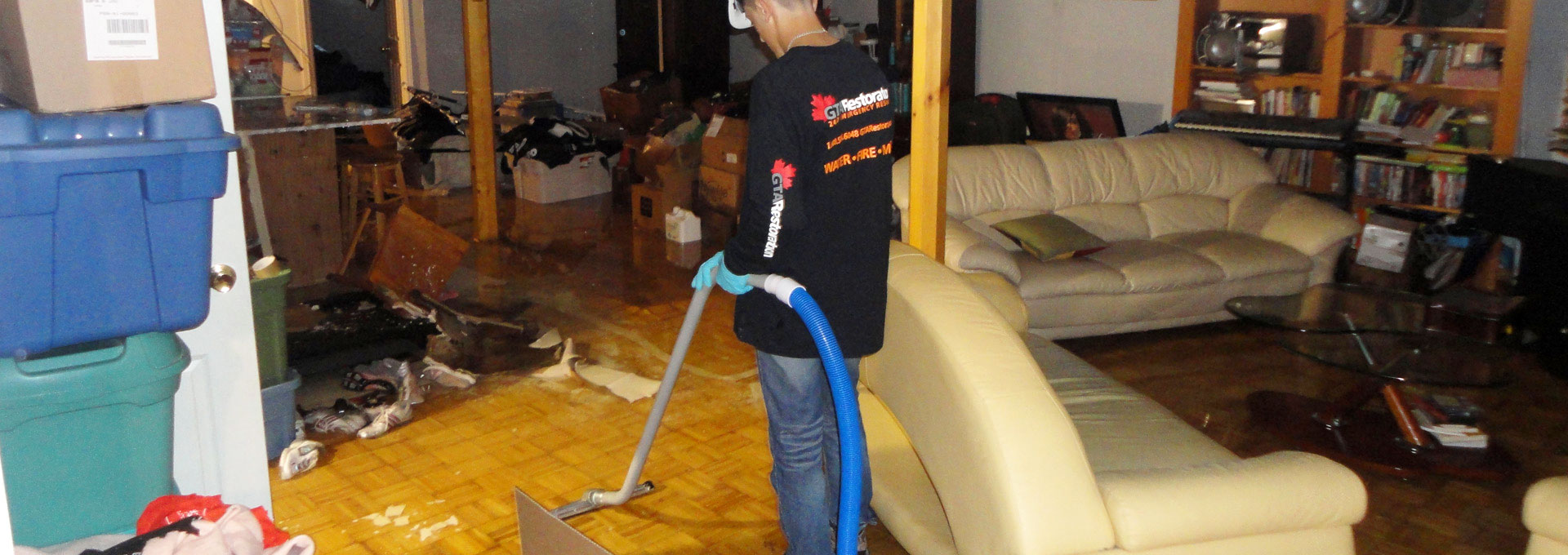
Flooding can spread water through floors, walls, basements, contents, and concealed building spaces in a short time. Toronto flood cleanup starts by identifying the water source, checking affected areas, removing standing water, and developing a drying and restoration plan.
GTA Restoration provides flood cleanup for Toronto homes, condos, rental properties, commercial buildings, and managed properties. Depending on the loss, our team can assist with water extraction, moisture inspection, structural drying, damaged material removal, contents handling, and related restoration work.
What to Do After Flooding in Toronto
Safety should come before cleanup. For example, water near electrical equipment, outlets, appliances, or an energized electrical system can create a serious hazard.
If your basement floods while the power remains on, avoid entering the water and contact the appropriate electrical service provider for assistance. In addition, the City of Toronto advises residents to report basement flooding to 311.
Toronto property owners can review the City’s current basement flooding guidance for safety, reporting, cleanup, and flood-prevention information.
Emergency Water Extraction
Standing water can move into flooring, drywall, insulation, cabinets, wall assemblies, and other porous materials. Therefore, removing accessible water helps crews begin the next stages of flood cleanup.
After extraction, technicians can inspect remaining moisture and determine which areas require structural drying or additional work.
Meanwhile, the amount of water, affected materials, flood source, and length of exposure all influence the restoration process.
Finding the Source of Flooding
Before planning repairs, it is important to understand how the water entered the property. Heavy rain, plumbing failures, foundation leaks, groundwater, drainage problems, sump pump failures, and sewer-related issues can produce different conditions.
For this reason, identifying the source helps the restoration team determine the appropriate cleanup approach and whether a plumber, drain contractor, or another specialist should investigate the underlying problem.
When plumbing causes the loss, our Toronto emergency plumbing service can assist with related plumbing problems.
Basement Flood Cleanup Toronto
Basements often contain finished walls, flooring, insulation, storage, mechanical equipment, furniture, and other materials that water can affect.
During basement flood cleanup, technicians can remove standing water, inspect moisture levels, evaluate damaged materials, and establish a drying plan based on conditions at the property.
In addition, finished basements may require inspection behind baseboards, underneath flooring, or within other concealed areas where moisture can remain.
Heavy Rain & Storm Flooding
Toronto can experience intense rainfall that places pressure on drainage and sewer systems. As a result, water may enter properties through foundation openings, below-grade areas, drains, windows, doors, or other vulnerable locations.
Following a major rain event, crews should determine where water travelled rather than focusing only on the visible puddles.
Therefore, a broader moisture inspection can help identify wet materials that require drying or removal.
Groundwater & Foundation Water Entry
Water can enter a basement through foundation cracks, vulnerable window areas, drainage problems, or other below-grade openings.
When groundwater or exterior drainage contributes to flooding, cleanup addresses the interior damage while the property owner investigates and corrects the source.
For recurring problems, additional evaluation of grading, foundation drainage, waterproofing, or other exterior conditions may be appropriate.
Sump Pump Failure & Basement Flooding
A sump pump helps move collected groundwater away from a building. However, mechanical problems or power interruptions can reduce its effectiveness.
After a sump pump-related flood, technicians can address the interior water damage while the appropriate contractor checks the pump and drainage system.
In addition, Toronto homeowners can review the City’s flood-prevention recommendations for sump pumps and related protection measures.
Plumbing-Related Flood Damage
Burst pipes, failed supply lines, overflowing fixtures, appliance connections, and other plumbing problems can release large amounts of water inside a property.
Once someone controls the water source, flood cleanup can move forward with extraction, moisture inspection, drying, and material assessment.
For additional information, see our Toronto water damage service.
Floodwater Contamination
Not every flood involves the same type of water. Therefore, the source and conditions determine the potential contamination level and the cleanup precautions required.
For example, water from a sewer backup requires a different approach from many plumbing leaks because sewage can introduce additional contaminants into the property.
For sewage-related losses, our Toronto sewer backup cleanup page explains that specialized service in more detail.
Wet Drywall, Insulation & Flooring
Floodwater can affect drywall, insulation, laminate, hardwood, carpet, subflooring, baseboards, cabinets, and other building materials.
Therefore, technicians assess each material according to the water source, moisture exposure, physical condition, and ability to dry effectively.
In some cases, materials can remain in place and dry successfully. However, severe damage or contamination can make removal necessary.
Hidden Moisture After Flooding
Water often moves farther than the visible flood line. For instance, moisture can remain underneath flooring, behind baseboards, inside walls, beneath cabinets, and within other building assemblies.
For this reason, technicians use moisture inspection methods to check surrounding areas and follow drying progress.
As a result, finding concealed moisture helps create a more complete flood restoration plan.
Structural Drying After a Flood
Removing standing water does not mean every affected building material is dry. Instead, floors, walls, framing, and other materials may continue holding moisture.
During structural drying, technicians can use dehumidification and air movement based on the materials, moisture conditions, and affected area.
For larger or difficult losses, our specialty drying service may also help.
Mould Concerns After Flooding
Persistent moisture can create conditions that support mould growth. Therefore, flood cleanup should address wet materials and hidden moisture rather than concentrating only on visible standing water.
If technicians find visible mould, the property may require a separate assessment and remediation plan.
For more information, our Toronto mold removal service covers mould inspection and remediation.
Contents Affected by Floodwater
Flooding can affect furniture, boxes, clothing, electronics, documents, inventory, equipment, and other personal or business contents.
During cleanup, crews can document and separate affected contents according to their condition and exposure.
In addition, moving items away from wet areas can provide access to floors, walls, and other surfaces that require inspection or drying.
Flood Odour Problems
Wet materials, stagnant water, contamination, and prolonged moisture can produce unpleasant odours after a flood.
For this reason, effective odour control begins by addressing the underlying water source, wet materials, contamination, and moisture conditions.
Afterward, persistent smells may require additional Toronto odor removal.
Residential Flood Cleanup Toronto
Flooding in a house can affect basements, living spaces, kitchens, mechanical rooms, storage areas, garages, and other parts of the property.
Residential flood cleanup Toronto work can combine extraction, contents movement, moisture inspection, structural drying, material removal, and repair planning.
Ultimately, the actual conditions at the property determine the appropriate scope.
Condo Flood Cleanup
Water in a condominium can move from one suite into neighbouring or lower units and may also affect common building areas.
Because several areas may require attention, restoration crews can coordinate their work with residents, property management, contractors, and other building representatives.
Meanwhile, moisture documentation can help identify where water travelled and which areas need drying or repairs.
Commercial Flood Cleanup Toronto
Offices, retail spaces, restaurants, warehouses, rental properties, and other businesses can face significant disruption after flooding.
For commercial losses, flood cleanup in Toronto may involve phased water extraction, contents movement, access planning, structural drying, and coordination with staff or tenants.
Therefore, a site-specific restoration plan can organize the work around the property’s layout and operating requirements.
Documenting Flood Damage
Photos, videos, moisture readings, inventories, inspection notes, contractor reports, and receipts can help document conditions following a flood.
In addition, property owners should contact their insurer when they plan to make an insurance claim and follow the insurer’s instructions regarding documentation and damaged property.
However, insurance coverage depends on the individual policy and circumstances, so the insurer determines which losses and restoration costs qualify for coverage.
Repairs After Flood Damage
Once crews complete the necessary cleanup and drying, repairs can address damaged drywall, insulation, flooring, baseboards, ceilings, cabinets, paint, and other building finishes.
For more extensive flooding, additional trades or contractors may need to address plumbing, electrical, foundation, drainage, or structural concerns.
Therefore, a repair plan based on confirmed damage helps keep reconstruction focused on affected areas.
Reducing the Risk of Future Basement Flooding
Property owners can take several steps to reduce basement flooding risk. For example, these measures may include drainage improvements, sump pumps, backwater valves, foundation repairs, plumbing work, and better management of water around the building.
In addition, the City of Toronto operates a Basement Flooding Protection Subsidy Program for eligible residential properties and qualifying flood-protection improvements.
Homeowners can review current eligibility and requirements through the City’s Basement Flooding Protection Subsidy Program.
Backwater Valves & Sump Pumps
Backwater valves and sump pumps can form part of a property’s basement flood-protection strategy. However, each device serves a different purpose and requires proper installation and maintenance.
For example, a backwater valve can help prevent sewer flow from backing into a home, while a sump pump moves collected groundwater away from the foundation.
Therefore, property owners should use qualified contractors and follow City requirements when installing flood-protection equipment.
Toronto Flood Cleanup Services
GTA Restoration provides Toronto flood cleanup for homes, condos, rental properties, commercial buildings, and managed properties affected by water intrusion and flooding.
Depending on the damage, our team can inspect affected areas, remove standing water, locate moisture, dry building materials, handle damaged contents, remove materials when necessary, and coordinate the next stages of flood damage restoration.
Flood Cleanup Emergency in Toronto?
Call GTA Restoration Today!
Learn more ↴
Flooded Basement Cleanup | Flood Cleanup Toronto| Water Damage Restoration | Emergency Flooding in Basement | Commercial Flood Damage
For non-emergencies use our contact form
Flood Damage Cleanup & Restoration in Toronto
Flooding can affect much more than the visible floor surface. Water can spread into walls, flooring, insulation, contents, and concealed building spaces. Therefore, GTA Restoration approaches each flood according to the source, affected materials, and conditions found during inspection.
Flood Damage Inspection
A flood inspection helps identify the water source and affected areas. First, technicians can check visible damage and look for moisture that travelled beyond the main flooded area.
Water Extraction
Standing water can continue spreading through porous building materials. After crews remove accessible water, they can evaluate remaining moisture and begin the appropriate drying process.
Basement Flood Cleanup
Finished and unfinished basements can contain flooring, drywall, insulation, furniture, storage, and mechanical equipment. As a result, basement flooding often requires both water removal and a broader moisture inspection.
Structural Drying
Floors, walls, framing, and other materials may stay wet after extraction. During drying, technicians can use moisture measurements, dehumidification, and air movement according to site conditions.
Wet Building Materials
Drywall, insulation, flooring, cabinets, and trim respond differently to water exposure. Therefore, technicians assess the condition of each material before deciding whether drying or removal makes sense.
Hidden Moisture
Water can move underneath flooring and into wall or ceiling assemblies. For this reason, checking surrounding areas helps locate moisture that may not appear during a visual inspection.
Flood-Damaged Contents
Furniture, documents, electronics, inventory, and personal belongings may also require attention. During cleanup, crews can document and separate affected contents while creating access to wet building surfaces.
Residential & Condo Floods
Water can move between rooms, floors, suites, and common areas. In multi-unit buildings, restoration may also require coordination with residents, property managers, and other contractors.
Commercial Flood Cleanup
Flooding can disrupt offices, stores, restaurants, warehouses, and rental properties. For larger losses, a phased cleanup and drying plan can help organize work around occupants and building operations.
Toronto Flood Cleanup
GTA Restoration provides Toronto flood cleanup for residential and commercial properties affected by storms, plumbing failures, groundwater, drainage problems, and other water losses. Our team can assist with extraction, moisture inspection, structural drying, damaged materials, contents, and restoration planning.
Need Flood Cleanup in Toronto?
Call GTA Restoration Today!
Service Areas Across Canada
GTA Restoration serves communities across Canada, including Toronto and the GTA. U.S. locations are opening. Browse our Canadian service areas below, and contact us to confirm services and availability for your address.
Search
- Air Duct Cleaning Montreal
- Ajax Asbestos Removal
- Ajax Mold Removal
- Ajax Water Damage
- Asbestos Removal Calgary
- Asbestos Removal Edmonton
- Asbestos Removal Fort Saskatchewan
- Asbestos Removal Gloucester
- Asbestos Removal Grimsby
- Asbestos Removal Hamilton
- Asbestos Removal Kanata
- Asbestos Removal Kitchener
- Asbestos Removal Laval
- Asbestos Removal Lincoln
- Asbestos Removal Montreal
- Asbestos Removal Nepean
- Asbestos Removal Niagara Falls
- Asbestos Removal Orleans
- Asbestos Removal Ottawa
- Asbestos Removal Sherwood Park
- Asbestos Removal Spruce Grove
- Asbestos Removal St Catharines
- Asbestos Removal St-Albert
- Asbestos Removal Thorold
- Asbestos Testing Hamilton
- Asbestos Testing Montreal
- Asbestos Testing Petersburg
- Aurora Mold Removal
- Aurora Water Damage
- Beaconsfield Asbestos Removal
- Brampton Asbestos Removal
- Brampton Mold Removal
- Brampton Water Damage
- Burlington Asbestos Removal
- Burlington Mold Removal
- Burlington Water Damage
- Burst Pipe Montreal Frozen Pipe
- Burst Pipe Repair Edmonton
- Burst Pipe Repair Ottawa
- Caledon Mold Removal
- Caledon Water Damage
- Calgary Mold Removal
- Calgary Water Damage
- Cambridge Mold Removal
- Cambridge Water Damage
- Clarington Mold Removal
- Concord Mold Removal
- Concord Water Damage
- Cooksville Mold Removal
- Edmonton Water Damage
- Emergency Roofing Vancouver
- Etobicoke Asbestos Removal
- Etobicoke Mold Removal
- Etobicoke Water Damage
- Fire Damage Grimsby
- Fire Damage Lincoln
- Fire Damage Niagara Falls
- Fire Restoration Fort McMurray
- Fire Damage Restoration Thorold
- Fire Damage St Catharines
- Flood Cleanup Grimsby
- Flood Cleanup Lincoln
- Flood Cleanup Niagara Falls
- Flood Cleanup St Catharines
- Flood Cleanup Thorold
- London Mold Removal
- London Water Damage
- Markham Asbestos Removal
- Markham Mold Removal
- Markham Water Damage
- Mississauga Asbestos Testing
- Mississauga Mold Removal
- Mississauga Water Damage
- Mold Inspection Removal Kitchener
- Mold Remediation Montreal
- Mold Removal & Inspection LaSalle
- Mold Removal Anjou
- Mold Removal Boucherville
- Mold Removal Brossard
- Mold Removal Burnaby
- Mold Removal Chambly
- Mold Removal Chateauguay
- Mold Removal Chomedey
- Mold Removal Coquitlam
- Mold Removal Dollard Des Ormeaux
- Mold Removal Dorval
- Mold Removal Edmonton
- Mold Removal Fort Saskatchewan
- Mold Removal Gloucester
- Mold Removal Grimsby
- Mold Removal Hamilton Inspection
- Mold Removal Ile Bizard
- Mold Removal in Osgoode
- Mold Removal Beaconsfield
- Mold Removal Kahnawake
- Mold Removal Kanata
- Mold Removal Kirkland
- Mold Removal Laval
- Mold Removal Lincoln
- Mold Removal Longueuil
- Mold Removal Montreal East
- Mold Removal Mount Royal
- Mold Removal Nepean
- Mold Removal New Westminster
- Mold Removal Niagara Falls
- Mold Removal Orleans
- Mold Removal Ottawa
- Mold Removal Cumberland
- Mold Remediation Hampstead
- Mold Removal Remediation Roxboro
- Mold Removal Richmond BC
- Mold Removal Rideau Lakes
- Mold Removal Rockcliffe Park
- Mold Removal Saint Hubert
- Mold Removal Saint Laurent
- Mold Removal Sherwood Park
- Mold Removal Spruce Grove
- Mold Removal St Catharines
- Mold Removal Ste Dorothee
- Mold Removal St۔ Albert
- Mold Removal Surrey
- Mold Removal Thorold
- Mold Removal Vancouver
- Mold Removal Vanier
- Mold Removal Westmount
- Montreal Biohazard Cleanup
- Montreal Emergency Plumber
- Montreal Fire Restoration
- Montreal Flood Cleanup
- Montreal Odor Removal
- Montreal Roofing Emergency
- Montreal Sewer Backup Cleanup
- Montreal Water Leak Detection
- Montréal Asbestos Removal
- Montréal Emergency Plumbing
- Montréal Mold Removal
- Montréal Pipe Burst Emergency
- Montréal Water Damage
- Newmarket Mold Removal
- Newmarket Water Damage
- North York Mold Removal
- Oakville Mold Removal
- Oakville Water Damage
- Oshawa Mold Removal
- Oshawa Water Damage
- Ottawa Air Duct Cleaning
- Pickering Mold Removal
- Pickering Water Damage
- Red Deer Water Damage
- RedDeer Mold Removal
- Richmond Hill Mold Removal
- Richmond Hill Water Damage
- Roof Repair Lincoln
- Roof Repair Niagara Falls
- Roof Repair St Catharines
- Scarborough Asbestos Removal
- Scarborough Mold Removal
- Scarborough Water Damage
- Sewage Cleanup Edmonton
- Sewer Backup Lincoln
- Sewer Backup Niagara Falls
- Sewer Backup Ottawa
- Sewer Backup St Catharines
- Thornhill Mold Removal
- Toronto & GTA Asbestos Removal
- Toronto & GTA Mold Removal
- Toronto Air Duct Cleaning
- Toronto Water Damage
- Unionville Mold Removal
- Unionville Water Damage
- Vancouver Asbestos Removal
- Vancouver Biohazard Cleanup
- Vancouver Emergency Plumber
- Vancouver Emergency Plumbing
- Vancouver Fire Restoration
- Vancouver Flood Cleanup
- Vancouver Mold Removal
- Vancouver Odor Removal
- Vancouver Pipe Burst Emergency
- Vancouver Sewer Backup Cleanup
- Vancouver Water Damage
- Vancouver Water Leak Detection
- Vaughan Mold Removal
- Vaughan Water Damage
- Vermiculite Removal Ottawa
- Water Damage Grimsby
- Water Damage Kanata
- Water Damage Kitchener
- Water Damage Lincoln
- Water Damage Longueuil
- Water Damage Nepean
- Water Damage Niagara Falls
- Water Damage Orleans
- Water Damage Ottawa
- Water Damage Repair Montreal
- Water Damage Laval Montreal
- Water Damage Restoration Thorold
- Sewage Backup Cleanup Montreal
- Water Damage St Catharines
- Water Damage Vancouver
- Water Flood Damage Repair Hamilton
- Flood Damage Repair Hampstead
- Whitby Water Damage
- Woodbridge Asbestos Removal
- Woodbridge Mold Removal
- Woodbridge Water Damage
- Restoration Equipment Rental
Toronto Flood Cleanup FAQs
What should I do when my basement floods?
Avoid entering standing water when electrical hazards or contamination may exist, and arrange an assessment before beginning cleanup.
How does professional flood cleanup begin?
Technicians identify affected areas, assess the water source, remove accessible standing water, and develop a drying plan.
Can moisture remain after the water is removed?
Yes, moisture can remain underneath flooring, behind walls, inside building assemblies, and in other concealed areas.
Which materials can flooding damage?
Floodwater can affect drywall, insulation, flooring, cabinets, furniture, contents, and many other porous materials.
Does every flood require the same cleanup process?
No, the water source, contamination concerns, affected materials, and extent of moisture determine the appropriate cleanup process.
Why is structural drying important after flooding?
Structural drying addresses moisture that remains in floors, walls, framing, and other materials after standing water is removed.
Toronto flood cleanup from GTA Restoration
GTA Restoration provides Toronto flood cleanup for residential and commercial properties affected by flooding and water intrusion.
Learn more ↴ 
RELATED ARTICLES
Direct Billing & Insurance Claims
Ask your insurer about coverage, deductibles and the records it needs.

In-House Financing Available
Financing up to 24 months. No interest. No money down. Ask us about the terms.
Certifications & Insurance
View our firm certification, technician qualifications and insurance documents.

IICRC Certified Firm
GTA Restoration Inc.
Firm number 199912
Valid through

Business Insurance
GTA Restoration Group Inc.
$5 million general liability per occurrence
$8 million contractors pollution per claim
–
IICRC Technician Qualifications
Tony Sokol T. Lleshi · Registration 214520
Valid through
Water Damage Restoration · Fire & Smoke Damage Restoration · Applied Microbial Remediation · Odor Control · Trauma & Crime Scene
View technician verification (PDF) — opens in a new tabInsurance is subject to policy terms, conditions and exclusions.
 Facebook
 Instagram
 LinkedIn
 X / Twitter
 YouTube