Emergency Flood Cleanup in Toronto and the GTA
GTA Restoration provides emergency flood cleanup for homes and businesses across Toronto and the GTA. A sudden leak or overflow can soak floors, walls and nearby belongings. First, our team checks the water source and affected areas. Then, we plan water removal, drying and repairs around the damage.
Our emergency flood cleanup service covers basement floods, burst pipes and sewer backups. In addition, we offer 24/7 assistance and explain the next steps when you call. Tell us where the water is coming from and whether it is still rising.
Call Us: 416-800-0000
Make the Area Safe
Keep people and pets away from sewage, damaged floors and electrical hazards. If you can reach a plumbing shutoff safely, close it to stop the leak. However, do not enter standing water to reach a valve or electrical panel.
The Canadian Red Cross offers safety steps for returning after a flood. Its advice includes waiting for clearance from authorities and having an electrician check affected electrical equipment before use.
Flood Water Removal After Leaks and Backups
The water source helps shape the cleanup plan. For example, a broken supply pipe needs plumbing repairs as well as drying. A sewer backup needs extra care with contaminated materials. Our sewage removal team can assess those conditions.
How Our Emergency Flood Cleanup Process Works
1. Find the Water Source
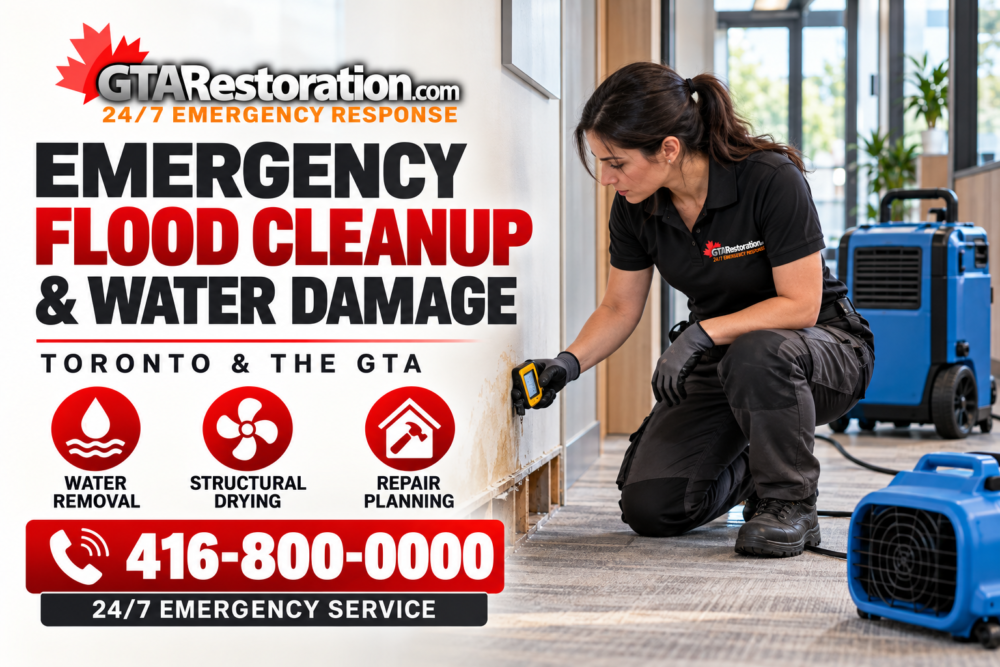
First, crews ask when the problem began and check where the water travelled. In addition, leak detection can help investigate an unclear source. Moisture meters help check wet materials; thermal images can guide further checks but do not measure moisture directly.
2. Extract Water and Dry the Structure
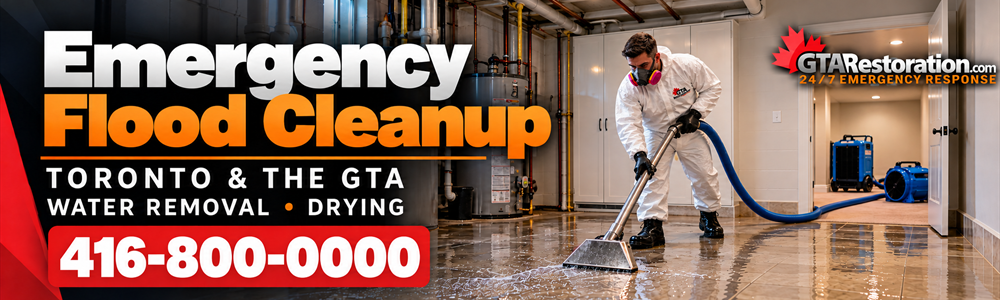
Once the area is safe, pumps and extractors remove standing water. Next, air movers and dehumidifiers help dry suitable materials. We may use specialty drying methods for hard-to-reach spaces. Throughout the work, moisture readings guide changes to the setup.
3. Check Wet Materials
For example, some flooring, insulation or drywall may need removal. However, the team considers the water source, damage and drying options before deciding what can stay. Visible mould or repeated dampness also needs attention. Cleaning alone will not fix an ongoing leak.
4. Record the Work and Plan Repairs
In addition, photos, readings and work notes help track the loss. Also, keep quotes and invoices for your records. Repairs should follow suitable drying checks. Your insurer reviews the claim and decides which costs your policy covers.
What Affects Drying Time?
Every property differs. For this reason, drying plans account for:
- Depth and spread: water may reach several rooms or floors.
- Material type: dense flooring and layered walls can hold moisture.
- Site conditions: temperature, humidity and access affect the work.
However, a dry-looking surface does not confirm that the layers below are ready for repairs. Therefore, crews check progress rather than promise a fixed finish date.
Signs That Need a Closer Look
Leaks do not always leave a puddle. Watch for changes in rooms beside or below the affected area.
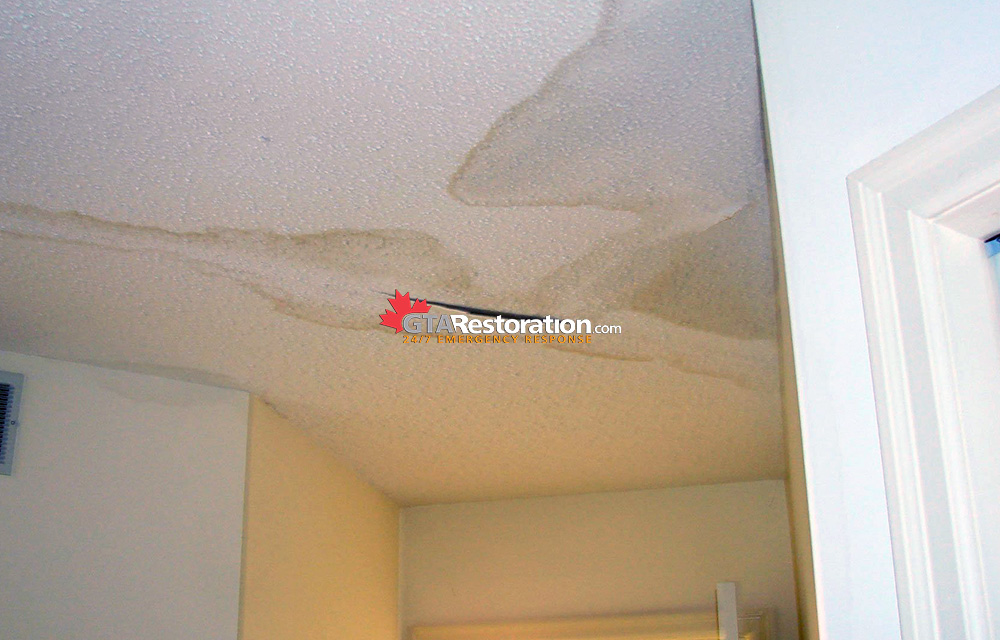
- Stained ceilings: fresh marks may point to water from above.
- Swollen trim or flooring: moisture can change the shape of materials.
- Peeling paint: damp layers may loosen the finish.
- Musty odours: investigate the cause instead of masking the smell.
Emergency Water Cleanup for Homes and Businesses
Houses, condos, offices and shops each need a practical plan. For example, shared buildings may need access to nearby units. Also, our team can discuss affected rooms, equipment space and repair priorities with owners or property managers.
For broader recovery needs, explore our water damage restoration services. Prompt assessment helps connect the urgent cleanup with the work that follows.
Need Emergency Flood Cleanup?
Call GTA Restoration for 24/7 help with water removal, drying and repair planning in Toronto and the GTA.
Call Us: 416-800-0000
Learn More
Basement Cleanup | Burst Pipe Repairs | Specialty Drying




 Facebook
 Instagram
 LinkedIn
 X / Twitter
 YouTube