
Tags: Avoid Mold Growth, Mold Growth, Mold Growth Removal, Mold Remediation, Mold Removal, Prevent Mold Growth, Water Damage Causing Mold Growth,



For non-emergencies use our contact form


Emergency? 24-Hours
416-800-0000Share what changed and when before the visit. A few clear notes help the team review moisture clues and discuss the work needed.
First, record whether dampness follows rain, snowmelt or warmer days. Then, note how long each wet patch lasts.
Describe the rooms and surfaces involved. Also, mention nearby sinks, windows or outside walls that may help guide the check.
Take photos from a safe position. However, avoid disturbing the growth or opening walls just to get a closer look.
List old leaks and the work done to fix them. Then, explain which problems returned and when you first noticed them.
If you have a humidity meter, save readings with dates. Also, note whether windows or pipes collect water droplets.
Explain how you use fans and dehumidifiers. Then, flag equipment faults or drainage problems that may need attention.
Ask how the plan addresses seasonal mold growth. Also, confirm repairs, cleanup and waste handling before work starts.
Finally, agree on what to monitor after repairs. Keep photos and notes if dampness or smells return.
Need help with a damp or moldy area?
Call GTA Restoration to discuss the next steps.
Service Areas Across Canada
GTA Restoration serves communities across Canada, including Toronto and the GTA. U.S. locations are opening. Browse our Canadian service areas below, and contact us to confirm services and availability for your address.
Search
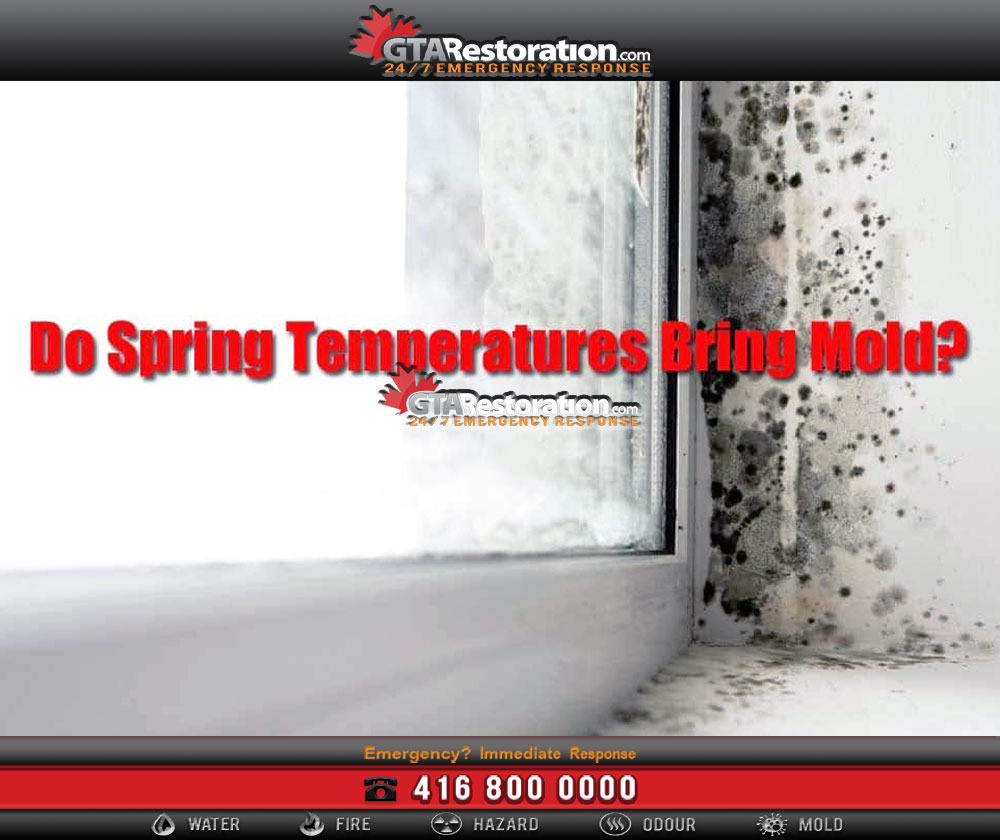
No. Mold needs moisture to grow. However, spring rain and snowmelt can leave parts of a home wet.
Yes, if materials stay damp. Therefore, check leaks and wet surfaces as well as the room temperature.
Aim for about 30–50% indoors. Also, watch for droplets on cold surfaces and address their cause.
Sometimes. However, damp outdoor air can add moisture. Choose airflow steps that suit the weather and room.
Not usually when mold is visible. First, focus on the moisture source and cleanup plan.
No. Drying helps control moisture. However, moldy surfaces still need proper cleaning or removal.
Direct Billing & Insurance Claims
Ask your insurer about coverage, deductibles and the records it needs.

In-House Financing Available
Financing up to 24 months. No interest. No money down. Ask us about the terms.
Learn more ↴ 
RELATED ARTICLES





Call Us 416-800-0000
Emergency? 24/7 Restoration Help
We cover all GTA 24/7.
Head Office:
250 Consumers Rd,
#10
Toronto, ON
M2J 4V6,
Open 24 hours
Downtown Office:
1 Toronto St,
#10
Toronto, ON
M5W 1A1,
Open 24 hours
For non-emergencies use our contact form
Not sure what you need?
Call us today to find the best product for your situation.
Head Office:
101 Lebovic Ave,
Unit #10
Scarborough,
ON, M1L 4T7
Hours
24-Hours Open
Downtown Office:
250 Yonge Street,
Unit #1A
Toronto,
ON, M5B 2L7
Hours
24-Hours Open
Spring Mold Growth: How Temperature and Moisture Play a Role
Get a quote today


