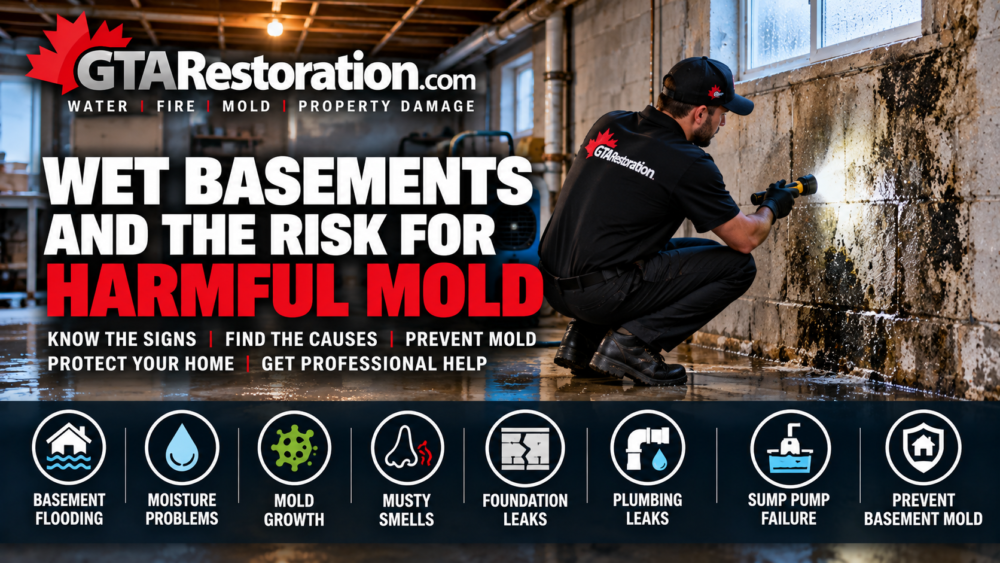
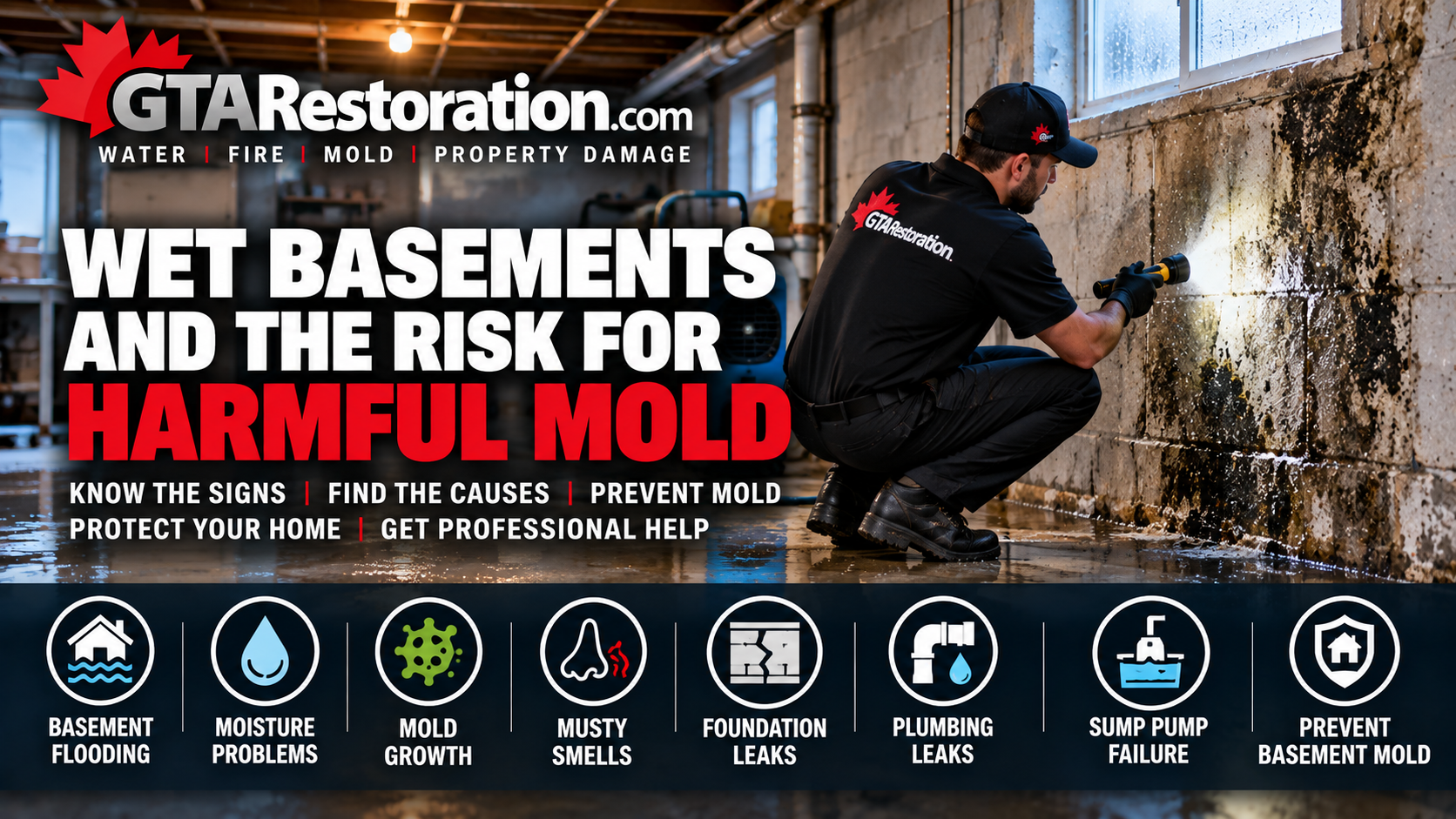
Wet Basements and the Risk for Harmful Mold
Wet basements and the risk for harmful mold often go together because mold needs moisture to grow. A basement may become damp after flooding, foundation seepage, a leaking pipe, poor drainage or high indoor humidity. If that moisture remains, mold may begin growing on drywall, wood, insulation, carpet, cardboard and other materials.
However, basement mold does not always appear as a large visible patch. Sometimes the first warning is a musty smell, damp wall, water stain or recurring condensation. Therefore, finding and correcting the moisture source matters just as much as cleaning visible mold.
Why Basements Develop Moisture Problems
Basements sit below or partly below ground level, so they face several possible moisture sources. For example, rainwater or melting snow can move toward the foundation. Cracks in basement walls or floors may then allow water to enter.
In addition, plumbing leaks, sump pump problems and poor drainage can leave materials wet. Humid summer air may also condense on cooler basement surfaces.
Common causes of wet basements include:
- Foundation cracks or seepage
- Heavy rainfall
- Melting snow
- Plumbing leaks
- Sump pump failure
- Poor lot grading
- Blocked or overflowing eavestroughs
- Short or poorly placed downspouts
- High indoor humidity
- Poor basement ventilation
Why Damp Materials Can Develop Mold
Mold spores are naturally present in indoor and outdoor environments. Usually, they do not become a major problem on dry building materials. However, moisture gives mold the conditions it needs to grow.
As a result, wet drywall, carpet, insulation and stored cardboard can become problem areas. Basements with repeated moisture issues may also develop hidden mold behind finished walls or beneath flooring.
Does All Basement Mold Look the Same?
No. Mold can appear black, green, white, grey or other colours. However, colour alone does not tell you how serious the situation is or how someone may react to it.
Instead, focus on the amount of growth, how long the area has remained damp and whether the moisture source is still active. Most importantly, do not assume that only dark-coloured mold requires attention.
Signs of Mold and Moisture in a Wet Basement
Musty or Earthy Odours
A persistent musty smell can indicate moisture or hidden mold. For example, growth may be present behind drywall, under carpet or inside stored materials even when you cannot see it clearly.
If the smell remains after cleaning, investigate the surrounding area for leaks and damp building materials.
Visible Staining or Mold Growth
Look for dark spots, white patches, discolouration or fuzzy growth on basement walls, ceilings, flooring and stored items. In addition, check behind furniture and near exterior walls where airflow may be limited.
Water Stains and Peeling Finishes
Water marks, peeling paint, bubbling drywall or damaged baseboards can point to an ongoing moisture problem. Therefore, simply repainting the surface will not solve the issue if water continues entering the basement.
Condensation and High Humidity
Condensation on windows, pipes or cool basement walls can indicate excess indoor humidity. Health Canada recommends keeping relative humidity between about 30% and 50% to help control moisture and reduce mold growth.
The Health Canada mould guidance also recommends fixing damp areas and water leaks promptly.
Possible Health Effects of Damp and Moldy Spaces
Health Canada reports that people living in damp or moldy homes may be more likely to experience eye, nose and throat irritation, coughing, wheezing, shortness of breath or worsening asthma symptoms.
However, symptoms alone cannot prove that mold is the cause. Anyone with ongoing or worsening health concerns should speak with a health care professional.
Children, older people and people with asthma, severe allergies or certain medical conditions may be more sensitive to damp or moldy environments.
Hidden Mold After Basement Flooding
After a flood, water can move into wall cavities, insulation and flooring. Therefore, surfaces may appear dry while moisture remains inside the structure.
If you suspect hidden water, GTA Restoration can provide water leak detection and moisture checks to help identify wet areas before they develop into larger problems.
How to Reduce Mold Risk in a Wet Basement
Find and Stop the Water Source
The first step is always moisture control. For example, repair leaking pipes, foundation cracks or failed plumbing. Also, check gutters, downspouts and exterior drainage when rainwater enters the basement.
If the moisture source remains, mold may return even after cleaning.
Dry Wet Materials Quickly
After flooding or a leak, begin drying affected materials as soon as it is safe. Health Canada notes that rapid drying after water damage reduces the chance of mold growth.
Depending on the amount of water, drying may require water extraction, air movers and dehumidifiers. GTA Restoration provides professional water removal and structural drying when a basement experiences significant water damage.
Control Basement Humidity
A dehumidifier can help control moisture in a damp basement. In addition, use a hygrometer to monitor relative humidity instead of guessing.
Keep stored items off damp floors where possible. Plastic storage containers may also be a better option than cardboard in basements that have a history of moisture.
Inspect Foundation and Drainage Problems
Water that repeatedly appears after heavy rain may point to a foundation or drainage issue. Therefore, inspect foundation walls, window wells, grading, downspouts and sump equipment.
Our guide to basement waterproofing methods explains several ways property owners can address recurring water entry.
Do Not Ignore Recurring Mold
If mold returns after cleaning, the moisture source probably remains. In that case, a property inspection can help identify damp areas and possible building problems.
For larger or recurring growth, GTA Restoration provides mold removal and remediation throughout Toronto and the GTA.
Small Mold Areas vs. Larger Problems
Small amounts of mold on suitable hard surfaces may sometimes be cleaned with water and detergent. However, larger areas, repeated mold growth, contaminated porous materials or hidden growth may require professional remediation.
In addition, sewage-related basement flooding requires different precautions because the water may contain harmful contaminants.
Check the Basement After Heavy Rain or Snowmelt
Basement water problems often appear after storms or melting snow. Therefore, inspect vulnerable areas after major weather events.
Look near foundation walls, window wells, floor drains, sump pumps and previous leak locations. Early detection can help prevent a small damp area from becoming a larger restoration project.
Wet Basements Should Not Stay Wet
Ultimately, wet basements and the risk for harmful mold are closely connected through moisture. Mold needs damp conditions, so the best long-term solution is to correct the water problem rather than repeatedly treating the surface.
By controlling humidity, repairing leaks, improving drainage and drying water damage quickly, property owners can reduce wet basements and the risk for harmful mold.
If you already notice water stains, musty odours or visible growth, address the source early. Taking action now can help reduce wet basements and the risk for harmful mold before the affected area spreads.
Wet Basement, Musty Smell or Visible Mold?
GTA Restoration provides moisture inspections, water leak detection, structural drying and mold remediation throughout Toronto and the GTA.
Find and fix the moisture source before basement mold spreads into more building materials.
Call Us: 416-800-0000
Learn More
Why Does Basement Smell Musty? Find the Cause | How to Remove the Musty Smell from Your Basement | Signs of Hidden Mold in Your Home | Signs of Mold Growth and How to Detect it in your Home | Signs of Water Damage on Walls & How to Address Them | Water Flood Damage Repair Mississauga












 BannerText_Seraphinite Accelerator


You must be logged in to post a comment.