
Flood Emergency Management
Flood emergency management starts with a plan for people, safe exits and clear advice. Heavy rain, snowmelt or rising rivers can affect homes and workplaces with little warning. In Toronto and nearby towns, follow local flood notices and orders to leave. Call 911 if anyone faces an immediate threat to life.
This guide covers practical flood planning before water arrives and the steps to discuss after access is safe. GTA Restoration can help with property cleanup and recovery. Local authorities and emergency services direct flood warnings, rescue and safe exits.
Use Official Alerts in Your Flood Planning
First, check notices from your city or town and local conservation authority. Read the area covered, issue time and next update. A warning for one watershed does not describe every street or building nearby.
A water safety statement warns of risks around rivers, banks or ice. A flood outlook gives early notice of conditions that may lead to flooding. A flood watch means flooding is possible; a flood warning means it is expected soon or already happening. Follow the actions in the actual notice.
Ontario’s official flood guidance explains how to prepare, where to get updates and steps before, during and after a flood. Check current notices directly, since water levels can change after you read this page.
Build a Flood Emergency Management Plan
Next, agree on an exit route, meeting place and contact person. Plan for children, pets and anyone who needs help leaving. Keep an emergency kit ready, including the medicines you need, phone numbers and copies of key records.
Before heavy rain, move key papers and valuables away from low storage areas when safe. Keep exits clear. Ask a qualified contractor about sump pumps or backwater valves that suit your building; these steps do not remove all flood risk.
In condos, confirm how management sends alerts and controls access to shared spaces. For workplaces, list who can close affected areas and contact staff after hours. Review the plan when people move in or site risks change.
Put People First During a Flood Response
If officials tell you to leave, use the advised route. Do not wait to collect belongings. Never walk or drive through floodwater: it can hide strong currents, damaged roads and open drains. Also, keep children and pets away from flooded areas.
Stay out of water near electrical systems. Do not cross a wet floor to reach a power panel. Ask your electric utility for help if water threatens outlets, wiring or equipment. Follow the gas or power company’s advice. Do not try to use shutoffs you do not know.
Plan a Safe Return After Flooding
Return only when local officials allow it. Even then, your building may need further checks. Look for signs of weak walls, power risks and sewage before anyone starts cleanup. Ask a Licensed Electrical Contractor to check wires and devices that got wet.
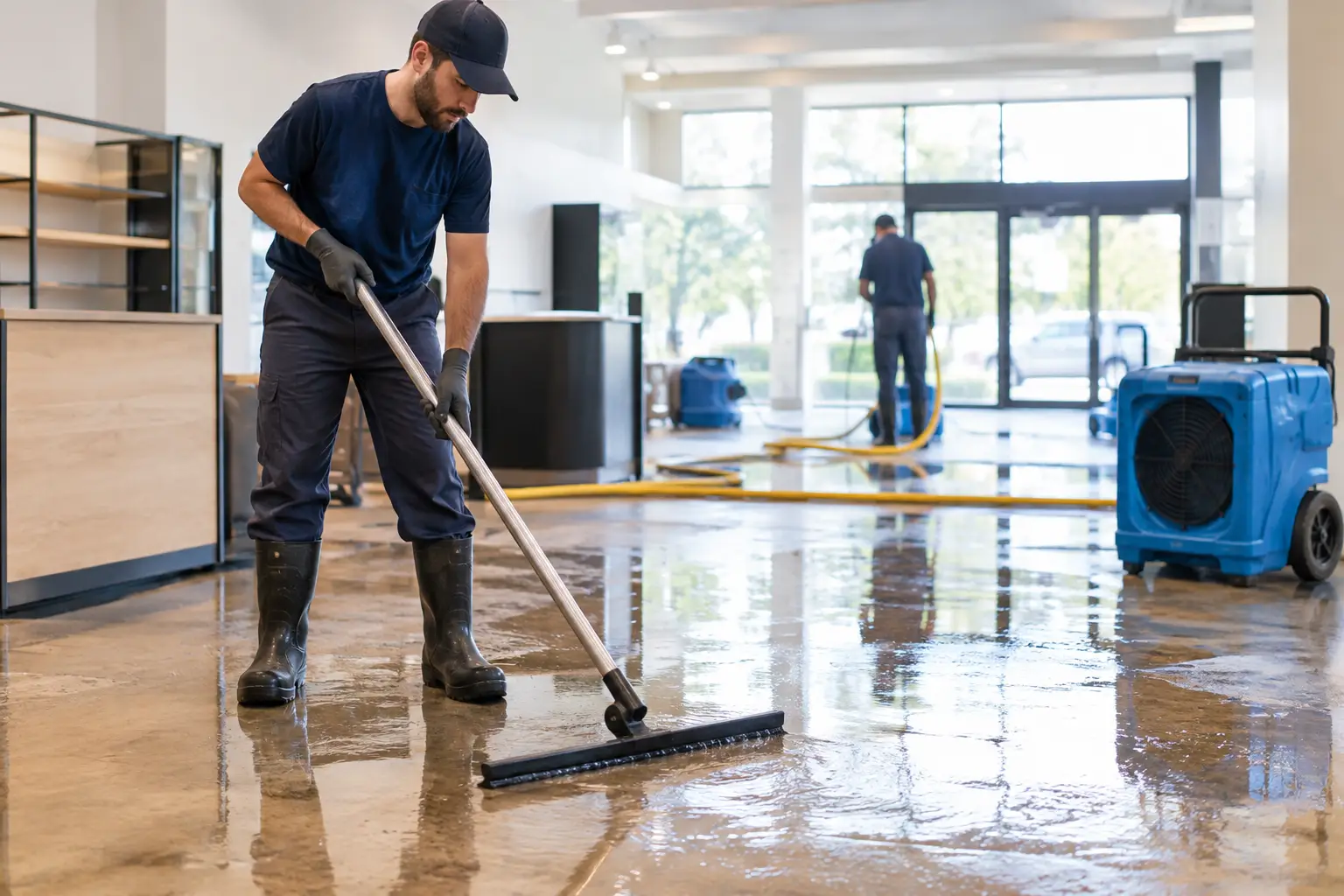
Then discuss flood cleanup and water removal with the restoration team. Explain the water source, rooms affected and any sewage concerns. Do not assume floodwater is clean or that a dry-looking floor means the materials beneath it are dry.
Agree on the Flood Recovery Work
Ask for a clear scope covering water removal, wet materials, drying checks and repairs. The order of work depends on the site. For example, wet drywall or flooring may need removal so the team can reach trapped moisture.
For buildings that people still use, agree on work zones and access times. Our commercial restoration services can support planning around tenants, staff and operating areas. Before you reopen, ask which checks the type of damage calls for.
Keep Records and Review Your Flood Plan
Finally, take photos only when safe and note when things happened. Save repair bills, quotes and moisture records. Your insurer decides coverage, so ask which records it needs and what to do with damaged belongings.
Once urgent work is complete, review your flood emergency management plan. Note which contacts, routes and access plans worked well. Keep those details up to date so each person knows what to do next time.
For non-emergencies use our contact form
Flood Response and Recovery Support
GTA Restoration can discuss property cleanup as part of your flood emergency management plan. Share the damage, location and current access limits.
Safe Flood Access
First, follow official restrictions and keep people out of unsafe rooms. Tell the team about known hazards before anyone enters.
Water Removal Planning
Describe the source and spread of standing water. This helps the team plan suitable equipment, work zones and access routes.
Flood Contamination Concerns
Report sewage, chemicals or other known risks in the water. Also, keep children and pets clear until the team checks the area.
Moisture Checks
Hidden moisture may remain beneath floors or inside walls. Ask which materials need testing and how the findings guide drying.
Drying and Repairs
Then agree on the work needed for wet materials. Progress checks help guide the next stage of flood recovery.
Condo Flood Access
Share management contacts, keys and access times. Water may affect nearby units, so share updates to help each household plan the work.
Business Recovery Plans
Discuss staff access, equipment and work areas before cleanup begins. Keep unsafe zones separate from any areas still in use.
Flood Records
Finally, keep photos, bills and drying records with your claim file. Ask your insurer which further details it needs.
For property flood cleanup in Toronto and the GTA, contact GTA Restoration.
Service Areas Across Canada
GTA Restoration serves communities across Canada, including Toronto and the GTA. U.S. locations are opening. Browse our Canadian service areas below, and contact us to confirm services and availability for your address.
Search
- Air Duct Cleaning Montreal
- Ajax Asbestos Removal
- Ajax Mold Removal
- Ajax Water Damage
- Asbestos Removal Calgary
- Asbestos Removal Edmonton
- Asbestos Removal Fort Saskatchewan
- Asbestos Removal Gloucester
- Asbestos Removal Grimsby
- Asbestos Removal Hamilton
- Asbestos Removal Kanata
- Asbestos Removal Kitchener
- Asbestos Removal Laval
- Asbestos Removal Lincoln
- Asbestos Removal Montreal
- Asbestos Removal Nepean
- Asbestos Removal Niagara Falls
- Asbestos Removal Orleans
- Asbestos Removal Ottawa
- Asbestos Removal Sherwood Park
- Asbestos Removal Spruce Grove
- Asbestos Removal St Catharines
- Asbestos Removal St-Albert
- Asbestos Removal Thorold
- Asbestos Testing Hamilton
- Asbestos Testing Montreal
- Asbestos Testing Petersburg
- Aurora Mold Removal
- Aurora Water Damage
- Beaconsfield Asbestos Removal
- Brampton Asbestos Removal
- Brampton Mold Removal
- Brampton Water Damage
- Burlington Asbestos Removal
- Burlington Mold Removal
- Burlington Water Damage
- Burst Pipe Montreal Frozen Pipe
- Burst Pipe Repair Edmonton
- Burst Pipe Repair Ottawa
- Caledon Mold Removal
- Caledon Water Damage
- Calgary Mold Removal
- Calgary Water Damage
- Cambridge Mold Removal
- Cambridge Water Damage
- Clarington Mold Removal
- Concord Mold Removal
- Concord Water Damage
- Cooksville Mold Removal
- Edmonton Water Damage
- Emergency Roofing Vancouver
- Etobicoke Asbestos Removal
- Etobicoke Mold Removal
- Etobicoke Water Damage
- Fire Damage Grimsby
- Fire Damage Lincoln
- Fire Damage Niagara Falls
- Fire Restoration Fort McMurray
- Fire Damage Restoration Thorold
- Fire Damage St Catharines
- Flood Cleanup Grimsby
- Flood Cleanup Lincoln
- Flood Cleanup Niagara Falls
- Flood Cleanup St Catharines
- Flood Cleanup Thorold
- London Mold Removal
- London Water Damage
- Markham Asbestos Removal
- Markham Mold Removal
- Markham Water Damage
- Mississauga Asbestos Testing
- Mississauga Mold Removal
- Mississauga Water Damage
- Mold Inspection Removal Kitchener
- Mold Remediation Montreal
- Mold Removal & Inspection LaSalle
- Mold Removal Anjou
- Mold Removal Boucherville
- Mold Removal Brossard
- Mold Removal Burnaby
- Mold Removal Chambly
- Mold Removal Chateauguay
- Mold Removal Chomedey
- Mold Removal Coquitlam
- Mold Removal Dollard Des Ormeaux
- Mold Removal Dorval
- Mold Removal Edmonton
- Mold Removal Fort Saskatchewan
- Mold Removal Gloucester
- Mold Removal Grimsby
- Mold Removal Hamilton Inspection
- Mold Removal Ile Bizard
- Mold Removal in Osgoode
- Mold Removal Beaconsfield
- Mold Removal Kahnawake
- Mold Removal Kanata
- Mold Removal Kirkland
- Mold Removal Laval
- Mold Removal Lincoln
- Mold Removal Longueuil
- Mold Removal Montreal East
- Mold Removal Mount Royal
- Mold Removal Nepean
- Mold Removal New Westminster
- Mold Removal Niagara Falls
- Mold Removal Orleans
- Mold Removal Ottawa
- Mold Removal Cumberland
- Mold Remediation Hampstead
- Mold Removal Remediation Roxboro
- Mold Removal Richmond BC
- Mold Removal Rideau Lakes
- Mold Removal Rockcliffe Park
- Mold Removal Saint Hubert
- Mold Removal Saint Laurent
- Mold Removal Sherwood Park
- Mold Removal Spruce Grove
- Mold Removal St Catharines
- Mold Removal Ste Dorothee
- Mold Removal St۔ Albert
- Mold Removal Surrey
- Mold Removal Thorold
- Mold Removal Vancouver
- Mold Removal Vanier
- Mold Removal Westmount
- Montreal Biohazard Cleanup
- Montreal Emergency Plumber
- Montreal Fire Restoration
- Montreal Flood Cleanup
- Montreal Odor Removal
- Montreal Roofing Emergency
- Montreal Sewer Backup Cleanup
- Montreal Water Leak Detection
- Montréal Asbestos Removal
- Montréal Emergency Plumbing
- Montréal Mold Removal
- Montréal Pipe Burst Emergency
- Montréal Water Damage
- Newmarket Mold Removal
- Newmarket Water Damage
- North York Mold Removal
- Oakville Mold Removal
- Oakville Water Damage
- Oshawa Mold Removal
- Oshawa Water Damage
- Ottawa Air Duct Cleaning
- Pickering Mold Removal
- Pickering Water Damage
- Red Deer Water Damage
- RedDeer Mold Removal
- Richmond Hill Mold Removal
- Richmond Hill Water Damage
- Roof Repair Lincoln
- Roof Repair Niagara Falls
- Roof Repair St Catharines
- Scarborough Asbestos Removal
- Scarborough Mold Removal
- Scarborough Water Damage
- Sewage Cleanup Edmonton
- Sewer Backup Lincoln
- Sewer Backup Niagara Falls
- Sewer Backup Ottawa
- Sewer Backup St Catharines
- Thornhill Mold Removal
- Toronto & GTA Asbestos Removal
- Toronto & GTA Mold Removal
- Toronto Air Duct Cleaning
- Toronto Water Damage
- Unionville Mold Removal
- Unionville Water Damage
- Vancouver Asbestos Removal
- Vancouver Biohazard Cleanup
- Vancouver Emergency Plumber
- Vancouver Emergency Plumbing
- Vancouver Fire Restoration
- Vancouver Flood Cleanup
- Vancouver Mold Removal
- Vancouver Odor Removal
- Vancouver Pipe Burst Emergency
- Vancouver Sewer Backup Cleanup
- Vancouver Water Damage
- Vancouver Water Leak Detection
- Vaughan Mold Removal
- Vaughan Water Damage
- Vermiculite Removal Ottawa
- Water Damage Grimsby
- Water Damage Kanata
- Water Damage Kitchener
- Water Damage Lincoln
- Water Damage Longueuil
- Water Damage Nepean
- Water Damage Niagara Falls
- Water Damage Orleans
- Water Damage Ottawa
- Water Damage Repair Montreal
- Water Damage Laval Montreal
- Water Damage Restoration Thorold
- Sewage Backup Cleanup Montreal
- Water Damage St Catharines
- Water Damage Vancouver
- Water Flood Damage Repair Hamilton
- Flood Damage Repair Hampstead
- Whitby Water Damage
- Woodbridge Asbestos Removal
- Woodbridge Mold Removal
- Woodbridge Water Damage
- Restoration Equipment Rental
Flood Emergency Management Questions
Where should I check local flood alerts?
Check your city or town and local conservation authority. Read the location and time on each notice, then follow its latest advice.
What does a flood watch mean?
A flood watch means flooding is possible. A flood warning means it is expected soon or already happening in the stated area.
When can I return to a flooded property?
Wait for local officials to allow return. Your building may still need checks for power, weak walls or other risks before entry.
Can GTA Restoration direct an evacuation?
Local officials and emergency services tell people when and how to leave. GTA Restoration can discuss property cleanup and recovery once access is safe.
Which records help after flood damage?
Keep photos taken safely, notes with dates, quotes and bills. Then ask your insurer which other records it needs to review the claim.
Learn more ↴ 
RELATED ARTICLES
Direct Billing & Insurance Claims
Ask your insurer about coverage, deductibles and the records it needs.

In-House Financing Available
Financing up to 24 months. No interest. No money down. Ask us about the terms.
Certifications & Insurance
View our firm certification, technician qualifications and insurance documents.

IICRC Certified Firm
GTA Restoration Inc.
Firm number 199912
Valid through

Business Insurance
GTA Restoration Group Inc.
$5 million general liability per occurrence
$8 million contractors pollution per claim
–
IICRC Technician Qualifications
Tony Sokol T. Lleshi · Registration 214520
Valid through
Water Damage Restoration · Fire & Smoke Damage Restoration · Applied Microbial Remediation · Odor Control · Trauma & Crime Scene
View technician verification (PDF) — opens in a new tabInsurance is subject to policy terms, conditions and exclusions.
 Facebook
 Instagram
 LinkedIn
 X / Twitter
 YouTube


