Vancouver Water Damage services from GTA Restoration help homeowners, condo owners, property managers, and businesses deal with leaks, burst pipes, flooding, appliance failures, overflowing fixtures, and other water-related property damage. Our team provides water extraction, moisture checks, structural drying, cleanup, and restoration support throughout Vancouver.
Most importantly, avoid entering wet areas if there is a risk of electrical hazards, unstable materials, sewage, or other contamination. Once the area is safe, restoration work can begin.
Common Causes of Water Damage in Vancouver
Water damage can start from many different sources. For example, burst pipes, leaking appliances, failed plumbing connections, overflowing fixtures, roof leaks, sewer backups, and flooding may all affect a property.
However, the restoration plan should match the actual source. A clean plumbing leak may require a different cleanup approach than water mixed with sewage or outdoor runoff.
What to Do After Water Damage
Quick action can help reduce further damage. First, stop the water source when it is safe and practical to do so.
Keep people and pets away from unsafe wet areas.
Do not use electrical equipment around standing water.
Move unaffected contents away from spreading water when practical.
Avoid opening walls or ceilings yourself to search for hidden water.
Take photos from a safe location if you may need insurance records.
Contact the appropriate plumber, roofer, restoration professional, or building manager.
In addition, do not assume water is clean simply because it looks clear. The source and surrounding conditions matter.
First, technicians check where the water travelled and which materials it affected. They may also use moisture meters to check drywall, flooring, ceilings, trim, cabinetry, and other materials beyond the visible wet area.
2. Control the Water Source
Before restoration continues, the source should be stopped or controlled. For example, this may involve plumbing repair, roof repair, appliance service, drain work, or another trade depending on the cause.
3. Extract Standing Water
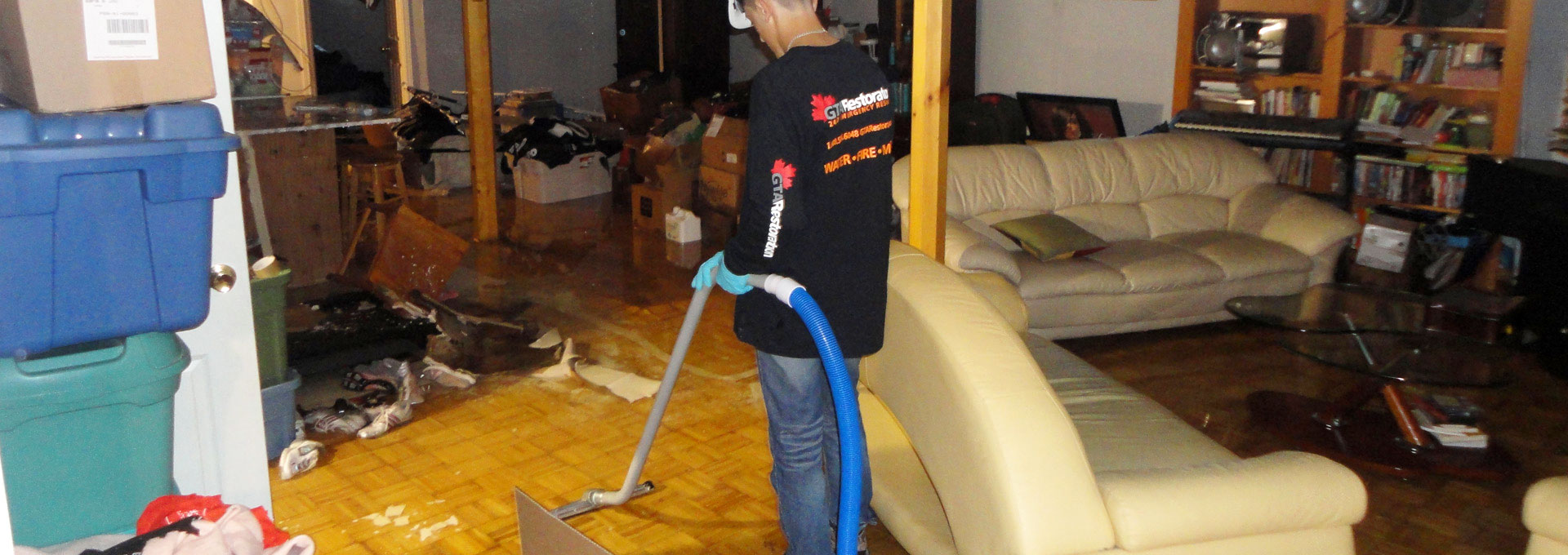
Next, technicians use suitable extraction equipment to remove standing water. As a result, less water remains in contact with floors, walls, contents, and other materials.
4. Assess Water-Damaged Materials
Some materials may dry in place, while others may require removal. For example, carpet, underpad, drywall, insulation, or damaged flooring may need closer review depending on the source, amount of water, and condition.
5. Clean the Affected Area
After extraction, technicians clean suitable surfaces and materials as needed. However, the cleaning method depends on the water source and what the water contacted.
6. Begin Structural Drying
Technicians may use commercial dehumidifiers and air-moving equipment where appropriate. Meanwhile, moisture readings help track drying progress.
Drying should rely on actual readings and project goals rather than appearance alone.
7. Recheck and Plan Repairs
Finally, technicians review moisture levels and remaining damage. If water affected drywall, flooring, trim, insulation, cabinetry, or finishes, repair work can follow after cleanup and drying.
Water Extraction Vancouver
Standing water can spread quickly into nearby rooms, wall cavities, and lower levels. Therefore, extraction is often one of the first major steps in a water damage Vancouver project.
Depending on the amount and location of the water, technicians may use portable extraction units, wet vacuums, pumps, or other suitable equipment.
Structural Drying and Moisture Checks
Moisture may remain inside building materials after the surface appears dry. For this reason, structural drying can continue after visible water is gone.
Technicians may use dehumidifiers and air movers where appropriate. In addition, moisture readings help determine whether materials are moving toward the drying goals for the project.
What Happens to Water-Damaged Materials?
Different materials respond differently to water. Hard surfaces may dry well, while porous materials can hold moisture below the surface.
Materials that may need closer review include:
Carpet and underpad
Drywall
Insulation
Wood and laminate flooring
Cabinetry
Baseboards and trim
Furniture and contents
However, technicians should base removal decisions on the water source, amount of damage, exposure time, material type, and condition.
Flood Damage Vancouver
Flooding can affect several rooms or levels of a building. Water may enter from heavy rain, drainage problems, plumbing failures, sewer backups, or other sources.
As a result, the cleanup may require water extraction, material assessment, cleaning, drying, and repair work.
Sewer backups require different handling from normal plumbing leaks. Wastewater may contain sewage or other contamination, so direct contact should be avoided.
For this reason, the cleanup method should reflect the water source and affected materials.
Wet materials that remain damp can support mold growth. Therefore, prompt water removal and drying are important after water damage.
However, water damage does not automatically mean mold is present. If technicians find signs of mold or long-term moisture, the property may need a separate mold assessment or remediation plan.
Health Canada advises drying wet materials as quickly as possible after flooding because excess moisture can support mold growth.
Odour Control After Water Damage
Water-related odours may come from wet materials, sewage, mold, or other contamination. Therefore, odour control works best after technicians address the actual source.
Once the source is treated, additional deodorizing methods may help with remaining smells. Learn more about our Vancouver Odor Removal service.
Condo Water Damage Vancouver
Water damage in condos can affect more than one unit. Water may move through floors, ceilings, wall cavities, plumbing openings, and neighbouring areas.
As a result, the response may require coordination between the unit owner, property manager, restoration team, plumber, and other trades.
Commercial Water Damage Vancouver
GTA Restoration also provides Vancouver water damage restoration support for offices, retail spaces, restaurants, warehouses, commercial buildings, and managed properties.
For businesses, the restoration plan may need to consider building access, affected work areas, inventory, equipment, tenants, and ongoing operations.
Water Damage Insurance Documentation
Insurance coverage for water damage depends on the cause of loss and the policy. Therefore, property owners should contact their insurer or broker when a claim may apply.
Our team can record visible damage, affected materials, moisture readings, equipment use, and restoration work. However, the insurer decides coverage based on the policy, cause, deductible, limits, and exclusions.
Vancouver Water Damage FAQs
What should I do first after water damage?
Stop the water source if you can do so safely. Then, keep people away from electrical hazards and arrange the appropriate repair and restoration service.
Can water travel behind walls?
Yes. Water can move through wall cavities, flooring, ceilings, and nearby materials. Therefore, moisture checks may need to extend beyond the visible damage.
Does every wet material need removal?
No. Instead, the water source, material type, damage, and ability to dry the material help determine the next step.
How long does structural drying take?
There is no fixed drying time for every property. Material type, water amount, temperature, humidity, and access all affect the process.
Will insurance cover water damage?
Coverage depends on the policy and cause of loss. For this reason, contact your insurer or broker to confirm coverage, limits, deductible, and exclusions.
Need Water Damage Restoration in Vancouver?
GTA Restoration provides water extraction, structural drying, moisture checks, cleanup, and restoration support for residential and commercial properties in Vancouver.
GTA Restoration provides Vancouver Water Damage cleanup and restoration for homes, condos, rental properties, offices, retail spaces, and commercial buildings. In addition, our team can assist with water extraction, moisture checks, structural drying, damaged materials, odour control, and restoration after the source is controlled.
Water Damage Assessment
Every water-damage project starts with a review of where the water travelled and which materials it affected. Therefore, technicians check visible damage and may use moisture meters to inspect flooring, drywall, ceilings, trim, and nearby materials.
Water Extraction
If standing water remains, technicians can remove it with suitable extraction equipment. Afterward, the team checks wet materials to determine what needs drying, cleaning, or removal.
Structural Drying
Moisture can remain inside building materials after visible water is gone. For this reason, technicians may use dehumidifiers and air-moving equipment while moisture readings help track progress.
Damaged Building Materials
Drywall, carpet, flooring, insulation, cabinetry, and contents can react differently to water. However, technicians should base removal decisions on the water source, material type, amount of damage, and condition.
Flood and Burst-Pipe Damage
Flooding and burst pipes can affect several rooms or levels of a property. As a result, technicians may need to inspect areas beyond the visible water and check nearby walls, ceilings, and flooring.
Condo and Commercial Properties
Our water damage Vancouver services support condos, apartment buildings, offices, retail spaces, restaurants, warehouses, and managed properties. Likewise, larger buildings may require coordination with property management or building staff.
Odour and Mold Concerns
Wet materials can develop musty odours when moisture remains. Therefore, the first step is to address the source and dry affected materials. If mold is present, a separate mold assessment or remediation plan may also be needed.
Insurance Documentation
If an insurance claim is involved, our team can record affected areas, moisture readings, damaged materials, equipment use, and restoration work. However, your insurer determines coverage based on the policy, cause of loss, deductible, limits, and exclusions.
GTA Restoration serves communities across Canada, including Toronto and the GTA. U.S. locations are opening. Browse our Canadian service areas below, and contact us to confirm services and availability for your address.




 Facebook
  Instagram
  LinkedIn
  X / Twitter
  YouTube