Flood Cleanup Lincoln – Water Damage Restoration
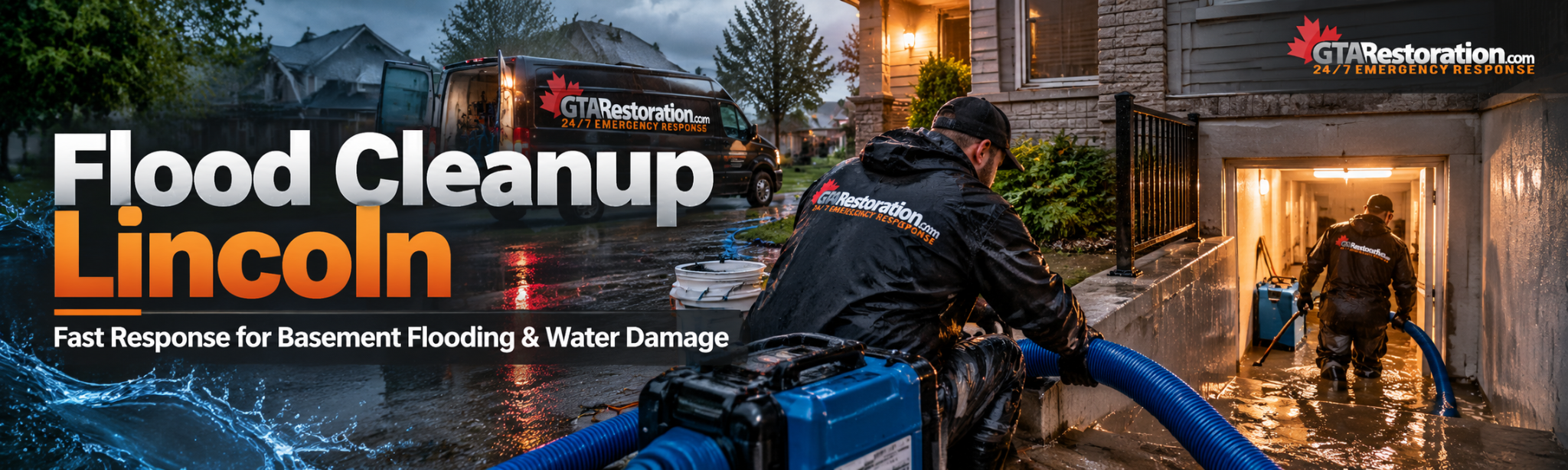
Emergency Water Removal & Flood Restoration in Lincoln
When a basement, home or business floods, Flood Cleanup Lincoln services can help remove standing water, locate hidden moisture and begin structural drying. Heavy rain, sewer backups, burst pipes, sump pump problems and plumbing leaks can all cause water to spread quickly through floors, walls and contents.
GTA Restoration provides emergency water extraction, moisture assessment, drying, cleanup and restoration support throughout Lincoln. Do not enter standing water when electrical outlets, appliances, wiring or the electrical panel may have been affected.
Common Reasons for Flood Cleanup Lincoln
Basement Flooding After Heavy Rain
Heavy rainfall can put pressure on drainage systems and allow water to enter basements through drains, foundations or other openings. As a result, finished flooring, drywall, insulation and stored belongings may become wet.
For more information about lower-level flooding, visit our flooded basement cleanup service.
Sump Pump Problems
A sump pump can help move groundwater away from a basement. However, a failed pump, blocked discharge line or power outage may leave the system unable to keep up during severe weather.
Therefore, test the sump pump regularly and consider a suitable backup system if the property depends on it for flood protection.
Sewer Backup Flooding
Wastewater entering through basement drains or fixtures requires more care than a clean-water leak. In addition, sewage can contaminate porous materials and create health concerns.
If sewage is involved, keep people and pets away from the affected area and visit our sewage backup cleanup service for more information.
Burst Pipes & Plumbing Leaks
Burst pipes, failed supply lines and plumbing leaks can release large amounts of water in a short period. Therefore, stop the source when it is safe to do so and begin extraction as soon as practical.
Our water damage restoration service explains how extraction, moisture checks and structural drying fit together.
Our Flood Cleanup Lincoln Process
1. Check the Property for Immediate Hazards
Safety comes first. Standing water may reach electrical equipment, contaminated materials or damaged building components.
The Town of Lincoln advises residents not to enter a flooded basement when water has contacted electrical outlets, baseboard heaters, furnaces or electrical panels. You can review the Town’s flooding and recovery guidance for current local information.
2. Find & Control the Water Source
Next, determine whether the water came from rainfall, plumbing, a sewer backup, groundwater or another source. A plumber or municipal service may also need to address the cause before full restoration continues.
3. Remove Standing Water
Once conditions allow safe work, technicians can begin water extraction. Removing standing water quickly helps make the remaining drying process more manageable.
However, water removal is only the beginning of flood restoration. Moisture can remain under flooring, inside wall cavities and in other building materials after the visible water disappears.
4. Inspect for Hidden Moisture
Moisture meters help technicians check materials that may still contain water. In addition, thermal imaging can identify temperature patterns that deserve a closer inspection.
This step helps establish where drying equipment is needed instead of relying only on how a surface looks or feels.
5. Remove Materials When Needed
Some materials can remain after proper cleaning and drying. By comparison, badly damaged or contaminated porous materials may require removal.
Therefore, technicians consider the water source, material type, condition and level of saturation before setting the removal scope.
6. Structural Drying & Dehumidification
After extraction and any required removal, air movers and dehumidifiers can help reduce moisture inside the affected structure. Meanwhile, technicians can take moisture readings to follow drying progress.
Drying should follow measured conditions rather than a fixed number of days.
7. Clean & Prepare for Repairs
Once the affected areas reach suitable drying goals, cleaning and repair planning can continue. Depending on the loss, repairs may include drywall, flooring, insulation, trim, cabinets or paint.
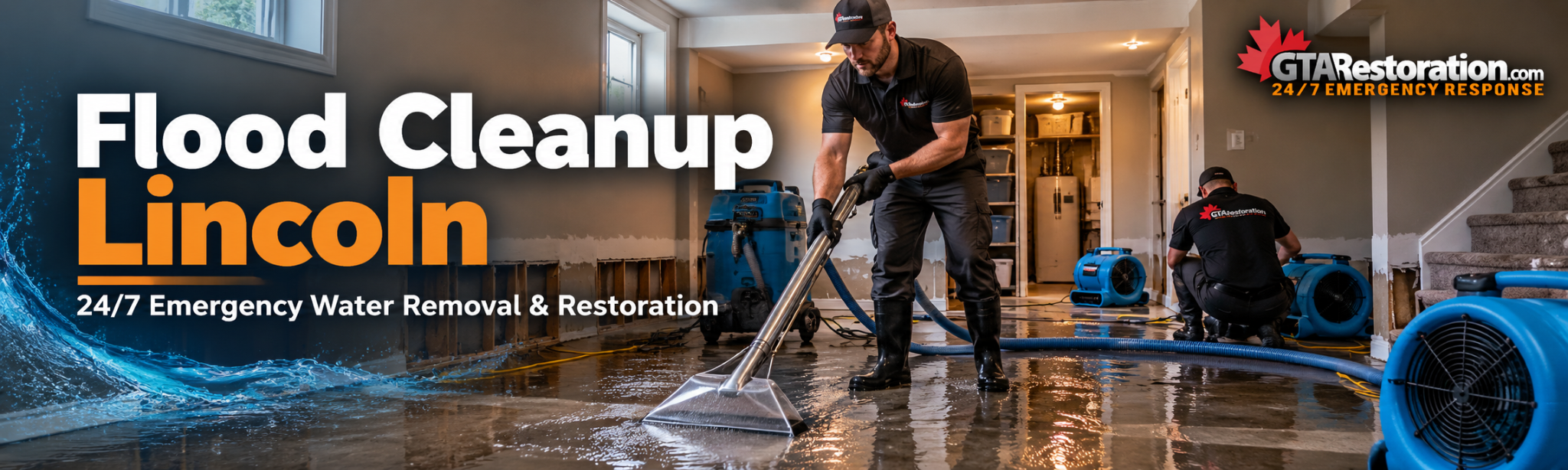
Flooded Basement Cleanup in Lincoln
Basements often contain finished rooms, storage areas, furnaces, electrical equipment and plumbing. Therefore, flooding can affect both building materials and important home systems.
When a basement floods, do not walk into standing water if electrical equipment may be involved. Once the area is safe, document the water level and affected materials before major cleanup begins.
The Town of Lincoln also asks residents to report basement flooding so municipal staff can review the sewer system where appropriate.
Flood Prevention for Lincoln Properties
Keep Catch Basins & Drainage Paths Clear
Leaves, grass and other debris can block drainage routes. For this reason, the Town recommends keeping nearby catch basins and drainage paths clear.
Direct Downspouts Away from the Foundation
Water from the roof should drain away from the building instead of collecting beside the foundation. In addition, maintain eavestroughs and correct drainage problems around the property.
Maintain Sump Pumps & Backwater Protection
Lincoln recommends testing sump pumps regularly and considering backup power where appropriate. The Town also provides information about backwater valves for reducing the risk of sanitary sewer backups.
Review the Town’s flood prevention information for current local recommendations.
Mould After Flood Damage
Water damage does not automatically mean mould remediation is required. However, materials that remain damp can create conditions that support mould growth.
Therefore, prompt extraction, moisture assessment and drying matter after a flood. If visible mould or recurring musty odours appear, visit our mold removal and remediation service.
Residential & Commercial Flood Damage Restoration Lincoln
GTA Restoration provides flood cleanup for houses, rental properties, offices, retail spaces and other commercial buildings. Larger losses may require extra coordination with occupants, managers, contractors and insurers.
In addition, commercial properties may need drying and cleanup planned around business operations. The restoration scope should match the actual water source, affected materials and conditions found at the property.
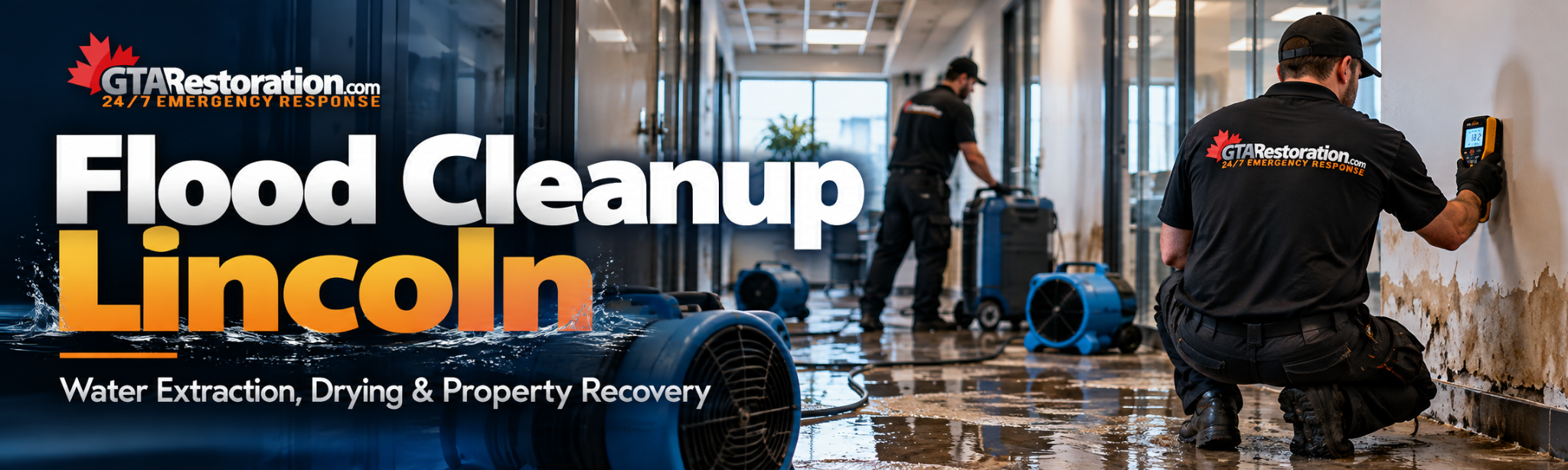
Flood Damage Insurance Documentation
When it is safe, photograph the water source, water level, affected rooms and damaged contents. Also keep plumbing reports, restoration records, estimates and invoices together.
GTA Restoration can document site conditions and work completed. However, your insurance company determines coverage, deductibles, exclusions, limits and claim payments under your individual policy.
Need Flood Cleanup Lincoln?
GTA Restoration provides water extraction, moisture checks, structural drying and flood damage cleanup for homes and businesses in Lincoln.
Avoid flooded areas when electrical, sewage or structural hazards may be present.
Learn More
Water Damage Lincoln | Mold Removal Lincoln | Fire Damage Lincoln | Sewer Backup Lincoln | Asbestos Removal Lincoln
For non-emergencies use our contact form
24/7 Flood Cleanup Lincoln
Flooding can affect floors, drywall, insulation, contents and mechanical areas within a short period of time. GTA Restoration provides Flood Cleanup Lincoln services for homes and businesses that need water removal, moisture assessment, structural drying and restoration support.
Our team responds to basement flooding, burst pipes, plumbing leaks, storm water and other water-damage situations throughout Lincoln.
Emergency Flood Cleanup Lincoln
Standing water can create electrical, contamination and structural hazards. Therefore, check conditions carefully before entering the affected area.
Basement Flood Cleanup
Finished basements may contain flooring, drywall, insulation and stored contents. As a result, water can affect several materials during one flood.
Water Extraction
Professional extraction removes standing water so structural drying can begin. However, visible water removal does not mean every material is dry.
Hidden Moisture Detection
Moisture can remain beneath flooring or inside walls. Therefore, technicians may use moisture meters and other tools to check areas that need further drying.
Structural Drying Lincoln
Air movement and dehumidification can reduce moisture after extraction. Meanwhile, moisture readings help guide drying progress.
Sewer Backup Cleanup
Wastewater requires extra precautions because it may contaminate materials. For this reason, keep people and pets away from sewage-affected areas.
Flood Damage After Heavy Rain
Heavy rain can overwhelm drainage around a property. In addition, poor grading, blocked catch basins or sump pump problems may contribute to basement flooding.
Sump Pump Flooding
A failed sump pump can allow groundwater to rise into a basement. Therefore, regular testing and suitable backup power can help reduce risk.
Residential Flood Restoration Lincoln
Homes may need extraction, drying, damaged-material removal and repair planning after a flood. Each project depends on the source and extent of the water.
Commercial Flood Cleanup Lincoln
Commercial buildings may require extra coordination around staff, tenants and daily operations. As a result, access and drying plans may need to fit the property schedule.
Mould Prevention After Flooding
Persistent moisture can support mould growth. Therefore, proper moisture checks and structural drying remain important after the standing water is gone.
Flood Insurance Documentation
Photos, moisture readings, invoices and restoration records can help document the loss. However, the insurer decides what the policy covers and what it will pay.
Flooded basement or water damage in Lincoln?
Contact GTA Restoration for emergency water extraction, drying and flood restoration support.
Service Areas Across Canada
GTA Restoration serves communities across Canada, including Toronto and the GTA. U.S. locations are opening. Browse our Canadian service areas below, and contact us to confirm services and availability for your address.
Search
- Air Duct Cleaning Montreal
- Ajax Asbestos Removal
- Ajax Mold Removal
- Ajax Water Damage
- Asbestos Removal Calgary
- Asbestos Removal Edmonton
- Asbestos Removal Fort Saskatchewan
- Asbestos Removal Gloucester
- Asbestos Removal Grimsby
- Asbestos Removal Hamilton
- Asbestos Removal Kanata
- Asbestos Removal Kitchener
- Asbestos Removal Laval
- Asbestos Removal Lincoln
- Asbestos Removal Montreal
- Asbestos Removal Nepean
- Asbestos Removal Niagara Falls
- Asbestos Removal Orleans
- Asbestos Removal Ottawa
- Asbestos Removal Sherwood Park
- Asbestos Removal Spruce Grove
- Asbestos Removal St Catharines
- Asbestos Removal St-Albert
- Asbestos Removal Thorold
- Asbestos Testing Hamilton
- Asbestos Testing Montreal
- Asbestos Testing Petersburg
- Aurora Mold Removal
- Aurora Water Damage
- Beaconsfield Asbestos Removal
- Brampton Asbestos Removal
- Brampton Mold Removal
- Brampton Water Damage
- Burlington Asbestos Removal
- Burlington Mold Removal
- Burlington Water Damage
- Burst Pipe Montreal Frozen Pipe
- Burst Pipe Repair Edmonton
- Burst Pipe Repair Ottawa
- Caledon Mold Removal
- Caledon Water Damage
- Calgary Mold Removal
- Calgary Water Damage
- Cambridge Mold Removal
- Cambridge Water Damage
- Clarington Mold Removal
- Concord Mold Removal
- Concord Water Damage
- Cooksville Mold Removal
- Edmonton Water Damage
- Emergency Roofing Vancouver
- Etobicoke Asbestos Removal
- Etobicoke Mold Removal
- Etobicoke Water Damage
- Fire Damage Grimsby
- Fire Damage Lincoln
- Fire Damage Niagara Falls
- Fire Restoration Fort McMurray
- Fire Damage Restoration Thorold
- Fire Damage St Catharines
- Flood Cleanup Grimsby
- Flood Cleanup Lincoln
- Flood Cleanup Niagara Falls
- Flood Cleanup St Catharines
- Flood Cleanup Thorold
- London Mold Removal
- London Water Damage
- Markham Asbestos Removal
- Markham Mold Removal
- Markham Water Damage
- Mississauga Asbestos Testing
- Mississauga Mold Removal
- Mississauga Water Damage
- Mold Inspection Removal Kitchener
- Mold Remediation Montreal
- Mold Removal & Inspection LaSalle
- Mold Removal Anjou
- Mold Removal Boucherville
- Mold Removal Brossard
- Mold Removal Burnaby
- Mold Removal Chambly
- Mold Removal Chateauguay
- Mold Removal Chomedey
- Mold Removal Coquitlam
- Mold Removal Dollard Des Ormeaux
- Mold Removal Dorval
- Mold Removal Edmonton
- Mold Removal Fort Saskatchewan
- Mold Removal Gloucester
- Mold Removal Grimsby
- Mold Removal Hamilton Inspection
- Mold Removal Ile Bizard
- Mold Removal in Osgoode
- Mold Removal Beaconsfield
- Mold Removal Kahnawake
- Mold Removal Kanata
- Mold Removal Kirkland
- Mold Removal Laval
- Mold Removal Lincoln
- Mold Removal Longueuil
- Mold Removal Montreal East
- Mold Removal Mount Royal
- Mold Removal Nepean
- Mold Removal New Westminster
- Mold Removal Niagara Falls
- Mold Removal Orleans
- Mold Removal Ottawa
- Mold Removal Cumberland
- Mold Remediation Hampstead
- Mold Removal Remediation Roxboro
- Mold Removal Richmond BC
- Mold Removal Rideau Lakes
- Mold Removal Rockcliffe Park
- Mold Removal Saint Hubert
- Mold Removal Saint Laurent
- Mold Removal Sherwood Park
- Mold Removal Spruce Grove
- Mold Removal St Catharines
- Mold Removal Ste Dorothee
- Mold Removal St۔ Albert
- Mold Removal Surrey
- Mold Removal Thorold
- Mold Removal Vancouver
- Mold Removal Vanier
- Mold Removal Westmount
- Montreal Biohazard Cleanup
- Montreal Emergency Plumber
- Montreal Fire Restoration
- Montreal Flood Cleanup
- Montreal Odor Removal
- Montreal Roofing Emergency
- Montreal Sewer Backup Cleanup
- Montreal Water Leak Detection
- Montréal Asbestos Removal
- Montréal Emergency Plumbing
- Montréal Mold Removal
- Montréal Pipe Burst Emergency
- Montréal Water Damage
- Newmarket Mold Removal
- Newmarket Water Damage
- North York Mold Removal
- Oakville Mold Removal
- Oakville Water Damage
- Oshawa Mold Removal
- Oshawa Water Damage
- Ottawa Air Duct Cleaning
- Pickering Mold Removal
- Pickering Water Damage
- Red Deer Water Damage
- RedDeer Mold Removal
- Richmond Hill Mold Removal
- Richmond Hill Water Damage
- Roof Repair Lincoln
- Roof Repair Niagara Falls
- Roof Repair St Catharines
- Scarborough Asbestos Removal
- Scarborough Mold Removal
- Scarborough Water Damage
- Sewage Cleanup Edmonton
- Sewer Backup Lincoln
- Sewer Backup Niagara Falls
- Sewer Backup Ottawa
- Sewer Backup St Catharines
- Thornhill Mold Removal
- Toronto & GTA Asbestos Removal
- Toronto & GTA Mold Removal
- Toronto Air Duct Cleaning
- Toronto Water Damage
- Unionville Mold Removal
- Unionville Water Damage
- Vancouver Asbestos Removal
- Vancouver Biohazard Cleanup
- Vancouver Emergency Plumber
- Vancouver Emergency Plumbing
- Vancouver Fire Restoration
- Vancouver Flood Cleanup
- Vancouver Mold Removal
- Vancouver Odor Removal
- Vancouver Pipe Burst Emergency
- Vancouver Sewer Backup Cleanup
- Vancouver Water Damage
- Vancouver Water Leak Detection
- Vaughan Mold Removal
- Vaughan Water Damage
- Vermiculite Removal Ottawa
- Water Damage Grimsby
- Water Damage Kanata
- Water Damage Kitchener
- Water Damage Lincoln
- Water Damage Longueuil
- Water Damage Nepean
- Water Damage Niagara Falls
- Water Damage Orleans
- Water Damage Ottawa
- Water Damage Repair Montreal
- Water Damage Laval Montreal
- Water Damage Restoration Thorold
- Sewage Backup Cleanup Montreal
- Water Damage St Catharines
- Water Damage Vancouver
- Water Flood Damage Repair Hamilton
- Flood Damage Repair Hampstead
- Whitby Water Damage
- Woodbridge Asbestos Removal
- Woodbridge Mold Removal
- Woodbridge Water Damage
- Restoration Equipment Rental
Flood Cleanup Lincoln FAQs
What should I do first when my basement floods?
Stay out of the water if electrical outlets, appliances, wiring or the electrical panel may be affected. Once conditions are safe, document the damage and arrange water removal.
Can water remain after the basement looks dry?
Yes. Moisture may remain beneath flooring, inside wall cavities or in other building materials even after standing water is removed.
What if the flood contains sewage?
Keep people and pets away from sewage-contaminated areas. In addition, avoid unnecessary contact with affected water and materials.
Can a sump pump help prevent basement flooding?
A working sump pump can help manage groundwater. Therefore, test it regularly and consider suitable backup power where needed.
Can flood cleanup records help with insurance?
Photos, moisture readings, estimates and invoices can help document the loss. However, your insurer determines coverage, deductibles, limits and claim payment.
Learn more ↴ 
Latest Articles
Direct Billing & Insurance Claims
Ask your insurer about coverage, deductibles and the records it needs.

In-House Financing Available
Financing up to 24 months. No interest. No money down. Ask us about the terms.
Certifications & Insurance
View our firm certification, technician qualifications and insurance documents.

IICRC Certified Firm
GTA Restoration Inc.
Firm number 199912
Valid through
Business Insurance
GTA Restoration Group Inc.
$5 million general liability per occurrence
$8 million contractors pollution per claim
–
IICRC Technician Qualifications
Tony Sokol T. Lleshi · Registration 214520
Valid through
Water Damage Restoration · Fire & Smoke Damage Restoration · Applied Microbial Remediation · Odor Control · Trauma & Crime Scene
View technician verification (PDF) — opens in a new tabInsurance is subject to policy terms, conditions and exclusions.
 Facebook
 Instagram
 LinkedIn
 X / Twitter
 YouTube