...

Montreal Sewer Backup Cleanup | Sewage Restoration

Montreal Sewer Backup Cleanup

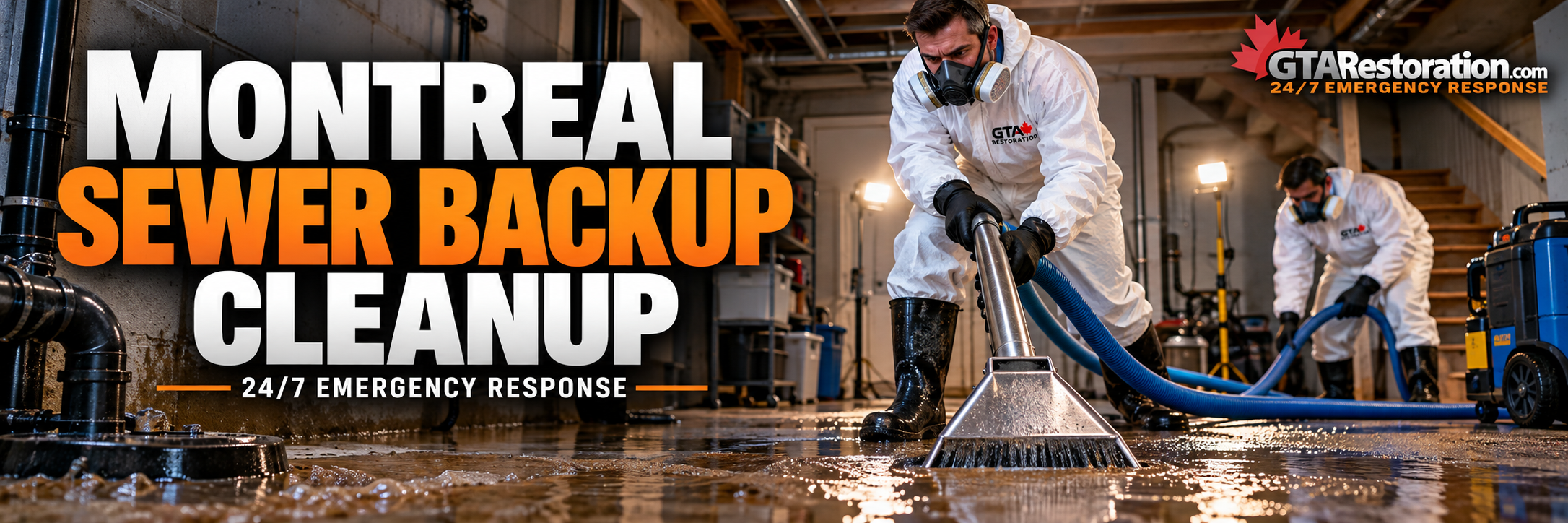
Montreal sewer backup cleanup requires more than removing visible wastewater. Sewage can spread across basement floors, soak drywall and insulation, move under flooring, and damage furniture or stored items. GTA Restoration provides sewage removal, cleaning, drying, and property restoration support for homes and businesses.

A blocked drain, damaged pipe, heavy rain, sewer problem, or failed backflow valve may cause a sewer backup. Therefore, the response should address both the source of the backup and the damage inside the property.

What to Do After a Sewer Backup

Safety comes first when sewage enters a building. Keep children, pets, tenants, and anyone without proper protection away from the affected area.

Next, stop using plumbing fixtures if they make the backup worse. Toilets, sinks, showers, washing machines, and dishwashers may add more water to a blocked drainage system.

Be careful around electricity as well. Stay out of standing water when it reaches outlets, appliances, wiring, or electrical equipment.

For local information about flooding and sewer backups, review the City of Montréal flooding guidance.

Plumber vs. Sewer Backup Cleanup

A plumber and a restoration company handle different parts of the job. First, a plumber finds and repairs the blocked drain, damaged pipe, sewer line, or backflow problem.

The cleanup team deals with the damage inside the property. This work may include sewage extraction, removal of damaged materials, cleaning, drying, odour control, and repairs.

For this reason, many sewer backups require both services. Fixing the drain does not clean dirty building materials. At the same time, cleaning the property without fixing the drain may allow another backup.

Emergency Sewage Extraction

Once the area is safe, crews can use professional equipment to remove standing sewage and wastewater. Fast extraction gives technicians better access to floors, walls, contents, and other wet areas.

However, removing the standing water is only the first step. The cleanup team must inspect wet materials and decide what crews can clean, dry, save, or remove.

Removing Sewage-Damaged Materials

Some materials absorb sewage quickly. Carpet padding, insulation, drywall, particleboard, some flooring, and soft furniture can hold dirty water below the surface.

As a result, crews may remove materials when cleaning cannot restore them. The amount of sewage, length of exposure, type of material, and level of damage all help crews decide what should stay and what should go.

Not every wet material needs disposal. A proper inspection helps the cleanup team choose the right plan for the property.

Cleaning After a Sewer Backup

After crews remove standing sewage and damaged materials, they can clean the remaining suitable surfaces. In addition, the team should inspect nearby areas because dirty water may travel beyond the visible damage.

Crews choose cleaning methods based on the surface and amount of sewage involved. Spraying fragrance or cleaner over dirty materials will not solve the problem when sewage residue remains underneath.

Learn more about our sewage backup cleanup services and how professional cleanup can help after wastewater enters a building.

Structural Drying After Sewage Cleanup

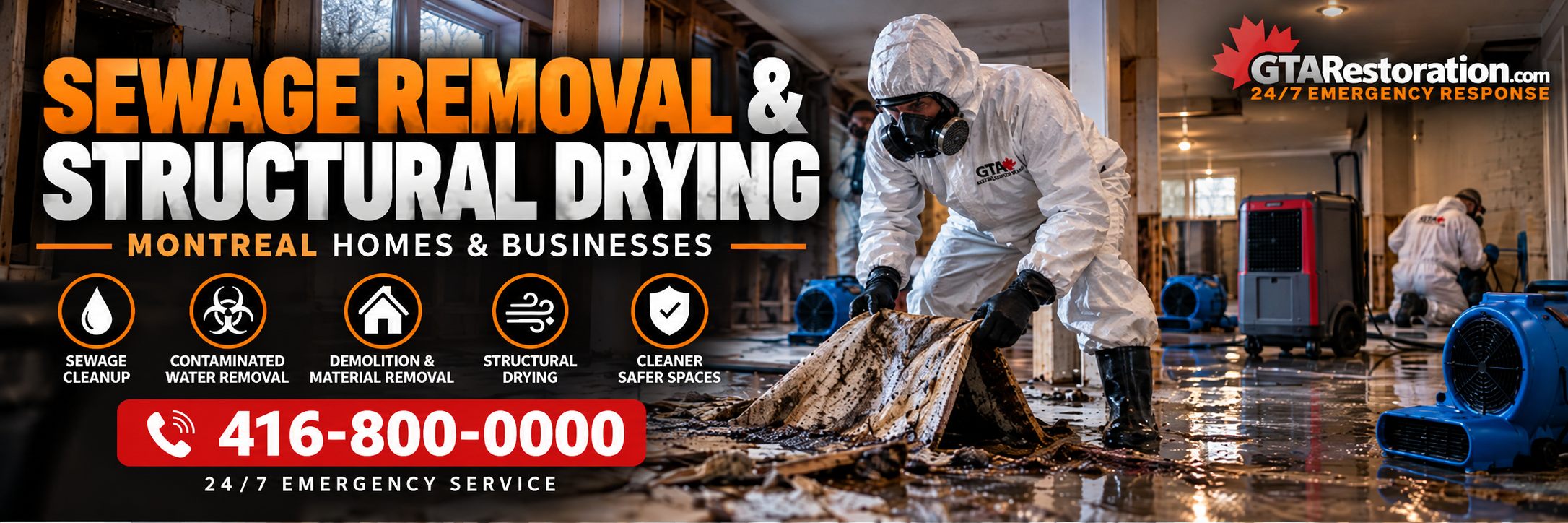
Removing sewage does not mean the building is dry. Water may remain in subfloors, wall framing, drywall edges, cabinets, wood, and other hidden areas.

Therefore, crews may use commercial dehumidifiers, air movers, moisture meters, and other drying equipment after they handle the dirty materials.

Moisture readings help the team follow the drying process. They also help crews find areas that still need more drying.

Hidden Water & Sewage Damage

Sewage does not always stay in the centre of a room. Dirty water can move under flooring, behind baseboards, inside walls, and into nearby spaces.

For example, a basement may look clean after crews remove the standing water, while moisture remains under the floor or behind drywall. A full inspection helps find these hidden areas before repairs begin.

Sewage Odour Removal

A sewage smell may remain when dirty residue, wet materials, or hidden moisture stays inside the property. For this reason, crews should control odours after proper sewage removal, cleaning, and drying.

Simply covering the smell with fragrance does not fix the cause. Crews must find and address the source of the odour first.

Basement Sewer Backup Cleanup

Basements may contain drywall, flooring, insulation, furniture, storage, appliances, and mechanical equipment. A sewer backup can damage several of these areas at the same time.

In addition, water may become trapped under flooring or inside finished walls. The cleanup team should address both visible sewage and hidden areas that wastewater reaches.

Montreal Condo Sewer Backups

A sewer backup in a condo or apartment building can involve shared drains, common areas, nearby units, tenants, and property managers.

As a result, these jobs often require good communication between plumbers, cleanup crews, building managers, residents, and insurance contacts.

The cleanup team should follow the path of the sewage instead of checking only the unit where the problem first appeared.

Commercial Sewage Cleanup

Businesses may need extra planning during sewer backup cleanup. Offices, stores, restaurants, warehouses, and other buildings each have different layouts and operating needs.

Depending on the property, the cleanup plan may include controlled access, after-hours work, drying equipment, site records, and work with building management.

Backflow Valves & Sewer Backup Prevention

A properly installed backflow valve can help reduce the chance of sewage flowing back into a property. Property owners should keep the valve accessible and arrange regular maintenance when needed.

In addition, a plumber can inspect the drainage system and determine whether the property has suitable backflow protection.

For more information, read the City of Montréal guidance about backflow stop valves.

Mold Risk After a Sewer Backup

Sewage is the first concern, but leftover moisture can create another problem. Wet drywall, wood, flooring, insulation, and other materials may support mould growth when they stay damp.

Therefore, crews should dry the property and check moisture levels after sewage cleanup. If mould or a musty smell appears, the property may need another inspection.

Our mold removal and remediation services provide additional support when moisture leads to mould concerns.

Insurance & Damage Records

Photos, moisture readings, equipment records, damaged-material lists, and site notes can create a clear record of the loss and cleanup work.

However, the restoration company does not decide what insurance will cover. Your insurer reviews the cause of the loss, your policy, coverage limits, and deductible.

Montreal Sewer Backup Cleanup Services

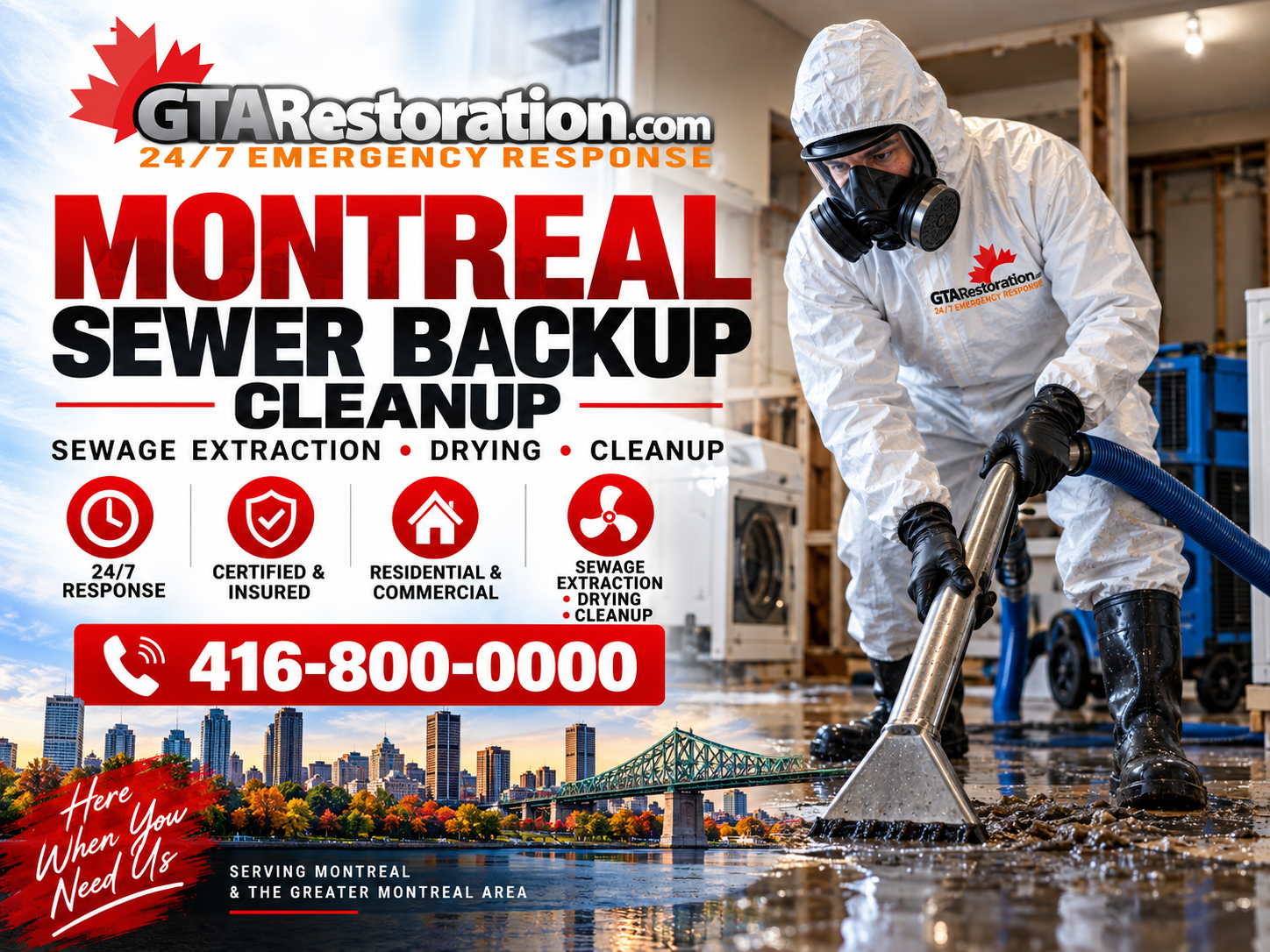
GTA Restoration provides Montreal sewer backup cleanup for basements, homes, condos, rental properties, businesses, and managed buildings. Our services may include sewage extraction, damaged-material removal, cleaning, drying, moisture checks, odour control, and restoration planning.

If sewage enters your property, keep people away from the dirty area and arrange professional help. Most importantly, address both the cause of the sewer backup and the property damage it creates.


Sewer Backup Emergency in Montreal?

Call GTA Restoration Today!

Learn more ↴

Montreal Fire Restoration | Water Damage Sewage Cleanup Disinfection Montreal | Montreal Flood Cleanup | Mold Removal & Remediation | Sewer Backup Cleanup vs Plumbing | Montreal Emergency Plumber | Mold Remediation Timeline: How Long It Takes

Emergency? Immediate response 24/7

416.800.0000 416.800.0000

For non-emergencies use our contact form

Sewer Backup Cleanup & Property Recovery in Montreal

A sewer backup can damage more than the visible floor. Dirty water may reach drywall, insulation, flooring, furniture, cabinets, stored items, and hidden parts of the building. Therefore, a proper cleanup should address both sewage and leftover moisture.

Sewage Water Removal

Professional extraction equipment helps crews remove standing sewage from the affected area. Afterward, the team can inspect floors, walls, and other wet materials to choose the next steps.

Checking Damaged Materials

Some materials absorb dirty water very quickly. For this reason, crews check drywall, insulation, carpet padding, flooring, wood products, and other materials to decide what they can clean or dry and what they should remove.

Cleaning Affected Areas

Once crews remove the standing sewage and damaged materials, they can clean the remaining suitable surfaces. In addition, the team should inspect nearby spaces when wastewater travels beyond the visible damage.

Drying the Property

Removing sewage does not automatically dry a building. Water may remain inside walls, floors, cabinets, wood, and other materials, so crews may use drying equipment after handling the dirty materials.

Checking Moisture Levels

Moisture readings help the cleanup team follow drying progress. As a result, crews can find areas that still need attention instead of judging dryness only by appearance.

Basement Sewage Cleanup

Finished basements often contain flooring, drywall, insulation, furniture, appliances, and stored belongings. Therefore, crews should inspect both visible sewage damage and hidden areas under or behind finished materials.

Condo & Commercial Cleanup

Condos, apartments, and businesses may have shared drains, common areas, tenants, staff, or nearby units. For this reason, good communication and access planning can make the cleanup easier to manage.

Removing Sewage Odours

Bad smells may continue when dirty residue or wet materials remain in the building. Therefore, crews should remove the source through proper cleaning and drying instead of simply covering the smell.

Reducing Future Sewer Backup Risk

Backflow valves, drain maintenance, and plumbing checks can help reduce future sewer backup problems. In addition, property owners should keep backflow devices accessible for inspection and maintenance.

Montreal Sewer Backup Cleanup

GTA Restoration provides Montreal sewer backup cleanup for homes, basements, condos, rental properties, businesses, and managed buildings. Our team can inspect the affected areas and prepare a cleanup and drying plan based on the damage we find.


Need Sewer Backup Cleanup in Montreal?

Call GTA Restoration Today!


GTA Service Centre


Montreal Sewer Backup FAQs

What should I do first after a sewer backup?

Keep people and pets away from the dirty water, stop using plumbing that may worsen the backup, and arrange professional help.

Who repairs the cause of the sewer backup?

A plumber usually repairs the drain or sewer problem, while the cleanup team handles the sewage, wet materials, cleaning, and drying.

Can sewage travel under finished flooring?

Dirty water can move under flooring, behind baseboards, inside walls, and into nearby areas even when the surface looks dry.

Does every sewer backup need the same cleanup?

Each job is different because the cleanup depends on the amount of sewage, how long materials stay wet, and where the wastewater travels.

Why is drying needed after sewage removal?

Water can remain inside floors, walls, cabinets, wood, and other materials even after crews remove the visible sewage.

How do crews find hidden moisture?

Restoration crews can use moisture meters and other inspection tools to locate wet materials that need more drying or further checks.

When can mould become a concern?

Mould can become a concern when building materials stay damp after the backup, which makes proper drying and moisture checks important.

Does GTA Restoration provide sewer backup cleanup in Montreal?

GTA Restoration provides Montreal sewer backup cleanup for homes, basements, condos, rental properties, businesses, and managed buildings.


We Work Direct with All Insurance Companies

Wᴇ ᴀʀᴇ ᴄᴏᴍᴍɪᴛᴛᴇᴅ ᴏɴ ᴡᴏʀᴋɪɴɢ ᴡɪᴛʜ ᴇᴠᴇʀʏ ɪɴsᴜʀᴀɴᴄᴇ ᴄᴏᴍᴘᴀɴʏ ᴀᴄʀᴏss Cᴀɴᴀᴅᴀ & USA.


In House Financing Available

In House Financing Available

FREE Financing Up To 24 Months NO INTEREST NO MONEY DOWN


follow us on  LinkedIn Instagram Twitter Facebook YouTube


Our Clients

Our Vendor Clients


Affiliates

fully certified


Emergency? Immediate response 24/7

416.800.0000

416.800.0000

We cover all GTA 24/7.

Head Office:
250 Consumers Rd,
#10
Toronto, ON
M2J 4V6,
Open 24 hours

Downtown Office:
1 Toronto St,
#10
Toronto, ON
M5W 1A1,
Open 24 hours

For non-emergencies use our contact form


    Not sure what you need?

    Call us today to find the best product for your situation.

    416-800-0000 416-800-0000

    Head Office:
    101 Lebovic Ave,
    Unit #10
    Scarborough,
    ON, M1L 4T7
    Hours
    24-Hours Open

    Downtown Office:
    250 Yonge Street,
    Unit #1A
    Toronto,
    ON, M5B 2L7
    Hours
    24-Hours Open

    Montreal Sewer Backup Cleanup

    Get a quote today