Montreal water damage can result from burst pipes, plumbing leaks, flooded basements, sewer backups, appliance failures, roof leaks, heavy rain, or other water intrusion. Even when the visible water disappears, moisture can remain inside drywall, flooring, insulation, cabinets, ceilings, and other building materials.
GTA Restoration provides water damage cleanup and restoration support for homes, condos, rental properties, commercial spaces, and managed buildings throughout Montreal. Depending on the loss, services may include water extraction, moisture inspection, damaged-material assessment, structural drying, cleaning, and restoration planning.
Common Causes of Water Damage in Montreal
Water damage can begin in many different ways. For example, a burst pipe may release water quickly, while a slow plumbing leak may remain hidden behind a wall for days or weeks.
Other common causes include basement flooding, overflowing fixtures, leaking water heaters, appliance failures, roof leaks, drain problems, and sewer backups.
Because the source matters, the cleanup plan should reflect the type of water, how long materials stayed wet, and where the moisture travelled.
What to Do After Water Damage
Safety comes first. Avoid standing water when electrical outlets, wiring, appliances, structural damage, sewage, or other hazards may be present.
Next, stop the water source when it is safe to do so. Take photos or video of visible damage before cleanup changes the conditions, and move unaffected belongings away from wet areas when possible.
Visible water shows only part of the problem. Moisture can move underneath flooring, behind drywall, through ceilings, around cabinets, and into nearby rooms.
For this reason, a proper inspection should follow the path of the water rather than focusing only on the first wet area.
Technicians can use moisture meters and other inspection tools to locate materials that need extraction, drying, or further assessment.
Emergency Water Extraction
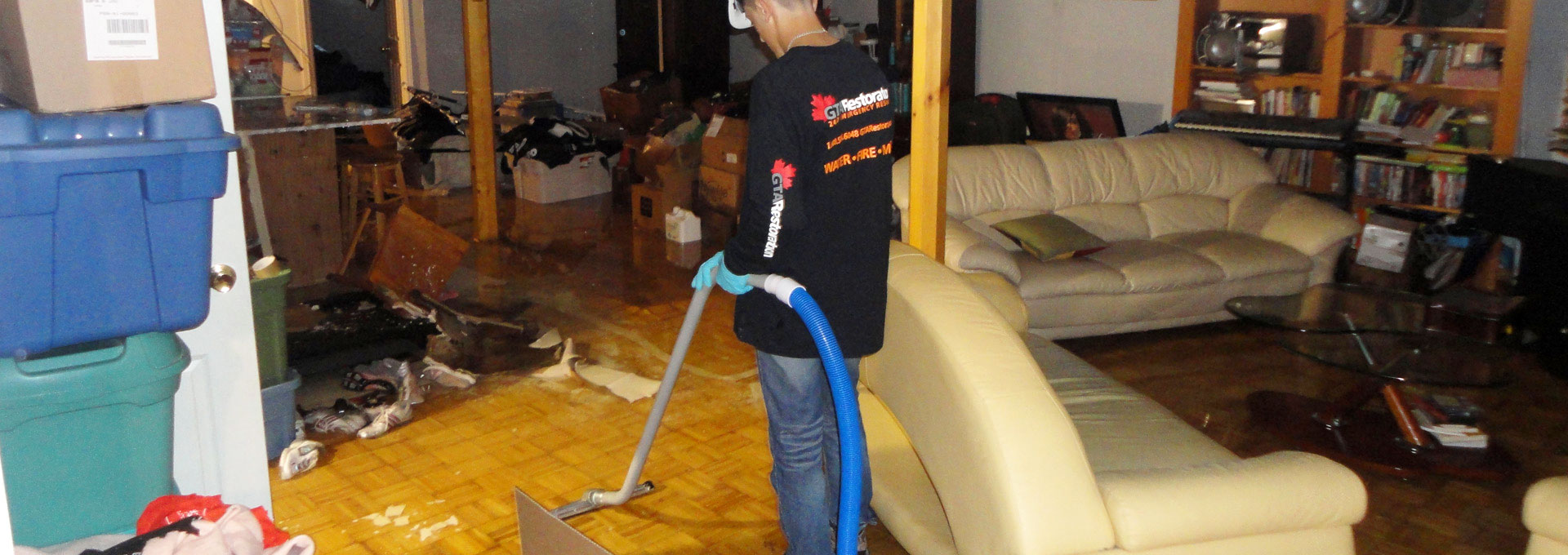
Professional extraction equipment can remove standing water from floors, basements, carpets, and other accessible areas.
However, extraction does not mean the property is fully dry. Water may remain inside drywall, insulation, flooring, wood, cabinets, and other materials after the visible water is gone.
After crews remove standing water and address damaged materials, structural drying can begin. Depending on the conditions, the setup may include air movers, commercial dehumidifiers, and other drying equipment.
During this process, moisture readings help technicians track drying progress and adjust equipment as conditions change.
Water can travel farther than many property owners expect. It may remain under flooring, behind baseboards, inside wall cavities, above ceilings, or around built-in cabinets.
As a result, a room may appear dry while surrounding materials still contain moisture.
Moisture readings help identify these areas before repairs begin.
Burst Pipe Water Damage
A burst or frozen pipe can release a large amount of water in a short time. Plumbing repairs stop the source, but water that already escaped may continue damaging nearby materials.
Therefore, burst-pipe cleanup may also require extraction, moisture checks, material assessment, and structural drying.
Basements often contain drywall, insulation, flooring, furniture, appliances, storage, and mechanical equipment. Floodwater can also become trapped behind finished walls or beneath flooring.
For this reason, basement cleanup should address both visible water and hidden moisture.
The City of Montréal also warns that pumping water from a flooded basement too quickly can create foundation concerns in certain flood conditions, so the situation should be assessed before aggressive pumping begins. citeturn579060search0
Sewer Backup Water Damage
Sewer backups create different cleanup concerns because the water may contain sewage or other contamination.
When wastewater is involved, avoid unnecessary contact and keep children, pets, tenants, and unprotected occupants away from the affected area.
Different materials respond differently to water. Drywall may wick moisture upward, insulation can stay wet inside cavities, and flooring may trap water underneath.
Therefore, crews should assess the condition of each material rather than automatically removing everything.
Some materials may dry successfully, while others may require removal when damage, contamination, or prolonged wetting makes restoration impractical.
Cleaning After Water Damage
After extraction and material assessment, crews can clean suitable surfaces based on the source and condition of the water.
For clean-water losses, the process may differ from floodwater or sewage contamination. The cleanup method should match the actual conditions found at the property.
Mould Risk After Water Damage
Wet building materials can support mould growth when moisture remains uncontrolled. Prompt water removal and drying can help reduce that risk.
Therefore, moisture checks are important after significant water damage rather than relying only on surface appearance.
If mould is already visible or suspected, our mould removal services provide additional information.
Water Damage in Montreal Condos
Water can move between condo units through ceilings, walls, floors, service openings, and common areas.
Consequently, a leak that begins in one unit may affect neighbouring or lower units before anyone sees the full extent of the damage.
Condo water damage may require coordination between residents, property management, plumbers, restoration teams, and other affected parties.
Commercial Water Damage
Water damage in offices, retail spaces, warehouses, restaurants, and other commercial properties can interrupt operations and affect equipment, inventory, staff, tenants, or customers.
For this reason, the restoration plan should identify priority areas while also checking the full extent of the moisture.
Larger losses may require additional extraction equipment, drying equipment, monitoring, and access planning.
Documenting Water Damage
Photos, videos, moisture readings, affected-material records, equipment logs, invoices, and restoration notes can help document the condition of the property and work completed.
In addition, property owners should keep records of plumbing repairs, emergency work, and other expenses connected to the loss.
The insurer determines coverage according to the policy and circumstances of the loss. A restoration contractor can document its work but does not decide whether an insurance company will approve a claim.
When Montreal 311 May Be Needed
Certain water problems involve municipal infrastructure rather than private plumbing. Montréal advises contacting 311 for significant water leakage, water infiltration inside a home, or certain issues involving the municipal water service. citeturn579060search5
For private plumbing, property owners generally need a plumbing professional. Determining where the problem starts can help identify who should handle the repair.
Montreal Water Damage Restoration
GTA Restoration provides Montreal water damage cleanup and restoration support for homes, condos, rental properties, businesses, and managed buildings. Depending on the loss, services may include water extraction, moisture inspection, damaged-material assessment, structural drying, cleaning, and restoration planning.
Because every water loss is different, the source, affected materials, amount of water, contamination, and exposure time all influence the restoration plan.
Water damage can affect floors, walls, ceilings, insulation, cabinets, furniture, and hidden building areas. Therefore, a proper response should address both visible water and moisture that remains inside materials.
Water Damage Assessment
A detailed inspection helps crews identify where water travelled and which materials became wet. Afterward, the team can plan extraction, drying, cleaning, and material removal when needed.
Standing Water Removal
Professional extraction equipment can remove accessible water from floors, basements, carpets, and other areas. However, the property may still contain moisture after visible water disappears.
Hidden Moisture Checks
Water can move under flooring, behind walls, through ceilings, and around cabinets. For this reason, moisture readings help technicians locate wet areas that need further attention.
Structural Drying
Air movers, dehumidifiers, and other equipment can help dry suitable building materials. During drying, technicians can monitor moisture and adjust equipment as conditions change.
Wet Building Materials
Drywall, insulation, flooring, wood, and other materials react differently to water. Therefore, crews assess their condition before deciding what can remain for drying and what may require removal.
Basement Water Damage
Basement flooding may affect flooring, drywall, insulation, furniture, appliances, and stored belongings. As a result, crews should inspect both visible water and hidden areas reached by moisture.
Plumbing & Sewer Losses
Burst pipes, leaks, drain problems, and sewer backups create different cleanup needs. For this reason, the restoration plan should reflect the source and condition of the water.
Condo & Commercial Water Damage
Water can spread between units, floors, work areas, and common spaces in larger buildings. Consequently, these losses may require additional coordination, equipment, and access planning.
Mould Risk After Water Damage
Wet materials can support mould growth when moisture remains uncontrolled. Therefore, prompt drying and moisture checks are important after significant water damage.
Montreal Water Damage
GTA Restoration provides Montreal water damage cleanup for homes, condos, rental properties, businesses, and managed buildings. Our team can inspect the affected areas and prepare a water extraction and drying plan based on the conditions found.
GTA Restoration serves communities across Canada, including Toronto and the GTA. U.S. locations are opening. Browse our Canadian service areas below, and contact us to confirm services and availability for your address.
Stop the water source when it is safe, avoid electrical hazards, document visible damage, and arrange an inspection for cleanup and drying.
How can water damage remain hidden?
Moisture can travel underneath flooring, behind walls, inside ceilings, around cabinets, and into other areas beyond the visible water.
Can standing water removal fully dry a property?
Building materials may continue holding moisture after visible water disappears, so structural drying and moisture checks may still be necessary.
Why might wet materials need removal?
Some drywall, insulation, flooring, or other absorbent materials may become too damaged or contaminated for practical cleaning and drying.
When can mould become a concern?
Mould risk increases when materials remain damp, which makes prompt water removal, drying, and moisture monitoring important.
Does water damage cleanup include moisture monitoring?
Restoration technicians can use moisture readings to locate wet materials and follow changes during the structural drying process.
Who provides water damage cleanup in Montreal?
GTA Restoration provides Montreal water damage cleanup and restoration support for homes, condos, rental properties, businesses, and managed buildings.
Direct Billing & Insurance Claims
Ask your insurer about coverage, deductibles and the records it needs.
In-House Financing Available
Financing up to 24 months. No interest. No money down. Ask us about the terms.




 Facebook
  Instagram
  LinkedIn
  X / Twitter
  YouTube