...
Mold Removal and Mould Remediation Toronto - GTA Restoration

Emergency? 24-Hrs

416.800.0000
  • Home Restore
  • Emergency Services
    • Emergency Plumbers 24/7
    • Water Damage Restoration
    • Flooded Basement
    • Mold Remediation Toronto
    • Sewer Backup Remediation
    • Fire & Smoke Restoration
    • Odour Removal Toronto
    • Biohazard Cleanup
    • Emergency Roofing Repair
    • Water Leak and Detection
    • Condominium Restoration
    • Basement WaterProofing
    • Property Inspection Toronto
    • Sanitizing and Disinfection
    • Insurance Claim Appraisers
    • Equipment for Rent Toronto
    • Privacy Policy & Service Terms
  • Commercial Restoration
  • Blog
  • Our Team
  • Contact
30 January 2022 - Categories: GTA Commercial Restoration GTA Restoration Articles GTA Restoration Clean Locations GTA Restoration Equipment for Rent GTA Restoration Services Toronto

How To Deal with Fire and Smoke Damage


Disaster Restoration Emergency Plumbing Service Blog Icon

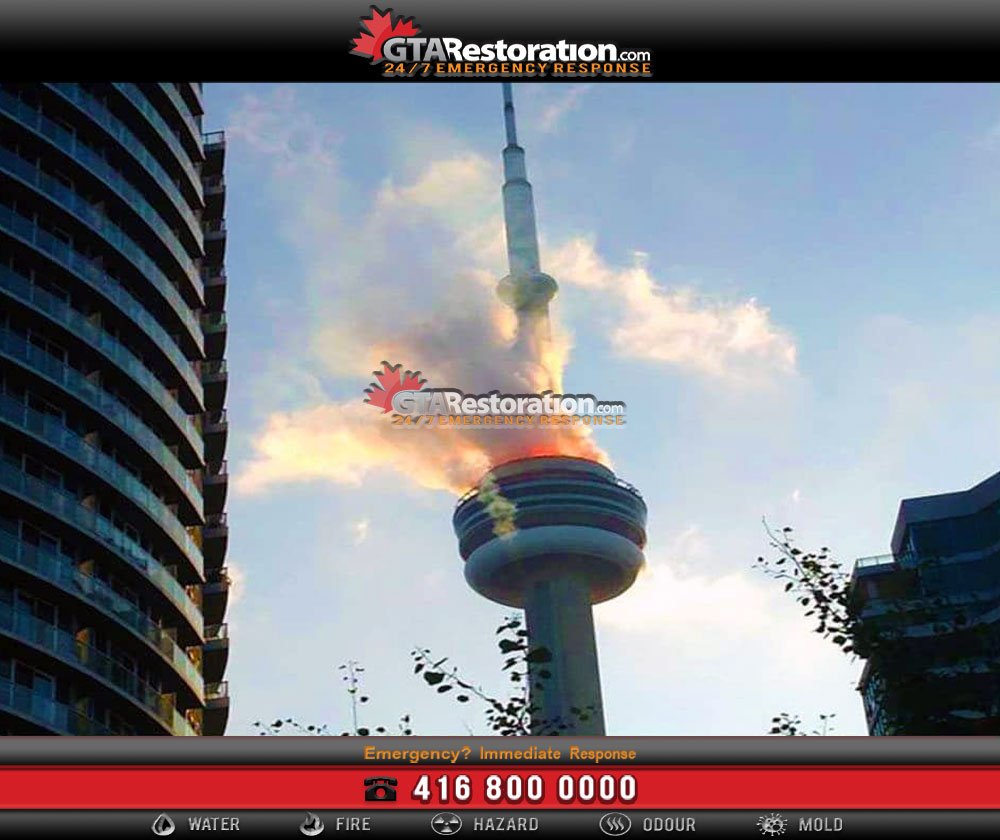
How to deal with fire and smoke damage including soot cleanup and restoration

How To Deal with Fire and Smoke Damage

Knowing how to deal with fire and smoke damage starts with safety. Even after firefighters put out the flames, smoke, soot, damaged materials and water from firefighting can remain throughout the property. Therefore, do not enter a fire-damaged home or business until fire officials confirm that it is safe.

Once you can enter, focus on documenting the damage and preventing further loss. Smoke often travels well beyond the room where the fire started. In addition, water may soak flooring, drywall, ceilings, insulation and personal belongings. A proper inspection can help identify these less obvious areas before cleanup begins.

1. Make Sure the Property Is Safe

First, follow all instructions from the fire department and other emergency officials. A property can look stable while electrical hazards, weakened ceilings or damaged building materials remain inside.

Also, avoid turning on electrical equipment or utilities until a qualified professional confirms that they are safe. If firefighting water reached outlets, wiring or equipment, extra care is needed.

2. Document the Fire and Smoke Damage

When conditions are safe, take clear photos and videos of each affected room. Start with wide views, then record damaged walls, ceilings, flooring, furniture and personal belongings.

In addition, keep receipts, estimates and records related to emergency work and repairs. Good documentation can make it easier to explain the loss to your insurance company.

3. Protect the Property from More Damage

Fire can leave broken windows, damaged doors or openings in roofs and walls. As a result, rain, cold weather, animals or unauthorized entry may cause further damage.

Temporary board-up, roof covering or other emergency protection may be required. However, do not enter an unsafe area simply to secure it yourself.

Avoid Aggressive Cleaning Before an Assessment

It can be tempting to wipe soot from walls immediately. However, using the wrong cleaner or method can spread residue or push it deeper into porous materials. Instead, identify the type and extent of smoke damage before starting major cleaning.

Fire and Smoke Damage Cleanup Process

Remove Water from Firefighting

Fire losses often include water damage. Sprinklers and fire hoses can leave drywall, flooring, insulation, cabinets and contents wet. Therefore, water extraction and structural drying may need to begin early.

Moisture meters can help find water that has travelled beneath flooring or inside walls. Then air movers, dehumidifiers and other drying equipment can be placed where needed.

Clean Soot and Smoke Residue

Soot can behave differently depending on what burned. For example, a cooking fire may leave a different residue from a fire involving plastics, electronics, furniture or building materials.

Because of these differences, walls, ceilings, glass, metal, wood and fabrics may each need a different cleaning method. Our guide to smoke damage cleaning products explains why one cleaner is not suitable for every type of smoke residue.

Remove Smoke Odours at the Source

Smoke smell can remain even after visible soot disappears. The reason is simple: smoke residue may settle inside drywall, cabinets, furniture, insulation and other porous materials.

Therefore, air fresheners alone rarely solve a serious smoke problem. Professional odour removal starts by finding and cleaning the source. After that, additional deodorizing or air treatment may help with remaining odours.

Check Furniture and Personal Belongings

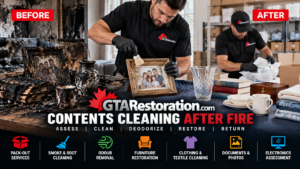
Do not automatically throw away everything exposed to smoke. Some furniture, clothing, documents and other contents may respond well to professional cleaning.

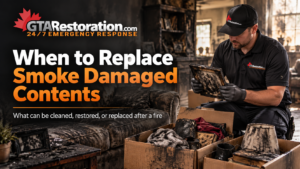
On the other hand, heavy soot, heat damage, water damage or deep smoke odour may make some belongings difficult to restore. Before disposing of valuable items, photograph them and check your insurer’s requirements. You can also review our guide on when to replace smoke damaged contents.

For additional safety guidance, the Canadian Red Cross home fire guide recommends waiting for official approval before re-entering a fire-damaged property, using protective gear during cleanup and keeping records of damaged belongings and expenses.

Inspect Heating and Ventilation Systems

Smoke can travel through vents and HVAC pathways into rooms that never had visible flames. Consequently, filters, vents and accessible system components may need inspection before normal use resumes.

If smoke affected several areas, a professional assessment can help determine whether additional cleaning is required.

What To Do After Fire and Smoke Damage

Contact Your Insurance Company

Contact your insurer as soon as practical and ask what information they need. Since policies differ, your insurer should confirm coverage for emergency cleanup, damaged contents, temporary repairs and reconstruction.

Meanwhile, keep photos, estimates, invoices and other records in one place. This can make the claims process easier to follow.

Arrange a Complete Damage Inspection

Understanding how to deal with fire and smoke damage means looking beyond visible burn marks. A complete inspection should consider smoke spread, soot, odours, water damage, affected contents and damaged building materials.

For example, flames may remain in one room while smoke reaches hallways, bedrooms and closets. Likewise, firefighting water may travel beneath flooring or into wall cavities.

Begin Restoration in the Right Order

Emergency work usually comes before cosmetic repairs. First, the property should be made safe. Next, crews can address standing water, wet materials, soot and smoke contamination. After cleanup and drying, repair work can move forward.

Depending on the loss, repairs may involve drywall, insulation, paint, flooring, trim, cabinets and other finishes. Larger fires may require more extensive reconstruction.

The length of the project also depends on the extent of the loss. Our fire damage restoration timeline explains how emergency mitigation, cleaning, drying and repairs can affect the overall schedule.

When Professional Fire Restoration Is Needed

A small and contained smoke incident may only require limited cleaning. However, professional help becomes much more important when soot affects several rooms, smoke enters porous materials, water damages the structure or the fire causes physical damage.

Professional fire and smoke damage restoration can include damage assessment, water extraction, structural drying, soot cleaning, contents handling, odour treatment and repair preparation. GTA Restoration provides these services for homes, condos, businesses and other properties throughout Toronto and the GTA.

Ultimately, learning how to deal with fire and smoke damage comes down to following the correct order. Start with safety, document the loss, address water and soot, clean smoke contamination and deal with odours at their source. Then repairs can begin after the affected areas have been properly assessed and cleaned.

If you are unsure how to deal with fire and smoke damage after a larger property fire, professional assessment can help identify damage that may not be obvious from the surface.


Need Help With Fire and Smoke Damage?

GTA Restoration provides fire and smoke cleanup, soot removal, odour treatment, water extraction and restoration support throughout Toronto and the GTA.

Recent fire or smoke damage? Get help before soot, moisture and odours spread farther.

Call Us: 416-800-0000

Learn More

Fire & Smoke Restoration | Restoration Services for Water, Fire, Mold & Property Damage | Toronto Fire Restoration | Montreal Fire Restoration
Share this... Spread the word!


Tags: Fire Damage Toronto, Fire Restoration, Odor Removal Toronto, Smoke Damage, Smoke Damage Toronto, Smoke Remediation, Soot Cleanup,

☛ ☛ Related Restoration Articles You May Also Like!

The Transformation: What Happens Before and After Fire Restoration with GTA Restoration
Office Fire Restoration Example – Cleanup, Drying & Repairs
The Importance of Hiring a Fire Damage Restoration Company
Fire Damage Restoration Professionals Should Clean Smoke Damage

Emergency? Immediate response 24/7

416.800.0000 416.800.0000

For non-emergencies use our contact form

Start With Fire Safety

Do not enter a fire-damaged property until emergency officials confirm that it is safe. Hidden electrical, structural and smoke-related hazards may remain even after the flames are out.

Document the Damage

Once access is allowed, photograph affected rooms, surfaces and belongings. In addition, keep receipts and records related to emergency work, temporary accommodation and repairs.

Inspect Smoke Beyond the Fire Area

Smoke can move through doors, hallways, wall openings and HVAC pathways. Therefore, rooms without visible fire damage may still require inspection and cleaning.

Remove Firefighting Water

Water from hoses or sprinklers can affect flooring, drywall, ceilings and insulation. Early extraction and drying can help limit additional damage to wet building materials.

Use the Correct Soot Cleaning Method

Different fires create different smoke residues. As a result, one cleaning product or method may not work safely on every surface. Testing the surface first can help avoid smearing or permanent staining.

Address Smoke Odours at the Source

Odour can remain inside porous materials after visible soot is removed. Therefore, successful deodorizing starts with cleaning contaminated surfaces and removing materials that cannot be restored.

Check Furniture and Contents

Some belongings can be professionally cleaned, while others may need replacement. Document valuable or badly damaged contents before disposal and check the insurer’s requirements first.

Inspect Hidden Areas

Smoke, soot and water may reach areas behind walls, above ceilings or beneath flooring. A complete inspection helps identify these areas before repair work begins.

Keep Insurance Records

Photos, estimates, invoices and work records can help document the loss. However, your insurance provider determines coverage based on the policy and cause of damage.

Complete Repairs After Cleanup

Once soot, odour and moisture concerns have been addressed, repair work can begin. Depending on the damage, restoration may include drywall, paint, insulation, flooring, trim or cabinetry.

Professional Fire and Smoke Restoration

GTA Restoration provides fire and smoke damage cleanup for homes, condos and commercial properties. Services may include soot cleaning, odour control, water extraction, structural drying, contents assessment and restoration support.


Concerned About Fire, Soot or Smoke Damage?

Get professional help assessing smoke, soot, odours and water damage before cleanup and repairs move forward.

Call Us: 416-800-0000


Nationwide, Local Pricing

GTA Restoration offers local flood & water damage repair, mold removal/remediation, asbestos removal/abatement, fire/smoke damage repair services and much more.

Search

  • Ajax Asbestos Removal
  • Ajax Mold Removal
  • Ajax Water Damage
  • Anjou Mold Removal
  • Aurora Mold Removal
  • Aurora Water Damage
  • Beaconsfield Asbestos Removal
  • Beaconsfield Mold Removal
  • Boucherville Mold Removal
  • Brampton Asbestos Removal
  • Brampton Asbestos Removal
  • Brampton Mold Removal
  • Brampton Water Damage
  • Brossard Mold Removal
  • Burlington Asbestos Removal
  • Burlington Mold Removal
  • Burlington Water Damage
  • Burnaby Mold Removal
  • Burst Frozen Pipe Edmonton
  • Caledon Mold Removal
  • Caledon Water Damage
  • Calgary Asbestos Removal
  • Calgary Mold Removal
  • Calgary Water Damage
  • Cambridge Mold Removal
  • Cambridge Water Damage
  • Chambly Mold Removal
  • Chateauguay Mold Removal
  • Chomedey Mold Removal
  • Clarington Mold Removal
  • Concord Mold Removal
  • Concord Water Damage
  • Mississauga Mold Removal
  • Coquitlam Mold Removal
  • Cumberland Mold Removal
  • Dollard-des-Ormeaux Mold Removal
  • Dorval Mold Removal
  • Edmonton Asbestos Removal
  • Edmonton Mold Removal
  • Edmonton Water Damage
  • Etobicoke Asbestos Removal
  • Etobicoke Mold Removal
  • Etobicoke Water Damage
  • McMurray Fire Damage Services
  • Saskatchewan Asbestos Removal
  • Saskatchewan Mold Removal
  • Frozen Burst Pipe Repair Montreal
  • Frozen Burst Pipe Repair Ottawa
  • Gloucester Asbestos Removal
  • Gloucester Mold Removal
  • Hamilton Asbestos Removal
  • Hamilton Asbestos Testing
  • Hamilton Mold Removal
  • Hamilton Water Damage
  • Hampstead Mold Removal
  • Hampstead Water & Flood Damage
  • L'île-Bizard Mold Removal
  • Kahnawake Mold Removal
  • Kanata Asbestos Removal
  • Kanata Mold Removal
  • Kanata Water Damage
  • Kirkland Mold Removal
  • Kitchener Asbestos Removal
  • Kitchener Mold Removal
  • Kitchener Water Damage
  • Lasalle Mold Removal
  • Laval Asbestos Removal
  • Laval Mold Removal
  • Laval Water Damage
  • London Mold Removal
  • London Water Damage
  • Longueuil Mold Removal
  • Longueuil Water Damage
  • Markham Asbestos Removal
  • Markham Mold Removal
  • Markham Water Damage
  • Mississauga Asbestos Testing
  • Mississauga Mold Removal
  • Mississauga Water Damage
  • Montreal Air Duct Cleaning
  • Montreal Asbestos Removal
  • Montreal Asbestos Testing
  • Montreal East Mold Removal
  • Montreal Mold Removal
  • Montreal Water Damage
  • Mount-Royal Mold Removal
  • Nepean Asbestos Removal
  • Nepean Mold Removal
  • Nepean Water Damage
  • New Market Water Damage
  • New Westminster Mold Removal
  • Newmarket Mold Removal
  • North York Mold Removal
  • Oakville Mold Removal
  • Oakville Water Damage
  • Orleans Asbestos Removal
  • Orleans Mold Removal
  • Orleans Water Damage
  • Osgoode Mold Removal
  • Oshawa Mold Removal
  • Oshawa Water Damage
  • Ottawa Air Duct Cleaning
  • Ottawa Asbestos Removal
  • Ottawa Mold Removal
  • Ottawa Vermiculite Removal
  • Ottawa Water Damage
  • Pickering Mold Removal
  • Pickering Water Damage
  • Red Deer Mold Removal
  • Red Deer Water Damage
  • Richmond Hill Mold Removal
  • Richmond Hill Water Damage
  • Richmond Mold Removal
  • Rideau Lakes Mold Removal
  • Rockcliffe Park Mold Removal
  • Roxboro Mold Removal
  • Saint Laurent Mold Removal
  • Saint-Hubert Mold Removal
  • Scarborough Asbestos Removal
  • Scarborough Mold removal
  • Scarborough Water Damage
  • Sewer Backup Edmonton
  • Sewer Backup Montreal
  • Sewer Backup Ottawa
  • Sherwood Park Asbestos Removal
  • Sherwood Park Mold Removal
  • Spruce Grove Asbestos Removal
  • Spruce Grove Mold Removal
  • St. Albert Asbestos Removal
  • St. Albert Mold Removal
  • Ste.Dorothee Mold Removal
  • Surrey Mold Removal
  • Thornhill Mold Removal
  • Toronto & GTA Asbestos Removal
  • Toronto & GTA Mold Removal
  • Toronto Air Duct Cleaning
  • Toronto Water Damage
  • Unionville Mold Removal
  • Unionville Water Damage
  • Vancouver Asbestos Removal
  • Vancouver Mold Removal
  • Vancouver Water Damage
  • Vanier Mold Removal
  • Vaughan Mold Removal
  • Vaughan Water Damage
  • Westmount Mold Removal
  • Whitby Water Damage
  • Woodbridge Asbestos Removal
  • Woodbridge Mold Removal
  • Woodbridge Water Damage
  • Waterproofing
  • Kitchen & Bath Pro
  • Condo Restoration

Main Head Office


Fire and Smoke Damage – Frequently Asked Questions

What should I do first after a house fire?

Stay out until emergency officials confirm the property is safe. After that, document the damage and contact your insurer and restoration company.

Can I clean smoke damage myself?

Minor residue may be manageable in some cases. However, widespread soot, oily smoke residue, heavy odours or damage across several rooms should be professionally assessed.

Why does smoke smell remain after cleaning?

Smoke residue can enter drywall, furniture, insulation, cabinets and other porous materials. Therefore, the contamination source may need cleaning or removal before the odour can be controlled.

Can water damage happen during a fire?

Yes. Fire hoses and sprinkler systems can leave building materials wet. Water extraction and structural drying may become an important part of the fire restoration process.

How long does fire and smoke restoration take?

The time depends on the size of the fire, smoke spread, water damage, affected materials and repairs required. Small losses may move quickly, while major structural fires take longer.


We Work Direct with All Insurance Companies

Wᴇ ᴀʀᴇ ᴄᴏᴍᴍɪᴛᴛᴇᴅ ᴏɴ ᴡᴏʀᴋɪɴɢ ᴡɪᴛʜ ᴇᴠᴇʀʏ ɪɴsᴜʀᴀɴᴄᴇ ᴄᴏᴍᴘᴀɴʏ ᴀᴄʀᴏss Cᴀɴᴀᴅᴀ & USA.


In House Financing Available

In House Financing Available

FREE Financing Up To 24 Months NO INTEREST NO MONEY DOWN


Contact Us

Learn more ↴ GTA Restoration Tips

RELATED ARTICLES

  • How To Avoid Sprinkler Water Damage?
  • How To Deal With Floods & Water Damage?
  • Signs of Mould Growth In Your Property?
  • Avoid Mould Damage from Melting Snow
  • How to Prevent Water Damage In Summer
  • Avoid Mold Growth With Proper Air Flow
  • Prevent House Floods from Spring Rains
  • Prevent Frozen Burst Pipes in Winter
  • What To Do on Your Flooded Basement?


follow us on  LinkedIn Instagram Twitter Facebook YouTube


Our Clients

Our Vendor Clients


Affiliates

fully certified


GTA Restoration Toronto

Copyright © 2009 - 2026 All Rights Reserved. Sitemap/Links

LinkedInInstagram Twitter Facebook YouTube

Call Us 416-800-0000

Emergency? Immediate response 24/7

416.800.0000

416.800.0000

We cover all GTA 24/7.

Head Office:
250 Consumers Rd,
#10
Toronto, ON
M2J 4V6,
Open 24 hours

Downtown Office:
1 Toronto St,
#10
Toronto, ON
M5W 1A1,
Open 24 hours

For non-emergencies use our contact form


    Not sure what you need?

    Call us today to find the best product for your situation.

    416-800-0000 416-800-0000

    Head Office:
    101 Lebovic Ave,
    Unit #10
    Scarborough,
    ON, M1L 4T7
    Hours
    24-Hours Open

    Downtown Office:
    250 Yonge Street,
    Unit #1A
    Toronto,
    ON, M5B 2L7
    Hours
    24-Hours Open

    How To Deal with Fire and Smoke Damage

    Get a quote today


      GTA Restoration Assistant 24/7 Emergency Restoration Help
      Hi! I'm GTA Restoration's virtual assistant. How can I help with your property damage today?
      Emergency? Call 416-800-0000